
The Connoisseur’s Guide to Emerald Cut Engagement Rings in 2026
Why do the world's most discerning collectors refer to the emerald cut as the "honesty cut"? While other shapes use a complex mosaic of facets to mask internal flaws, the emerald cut offers a crystal-clear window into the diamond's soul. You've likely felt the pull of emerald cut engagement rings for their architectural grace, yet you're probably haunted by the fear of a visible inclusion ruining that pristine, open table. It's a high-stakes choice where there's nowhere for a diamond's imperfections to hide.
We understand that selecting a stone of this caliber requires more than just a passing glance at a grading report. This guide promises to transform you into a true connoisseur, teaching you how to master the hypnotic "Hall of Mirrors" effect and choose a GIA certified stone that radiates status. You'll learn the precise length-to-width ratios that define modern luxury in 2026 and how to hand-select a loose diamond that reflects your personal standard of excellence. From vintage-inspired settings to the trending East-West orientation, we're providing the expert roadmap you need to make a confident, generational investment.
Key Takeaways
- Master the "Hall of Mirrors" effect by identifying the rhythmic interplay of light and dark rectangular planes that define a high-quality step-cut.
- Understand why prioritizing Clarity and Color is non-negotiable for emerald cut engagement rings, as their open tables reveal inclusions that other shapes might hide.
- Learn to detect "windowing" and improper depth to ensure your diamond reflects light brilliantly rather than appearing flat or transparent.
- Discover the strategic advantage of evaluating loose GIA certified diamonds side-by-side to ensure complete transparency before the stone is set.
- Explore how bespoke settings and expert 3D CAD design protect the vulnerable corners of your diamond while enhancing its elongated, architectural silhouette.
The Architectural Elegance of Emerald Cut Engagement Rings
Unlike the chaotic sparkle of brilliant cuts, emerald cut engagement rings offer a structured, serene beauty. This shape is a "step-cut," defined by long, rectangular facets that run parallel to the girdle. These facets act like a series of steps leading into the heart of the stone, creating a sophisticated silhouette that has become a hallmark of refined taste. While a round brilliant diamond aims to scatter light in every direction, the emerald cut focuses it into a rhythmic "Hall of Mirrors" effect.
This optical phenomenon is the defining characteristic of a high-end emerald cut. When light enters the diamond, it bounces off the wide, flat planes, creating an interplay of bright light and dark shadows. It doesn't "sparkle" in the traditional sense; it "glows." This understated elegance is exactly why style icons and those seeking an exkluzív look choose this cut. It conveys a deep sense of status through architectural precision rather than mere flash.
A Brief History of the Step-Cut
The Architectural Elegance of Emerald Cut stones traces back to the 16th century. Originally designed for emerald gemstones to prevent chipping during the setting process, the cut was eventually adapted for diamonds. Its popularity peaked during the Art Deco era of the 1920s and 30s. The era's obsession with geometric precision and clean lines made emerald cut engagement rings the ultimate symbol of modern luxury. Today, we use advanced technology to refine these facets even further, ensuring that the vintage charm is paired with modern light performance.
Why the Emerald Cut is the "Honesty Cut"
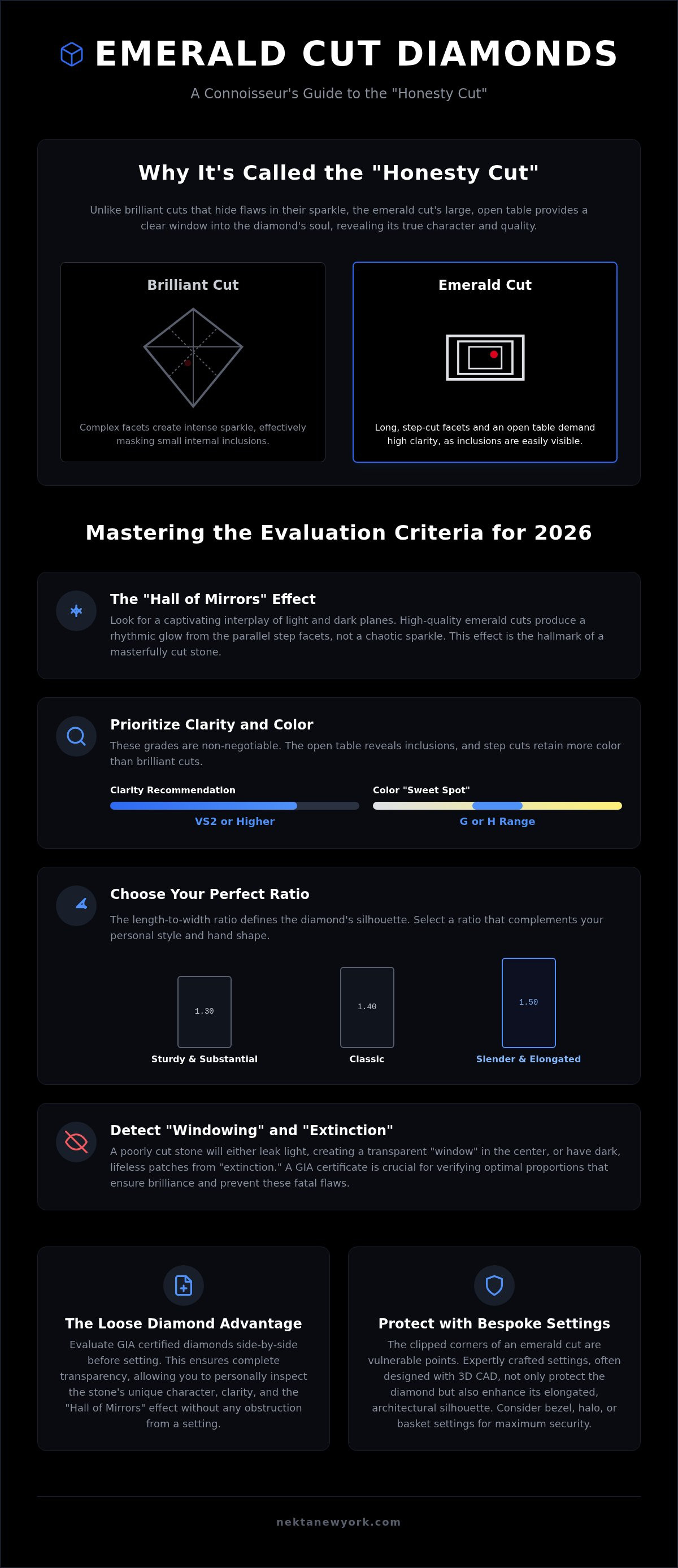
In our New York studio, we often refer to this as the "honesty cut" because it hides nothing from the viewer. Most diamond shapes use hundreds of tiny facets to mask internal inclusions, but the emerald cut features a large, open table. This top flat facet acts like a clear window into the diamond’s soul. If there's a flaw inside the stone, the step-cut facets will often magnify it rather than hide it. This transparency is why selecting a stone requires a master’s eye; you'll typically need a higher clarity grade to ensure the diamond remains eye-clean and breathtaking.
Evaluating Quality: The Unique Step-Cut Criteria for 2026
Selecting emerald cut engagement rings requires a shift in how you weigh the traditional 4Cs. While a round diamond can hide a lower clarity grade behind its frantic light return, the emerald cut demands perfection. You aren't just buying a stone; you're investing in a clear, geometric masterpiece. To ensure you're getting the best value in 2026, you must understand the technical nuances that separate a "good" stone from a breathtaking one.
Technical flaws like "windowing" and "extinction" are the enemies of a high-end diamond. Windowing occurs when a stone is cut too shallow, making the center look like a transparent piece of glass rather than a reflective gem. On the other hand, extinction creates dark, lifeless patches where light leaks out instead of bouncing back to your eye. Evaluating Quality: The Unique Step-Cut Criteria involves looking for a balanced light return across the entire stone. A GIA certificate is your only reliable defense against these issues, as it provides an objective verification of the stone's proportions.
The Perfect Ratio: Elongated vs. Square
The ratio of a diamond is its length divided by its width. For a classic, sophisticated look, most connoisseurs prefer a ratio between 1.30 and 1.50. A stone on the lower end (1.30) appears "sturdier" and more substantial, while a ratio of 1.50 creates a slender, elongated effect that makes the finger look longer and more graceful. There is no "right" answer here; it's about the aesthetic you want to project. If you're unsure which silhouette suits you best, you can compare different loose GIA certified stones side-by-side to see how they interact with your hand.
Clarity and Color: Where to Draw the Line
Because of the large open table, we generally recommend a clarity grade of VS2 or higher. Anything lower risks having an inclusion visible to the naked eye. Regarding color selection, step-cuts tend to hold onto warmth more than brilliant cuts. While a D-grade colorless stone is the pinnacle of luxury, the "sweet spot" for value often lies in the G or H range. These stones appear white to the eye but come at a more accessible price point. Be wary of strong fluorescence in emerald cuts; it can sometimes make these crisp, clear stones look milky or hazy, detracting from the "Hall of Mirrors" effect.
Selecting Your Setting: From Classic Solitaires to Bespoke Masterpieces
Choosing the right setting for emerald cut engagement rings is a delicate balance of aesthetics and structural engineering. While the step-cut's open table reveals the stone's clarity, the setting dictates its presence on the hand. A well-designed mount can actually enhance the perceived length of a diamond or strategically mask a minor inclusion near the girdle. However, the primary role of a bespoke setting is protection. The rectangular corners of an emerald cut are its most vulnerable points; they require secure prongs or a bezel to prevent chipping during daily wear.
Metal choice is equally critical. To maintain the "icy," hall-of-mirrors effect we discussed earlier, Platinum or 18k White Gold are the preferred choices. These cool-toned metals reflect the diamond’s natural brilliance without introducing the warmth of yellow or rose gold into the stone's clear window. For those navigating the world of custom bridal jewelry NYC, this technical harmony between metal and mineral is the foundation of a true legacy piece. It's about creating a frame that disappears, allowing the diamond to remain the undisputed protagonist.
The Solitaire: Minimalist Sophistication
A solitaire setting remains the ultimate expression of confidence. It's bold yet simple. While a traditional four-prong mount allows maximum light to enter the side facets, 2026 has seen a surge in bezel and gypsy settings. These styles encircle the diamond in metal, offering the highest level of durability and a sleek, contemporary aesthetic. The "East-West" orientation is another major 2026 trend. By setting the diamond horizontally across the finger, you transform a classic look into an avant-garde statement. Pairing this with a whisper-thin band creates an optical illusion, making the center stone appear larger and more dominant.
Three-Stone and Accent Designs
If you desire more complexity, three-stone designs offer unparalleled architectural power. Pairing an emerald cut center with tapered baguettes creates a timeless Art Deco aesthetic that feels both vintage and current. For a more aggressive, modern profile, consider side stones like trapezoids or Cadillac cuts. These shapes mirror the step-cut facets of the center stone, extending the "Hall of Mirrors" effect across the entire width of the ring. If the understated flash of the emerald cut feels too quiet, adding a delicate pavé band provides the traditional sparkle that balances the center stone's sophisticated glow.
The Loose Diamond Advantage: Why Expert Selection Matters
When you're investing in emerald cut engagement rings, the smartest move isn't buying a finished piece off a shelf. It's starting with a loose stone. This approach offers total transparency, allowing you to inspect every facet and corner before a setting hides potential flaws. In our New York studio, we maintain a curated selection of 168 loose diamonds, ensuring that you don't have to settle for "close enough" when seeking perfection. By selecting the diamond first, you also gain the freedom to design custom wedding bands NYC that pair flawlessly with your center stone's unique proportions later.
Comparing multiple GIA certified stones side-by-side is the only way to truly understand the nuance of the step-cut. Two diamonds with identical grades on paper can look vastly different in person. One might have a rhythmic "Hall of Mirrors" effect that captivates the eye, while the other feels static. Selecting a loose stone ensures that you're paying for visual beauty, not just a certificate. It's a process that invites you into a bizalmi kör, where expert knowledge meets your personal vision.
Viewing Diamonds in the NYC Diamond District
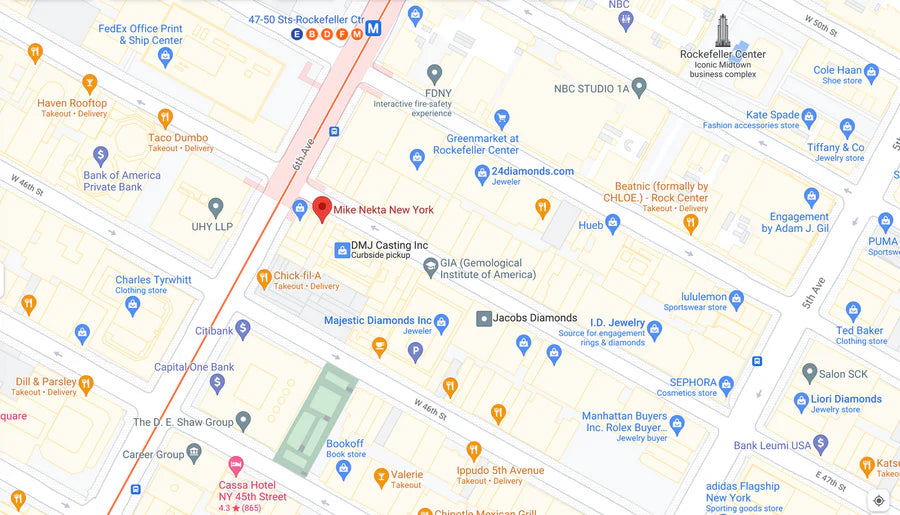
There's no substitute for seeing a diamond in its natural state. In the heart of Manhattan’s Diamond District, we invite you to view our collection under a professional jeweler’s loupe. Professional boutique lighting is designed to reveal the true "life" of a stone, highlighting how it reacts to movement. As a 3rd generation expert, Mike Nekta personally vets every stone in the inventory, identifying "hidden" flaws that a novice might miss. This hands-on experience transforms a simple purchase into a meaningful journey of discovery.
Navigating the Online Loose Diamond Collection
If you can't visit us in person, our digital tools provide a high-definition alternative. We use 360-degree, high-resolution videos that allow you to zoom in on the diamond's table and spot inclusions that are often invisible in standard photography. Understanding the GIA report is vital here; you must learn to read the "plot" of the diamond, which maps out the location of every internal characteristic. This technical data, combined with visual evidence, gives you the confidence to select a stone from anywhere in the world. You can explore the collection of loose GIA certified diamonds online to begin your search for a center stone that reflects your personal standard of luxury.
Ready to see these masterpieces in person? We invite you to book a private consultation at our NYC showroom to experience the Mike Nekta difference firsthand.
Crafting Your Legacy with Mike Nekta New York
Mike Nekta New York isn't just a jewelry boutique; it's a destination for those who view emerald cut engagement rings as a profound statement of personal history. Our philosophy centers on the rare intersection of technical perfection and artistic vision. For us, a diamond isn't an isolated commodity. It's the cornerstone of a legacy. By combining third-generation family expertise with a modern, high-end aesthetic, we ensure that every piece leaving our Manhattan studio meets the highest standards of the global luxury industry. We believe in total transparency. This is why every stone we offer is GIA certified and ethically sourced, providing the moral and technical foundation for your investment.
Choosing a ring here means participating in a tradition of excellence. We don't just sell jewelry; we engineer heirlooms designed to last generations. The architectural nature of the emerald cut requires a builder's precision and a poet's eye. We take pride in our maximalist approach to quality, ensuring that the "Hall of Mirrors" effect we've discussed remains vibrant and clear for decades to come. This commitment to durability and beauty is what defines the Mike Nekta signature.
The Bespoke Design Journey
Your journey begins with a private consultation where we align your aesthetic goals with your practical needs. This isn't a rushed transaction; it's an invitation into an exkluzív circle of craftsmanship. You'll start by hand-selecting the perfect center stone from our loose diamond collection, evaluating its life and fire in person or via high-resolution digital tools. Once the stone is secured, we move into the 3D CAD design phase. This allows you to visualize every angle of the setting before we begin the hand-finishing process. The final reveal is a ring crafted specifically for that individual stone, ensuring a fit that is both secure and visually seamless.
Beyond the Ring: A Lifetime of Service
An emerald cut’s beauty depends on its pristine clarity, which means regular maintenance is essential. We provide professional cleaning and meticulous prong inspections to ensure your diamond stays secure and its facets remain brilliant. Mike Nekta acts as your lifelong advisor, helping you navigate future milestones, from anniversary gifts to potential upgrades. If you're still weighing your options between different silhouettes, you can explore our sibling guide on The Ultimate Guide to Round Brilliant Cut Engagement Rings in 2026 to compare the fire of a round cut with the elegance of a step-cut. Our goal is to build a relationship that lasts as long as the diamonds we sell.
Secure Your Legacy with Architectural Perfection
Selecting emerald cut engagement rings is an exercise in discerning taste where every facet tells a story of transparency. You've learned that the hypnotic "Hall of Mirrors" effect isn't a happy accident; it's the result of masterful cutting and a relentless focus on clarity. By prioritizing a GIA certified stone and understanding the technical nuances of light return and ratios, you're no longer just a buyer. You're a connoisseur who understands that true luxury lies in what is revealed, not hidden.
At Mike Nekta New York, we invite you to take the next step in this journey. As a 3rd generation diamond expert located in the heart of the NYC Diamond District, Mike personally ensures that every stone in our collection meets his maximalist standards. Whether you choose to view our inventory online or visit us in person, you'll find the guidance needed to transform a loose diamond into a generational heirloom. It's a decision that balances sophisticated artistry with a secure, long-term investment.
Browse GIA Certified Loose Diamonds for Your Custom Emerald Ring and begin crafting a design that reflects your unique status. We're here to ensure your selection process is as flawless as the diamond you choose.
Frequently Asked Questions
Do emerald cut diamonds look smaller than round diamonds?
Emerald cut diamonds often appear slightly smaller than round brilliant diamonds of the same carat weight. This is because the emerald cut is deeper, carrying more of its weight in the pavilion rather than the table. However, their elongated shape can create a more dominant presence on the finger. When selecting emerald cut engagement rings, focusing on the right length-to-width ratio can help maximize the stone's visual impact.
What is the best clarity for an emerald cut diamond?
We generally recommend a clarity grade of VS2 or higher for an emerald cut. Because these stones feature a large, open table and step-cut facets, they don't hide internal inclusions as well as brilliant cuts. While a VS2 stone is typically eye-clean, a 3rd generation expert like Mike Nekta can help you vet specific stones to ensure no hidden flaws are magnified by the hall-of-mirrors effect.
Are emerald cut rings more expensive than other cuts?
Emerald cut diamonds often have a lower price-per-carat than round brilliant diamonds because there's less diamond waste during the cutting process. However, the total cost can increase because you must prioritize higher clarity and color grades. Since the open table reveals everything, you can't buy down on quality as easily as you might with a cushion or radiant cut. It's a balance of raw weight and refined purity.
What is the best length-to-width ratio for an emerald cut engagement ring?
The classic connoisseur's choice for a ratio typically falls between 1.30 and 1.50. A 1.30 ratio provides a sturdier, more rectangular look, while a 1.50 ratio offers a slender, elongated silhouette that many find more elegant. There isn't a single best ratio; it depends on your personal style and finger shape. We recommend comparing several GIA certified stones side-by-side to see which proportions resonate with you most.
Can I see inclusions in a VS2 emerald cut diamond?
In most cases, a VS2 emerald cut diamond will be eye-clean, meaning inclusions aren't visible without magnification. However, the location of the inclusion matters immensely in a step-cut. If a flaw is located directly under the center of the large table, it might be visible to a keen eye. This is why expert selection is vital. We personally vet every stone in our collection to ensure technical perfection before it reaches your hand.
Does an emerald cut diamond sparkle?
Emerald cuts don't sparkle with the frantic fire of a round diamond; instead, they produce a sophisticated glow. This is due to the long, parallel facets creating the hall-of-mirrors effect. You'll see flashes of light and dark planes rather than a rainbow of pin-fire. This understated brilliance is precisely why emerald cut engagement rings are favored by those seeking a more architectural and polgári elegance in their fine jewelry.
Is an emerald cut diamond good for a daily wear ring?
Yes, an emerald cut is excellent for daily wear, provided the setting is designed correctly. The corners of a rectangular stone are its most vulnerable points and can chip if struck hard. We recommend a bespoke setting with secure prongs or a bezel to protect these edges. With the right craftsmanship and regular professional inspections, your ring will remain a durable centerpiece of your legacy for generations to come.
How do I clean my emerald cut engagement ring at home?
You can maintain your ring's clarity at home using warm water, a few drops of mild dish soap, and a very soft-bristled toothbrush. Gently brush the facets, paying close attention to the underside of the stone where oils tend to accumulate. Because emerald cuts show smudges and oils more easily than other shapes, regular cleaning is essential to keep that icy, hall-of-mirrors effect looking its absolute best every day.