
Signs You Are Overpaying for a Diamond: A Buyer’s Checklist
A higher price doesn’t always mean a more beautiful diamond. The signs you are overpaying for a diamond often appear when a premium can’t be explained by the stone’s documented qualities, its appearance, or what the quoted price includes. It’s understandable to feel uncertain: grading details can make two diamonds difficult to compare, and a polished sales presentation may draw attention away from the specifics.
Judge the full value, not just the price tag or one impressive grade. This checklist shows how to compare diamonds on consistent terms, assess cut and appearance alongside grading information, and identify what documentation and included services add to a quote. You’ll also find questions to ask before deciding whether a premium is justified. Clear records and experienced guidance can help you make a considered choice without letting sales language set the standard.
Key Takeaways
- One high quote isn’t proof of overpricing. Look for an unexplained premium over genuinely comparable diamonds, including the services in each offer.
- The signs you are overpaying for a diamond become clearer when you consider how the 4Cs work together, rather than treating one grade as the whole story.
- Compare natural stones with natural stones and lab-grown with lab-grown, matching carat, cut, color, clarity, report details, and included services.
- Before committing, request complete stone specifications, verify that the report matches the diamond, and get included items in writing.
- Clear documentation and thoughtful expertise can help you assess a quote beyond its headline price.
Signs You Are Overpaying for a Diamond: Start With the Quote
A high quote by itself doesn’t prove that a diamond is overpriced. Ask whether the price includes a clear, supportable premium over diamonds with comparable characteristics and inclusions. If the seller can’t explain the difference, request more detail before deciding.
Warning signs include vague specifications, missing or mismatched report information, pressure to commit quickly, or a price difference the seller can’t account for. These are reasons to investigate, not automatic proof of overcharging. The four Cs, carat, cut, color, and clarity, describe different aspects of a diamond and must be considered together. An introduction to diamond grading and certification can help clarify the characteristics behind those descriptions.
Check what the quote covers, too. A complete ring price may include the setting, craftsmanship, customization, sourcing, or other services. Ask for the loose diamond price separately, then request an itemized explanation of the setting and any other inclusions. This makes it easier to compare offers without mistaking a difference in scope for a difference in the stone’s value.
Which pricing claims deserve a closer look?
Terms such as “investment quality” may sound persuasive, but they don’t identify measurable features on their own. Ask for the exact carat weight, cut details, color and clarity grades, and grading report information. Then ask how those documented characteristics support the quoted price. If the explanation focuses on prestige or urgency instead of specifics, take time to review the offer.
Request separate line items for the diamond and setting. This helps show whether two apparently similar quotes include the same work and services, or whether the difference comes from the ring design rather than the center stone.
When is a premium not automatically overpayment?
A higher price can have a clear basis. Documented differences between stones, rarity, or the quality of setting craftsmanship may support a premium, as may customization that reflects particular design choices. The reason should be specific enough for you to understand and assess, rather than resting only on a prestigious-sounding label.
Use these checks as prompts for a fair comparison, not as a verdict on a single diamond. The signs you are overpaying for a diamond become meaningful when a premium remains unexplained after you compare relevant details and what each quote includes. Without comparable evidence, it isn’t possible to confidently call an individual stone overpriced.
How the 4Cs and Grading Reports Reveal Diamond Value
A grading report gives you a structured description of a diamond, not a verdict on whether its asking price is fair. Carat, color, clarity, and cut work together. A larger carat weight alone doesn’t establish superior beauty or value, and a high grade in one category can’t tell the whole story. The report helps you compare assessed characteristics, while the price still needs to be judged against comparable stones and what the quote includes.
Give cut and appearance particular attention. Cut influences how a diamond handles light, while the measurements and proportions recorded on a report can help explain differences between stones. Two diamonds with similar headline grades may still look different because of proportions, light performance, inclusions, or viewing conditions. If possible, inspect the actual stone. If that isn’t practical, request clear imagery presented under consistent lighting. Attractive grades on paper don’t guarantee the visual result you prefer.
How to compare GIA diamond reports accurately
Start by matching the report number to the stone, then verify the report through GIA’s Report Check tool. Compare the details, not just the laboratory name or certificate presentation. Review the report date, measurements, proportions, and recorded grades side by side. If a report is absent, its details don’t match the stone, or the seller can’t clarify an inconsistency, pause and ask for an explanation before relying on it.
For a more detailed walkthrough, see this GIA certified loose diamond guide.
Why two diamonds with similar grades can look different
Grades summarize defined characteristics, but they don’t replace looking at the diamond. Proportions influence how light returns to the eye, and the location and visibility of inclusions can affect the stone’s appearance. Lighting and viewing angle matter, too. Avoid basing a decision on images captured under different conditions. Ask to examine the stone or compare clear, consistent imagery, and weigh what you see alongside the report rather than expecting any single grade combination to guarantee your preferred look.
These checks make the signs you are overpaying for a diamond more concrete: a missing report, details that don’t match, or an unexplained difference between the documentation and the stone deserves follow-up. Buyers considering loose GIA certified diamonds can explore loose GIA certified diamonds while keeping report verification and the actual stone at the center of the comparison.
Compare Diamond Quotes Like for Like Before Judging the Price
Start a useful comparison with the stones, not the headline totals. Compare natural diamonds with natural diamonds, and lab-grown diamonds with lab-grown diamonds. Then match their documented characteristics and separate the loose stone from the rest of the purchase. Market prices change, so treat current listings as a snapshot, not a permanent benchmark or a substitute for comparing genuinely similar diamonds.
What belongs in a fair diamond comparison?
Use the same fields for every quote. If information is missing, ask for it rather than assuming two stones are equivalent. Record the answers in a simple comparison table:
| Comparison detail | What to record |
|---|---|
| Stone type | Natural or lab-grown |
| Carat | Exact carat weight |
| Cut and shape | Cut grade or details provided, plus shape |
| Color and clarity | Exact grades as stated on the report |
| Report | Grading laboratory, report number, date, and matching stone details |
| Included services | Setting, design work, and any other stated inclusions |
Next, compare like with like. Keep the loose diamond quote distinct from the setting, taxes, shipping, and other stated charges so you can see what accounts for a difference in the total. Check that the setting materials and design work are described consistently. Use current listings with matching specifications where possible, or seek professional guidance. A lower headline price alone doesn’t establish better value.
How cut, shape, and setting change the comparison
Shape is a matter of preference, but it also affects which stones make a meaningful comparison. A round brilliant and an oval, for example, aren’t interchangeable simply because their carat weights are similar. Cutting characteristics and proportions can influence appearance, while the setting has its own materials and craftsmanship. Assess each part separately before considering the complete ring price. For more on round-brilliant design, see this round brilliant engagement ring guide.
If the details are difficult to line up, clarify them before drawing conclusions. The signs you are overpaying for a diamond are more persuasive when a price difference remains unexplained after the stone specifications and quoted inclusions are aligned. For a considered review of loose GIA certified diamonds, focus on those details rather than the total alone.
A Diamond Buyer’s Checklist Before You Accept a Quote
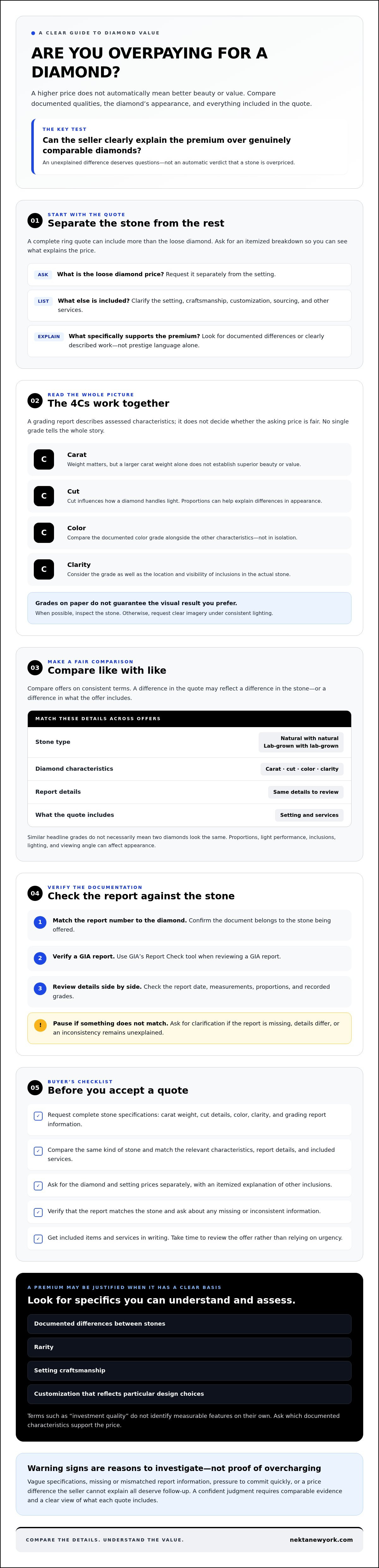
Before paying a deposit or making a final decision, get the details in writing and allow yourself time to review them. A checklist won’t determine value by price alone, but it can expose missing information and make the seller’s explanation easier to assess. A second comparable quote can add perspective. The lowest offer isn’t automatically the best if the stone, documentation, or inclusions differ.
Questions to ask a diamond seller
Ask direct questions and keep the answers with the quote. Clear responses should help you understand what you’re considering and why the price is set as quoted.
- What explains the price? Ask which specific characteristics distinguish this diamond from comparable stones.
- What kind of diamond is it? Confirm whether it’s natural or lab-grown, and request the grading report.
- Do the report and stone match? Check the report number and listed details against the diamond being offered.
- What does the quote include? Request written details for the stone, setting, design work, and any other stated services.
- Could the final total change? Ask which elements are confirmed and whether any charges or choices remain undecided.
Red flags that warrant independent verification
Pause if report information is unavailable, doesn’t match the diamond, or can’t be clarified. Urgency, unsupported claims of rarity, and unclear return terms are also reasons to slow down, document your questions, and review the details independently. These signs you are overpaying for a diamond don’t prove that a quote is unfair, but they do mean you need more evidence before relying on it.
- Verify the report details with the issuing laboratory.
- Ask for return, appraisal, warranty, and aftercare terms in writing, then confirm what each one means before relying on it.
- Note unanswered questions and request time to review the documents before committing.
If explanations remain vague or pressure replaces clear answers, step back. Compare another quote using the same specifications and written inclusions, or seek an independent expert opinion. Don’t let an impressive presentation take the place of information you can verify.
For a more informed review of diamond documentation and stone details, explore loose GIA certified diamonds from Mike Nekta New York, a Manhattan Diamond District boutique led by a third-generation diamond expert.
Choose Diamond Expertise That Makes the Value Clear
A low headline price can be appealing, but it doesn’t tell you whether a diamond suits your priorities or whether the quote is complete. Clear documentation and explanations you can assess are more useful: they show what distinguishes the stone, what the price includes, and where a premium comes from.
Mike Nekta New York is a Manhattan Diamond District jewelry boutique led by a third-generation diamond expert. That expertise can provide context as you review loose GIA certified diamonds or consider a custom engagement ring. The goal is to understand how the documented details and the actual stone relate to the design and qualities you value, rather than treating a certificate or sales claim as the final word.
How expert guidance can improve a diamond comparison
An experienced specialist can help explain report details and point out visual differences that may not be obvious from grades alone. Bring the specifications and quotes you’re comparing, and describe your priorities, budget, and preferred design. A useful discussion should make the trade-offs clearer, whether you’re weighing two loose stones or considering how a center diamond and setting work together. For additional perspective on custom choices, explore this custom bridal jewelry buyer’s guide.
A considered next step for your diamond search
Before choosing a stone or ring, write down what matters most to you: the diamond’s appearance, its documented characteristics, the design, or how the quote is itemized. Share those priorities and unanswered questions with a knowledgeable jeweler. Custom design can help align stone and setting choices with personal taste, but consider it for the design it offers, not as a promise of lower cost.
If a quote leaves you uncertain, review it with the specifications and report details in hand. An informed conversation can help you understand the choices in front of you, without assuming that the lowest offer is best or that every premium is justified. Explore diamond guidance from Mike Nekta as you continue your search.
Make Your Diamond Decision With Clarity
A single high quote doesn’t establish overpricing. Look for an unsupported premium: compare diamonds with matching characteristics and documentation, check what each quote includes, and take time to review unanswered questions. These are the signs you are overpaying for a diamond worth investigating, not automatic proof that a particular stone costs too much.
Clear records and thoughtful explanations matter more than a low headline price. They help you understand how the diamond’s qualities, appearance, and setting relate to your priorities. Mike Nekta is a third-generation diamond expert, and his Manhattan Diamond District boutique has operated for more than 20 years. Its offerings include loose GIA certified diamonds and custom engagement rings.
Bring your diamond specifications or quote, and take the next step at your own pace. Discuss your diamond priorities with Mike Nekta and explore your options with greater confidence. A considered choice begins with clear information, and you deserve the time and guidance to make one that feels right.
Frequently Asked Questions
What are the clearest signs you are overpaying for a diamond?
The clearest signs you are overpaying for a diamond are an unexplained price premium, incomplete specifications, missing or mismatched report details, and pressure to decide before you can review the quote. These are reasons to ask questions, not automatic proof that a price is unfair. Request the exact stone details and an itemized breakdown, then compare them with genuinely similar diamonds that include the same services and setting details.
Can a GIA certified diamond still be overpriced?
Yes. A GIA grading report documents assessed characteristics, but it doesn’t set a fair retail price or guarantee that a seller’s asking price is justified. Confirm that the report matches the diamond, then compare its specifications and appearance with comparable stones. Check whether the quote includes a setting or other services, too. Documentation is valuable, but it doesn’t replace careful price comparison or inspection of the actual stone.
How can I tell if a diamond quote is fair?
Compare the quote with current offers for diamonds of the same type and closely matching specifications. Check carat, cut, color, clarity, shape, report details, and measurements, then separate the loose diamond from the setting, taxes, shipping, and other stated inclusions. Ask the seller to explain any remaining difference. A comparison is meaningful only when the stones and what each quote includes are genuinely alike.
Does a higher diamond price always mean better quality?
No. A higher price may reflect documented differences in a diamond, its rarity, or the craftsmanship and services included in a complete ring quote, but price alone doesn’t establish superior quality or visual beauty. Review all four Cs together and consider the stone’s appearance, not just carat weight or one high grade. Ask what specific features support the premium and whether they matter to your priorities.
Should I compare natural and lab-grown diamond prices?
Compare them as separate categories rather than treating one as a direct price match for the other. First decide which type you’re considering, then compare stones within that category using consistent specifications, grading information, and inclusions. Natural and lab-grown diamonds represent different choices, so a headline price difference alone doesn’t show whether either quote is fair. Focus on the characteristics and value proposition that matter most to you.
What should I check before buying a loose diamond?
Confirm whether the diamond is natural or lab-grown, and request its complete specifications and grading report. Match the report number and details to the stone, then verify the report with the issuing laboratory. Examine the diamond or review clear imagery, and ask for the loose-stone price separately from any setting or other charges. Get included services and relevant purchase terms in writing before committing.
Can two diamonds with the same grades have different prices?
Yes. Matching grades don’t mean two diamonds are identical in every relevant respect. Measurements, proportions, shape, the visibility or position of inclusions, and visual performance can differ. Reports may also contain details that distinguish the stones beyond a quick comparison of headline grades. Review the full reports, compare the actual diamonds under similar viewing conditions, and ask the seller to explain any price difference you can’t account for.
Is a low-priced diamond always a better value?
No. A lower quote may involve different specifications, a different report, or fewer included services, so compare the full offer rather than its headline price. Check the stone’s documentation, visual appearance, and exact characteristics, then confirm what the quote covers and whether any terms remain unclear. A diamond offers better value when its documented qualities and inclusions meet your priorities at a price you can understand, not simply because it costs less.