
Proposing with a Placeholder Ring: A 2026 Guide
What if the ring in the proposal didn’t have to be the one your partner wears forever? Proposing with a placeholder ring can still feel deeply personal when it represents an honest promise: you’re ready to commit, and you want to choose the permanent ring together. The thoughtfulness lies not in presenting a temporary ring as final, but in making the moment and your intentions clear.
It’s understandable to worry that a stand-in could seem less sincere, or that guessing your partner’s style, ring size, or diamond preference could take some joy out of the decision. A temporary ring can ease that pressure while keeping the proposal a surprise and leaving space for a shared choice afterward.
This guide will help you plan a personal proposal, choose a suitable temporary ring, and explain its purpose with warmth and confidence. You’ll also find ways to make selecting the permanent engagement ring an enjoyable part of your story, from discussing preferences to exploring a design that reflects the person who’ll wear it. The goal is a meaningful proposal now and a ring you both love for years to come.
Key Takeaways
- Before proposing with a placeholder ring, discreetly gauge whether your partner would welcome choosing the permanent ring together.
- Compare a temporary ring, a proposer-selected engagement ring, and no ring by considering surprise, sizing uncertainty, and the conversation each option invites.
- Choose a stand-in with comfort, fit, and intended use in mind, and decide in advance how you’ll explain its meaning.
- Let the wearer’s preferences guide the permanent ring discussion, including cut, setting, metal, fit, and diamond documentation.
- Make the transition feel like a shared part of your engagement, not a correction to the proposal.
What Does Proposing with a Placeholder Ring Mean?
You can make a proposal personal without deciding every detail of an engagement ring on your own. If you’re unsure about your partner’s preferred style, stone, setting, or ring size, proposing with a placeholder ring lets you mark the commitment while leaving the permanent choice open to both of you.
A placeholder ring is a temporary stand-in for the proposal, not the permanent engagement ring. It accompanies the moment and signals that you intend to choose the lasting ring together. It isn’t right for every couple. What matters is whether the idea suits your partner and whether you’re both clear about what the ring represents.
Why Some Proposers Choose a Temporary Ring
Engagement ring preferences are personal, and even a thoughtful guess may not match exactly what your partner wants. They might have a particular diamond shape in mind, prefer a different setting, or care about how a ring feels on their hand. A temporary ring can give both partners a voice in those decisions without requiring you to delay the proposal.
Timing can also matter. Perhaps you want the proposal to be a surprise, or you’d rather ask first and shop together afterward. Neither approach has to be right for everyone; choose what suits your relationship. Consider discreetly asking how your partner feels about selecting a ring together, or listen for clues about whether they value a surprise ring or a shared decision. Broader engagement ring traditions offer context, but there’s no single way a proposal must unfold.
What Makes a Placeholder Ring Feel Intentional?
Clarity makes the gesture thoughtful. Present the ring honestly as a stand-in rather than letting your partner believe it’s the finished engagement ring. A short note or sincere explanation can connect the temporary choice to what matters most: your commitment and the opportunity to find a ring that feels right to both of you.
For example, you might say, “I wanted to ask you now, and I’d love for us to choose your engagement ring together.” Adapt the words so they sound like you. The aim isn’t to diminish the ring or over-explain your choice, but to make its meaning unmistakable.
In brief: A placeholder ring is a temporary proposal ring that represents the commitment while the couple plans to choose the permanent engagement ring together.
That distinction can prevent confusion later. A stand-in isn’t a lesser promise; it’s a deliberate way to separate the proposal from a purchase that deserves both partners’ preferences and attention.
How to Propose with a Placeholder Ring and Keep the Moment Personal
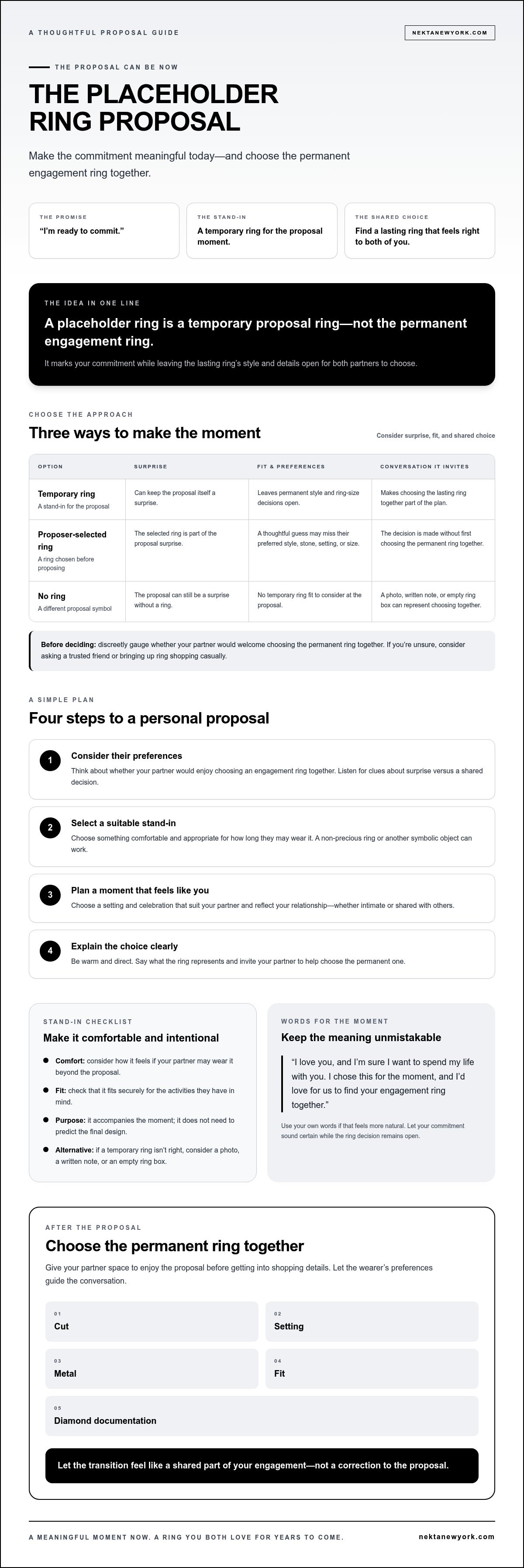
A thoughtful proposal doesn’t depend on guessing every detail of a ring. If you’re proposing with a placeholder ring, plan the moment around your relationship, then make the ring’s temporary role clear. This simple sequence can help:
- Consider your partner’s preferences. Think about whether they’d enjoy choosing an engagement ring together. If you’re unsure, ask a trusted friend or bring up ring shopping casually without revealing your plans.
- Select a suitable stand-in. Choose something comfortable and appropriate for how long your partner may wear it. A non-precious ring or another symbolic object can work. It doesn’t need to predict the permanent ring’s style.
- Plan a moment that feels like you. Choose a setting that suits your partner and the way you want to celebrate. The proposal can be intimate or shared with others, as long as it reflects your relationship.
- Explain the choice clearly. Say what the ring represents and invite your partner to help choose the permanent one.
Choose a Stand-In That Suits the Person and the Plan
Keep the stand-in comfortable and uncomplicated. If your partner might wear it beyond the proposal, check that it fits securely and feels comfortable for the activities they have in mind. Don’t assume it needs to resemble the eventual engagement ring. Its purpose is to accompany the moment, not set expectations for the final design. For more ideas, the Gemological Institute of America’s Propose Now, Shop Later article discusses the placeholder approach and possible stand-ins.
A ring isn’t essential, either. If your partner would prefer not to receive a temporary ring, consider a photograph, a written note, or an empty ring box as a symbol of the choice you’ll make together. Let what feels meaningful to them guide your decision.
Explain the Choice with Confidence
Be warm and direct rather than apologizing for the ring. You might say: “I love you, and I’m sure I want to spend my life with you. I chose this for the moment, and I’d love for us to find your engagement ring together.” Use your own words if that feels more natural. What matters is that your commitment sounds certain while the ring decision remains open.
If your partner says yes, give them space to enjoy the proposal before getting into shopping details. When you’re both ready to explore permanent-ring choices, explore engagement-ring guidance from Mike Nekta New York, where custom-designed engagement rings and loose GIA-certified diamonds are available to consider.
Placeholder Ring, Permanent Ring, or No Ring: Compare Your Options
There’s no universally correct ring choice for a proposal. The right approach depends on how your partner feels about surprises, how confident you are about their preferences and size, and whether you’ve discussed choosing a ring together. Compare the practical differences below, without treating any option as a measure of commitment.
| Option | Choice | Surprise | Sizing uncertainty | Follow-up conversation |
|---|---|---|---|---|
| Placeholder ring | Permanent ring chosen together | Proposal can remain a surprise | Lower stakes for the stand-in, but comfort and fit still matter | Explain the ring’s temporary role and plan to choose the lasting one together |
| Permanent ring | Proposer selects the final ring | Ring and proposal may both be a surprise | Greater importance if the size is uncertain | Discuss preferences or adjustments if needed |
| No ring | Couple selects the ring after the proposal | Proposal may be a surprise, ring isn’t part of it | No ring-size guess is needed at the proposal | Agree on how and when to begin choosing together |
When a Placeholder Ring May Be the Better Fit
Proposing with a placeholder ring may suit you if you want to ask now but would rather share decisions about the lasting ring, especially if you’re unsure about the cut, setting, or size. It works best when you can explain the stand-in’s purpose comfortably. If your partner has clearly said they want the proposer to choose a surprise ring, don’t assume a placeholder is automatically the best compromise. Consider talking about ring-shopping preferences without revealing your plans. The Knot also discusses the etiquette of proposing with a temporary engagement ring.
When to Propose with the Permanent Ring or Without One
A permanent ring may be a natural choice if you know your partner’s preferences and size with confidence, and you believe they’d value your selection. Look for specific preferences, not just broad impressions: a partner who likes diamonds may still have a definite view about shape or setting. For instance, round brilliant engagement-ring guidance can help you explore what a particular cut involves before choosing.
Proposing without a ring is equally valid for couples who prefer to make the ring decision together or want the proposal to stand on its own. Choose the path that fits your shared expectations, then make the next conversation clear and comfortable.
How to Choose a Placeholder Ring and Plan the Transition
A temporary ring should suit the proposal and its intended use, not act as a preview of the permanent design. Before proposing with a placeholder ring, consider how comfortable it will feel, whether it needs to withstand regular wear, and how you’ll move from the proposal to choosing the lasting ring together.
A Practical Checklist for the Temporary Ring
- Comfort and fit: If your partner may wear the ring after the proposal, consider whether it’s likely to fit securely and feel comfortable. Don’t assume you know their size, and avoid asking them to wear anything that feels restrictive or inconvenient.
- Intended wear: Decide whether the ring is for the proposal alone or may be worn for longer. Check the specific item’s materials and care guidance rather than assuming it’s suitable for daily wear, resizing, or exposure to water and activity.
- Meaning: Consider what would feel personal to your partner. A stand-in might be discreet, sentimental, or simply a symbol of commitment. It doesn’t need to imitate a diamond engagement ring.
- Practical terms: Before buying, review the seller’s policies for returns, resizing, and warranties. These terms vary by seller and item, so confirm them directly rather than relying on assumptions.
Keep the expected wearing period in mind, too. If choosing the permanent ring may take time, discuss how long your partner is comfortable wearing the temporary one and whether they’d prefer another way to mark the engagement in the meantime.
Make the Permanent-Ring Conversation Collaborative
Once the proposal has had room to settle, set aside a relaxed moment to talk about the ring. Ask which styles feel most like your partner, which stone shapes appeal to them, and what they value in a setting. Then discuss practical expectations together, including a budget boundary, desired timing, and how you’ll make decisions. You don’t need to settle every detail at once.
Let the proposal remain its own meaningful memory. Choosing a permanent ring is a separate experience, and it can be an enjoyable continuation rather than a correction. If your partner is drawn to something distinctive, custom design is one possible way to reflect their preferences. Explore custom bridal jewelry guidance as you begin considering that option.
Choosing the Permanent Engagement Ring After the Proposal
After the proposal, let the wearer’s preferences lead. The stand-in has given you time to make the lasting choice together, so there’s no need to rush into a ring before you’ve discussed what matters most. Start with a relaxed conversation about the look, feel, and practical details your partner wants.
Agree on Priorities Before Comparing Rings
Talk through preferred silhouettes and diamond shapes, setting styles, metal, fit, and everyday comfort. Identify any non-negotiables, then agree on a budget boundary and how you’ll make the decision together. Seeing rings in person can help clarify preferences that are difficult to describe, but you can take the process at your own pace.
If you’re considering a loose diamond, ask the jeweler to explain its GIA documentation and how the report relates to that specific stone. A GIA report records details used to identify and assess a diamond. Review those details as part of your comparison, alongside the appearance and qualities important to the wearer. Documentation provides useful information, but it doesn’t mean a stone will suit everyone’s taste.
Get Guidance for a Considered Ring Choice
Expert guidance can help you understand differences between stones and design choices without turning the conversation into a rushed decision. Mike Nekta is a third-generation diamond expert, and Mike Nekta New York is a Manhattan Diamond District boutique offering loose GIA-certified diamonds and custom-designed engagement rings. A custom design is one way to reflect the wearer’s preferences, not a requirement for an engagement to feel meaningful.
Bring your questions and priorities to a jeweler, and ask for clear explanations of the options you’re considering. The goal is a choice that feels considered to both of you, whether you select an existing design or explore a custom-designed ring.
When you’re ready to continue, explore engagement rings and expert guidance at your own pace.
Make the Proposal Yours, Then Choose Together
A meaningful proposal is built on honesty and care, not on whether the ring is already the final one. Proposing with a placeholder ring can preserve the surprise while leaving room for both partners to shape the permanent choice. Be clear about what the stand-in represents, then take time to discuss preferences, practical needs, and priorities before comparing rings.
When you’re ready to explore the next step, Mike Nekta New York brings more than 20 years in business and the perspective of third-generation diamond expert Mike Nekta. The Manhattan Diamond District boutique offers custom-designed engagement rings and loose GIA-certified diamonds for couples considering their options.
Explore engagement rings and expert guidance when you’re ready to begin choosing a ring that reflects the person who’ll wear it. Take the process at a pace that feels right for both of you, and let this shared decision become another meaningful part of your story.
Frequently Asked Questions
Is it okay to propose with a placeholder ring?
Yes, it’s okay to propose with a placeholder ring if the approach feels right for your relationship and you’re honest about what the ring represents. It lets you propose before making a permanent ring choice, while inviting your partner to help select a design they’ll enjoy wearing. Consider their preferences first. If they’ve said they want you to choose a surprise ring, talk about ring-shopping expectations before deciding on a stand-in.
What can I use as a placeholder engagement ring?
You can use a simple, comfortable ring, a non-precious stand-in, or a sentimental item that has meaning for you both. The placeholder doesn’t need to resemble the eventual engagement ring. If your partner may wear it beyond the proposal, consider fit, comfort, and whether it suits the intended use. Check the seller’s policies for returns or resizing, since terms depend on the item and seller. A note, photograph, or empty ring box can work if a ring doesn’t feel right.
How do I tell my partner the ring is temporary?
Tell them directly and warmly during the proposal or soon afterward. For example: “I’m certain I want to spend my life with you. I chose this for the moment, and I’d love for us to choose your engagement ring together.” This makes the commitment clear without suggesting the ring is the final choice. Avoid apologizing for the stand-in or leaving its purpose ambiguous. A short personal note can also explain your intention if you find it easier to write than say.
Should I propose with a placeholder ring or no ring?
Choose a placeholder if having something to present matters to you and you can explain its temporary role comfortably. Proposing without a ring may suit a couple who would rather choose the permanent ring together or avoid guessing a size. Neither option guarantees a better reaction. Think about what your partner has said about proposals and surprises, then choose the approach that best matches your shared expectations. You can also discuss ring preferences discreetly without revealing when you plan to propose.
Do you choose the engagement ring together after a placeholder proposal?
You can, and that’s often the point of using a placeholder: the temporary ring marks the proposal while leaving the lasting design open for both partners. Start by discussing preferred cuts, settings, metals, fit, and budget boundaries. Browse together, compare options, and decide how much each person wants to guide the choice. Choosing jointly doesn’t make the proposal less personal; it gives the wearer a meaningful role in selecting a ring they’ll wear.
Will proposing with a placeholder ring seem less meaningful?
Not necessarily. The meaning of the proposal comes from the commitment and the way you communicate it, rather than whether the ring is already permanent. Proposing with a placeholder ring can feel intentional when you explain why you chose it and make clear that the decision to get engaged is sincere. Your partner’s preferences matter, though. If they’ve expressed a strong wish for a surprise ring chosen by you, consider discussing that expectation before making your plan.
How soon should we choose the permanent engagement ring?
There’s no universal deadline. You can begin discussing the permanent ring soon after the proposal, but take the time you need to understand preferences, set a comfortable budget, and compare designs without pressure. If the placeholder will be worn regularly, agree on how long it feels practical to use and whether it’s comfortable. For a custom-designed ring, ask the jeweler about the expected process and timing before making plans around a particular date.