
The Real Meaning of Precision in Diamond Setting
I’ve been around diamonds my entire life. I’m Mike Nekta, a third-generation jeweler and a GIA-certified gemologist, and I’ve spent over 20 years working hands-on with high-end diamond jewelry, large-carat stones, custom engagement rings, and investment-grade pieces.
So when I hear people talk about “precision” in diamond setting, I know exactly what they usually mean.
They mean the diamond looks straight.
They mean the prongs look even.
They mean it “sparkles.”

Those things matter, but they are not the real meaning of precision. Precision is what you don’t notice when you look at a ring. It’s the invisible difference between a diamond that’s merely held in place and a diamond that’s protected, elevated, and presented at its absolute best for decades.
In this article, I’ll walk you through what precision actually is, where it shows up, what it costs (and saves), and how to spot it before you buy.
What Precision In Diamond Setting Really Means
Precision in diamond setting is the exact control of geometry, pressure, alignment, and finishing so the stone is:
- Secure without unnecessary force
- Centered and level in all planes, not just “straight from the top”
- Optically balanced so light performance is not compromised by metal placement
- Protected at its vulnerable points, especially edges, corners, and girdle
- Comfortable and durable in a way that holds up to real life
A diamond setting is a mechanical system disguised as jewelry. The diamond is hard, but it is not indestructible. Precision is what keeps stress from concentrating in the wrong place. It’s what keeps micro-movement from becoming a loose stone. It’s what keeps a beautiful ring from turning into a recurring repair story.
Why Precision Matters More As Carat Weight Goes Up
The bigger the diamond, the smaller the margin for error.
With large-carat stones, everything gets amplified:
- The lever effect increases. A taller or heavier stone puts more force on the head and shank during impact.
- The visual sensitivity increases. A half-millimeter shift that might be invisible in a small ring becomes obvious fast.
- The financial risk increases. When you’re setting a high-value stone, “good enough” is not a sensible standard.
This is why my work with large-carat diamonds has shaped how I think about setting. Precision isn’t a luxury detail. It’s risk management, longevity, and respect for the stone.
The Three Layers Of Precision: Geometry, Tension, And Finish
When I’m evaluating a setting, I’m thinking in three layers.
Geometry
Geometry is the blueprint of the setting. It’s the relationship between:
- The diamond’s measurements
- The seat (bearing) cut into the prongs or bezel
- The symmetry and alignment of the head
- The height and orientation of the stone
- The relationship between the center stone and any side stones, halo, or gallery
If the geometry is wrong, no amount of polishing can fix it.
Tension
Tension is how the metal holds the stone. Not just “tight,” but correctly tight.
Precision tension means:
- The prongs contact the stone where they should, not where it’s convenient
- The pressure is even and controlled
- The stone doesn’t rock, rotate, or lift
- The setter avoids creating stress points that can chip edges or corners
Finish
Finish is what most people see. Clean prongs. Smooth beads. Bright polish. Crisp lines.
But finish is also functional:
- Clean finishing reduces snag points and wear points
- Proper tool work reduces micro-cracks in metal
- Balanced polishing preserves prong strength instead of thinning it out
If the finish is gorgeous but the geometry or tension is wrong, you’re looking at a pretty problem.
The Seat Cut: Where Precision Quietly Begins
One of the most overlooked parts of diamond setting is the seat cut, also called the bearing. This is the exact ledge created inside the prong or bezel where the diamond rests.
A precise seat cut:
- Matches the diamond’s girdle thickness and shape
- Supports the stone evenly
- Positions the stone at the intended height
- Avoids point pressure on fragile areas
A sloppy seat cut often leads to:
- Prongs that look bulky because they’re compensating
- Stones that sit crooked even if the top view looks okay
- Long-term loosening because the diamond is not truly seated
When I look at a ring and the prongs feel “heavy,” my first question is why. Sometimes the design calls for it. But often it’s covering up a seat that wasn’t cut cleanly enough to let the prongs be refined without sacrificing security.
Alignment Is Not Just “Straight From The Top”

A ring can look straight in a photo and still be misaligned.
True alignment is measured in multiple planes:
- North-south and east-west centering
- Leveling so the table isn’t tilted
- Rotational alignment so fancy shapes face correctly
- Vertical alignment so the stone’s height matches the design and intended wear
This matters because misalignment changes both beauty and durability:
- Tilt can expose a corner or edge
- Rotation can make a pear or marquise look “off” immediately
- Height affects snagging, impact risk, and comfort
- A stone that sits unevenly can create uneven prong wear over time
Precision is when the ring looks correct from every angle, not just in the Instagram shot.
Prongs: The Most Misunderstood Detail In Fine Jewelry
People tend to judge prongs by how small they are. That’s not the right standard.
The best prongs are not just tiny. They are:
- Properly placed
- Properly shaped
- Properly finished
- Properly strong for the stone and lifestyle
Prong Placement: Protect The Vulnerable Areas
A round brilliant gives you flexibility. A cushion or radiant gives you less. A pear, marquise, or princess requires strategic protection.
Precision means prongs are positioned to protect the points and edges without blocking light unnecessarily.
For example:
- Pear shapes should usually have a protective prong or V-prong at the tip.
- Princess cuts benefit from V-prongs on corners because corners are chip-prone.
- Emerald cuts need careful corner security and clean lines because any unevenness is obvious.
Prong Shape: Function With Elegance
A refined prong is a controlled geometry, not a random blob of metal pushed over a diamond.
Depending on the design, I might use:
- Claw prongs for a sharper, elegant look
- Rounded prongs for a softer, classic feel
- Tab prongs for certain step cuts to maintain clean geometry
- V-prongs for corners and tips
The “precision” part is that the prong tips match each other, the pressure is even, and the diamond is seated correctly so prongs don’t have to overwork.
Prong Thickness: The Strength You Don’t Want To Notice
Over-polished prongs are a common issue, especially on rings that have been resized, refinished, or “touched up.”
When you see a prong that looks thin at the base, that’s a long-term durability concern. Precision setting includes leaving enough material where it matters most.
Bezel Setting Precision: It’s Not Just Wrapping Metal Around A Diamond
A bezel is often marketed as “more secure,” and it can be. But bezels demand their own kind of precision.
A precise bezel:
- Has an even wall thickness
- Pushes metal uniformly around the stone
- Avoids creating pressure points
- Sits flush without gaps
- Is finished cleanly so it doesn’t feel sharp or look lumpy
An imprecise bezel can actually introduce stress, especially on shapes with corners. It can also dull the look if the metal creeps too far over the crown and blocks light.
A well-made bezel should feel like it was grown around the diamond, not forced around it.
Pavé And Micro-Setting: Where “Good” Can Fail Fast

Pavé looks delicate, but it’s engineering at a tiny scale.
Precision pavé means:
- Even spacing and consistent bead size
- Secure beads that aren’t over-cut
- Proper bright-cut technique if used
- Minimal metal removal from the base
- Clean, controlled finishing that doesn’t weaken the work
The most common pavé issues I see come from shortcuts:
- Over-drilling seats to move quickly
- Weak beads that wear down too fast
- Uneven rows that catch light awkwardly
- Poor finishing that leaves sharp edges or snags
If you love pavé, precision is the difference between a ring that stays beautiful and one that sheds stones over time.
Halo Work: Precision Is The Difference Between “Framed” And “Crowded”
A halo should frame the center diamond, not compete with it.
Precision halo work means:
- The halo is perfectly concentric with the center
- The spacing is intentional and even
- The halo height complements the center stone height
- The pave diamonds face up consistently for uniform sparkle
When halos are off by even a little, you can feel it visually. The center looks like it’s drifting. The design looks tense. A precise halo feels calm and balanced.
How Precision Protects Light Performance
People rarely connect setting precision with brilliance, but it’s real.
If metal is placed poorly or prongs are bulky in the wrong spots, it can:
- Block light entry
- Create odd shadows under the crown
- Distract the eye with asymmetry
Precision lets the diamond do what it was cut to do. Good setting doesn’t “add sparkle.” It removes obstacles and presents the stone cleanly.
This matters even more with high-performing cuts where the diamond’s optics are the point of the purchase.
The Hidden Enemies: Stress, Movement, And Wear
Diamonds don’t usually fall out because someone “forgot” to set them. They fall out because of one of three issues.
Stress
If a diamond is forced into a seat that doesn’t match it, metal pressure can concentrate at one point. That can lead to chipping on vulnerable edges or corners, especially on fancy shapes.
Movement
Micro-movement is the beginning of loosening. A diamond might feel fine for months, then one day you hear the faint rattle.
A precise setting minimizes micro-movement by creating proper contact and pressure. Not excessive, but correct.
Wear
Prongs wear down. Beads wear down. Metal thins with polishing. Daily life slowly changes the structure.
Precision anticipates wear by building the setting with enough strength and correct geometry so it can age gracefully.
Craftsmanship Versus Speed: Why Precision Takes Time

In a world where people want everything fast, precision is a choice.
A setter working with care will:
- Measure and test fit
- Cut seats cleanly
- Set incrementally and evenly
- Check alignment multiple times
- Finish without thinning critical areas
- Inspect under magnification
- Re-check security and symmetry at the end
That takes time, skill, and patience. It’s also why two rings that look similar in a photo can feel completely different in real life.
What I Look For When Inspecting A Finished Setting
If you’re buying a ring, these are the practical things I’d tell you to check, even if you’re not a jeweler.
Check Symmetry With Your Eyes First
Hold the ring at arm’s length, then closer.
- Do the prongs look like they belong to the same ring?
- Does the stone look centered, or does it lean?
- Does the head look straight on the shank?
Your eyes catch imbalance quickly.
Look For Clean Contact And No Gaps
Under good lighting:
- Prongs should meet the stone cleanly.
- A bezel should not have random gaps.
- Halo stones should look evenly spaced.
Gaps can mean poor seating or incomplete closure.
Feel For Snags
Run a soft cloth or your fingertip gently around prongs and pavé.
- Snags often mean finishing issues.
- Snags also accelerate wear because they catch on fabric.
Listen For Rattle
Very gently, near your ear, tap the ring with your finger. You should not hear a stone move. If you do, it needs attention immediately.
Ask About Aftercare
A jeweler who builds precise settings usually has a clear viewpoint on maintenance.
For most engagement rings, I recommend routine checks. Not because the ring is “weak,” but because even the best setting lives in the real world.
Precision For Different Diamond Shapes
Each shape demands a different type of respect.
Round Brilliant
- Forgiving in symmetry, but still needs true leveling and centering.
- Prong placement is flexible, but the seat must still be clean.
Oval
- Rotation matters because the eye picks up tilt quickly.
- Prong alignment is crucial or the oval looks off-center.
Emerald Cut
- Step cuts show everything.
- Any uneven prong, misalignment, or crooked halo is obvious immediately.
Princess Cut
- Corners are the risk zone.
- V-prongs are often the smartest protection.
Pear And Marquise
- Tips are vulnerable.
- Orientation and protection at the point are non-negotiable.
Cushion And Radiant
- Need careful corner security without making the setting look bulky.
- Alignment matters because these shapes often show small asymmetries.
Precision is not one standard. It’s matching the setting strategy to the stone.
Resizing And Repairs: Precision Should Survive Service
A ring that’s made well should be serviceable without losing its integrity. That’s another part of precision people rarely think about.
When a ring is resized or repaired:
- The head must stay aligned.
- Pavé must not loosen.
- Prongs must not be thinned.
- The shank must retain strength and shape.
This is why I care about construction, not just appearance. A beautiful ring that can’t be maintained properly is not truly well-made.
The Precision Difference You Feel Every Day

There’s a certain feeling a precise ring has.
- The diamond looks “quietly perfect,” not fussy.
- The ring feels smooth when you put it on.
- It doesn’t snag constantly.
- It sits correctly on the finger.
- It wears comfortably and confidently.
I’ve had clients who upgraded not because their old ring was ugly, but because they finally held a ring that felt like it was built properly. That’s the difference.
What Precision Should Mean When You’re Spending Real Money
If you’re investing in a high-end diamond ring, precision should show up in:
- Documentation and transparency about materials and workmanship
- Clear discussion about lifestyle needs and durability
- Design choices that protect the stone without compromising beauty
- Quality control under magnification, not just a quick glance
- A long-term plan for maintenance, inspection, and service
Luxury isn’t just the sparkle. Luxury is confidence.
Common Myths About Diamond Setting Precision
Myth 1: “Smaller Prongs Are Always Better”
No. The best prongs are the right size for the diamond, the design, and the wearer’s life. Overly tiny prongs can wear down faster and reduce safety margin.
Myth 2: “If It Looks Straight, It Is Straight”
Not necessarily. A stone can be visually deceptive. True alignment requires multi-angle inspection.
Myth 3: “A Bezel Is Foolproof”
Bezels are secure, but only when executed precisely. A poorly made bezel can create stress and look uneven quickly.
Myth 4: “Pavé Losing Stones Is Normal”
It happens, but it’s not something you should accept as inevitable. Precision pavé reduces the likelihood significantly.
How I Approach Precision In Custom Work
When I create a custom engagement ring or high-end piece, I’m not just thinking about the day you propose or the day you gift it.
I’m thinking about:
- How it will wear in five years
- How it will look after routine polishing
- Whether the setting protects the stone’s vulnerable points
- Whether the design still looks balanced if the ring is resized
- How to keep the diamond as the hero, not the metal
That’s the mindset behind precision. It’s long-term thinking, executed in tiny details.
Book A Private Appointment In New York
If you’re considering a custom engagement ring, a large-carat diamond, or a high-end investment piece, I’d love to help you do it the right way.
I work with clients who care about the details that actually matter: stone selection, setting integrity, comfort, durability, and a finished look that feels truly elevated.
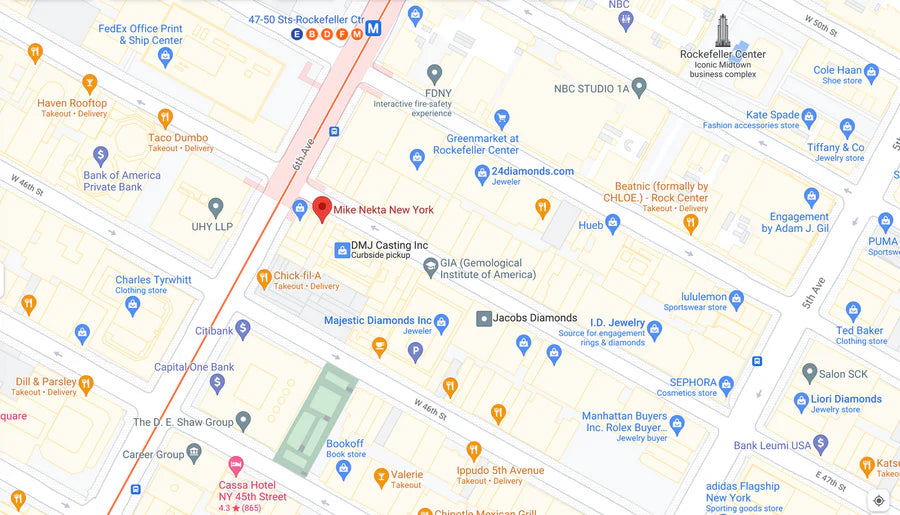
If you’d like, you can book a private appointment with me, Mike Nekta, in New York at Mike Nekta New York. We’ll go through your goals, your design preferences, and the level of precision your piece deserves.
Final Thoughts
Precision in diamond setting is not a buzzword. It’s craftsmanship you can trust.
It’s measured seats, even pressure, true alignment, thoughtful protection, and finishing that strengthens rather than weakens. It’s the difference between a ring that simply looks expensive and a ring that stays exceptional.
If you take one thing from this, let it be this: the diamond is only as secure and as beautiful as the setting allows it to be. And in fine jewelry, precision is what makes that beauty last.