
Modern Settings for Marquise Cut Diamond Rings You’ll Love
Marquise diamonds are having a moment again. Not the old school, high set, pointy prongs and heavy yellow gold kind of moment. I mean the modern kind. Cleaner lines. Lower profiles. Settings that actually make sense for real life, not just a jewelry store spotlight.
And honestly, marquise has always been a power shape. It is long. It is sharp. It catches light in a way rounds just do not. But the setting is everything. Put a marquise in the wrong setting and it looks dated fast. Put it in the right one and it looks like it was designed yesterday.
So let’s get into it. These are modern settings for marquise cut diamond rings you will love. The kinds of settings that make the stone look intentional, wearable, and expensive in a quiet way.
Why Marquise Works So Well In Modern Design
A marquise is basically built for modern jewelry.
It gives you a bigger look per carat because of the length. It elongates the finger. It can look sleek and architectural. And it plays well with negative space. That matters because a lot of modern ring design is about what you do not add.
But there is one catch. The tips.
Those points are gorgeous, and also the most vulnerable part of the diamond. So modern settings tend to do one of two things:
- Protect the tips in a smart way (without bulky hardware).
- Design around the tips so the whole ring feels balanced.
If you want a marquise that wears well for years, the setting is not just style. It is function.
1. East West Marquise Solitaire (The Modern Classic)
The east west setting is when you turn the marquise sideways, so the points face left and right instead of up and down. This one is everywhere right now for a reason.
It feels fresh. A little edgy. But still simple enough to be timeless.
Why people love it:
- It sits visually wider across the finger, which reads modern.
- It avoids the “traditional engagement ring silhouette” without being weird.
- It looks great in minimalist solitaires.
What to look for:
- A low profile basket so it does not snag constantly.
- Proper support at the tips, even if they are not obvious from the top.
- A band thickness that matches the length of the stone, so the ring does not feel top heavy.
East west is one of my favorite ways to make a marquise feel intentional instead of inherited.
2. Bezel Set Marquise (Clean, Protective, And Sharp)
A bezel is the smooth metal rim that wraps around the stone. For a marquise, it can look insanely modern. Like a piece of design, not just jewelry.
And the practical side matters too. Bezels protect those points better than almost anything.
Styles of bezel that feel modern:
- Full bezel with a crisp outline. Very sleek, almost graphic.
- Partial bezel that hugs the tips but leaves the sides open. More airy, still protective.
- Ultra thin bezel in platinum or white gold. Clean, “barely there” metal.
A bezel also changes the vibe of the diamond. The light performance is different than prongs, and the stone can read a little calmer, more polished. Less sparkle chaos, more controlled shine.
If you are hard on your hands, or you just want something clean and wearable, bezel is a strong move.
3. Floating Marquise (Minimal Prongs, Maximum Presence)
This is the setting style where the diamond looks like it is suspended, with very little visible metal from the top. It is modern, but it has to be executed perfectly. If it is not, it becomes a repair story later.
A true modern floating solitaire has:
- A well engineered basket that supports the stone from the side.
- Tip protection that does not rely on tiny, weak prongs.
- Balanced prong placement so the diamond does not look like it is “pinched.”
The payoff is big though. A floating marquise looks light. Airy. Expensive. Like the diamond is the only thing that matters.
And it should be.
4. Split Shank Marquise (More Architecture, Still Elegant)
A split shank means the band separates as it approaches the center stone. With a marquise, it creates a frame. It also adds stability because you have more metal supporting the head of the ring.
Modern split shanks are not overly decorated. No chunky scrollwork. No messy pave everywhere. They are clean and intentional.
Best modern variations:
- Knife edge split shank for sharp lines.
- Slight taper into a split for subtle structure.
- Pavé split shank, but only if the pavé is tight and fine, not thick and bumpy.
Split shank is for someone who wants a little more ring without going full halo.
5. Cathedral Setting, But Make It Modern
Cathedral settings have arches that rise up from the band to hold the center stone. Traditionally, they can look a bit heavy. But modern cathedral designs are slimmer, cleaner, and way more wearable than people assume.
Why it works for marquise:
- It gives height and presence without bulky side details.
- It adds support to a longer stone.
- It can make the ring feel “finished” from every angle.
Modern cathedral is all about restraint. Thin arches. Smooth lines. No extra fluff.
If you like classic silhouettes but want a modern execution, this is a smart middle ground.
6. Hidden Halo With A Marquise (Sparkle, But Not Obvious)
Halos can look dated when they are loud. But a hidden halo is different. You do not see it from the top. It sits under the diamond, so from the side you get this subtle shimmer.
With a marquise, a hidden halo can:
- Add sparkle in profile.
- Make the center look slightly larger from certain angles.
- Create a clean top view while still feeling detailed.
But it has to be done right. A hidden halo that sits too high can snag. One that is too delicate can wear down.
Modern does not mean fragile. Not if you plan to wear the ring for real.
7. Two Tone Marquise Settings (Quiet Contrast)
Two tone is back, but not the loud 80s version. Modern two tone is subtle. Usually a platinum head (for strength and a clean look around the diamond) with a yellow or rose gold band for warmth.
Why it looks good on marquise:
- The head disappears visually, keeping focus on the stone.
- The band gives personality without competing with the diamond.
- It works with both minimalist and more structural settings.
If you want modern but you also want warmth, two tone is a great way to get both.
8. Marquise With Tapered Baguette Sides (The Modern Vintage Hybrid)
This one is a classic combination, but when done with clean proportions, it looks very modern. A marquise center with tapered baguettes on the sides gives you that sharp, editorial feel.
Key details that make it feel modern:
- Slim baguettes, not chunky.
- Tight spacing so the side stones feel integrated.
- A low, clean gallery so it sits well on the hand.
It is a setting that says “I know what I am doing” without having to scream for attention.
9. Knife Edge Band With A Marquise (Sharp Lines, Sharp Stone)
Knife edge bands are literally shaped with a ridge down the center. With a marquise, it is a perfect match. The geometry is consistent. Everything feels intentional.
Why people love it:
- It looks clean and modern from every angle.
- It makes the ring feel thinner without being weak.
- It complements the marquise shape instead of fighting it.
This is one of those settings that looks simple until you see it in person. Then you get it.
10. Low Profile Marquise Settings (Because Snagging Is Not Cute)
A lot of modern clients want low set rings. Not because they do not like sparkle, but because they want to wear the ring without constantly catching it on sweaters, hair, pockets, everything.
A modern low profile marquise setting should still:
- Let light in from the sides.
- Protect the tips.
- Keep the stone secure without over squeezing it.
This is where craftsmanship matters. Because “low” done wrong means the diamond sits cramped and lifeless. Low done right means it sits sleek and confident.
11. Marquise North South Solitaire, But With Modern Prongs
North south is the traditional orientation, points up and down. It is still my favorite for a lot of hands, because it elongates the finger in the most flattering way.
What makes it modern is the prong work.
Modern prong options:
- Double claw prongs at the tips (very clean, very secure).
- V prongs that are shaped neatly, not bulky.
- Petite prongs with a crisp finish, not rough metal.
This is the difference between a marquise that looks like a family ring and a marquise that looks like it came from a top atelier.
Same stone shape. Different standards.
12. Open Gallery Settings (The Side View Matters)
A modern ring should look good from the side. That is non negotiable now because people actually look. People take photos. They stare at their hands. They notice the profile.
An open gallery means the structure under the stone is designed with negative space. Less metal. More air. More light.
Benefits:
- The ring feels lighter visually.
- Cleaning is easier.
- The diamond looks brighter because it is not boxed in.
This is one of those details that separates custom level work from mass produced settings.
A Quick Note About Marquise Proportions (Because It Affects The Setting)
Not all marquise diamonds behave the same. The length to width ratio changes everything.
- Longer, skinnier marquise can look super modern, but needs more careful support at the tips.
- Wider marquise can look bold and elegant, but needs a setting that does not make it feel squat.
- Bow tie is real. You want a marquise that handles light well, and a setting that does not exaggerate dark areas.
Setting choice should match the actual stone, not a stock photo of a marquise on a website.
This is where expertise matters more than trends.
“Mastery ages well. Trends don’t.”
That is the line I keep coming back to with marquise rings.
Because it is easy to chase whatever is popular this month. But a ring is not a pair of sneakers. You are going to wear it for years. It is going to get knocked around. It is going to need maintenance. And if the setting is poorly designed or poorly made, you do not see the problem on day one.
You feel it later. In repairs.
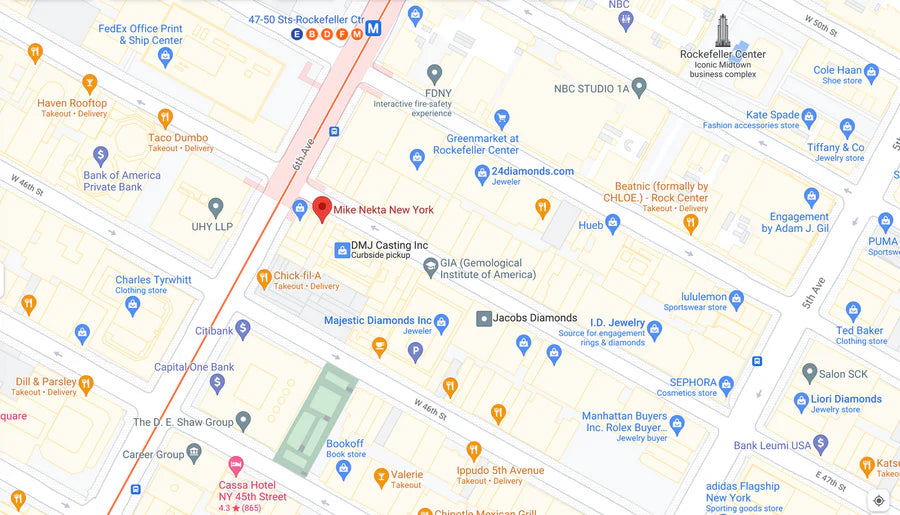
Book an appointment with Mike Nekta New York
If you’re considering a marquise cut diamond ring and you want a modern setting that actually holds up, book an appointment with me, Mike Nekta, at Mike Nekta New York.
Don’t guess. Bring it. Come with questions. Leave with clarity.