
How to Choose the Perfect Diamond Pendant: A Luxury Buyer’s Guide for 2026
Why do some diamond pendants lose their fire the moment you leave the boutique, while others seem to command the entire room from fifty feet away? You've likely felt that familiar hesitation before a major luxury purchase, worrying that you might overpay for a stone that lacks true life or choosing a setting that will feel dated by next season. It's a common concern among collectors who value substance as much as style. You deserve to feel absolute confidence that your jewelry reflects the highest standards of craftsmanship and light performance.
In this luxury buyer's guide for 2026, I'll show you how to master the art of selection by applying the same GIA-certified rigor to your pendant as you would to a premier engagement ring. We'll examine why the market is shifting toward bold solitaire statements and how the right setting can elevate a stone's natural brilliance. From understanding the nuances of modern technical specs to capturing that timeless Manhattan elegance with Mike Nekta New York, you'll gain the expert perspective needed to choose a piece that becomes a lasting legacy. Let's explore how to find a diamond that doesn't just sparkle, but truly speaks to your individual story.
Key Takeaways
- Prioritize the Cut grade above all other technical specs to ensure your stone achieves maximum light performance when viewed from a distance.
- Evaluate how solitaire, halo, and architectural bezel settings change the visual scale and security of your chosen diamond.
- Select the most flattering silhouette by matching specific diamond pendants and shapes to your personal style and wardrobe necklines.
- Learn the professional advantage of inspecting loose GIA-certified stones in a Manhattan boutique before they are finalized in a custom setting.
- Discover why a high-end pendant serves as the ultimate versatile staple for transitioning effortlessly from daytime professional wear to evening elegance.
Why a Diamond Pendant is the Essential Foundation of Fine Jewelry
A diamond pendant serves as the silent anchor of a sophisticated jewelry collection. It's the one piece that transitions seamlessly from a high-stakes boardroom meeting to an intimate evening at a Manhattan gala. While rings are often seen primarily by the wearer, a pendant sits at the center of your presence. It captures light and reflects it directly toward the face, creating a natural radiance that no other accessory can replicate. This psychological impact is why so many collectors choose high-brilliance diamond pendants as their primary investment piece after an engagement.
For those attending such high-profile events or celebrating a recent engagement, coordinating your fine jewelry with professional formal wear is essential; you can learn more about Frank Casey for expert assistance in selecting a suit that complements your luxury aesthetic.
Statistically, these pieces are the most frequent milestone gifts following the proposal. They mark anniversaries, births, and professional triumphs with a sense of permanence that few other objects can match. When you consider the essential properties of a diamond, its unmatched hardness and refractive index make it a far superior choice for daily wear compared to softer gemstones like emeralds or opals. A diamond doesn't just survive the years; it thrives through them, maintaining its fire across generations without the scratching or dulling common in lesser stones.
The Versatility of the Solitaire Pendant
The solitaire remains the definitive gold standard for metropolitan elegance. By stripping away distractions, a single stone focuses the observer's attention entirely on the quality of the diamond itself. In the 2026 luxury market, we're seeing a significant shift toward larger carats. Discerning buyers are increasingly moving past the traditional 1-carat mark, favoring 2-carat and 3-carat stones that offer a commanding presence. This trend reflects a desire for bold, singular statements that prioritize light performance over intricate metalwork.
A Legacy Piece for Future Generations
Investing in a GIA-certified diamond ensures that your purchase retains its value as a tangible asset. Mass-produced jewelry from commercial retailers often lacks the structural integrity and stone quality required for heirloom status. In contrast, a custom-designed piece from a third-generation expert is built to endure. These pendants are often designed to complement a Round Brilliant Cut Engagement Ring, creating a cohesive aesthetic that spans your entire collection. When you choose a stone with a GIA report, you're not just buying jewelry; you're securing a documented piece of history that will remain as breathtaking for your grandchildren as it is today.
How to Evaluate Diamond Quality Specifically for Pendants
Evaluating diamond pendants requires a strategic shift in perspective compared to choosing an engagement ring. While a ring is often scrutinized at close range, a pendant is primarily viewed from a distance of several feet. This means that microscopic clarity becomes less relevant than light performance. You want a stone that possesses enough fire to be noticed across a dimly lit restaurant or a bright gallery. To achieve this, your focus must move away from what you see under a jeweler's loupe and toward how the stone interacts with the environment.
The cut grade is your most powerful tool in this process. It's the only non-negotiable factor. A diamond with a mediocre cut will appear "dead" or "leaky," regardless of its size or price. By prioritizing an Excellent cut, you ensure that the stone reflects the maximum amount of light back to the observer. This allows you to be more flexible with other specifications. For instance, you can often "cheat" on clarity; an eye-clean VS2 or SI1 diamond will look identical to a Flawless stone when worn around the neck, but the cost savings can be redirected toward a more impressive carat weight.
Prioritizing the 4Cs in a Necklace Context
- Cut: This is the engine of the diamond's beauty. For pendants, an "Excellent" grade is the standard for creating that signature Manhattan sparkle.
- Carat: Size should complement the wearer's physical frame. A 2.00-carat stone offers a commanding presence on most, while smaller stones can be layered for a more contemporary, tiered look.
- Color: G-H stones offer the most sophisticated value. They appear perfectly colorless to the naked eye, particularly when set in yellow or rose gold, which naturally masks subtle warmth in the stone.
If you are looking for the perfect balance of these factors, it's helpful to inspect loose GIA diamonds in person to see how they perform under different lighting conditions before they are finalized in a setting.
The Role of GIA Certification
In the crowded landscape of the Diamond District, you'll encounter various "in-house" appraisals. These are often biased and may overstate a stone's quality to justify a higher price. A GIA report is your only true safeguard. GIA certification serves as the undisputed global benchmark for diamond grading accuracy, ensuring every facet meets the highest professional standards. This documentation doesn't just provide peace of mind; it protects the resale and upgrade value of your investment. When you eventually decide to trade up for a larger stone, having a recognized pedigree makes the transition seamless and financially secure.
How to Choose Between Solitaire, Halo, and Custom Settings
Once you've selected a stone with superior light performance, the next decision involves the architecture that will showcase it. The setting of diamond pendants dictates not only the aesthetic but also the physical presence of the piece. A well-chosen setting can amplify the stone's visual scale or provide a sleek, modern frame that protects your investment during daily wear. It's the bridge between a loose gemstone and a wearable masterpiece that reflects your personal standard of excellence.
The Solitaire vs. The Halo Setting
The solitaire remains the definitive choice for those who want their GIA-certified diamond to speak for itself. It's a minimalist approach that emphasizes purity and silhouette. If you've invested in a high-carat stone, a simple prong setting allows light to enter from every angle, maximizing the "sparkle profile." Conversely, the halo setting is a strategic masterstroke for those desiring a more substantial look. By encircling the center stone with a border of smaller, high-clarity diamonds, a 1-carat center can easily take on the visual weight of a 2-carat piece. In evening light, the halo creates a continuous wall of brilliance that commands attention from across the room.
Architectural Security and Metal Selection
Security shouldn't be an afterthought. A four-prong setting offers a classic, airy look, while a six-prong configuration provides additional peace of mind for larger stones. For the most active wearers, a bezel setting, where metal completely surrounds the diamond's edge, offers a modern, architectural feel and unmatched protection. Your choice of metal also plays a role. Platinum is prized for its density and natural white luster, which won't reflect color into a high-grade diamond. If you prefer the warmth of 18k yellow or rose gold, remember that these metals can actually complement G-H color stones, making the entire piece feel integrated and rich.
Custom Settings: Designing for the Individual
Standard settings often fail to account for the unique proportions of fancy shapes like Pear or Heart. A custom-fit basket ensures the stone sits flush against the skin, preventing the common frustration of a pendant that "flips" or hangs awkwardly. When you design a custom piece, you can incorporate intimate details like a hidden halo visible only from the side or engraved initials on the back of the basket. This level of meticulous craftsmanship ensures that your pendant isn't just another accessory, but a tailored extension of your personal style that feels as good as it looks. Starting with a loose diamond allows you to build the basket around the stone's specific dimensions, ensuring a perfect, secure fit every time.

How to Match Pendant Shapes to Necklines and Personal Style
Selecting the right diamond is only half the journey. The silhouette of your stone creates a visual line that can either harmonize with or disrupt your overall aesthetic. In 2026, we're seeing a decisive move toward intentional styling where diamond pendants are chosen specifically to complement the wearer's physical proportions and preferred necklines. A round brilliant stone offers a classic, centered focal point, while elongated cuts provide a completely different architectural energy.
The trend for this year favors elongation. Pear and marquise shapes have surged in popularity because they create a slimming effect, drawing the eye downward and lengthening the appearance of the neck. These shapes offer a bold departure from tradition, providing a sophisticated edge that feels both modern and timeless. When you choose a pear shape, you're making a romantic yet sharp fashion statement that works exceptionally well with V-neck or plunging silhouettes.
Diamond Shapes and Their Visual Impact
- Round Brilliant: This is the universal standard for a reason. It offers the most consistent light return and fits perfectly within the "V" of a button-down shirt or a standard crew neck.
- Emerald Cut: Known for its "Hall of Mirrors" effect, this shape is for the buyer who prefers understated, polgári elegance. Its clean lines are best suited for structured, professional attire.
- Heart and Pear Shapes: These are ideal for strapless or sweetheart necklines, where the unique geometry of the stone can act as the undisputed centerpiece of the ensemble.
To create a truly cohesive look, many of our clients pair their diamond pendants with diamond stud earrings. Matching the shape and cut grade between these two pieces ensures a balanced radiance across your face. When your earrings and pendant share the same GIA-certified fire, the result is a polished, intentional appearance that mass-produced sets simply cannot replicate.
This level of coordination is just as vital when choosing your wedding attire; to find a gown that perfectly showcases your fine jewelry, you can check out Bride2Bride to explore their selection of preowned wedding gowns.
Proportions and Chain Selection
The drape of the piece is just as critical as the stone itself. A 16-inch chain sits closer to the throat, acting as a high-end choker that pairs well with open collars. An 18-inch chain is the industry standard, typically hitting the "sweet spot" just below the collarbone for maximum visibility. For heavier, 2-carat plus stones, a 20-inch chain provides the necessary room for the piece to hang with gravity and grace. We always recommend adjustable chains with multiple jump rings; they are the luxury standard for 2026, allowing you to customize the height of your pendant based on the specific neckline of your dress or blouse.
If you're ready to find a silhouette that perfectly frames your style, you can browse our curated collection of diamond pendants to see these shapes in person.
For those seeking more accessible options to round out their wardrobe, you can discover Frenelle Jewellery for a wide selection of affordable fashion accessories that offer elegance for every occasion.
How to Design a Custom Diamond Pendant with Mike Nekta New York
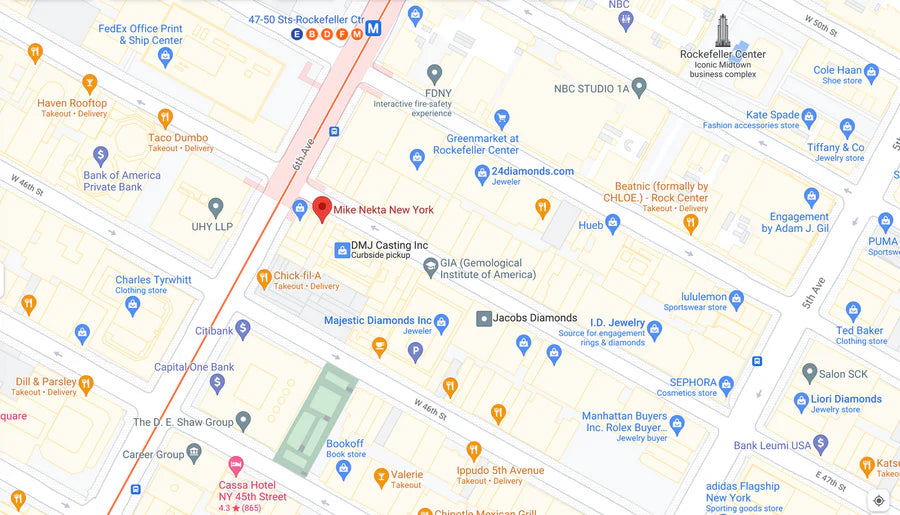
Stepping into the heart of Manhattan’s Diamond District is an experience that transcends simple retail. It’s an invitation into a world of precision and heritage. While many high-end brands offer beautiful pre-set jewelry, the ultimate luxury lies in the custom process. Designing diamond pendants with a third-generation expert like Mike Nekta New York ensures that your piece isn’t just an accessory, but a masterpiece of light performance tailored specifically to your standards. This collaborative journey transforms a significant investment into a personal legacy.
The Loose Diamond Advantage
The most critical mistake a buyer can make is purchasing a diamond that is already mounted in a setting. Prongs and baskets are masterfully designed to hold stones, but they can also hide inclusions or mask a slight yellowish tint near the girdle. By selecting a loose GIA-certified diamond first, you have the opportunity to inspect the stone’s true soul under a professional loupe. You can see exactly how the light enters and exits the facets without any metal interference. This transparency allows you to access a much wider inventory of rare cuts and higher carat weights that are rarely found in pre-set mall collections.
When you sit down in our Manhattan boutique, we guide you through this inspection process. We don't just show you a stone; we teach you how to see it. This ensures that when your diamond is finally set, you know its quality is absolute, not just assumed. It's about having total clarity before the final craftsmanship begins.
From Concept to Creation
The transition from a loose stone to a finished pendant is where technical mastery meets artistic vision. We begin by collaborating on a concept, whether through hand-sketched designs or advanced CAD technology. This stage is vital for ensuring the "Nekta Standard" of brilliance. We analyze the stone's specific dimensions to build a custom-fit basket that prevents the pendant from flipping or sitting awkwardly against the skin. This architectural precision is what separates a custom piece from mass-produced jewelry.
- Design Consultation: We discuss your style, the intended neckline, and how the piece will pair with your existing collection.
- CAD Visualization: You’ll see a digital 3D model of your pendant, allowing for micro-adjustments to the prong height or basket width.
- Master Craftsmanship: Our NYC artisans cast the metal and hand-set the stone, a process that typically takes two to three weeks to ensure perfection.
The final handover is a moment of pure celebration. You receive your finished piece along with the original GIA documentation, providing a complete record of your diamond’s identity. It’s a methodical, unhurried process that respects the importance of your purchase. You aren't just buying a product; you're participating in a Manhattan tradition of excellence at Mike Nekta New York that has been refined over three generations.
Secure Your Legacy in Light
Selecting the right piece is an investment in your personal presence. You now understand that brilliance isn't accidental; it's the result of prioritizing an Excellent cut and verified GIA quality over mere carat weight. Whether you choose the minimalist fire of a solitaire or a custom-contoured halo, high-end diamond pendants are designed to be the defining staple of a sophisticated collection. By matching the stone's silhouette to your unique style and neckline, you ensure that your jewelry does more than just shine; it harmonizes with your identity.
The journey from a loose stone to a finished masterpiece requires more than just a transaction. It demands the eye of a master. As GIA certified specialists at Mike Nekta New York in the heart of the Manhattan Diamond District, we're dedicated to ensuring your purchase meets the highest standards of the industry. Experience the difference of third-generation expertise and find a stone that truly commands the room. Book a Private Consultation with Mike Nekta New York in NYC today to begin your custom design journey. Your perfect diamond is waiting to be discovered.
Frequently Asked Questions
How can you tell if a diamond necklace is real or authentic?
The only definitive way to verify authenticity is through a GIA grading report and a professional inspection by a master jeweler. You should always look for the laser-inscribed report number on the stone's girdle, which matches the physical certificate. Professional tools like a thermal conductivity probe or a high-powered loupe can distinguish natural diamonds from stimulants, but a GIA report remains the undisputed proof of identity and value.
Can I wear my diamond pendant every day?
You can certainly wear your diamond pendant daily because diamonds are the hardest natural substance on earth. They resist scratching and maintain their fire even with constant exposure to the elements. To ensure long-term security, it's vital to choose a high-quality setting like a platinum basket or a secure bezel. Regular professional check-ups every six months will ensure the prongs remain tight and the stone stays safely in place.
What is the best diamond shape for a pendant?
The Round Brilliant remains the most popular choice for diamond pendants because its 57 or 58 facets provide the highest level of light return. If you prefer a more modern silhouette, elongated shapes like the Pear or Marquise are trending in 2026 for their ability to lengthen the neckline. For those seeking an understated, architectural look, the clean lines of an Emerald cut offer a sophisticated alternative that emphasizes clarity over raw sparkle.
Should I buy a loose diamond or a pre-set pendant?
Buying a loose diamond is always the superior choice for the discerning collector. Pre-set jewelry can often hide imperfections or structural issues behind the metal of the prongs. When you select a loose stone, you're able to inspect its performance and quality with total transparency before it's finalized in a setting. This approach also allows you to collaborate with an expert to design a custom basket that fits the stone's exact proportions.
How much does a 1-carat diamond pendant cost in 2026?
In 2026, a 1-carat natural round diamond with high-tier specifications, such as G-H color, VS2 clarity, and an Excellent cut, typically ranges between $4,000 and $6,000. If you're considering a lab-grown alternative with the same quality specs, the market price generally falls between $800 and $1,500. These values fluctuate based on the specific light performance and the intricacy of the custom setting you choose to house the stone.
What is the difference between a necklace and a pendant?
A necklace refers to the entire piece of jewelry worn around the neck, while a pendant is the specific charm or gemstone that hangs from the chain. You can often detach a pendant and move it to different chains to change the length or style of the piece. In luxury jewelry, the term "pendant" usually implies a singular, focused design element, such as a solitaire diamond, that serves as the centerpiece of the chain.
How do I clean my diamond pendant at home safely?
You can clean your pendant safely by soaking it in a bowl of warm water mixed with a few drops of mild, fragrance-free dish soap. After soaking for twenty minutes, gently brush the stone and the basket with a soft-bristled toothbrush to remove oils and debris. Rinse the piece thoroughly under warm running water and pat it dry with a lint-free microfiber cloth. Avoid using harsh chemicals or ultrasonic cleaners at home, as these can occasionally loosen stones.
Is platinum or gold better for a diamond pendant setting?
Platinum is the gold standard for diamond pendants due to its extreme durability and natural white luster that never fades. It's a dense metal that holds stones more securely than gold over time. However, 18k yellow or rose gold is an excellent choice if you prefer a warmer aesthetic or want to complement a specific skin tone. While gold is slightly softer, it offers a classic, polgári elegance that has remained a staple of Manhattan style for generations.