
How to Buy an Engagement Ring in 2026: The Luxury Professional’s Guide
What if the most prestigious GIA certificate on your desk is actually hiding a diamond that lacks soul and fire? It's a common trap in the modern market, where many buyers believe a high grade automatically equals a breathtaking stone. When you decide to buy an engagement ring in 2026, you're stepping into a market shaped by complex new import tariffs and advanced GIA clarity mapping. You've likely felt the frustration of comparing endless rows of identical-looking digital listings, fearing that a mass-market retailer might sell you a "perfect" stone that ultimately looks dull on her hand.
We understand that you aren't just looking for a transaction; you're seeking a legacy. This guide provides the elite expertise required to master the selection of a high-end, GIA-certified diamond with the confidence of an industry insider. We'll break down the 2026 shifts in natural diamond sourcing, the reality of the new GIA "Premium" lab-grown tiers, and how to leverage NYC Diamond District access for a truly one-of-a-kind piece. From the nuance of an emerald cut to the precision of a handcrafted setting, you're about to learn how to secure an heirloom that transcends the generic.
Key Takeaways
- Discover why the 2026 luxury standard has evolved from mass-market brands toward high-carat, personalized curation that reflects a unique love story.
- Learn how to look beyond the basic GIA report to assess the true light performance and "soul" of a diamond, ensuring your investment is visually spectacular.
- Master the nuances of different diamond silhouettes to find the perfect cut that complements both the wearer's hand shape and their personal aesthetic.
- Understand how to buy an engagement ring with total security by avoiding the pitfalls of "blind" online purchases and choosing the precision of NYC-handcrafted settings.
- Gain a step-by-step understanding of the custom design journey, from initial sketching to the final 3D CAD modeling of a future heirloom.
The Evolution of Luxury: Buying an Engagement Ring in 2026
The definition of luxury has undergone a radical transformation. It's no longer enough to simply walk into a retail chain and select a piece from a velvet tray. In 2026, when you choose to buy an engagement ring, you're looking for more than a shiny object; you're looking for a curated asset. The market has moved decisively away from the "one size fits all" approach that dominated the early 2000s. Today's luxury professional demands a level of personalization that mass-market retailers simply can't provide. While the history of the engagement ring is rooted in centuries of tradition, the modern standard is defined by the technical precision of the setting and the unique, soulful character of the stone.
Setting realistic expectations in the current market requires an understanding of value beyond the price tag. A "stock" ring is a compromise. It's a setting designed to fit a thousand different diamonds, which means it fits none of them perfectly. Expert curation, however, starts with the diamond itself. It involves a third-generation jeweler's eye to spot the "life" in a stone that a GIA certificate can't fully describe. This level of expertise is essential when navigating high-stakes purchases where the difference between a dull stone and a masterpiece is measured in microns.
Why Custom-Designed Rings are the New Standard
Machine-made, mass-produced settings are built for efficiency, not longevity. These generic mounts often use thin, porous metal that risks losing a stone over time. If you're investing in a high-carat Round Brilliant or a rare Fancy Shape, a bespoke setting isn't a luxury; it's a structural necessity. Custom artistry allows a master jeweler to hand-forge the prongs and basket to the exact dimensions of your specific diamond. This ensures maximum light entry and unparalleled security. It's the difference between a tailored suit and something off the rack.
The Value of the NYC Diamond District Perspective
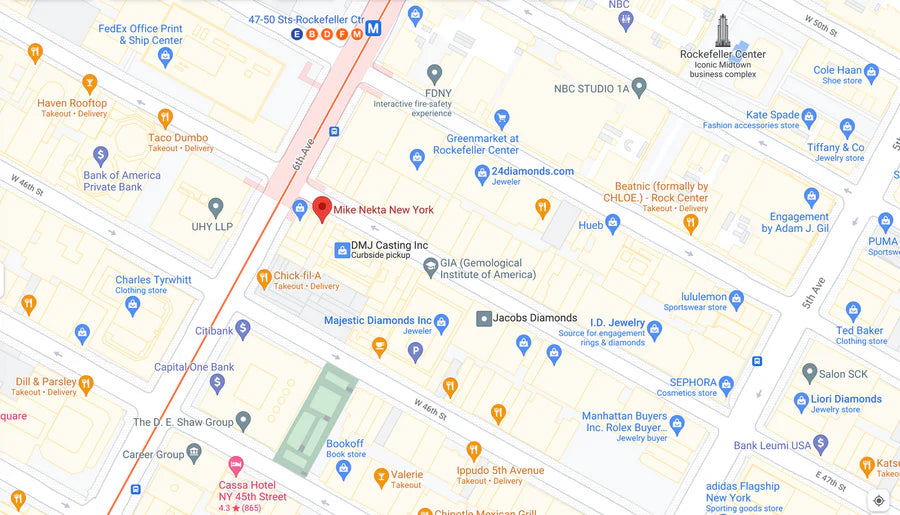
Manhattan's Diamond District remains the beating heart of the global trade. Navigating this high-intensity environment requires a guide with deep generational roots. As we move through 2026, understanding the origin and ethical journey of your stone has become paramount. With new tariffs affecting diamonds polished in various international hubs, having an expert who understands these shifts is vital. This "insider" advantage allows you to bypass generic online algorithms and access the world's finest inventory. When you buy an engagement ring through a process of expert curation, you aren't just making a purchase. You're securing a one-of-a-kind heirloom that holds its value and its beauty for generations.
The Mike Nekta Standard: Decoding GIA Certification
A GIA certificate is the essential passport for any high-end diamond. However, it's merely the baseline for a luxury investment. When you prepare to buy an engagement ring, you'll find that two stones with identical grades on paper can look worlds apart in person. One might radiate a blinding fire; the other might appear flat or "dead." This discrepancy exists because a report is a static map, not the territory itself. The "Nekta Eye" involves a rigorous selection process where Mike Nekta, founder of Mike Nekta New York, personally inspects stones to identify the top 1% that possess true "life" and character. We reject stones that meet the technical grade but fail the aesthetic test.
Technical specs like fluorescence and symmetry play a massive role in long-term value. While some fluorescence can be negligible, "Strong Blue" often results in a milky or oily appearance in natural sunlight. Similarly, symmetry isn't just about the facets lining up. It's about how those facets work together to bounce light back to your eye. For a deeper dive into these technicalities, GIA's diamond buying guide offers an excellent foundation for understanding the 4Cs. Our goal is to ensure your diamond performs brilliantly in every lighting environment, from a candlelit dinner to high-noon sun.
Beyond the 4Cs: Brilliance and Fire
An "Excellent" cut grade is a broad category. Within that range, there are "barely excellent" stones and "super-ideal" stones. We focus on the latter. The table percentage and total depth must fall within a very narrow "sweet spot" to ensure the diamond doesn't leak light through the bottom. We also look for "milkiness" or haze. These are subtle clouds that don't always trigger a lower clarity grade but significantly dampen the stone's brilliance. You won't find these details on the front page of a certificate. They require a master's loupe and decades of experience to detect.
Scaling Your Investment: The 4 Carat and Beyond
As you move into the territory of 4.0 carats and larger, the rules of engagement change. Large diamonds have larger facets, which act like windows. This makes inclusions much easier to see with the naked eye. Color also becomes more concentrated in higher carat weights, especially in the tips of pear or marquise shapes. If you are considering a significant stone, check out The Ultimate Guide to Round Brilliant Cut Engagement Rings in 2026 to understand how scale affects proportions. To begin your journey with a stone that meets these elite standards, you can browse our loose GIA certified diamonds to find a piece that truly stands out.
Selecting the Silhouette: A Comparison of Iconic Cuts
Choosing a silhouette isn't just about what looks good in a glass case. It's about how the stone interacts with the wearer's anatomy and personal style. If you want to buy an engagement ring that feels truly bespoke, you must consider the visual weight of the cut. For instance, elongated shapes like ovals or marquise cuts provide a slimming effect, making the finger appear longer and more graceful. In contrast, a square-set cushion cut offers a bold, architectural presence. The cut you choose dictates the entire personality of the piece, transforming a simple stone into a statement of identity.
The perceived size of a diamond is often more important than the raw carat weight. Certain cuts carry their weight in the "belly" of the stone, while others spread that weight across a larger surface area. When you prioritize a fancy shape, you're often getting a diamond that looks 10% to 15% larger than a round stone of identical weight. For a deeper understanding of how these proportions affect value, the American Gem Society's guide offers a comprehensive look at the technical standards of light performance across various shapes.
Round Brilliant vs. Fancy Shapes
The Round Brilliant Cut Engagement Ring remains the undisputed "gold standard" for sparkle. Its 58 facets are engineered to return the maximum amount of light to the viewer, creating a level of fire that no other cut can match. However, modern allure often lies in the unique character of fancy shapes. Consider the following when making your choice:
- Oval and Pear: These elongated cuts are perfect for those seeking a slimming, sophisticated look. They offer a larger face-up appearance than round diamonds.
- Cushion and Radiant: These shapes bridge the gap between vintage and modern. A Cushion Cut Engagement Ring provides a romantic, soft-edged glow, while a Radiant Cut Engagement Ring offers a high-intensity, "crushed ice" sparkle.
The Sophisticated Choice: Emerald and Asscher Cuts
Emerald and Asscher cuts represent a different philosophy of beauty. Instead of the chaotic sparkle of brilliant cuts, these step-cuts offer long, parallel facets that create a "hall of mirrors" effect. Clarity is paramount here. Because the facets are large and open, inclusions that would be hidden in a brilliant cut become visible to the naked eye. An Emerald Cut Engagement Ring exudes a quiet, big-city elegance that suits a minimalist aesthetic. Meanwhile, the Asscher cut provides a royal, geometric alternative for those who appreciate Art Deco perfection. If you prefer modern edges and high-intensity sparkle, a Princess Cut Engagement Ring offers a sharp, contemporary silhouette that remains a favorite for its bold geometry.
Ultimately, when you buy an engagement ring, the silhouette should reflect the wearer's soul. Whether it's the timeless Round Brilliant or a vintage-inspired Asscher, the cut is the foundation upon which your heirloom is built. It's the first thing people notice and the detail that ensures the ring remains a cherished icon for decades.
The Custom Design Journey: From Loose Diamond to Heirloom
The journey to buy an engagement ring reaches its pinnacle when you move beyond the display case and into the atelier. In the heart of Manhattan, a custom acquisition is a collaborative art form. It's a sequence of technical decisions guided by a third-generation master's intuition. We don't believe in "building" a ring through a generic online menu. Instead, we use a blend of old-world hand-sketching and high-precision CAD modeling to ensure your vision is both aesthetically flawless and structurally sound.
A critical choice in this journey is the metal that will cradle your diamond. Platinum is the elite preference for its natural white luster and exceptional durability. It doesn't require rhodium plating and provides the most secure grip for high-carat stones. Conversely, 18K gold offers a classic warmth. Whether you choose yellow, rose, or white gold, the alloy must be of the highest caliber to prevent the porosity often found in mass-produced jewelry. The final fitting is more than a size check; it's the moment your GIA appraisal confirms the enduring value of your new heirloom.
Step 1: The Loose Diamond Curation
A true luxury piece is never built around a pre-existing mounting. You should always select the stone first. This allows us to engineer the setting to the diamond's unique proportions. During your consultation, we narrow down the finest GIA-certified options, comparing them side-by-side. Whether you visit us in the NYC Diamond District or view high-definition video from across the globe, you'll see how different stones react to light. This curation process ensures you don't overpay for technical grades that don't translate to visual beauty.
Step 2: Engineering the Setting for Maximum Sparkle
The architecture of the setting determines how much light enters the diamond. In 2026, we're seeing a move toward minimalist prongs that provide security without overwhelming the stone. Popular trends like the "hidden halo" add a secret layer of brilliance visible only from the profile. We also prioritize the "flush fit." We engineer the engagement ring so that a future wedding band sits perfectly against it, avoiding the unsightly gaps common in stock settings. The decision to buy an engagement ring is one of the most significant investments of your life, and the process should reflect that weight. If you're ready to move beyond the ordinary, you can start your custom design journey with a personal consultation today.
Securing Your Acquisition: Why Expert Curation Trumps Convenience
Convenience is often the enemy of quality in the high-end diamond world. When you buy an engagement ring, you aren't simply purchasing a commodity; you're acquiring a rare geological asset. A digital listing with a single high-definition photo cannot capture how a stone handles light in motion. Online "blind" buying often leads to disappointment when the stone arrives looking hazy or dull compared to its edited studio portrait. Expert curation ensures that the stone you see is the stone that performs, filtered through a master's eye rather than a retail algorithm.
Beyond the initial purchase, the security of your investment depends on long-term support. Corporate warranties often come with complex "fine print" that requires frequent, inconvenient inspections to remain valid. A third-generation jeweler offers a different level of security. Our reputation is our most valuable asset. Whether you need a precise resizing for a custom shank or a professional cleaning to restore fire, you're dealing with the same hands that crafted the piece. We also provide the necessary GIA appraisal documentation to ensure your insurance coverage is accurate for 2026 standards.
The Mike Nekta Experience
The NYC Diamond District boutique advantage is simple: direct access without the bloated retail markups of 5th Avenue brands. You aren't paying for a global marketing budget; you're paying for the diamond and the craftsmanship. Mike Nekta's personal inventory includes stones that never hit the public market, giving you first right of refusal on some of the world's finest high-carat cuts. This personalized service doesn't end at the proposal. It continues for generations as the ring becomes a family heirloom, backed by a legacy of expertise that no corporate entity can replicate.
Next Steps for the Discerning Buyer
Timing is essential for a custom build. We recommend starting the process at least four to six weeks before your planned proposal. This allows for the meticulous curation of the stone and the engineering of the bespoke setting. When you're ready to move forward, booking a private consultation in our Manhattan showroom is the first step toward total confidence. Prepare to ask the right questions during your meeting:
- How does this stone's light performance compare to its technical GIA grade?
- Which metal alloy best suits the wearer's lifestyle and the diamond's color?
- How has the recent 2025-2026 tariff shift impacted the value of this specific stone?
The journey to find the perfect piece shouldn't be rushed or impersonal. It's a significant milestone that deserves the attention of a specialist who values quality as much as you do. Experience the Nekta difference and buy your engagement ring with expert guidance today.
Securing Your Legacy with a Timeless Acquisition
Choosing the right stone is a decision that resonates for generations. We've explored how 2026 standards demand more than just a certificate; they require an eye for light performance and a commitment to bespoke craftsmanship. By looking beyond the basic 4Cs and avoiding the pitfalls of corporate convenience, you ensure that your investment is both a technical masterpiece and a deeply personal symbol. A true heirloom isn't found on a standard retail shelf. It's curated through expertise and a deep respect for the art of jewelry making.
As a third-generation diamond expert located in the heart of NYC's Diamond District, Mike Nekta specializes in the curation of rare, 4ct+ GIA certified diamonds that most retail chains never see. When you're ready to buy an engagement ring that transcends the ordinary, you deserve a partner who values precision as much as you do. Don't settle for a digital approximation of luxury when you can have a piece engineered for brilliance.
Book a private consultation with Mike Nekta to find your perfect GIA-certified diamond and begin the journey toward an heirloom that will be cherished forever. Your vision is unique, and your diamond should be nothing less.
Frequently Asked Questions
How much should I realistically spend on a high-end engagement ring in 2026?
Your budget should reflect your personal financial comfort and your expectations for quality rather than an arbitrary social rule. In 2026, luxury buyers prioritize the rarity and light performance of the stone over a specific dollar amount. We focus on maximizing the value of your acquisition by selecting diamonds that outperform their technical grades, ensuring your investment holds its beauty and significance for decades.
Is it better to buy a loose diamond or a pre-set ring?
It's almost always better to buy a loose diamond before selecting a setting. This approach allows you to inspect the stone's true character and "life" without the metal hiding potential inclusions or tinting the color. When you choose to buy an engagement ring this way, you ensure the setting is engineered specifically for that stone's unique dimensions, resulting in superior sparkle and security.
What is the most important 'C' when buying a diamond for maximum sparkle?
Cut is the most critical of the 4Cs for achieving maximum sparkle and fire. While color and clarity are important, a poorly cut diamond will appear dull even if it's technically flawless. A "super-ideal" cut ensures that light enters the crown and reflects back to your eye rather than leaking out through the bottom of the stone, giving the diamond its signature brilliance.
How long does the custom engagement ring design process usually take?
The custom design process typically takes between four and six weeks from the initial consultation to the final fitting. This window allows for the careful curation of the loose stone, the creation of high-precision 3D CAD models, and the hand-finishing of the setting by master jewelers. We recommend starting your journey early to ensure every detail is perfected for your planned proposal date.
Why is GIA certification considered the gold standard for engagement rings?
GIA certification is the gold standard because it provides an unbiased, third-party assessment using the most conservative grading scales in the world. Other labs are often more lenient, which can lead to stones that don't live up to their paper grades in person. A GIA report ensures you're paying for the actual quality of the diamond you receive, protecting the long-term value of your investment.
Can I buy an engagement ring from the NYC Diamond District if I live outside New York?
You can absolutely buy an engagement ring from our Manhattan boutique regardless of your location. We utilize high-definition video consultations and macro-photography to bring the NYC Diamond District experience directly to you. Once your piece is finalized, we use fully insured, overnight shipping to ensure your acquisition arrives safely and securely at your door.
What is the difference between handcrafted and machine-made ring settings?
Handcrafted settings are forged with high-pressure tools to create a denser, more durable metal structure that stands the test of time. Machine-made settings are often cast in large batches, which can result in microscopic porosity that weakens the ring and risks losing stones. Our handcrafted approach ensures that every prong is perfectly aligned with your diamond's unique facets for a seamless, high-end finish.
How do I ensure the diamond I buy is ethically sourced?
We ensure ethical sourcing by working exclusively with trusted suppliers who adhere strictly to the Kimberley Process and modern transparency standards. Many of our high-carat stones also include GIA Diamond Origin Reports, which verify the specific country where the rough diamond was mined. This commitment to provenance is a cornerstone of our third-generation family legacy in the diamond trade.