
The Hidden Cost of Rushed Workmanship
I’ve spent more than 20 years in the diamond industry, and I’ve seen one pattern repeat itself with expensive consequences: when craftsmanship gets rushed, the problems don’t show up immediately. They show up later, when you’re wearing the piece every day, when light stops performing the way it should, or when a “small” structural shortcut turns into a major repair.
Diamond jewelry is not just metal and stones. It’s geometry, tension, symmetry, and finishing, all working together. When any one of those elements is hurried, the hidden cost is usually paid in durability, beauty, and long-term value.
What “Rushed” Really Looks Like In Diamond Jewelry
Rushed workmanship is rarely obvious at first glance, especially under bright retail lighting. It can look like a finished ring, a clean setting, a sparkling center stone.
But under magnification, and more importantly over time, rushed work tends to reveal itself through details like uneven prongs, improper seat cutting, weak solder joints, and inconsistent finishing. In diamond jewelry, details are the structure.
If the piece is built too quickly, it often isn’t built to last.
The Setting Might Be Holding, But It’s Not Secure
A diamond can be “set” and still not be set correctly.
When prongs are cut too deep, shaped too thin, or tightened unevenly, you get a ticking clock. The stone may sit slightly off-level, the prongs can snag, and wear accelerates at the weakest points. I’ve also seen rushed pavé work where bead setting is done without enough metal mass, which leads to small diamonds loosening far sooner than they should.
A secure setting should protect the diamond, not just display it.
Cut Corners In Metalwork Show Up As Repairs
Fast casting, minimal finishing, and quick assembly can save time, but the metal remembers.
Porosity in cast metal, rushed polishing that rounds critical edges, and thin galleries that look “delicate” but behave fragile can all lead to early maintenance. Then come the costs: re-tipping, re-setting, tightening, rebuilding prongs, replacing side stones, or, in the worst cases, starting over.
True luxury is not how a piece looks on day one. It’s how it holds its integrity after years of wear.
Rushed Finishing Dulls The Diamond’s Performance
This surprises people: even with a great diamond, poor finishing can mute brilliance.
If a setting blocks light unnecessarily, if prongs are bulky or uneven, or if the diamond isn’t oriented and seated precisely, the stone can look smaller or darker than it should. The most beautiful diamonds deserve a setting engineered to complement them, not compete with them.
When I’m evaluating a piece, I’m looking at how everything interacts: angles, spacing, symmetry, and how the diamond “lives” in the design.
The Real Cost Is Confidence
The hidden cost isn’t only money. It’s the feeling you get when you start questioning your jewelry.
If you’re constantly checking a prong, avoiding wearing the ring while traveling, or wondering if that faint rattle means something is loose, the piece stops being joyful. Diamond jewelry should feel effortless, secure, and quietly powerful.
Book A Private Appointment
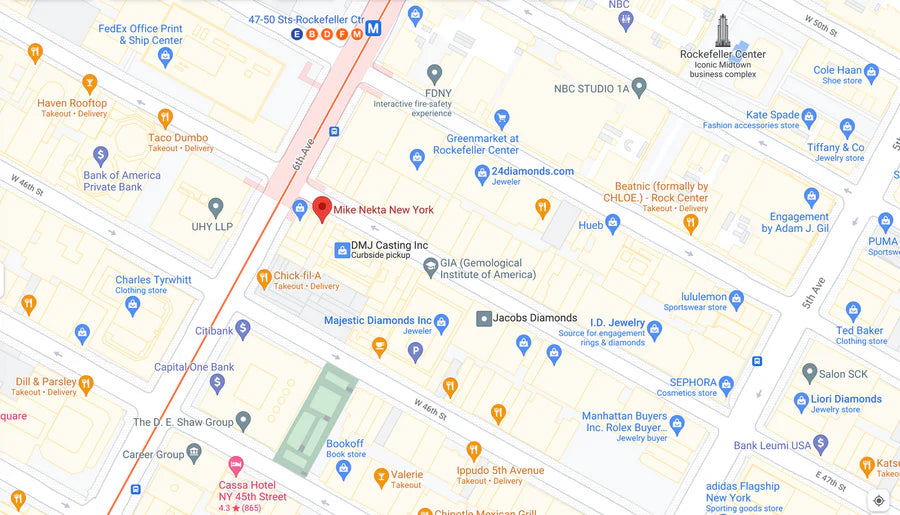
If you’re considering a custom engagement ring, a large-carat diamond, or a luxury investment piece, I’d love to guide you through it with the care it deserves. I’m Mike Nekta, a third-generation jeweler and GIA-certified gemologist, and at Mike Nekta New York I focus on craftsmanship that holds up beautifully over time.
If you’d like, you can book a private appointment with me, Mike Nekta, and we’ll review diamonds, design options, and setting details at a comfortable pace, with precision in every step.