
Why Expertise in Diamond Setting Is Invisible—Until It’s Missing
If you have ever looked at a diamond ring and thought, This is perfect, you probably were not thinking about prongs, gallery height, seat angles, or the exact pressure used to close a bead.
That is the point.
The best diamond setting work disappears. It does not announce itself. It does not compete with the stone. It does not create “features” that demand attention. It simply holds the diamond with confidence, symmetry, and restraint, so the only thing you notice is light.

But the moment setting expertise is missing, it becomes obvious in a way that is hard to unsee. The diamond looks smaller than it should. The ring feels uncomfortable. The stone sits crooked. Prongs snag. Pavé looks uneven. A halo appears wavy. A center stone loosens at the worst possible time. The brilliance that sold you on the diamond feels muted, and you may not know why.
This is why diamond setting is one of the most underestimated skills in fine jewelry. And it is also why the difference between “fine” and “exceptional” often comes down to work you cannot easily photograph, but you can absolutely feel over years of wear.
I want to pull back the curtain on what expert setting actually does, why it is invisible when it’s right, and what can go wrong when it isn’t.
The Strange Truth About Great Setting Work
When people shop for diamond jewelry, they understandably focus on the diamond. Carat. Cut. Color. Clarity. Fluorescence. The certificate. The sparkle under boutique lights. The romance of the moment.
The setting, by comparison, can seem like the supporting actor. Even the language around it encourages that. We say “the diamond” when we mean the whole ring. We refer to “a two-carat” instead of “a two-carat diamond in a precisely engineered setting that protects it and shows it at its best.”
The truth is that the setting is not just a holder. It is the interface between the diamond and the real world.
It determines:
- How securely the stone is held through daily life.
- How much light enters and exits the diamond.
- Whether the diamond sits straight and faces up properly.
- How comfortable the ring feels on the hand.
- How it will age, wear, and need maintenance.
- How the piece looks from every angle, not just the top view.
And still, when everything is done correctly, the setting looks effortless. That effortless look is not an accident. It is the result of judgment, experience, and precision.
Why Setting Expertise Matters More As Diamonds Get Larger
The larger the stone, the less margin there is for error.
With a small center stone, minor setting imperfections can hide. With a large-carat diamond, everything is amplified. A prong that is slightly heavy becomes visually dominant. A seat that is even a touch off can tilt the stone enough to be noticeable across a room. A poorly planned gallery can make a beautiful diamond look “stuck on top” instead of integrated and elegant.
Large diamonds also create more mechanical demands. They have more mass, more leverage, and more opportunity to get knocked. The setting has to manage those forces without looking bulky.
This is where true craftsmanship shows. Great setters can build strength without clumsiness, security without heaviness, and refinement without fragility.
What Diamond Setting Really Is (Beyond “Prongs And Metal”)
Setting a diamond is not simply pushing metal over a stone.
At a high level, it involves:
- Planning proportions that match the diamond’s dimensions, not a generic template.
- Cutting and shaping the seat so the diamond sits level, centered, and supported.
- Choosing and executing a setting style that enhances light and protects edges.
- Finishing prongs, beads, and bright-cut details with symmetry and clean geometry.
- Polishing without thinning critical areas or overheating delicate structures.
- Checking tension and contact points so the stone is secure but not stressed.
There is engineering in it, artistry in it, and also responsibility. A setter is handling a valuable stone and making choices that affect its safety for decades.
The public rarely sees that responsibility until something goes wrong.
The Most Common Ways Poor Setting Shows Up

If you want to understand why setting skill is “invisible,” look at the moments when it becomes visible.
Here are the issues I see most often, and why they matter.
Crooked Stones And Off-Center Alignment
A center stone that is not perfectly aligned changes the entire look of the ring. This is especially noticeable with elongated shapes like oval, emerald, marquise, and pear.
Even if the diamond itself is top quality, a misaligned set makes it look less refined. It can also create uneven pressure points, which can contribute to loosening over time.
Expert setting includes meticulous alignment checks from multiple angles. Not just the “top view,” but how the stone tracks with the finger, the shank, and side profiles.
Heavy Or Uneven Prongs
Prongs are supposed to protect the stone and visually disappear. When they are too thick, they can make a diamond look smaller and block light. When they are uneven, they create a distracting asymmetry that reads as “off” even to an untrained eye.
The best prongs are consistent in thickness, properly shaped for the stone, and finished with clean tips that do not snag.
Loose Stones And The “Rattle” Problem
If you ever hear a faint clicking or feel movement in the center stone, the setting is telling you something important.
A loose stone is not only a risk of loss. It can also cause wear at the contact points because movement creates friction. Over time, that can worsen the problem.
Well-executed settings are designed and finished to hold the stone with proper contact and tension, and then checked and rechecked.
Over-Polished Details That Lose Structure
Polishing is essential, but over-polishing can thin prongs, soften edges that were meant to be crisp, and weaken the parts of the setting that do real work.
One reason high-end pieces age better is that the finishing is done with restraint and strategy. You polish for beauty, but you do not polish away the architecture.
Pavé That Looks “Bumpy” Or Uneven
Pavé is one of the easiest places to see the difference between average and exceptional setting.
In fine pavé, the stones appear to float. The beads are uniform. The lines are straight. The sparkle reads like fabric.
In poor pavé, the surface looks lumpy. Stones are set at inconsistent heights. Beads are irregular. Gaps appear. Over time, stones can loosen and fall out.
Good pavé is slow work. It requires patience, spacing judgment, and consistency that comes from long practice.
Halo Work That Isn’t Perfectly Round (Or Perfectly Shaped)
Halos are unforgiving. The human eye notices subtle shape irregularities immediately. A halo that is slightly wavy or not perfectly symmetrical will pull attention away from the center stone, which is the opposite of the goal.
When halo work is excellent, it frames the diamond with quiet precision. When it is not, the entire ring can look less expensive even if the materials are excellent.
The Hidden Relationship Between Setting And Light Performance

Most people think a diamond’s sparkle is purely about cut quality.
Cut is crucial, but the setting influences light more than people realize.
The setting affects:
- How much light is blocked near the sides of the stone.
- Whether the stone sits too low (darker look) or too high (vulnerable and awkward).
- Whether the diamond is visually “open” from the sides for light return.
- How reflections from metal interact with the stone’s facets.
A well-designed setting gives the diamond room to perform. It supports the stone while keeping the visual field clean.
This is especially relevant for fancy shapes where the setting can either enhance the outline or visually fight it.
What Expertise Looks Like When You Know Where To Look
If diamond setting skill is invisible to most people, where can you actually see it?
Here are the tells.
Symmetry From Every Angle
A ring should look balanced from the top, profile, and even from the underside. Prongs should be evenly spaced. The stone should sit straight. The gallery should be centered. The shoulders should mirror each other.
When those elements are correct, the ring has a calm, composed look. That calmness reads as luxury.
Clean, Precise Contact Points
In prong settings, the metal should contact the diamond securely without looking like it is swallowing it.
In pavé, the beads should hold each stone with minimal metal showing, while still being structurally sound.
This is one of the hardest balances to achieve: the least visible metal, with the most reliable hold.
Consistent Finishing And Edge Control
High-end work has intentional edges. Some areas are crisp; some are softened for comfort. But nothing is accidentally rounded, uneven, or left rough.
Inside details matter too. The interior of a ring should be smooth. The underside of a head should be cleanly finished. The piece should feel as good as it looks.
Prongs That Protect Vulnerable Points
Different shapes need different protection.
- Pear and marquise diamonds have delicate tips that often benefit from a V-prong.
- Emerald cuts have corners that require thoughtful coverage.
- Ovals and cushions need prongs that complement their outline without distorting it.
A setter with deep experience does not use a one-size-fits-all approach. The design follows the stone.
Why Some Settings Fail Years Later (Even If They Look Fine At First)
One of the most frustrating things about setting problems is that they may not show up immediately.
A ring can look perfect on day one and still be built in a way that ages poorly.
Common long-term failure points include:
- Prongs that were finished too thin.
- Pavé beads that were not formed with enough integrity.
- Weak transition points where the head meets the shank.
- High profiles that invite impact.
- Poor metal choices for the lifestyle of the wearer.
Expert setting is not just about making it pretty. It is about making it last, while keeping it beautiful.
The Difference Between “Manufactured” And “Crafted”
A lot of settings today are produced from standardized molds or mass-manufactured components. That is not automatically bad. The issue is when a setting is treated as generic while the diamond is anything but.
A fine diamond has its own measurements, proportions, and personality. Two diamonds with the same carat weight can have different length-to-width ratios, different girdle thickness, different depth, and different facet patterns.
True craftsmanship respects that. It adapts the setting to the stone, not the other way around.
That is how you avoid common issues like:
- A diamond that sits too high because the seat was not cut for its depth.
- Prongs that land in awkward spots because spacing was pre-determined.
- Gaps beneath the stone that collect debris and dull the look.
- A head that overwhelms the diamond visually.
The goal is harmony. The setting should feel inevitable, like it was always meant for that exact diamond.
How Expert Setting Protects Your Investment
For high-end diamond jewelry, especially large-carat diamonds and investment-level pieces, setting is not a small detail. It is risk management.
A secure, well-made setting:
- Reduces the chance of losing the center stone.
- Helps prevent chipping by protecting corners and tips.
- Ages more gracefully, which supports long-term value.
- Requires fewer major repairs over the life of the piece.
You can upgrade a setting later, but you cannot undo a chipped diamond corner. Preventing that kind of damage is where experienced craftsmanship earns its keep.
The Subtle Comfort Factor Most People Ignore
Luxury is not only how something looks. It is how it feels in your life.
A ring can look stunning and still be annoying to wear if:
- The profile is too high and catches on everything.
- Prongs are sharp or poorly finished.
- The band edges are harsh.
- The balance is off and the ring spins constantly.
- The head is too heavy for the shank.
Comfort is part of expertise. The best rings feel stable, smooth, and natural on the hand. They do not demand your attention all day. They simply belong there.
The Questions You Should Ask Before Choosing A Setting

If you are investing in fine diamond jewelry, it helps to ask better questions than “Is it platinum or gold?” and “How many prongs?”
Here are a few that actually reveal setting quality:
- Will this setting be built specifically to my diamond’s measurements?
- How do you protect the vulnerable points of this shape?
- What maintenance does this style typically need over time?
- What height can we achieve for beauty without making it impractical?
- How will the setting be finished to prevent snagging?
- If pavé is involved, what is the method and what makes it secure?
A true professional will welcome these questions, because they speak to long-term satisfaction, not just the purchase moment.
Why This Matters More In Custom Work
Custom is where setting expertise can shine, or where it can quietly go wrong.
A custom ring is not only a design exercise. It is a technical build with many decisions that affect durability and beauty. When the diamond is large or rare, those decisions matter even more.
Custom should mean:
- Proportions tuned to your diamond.
- A setting engineered for your lifestyle.
- Details finished with intention.
- A piece that looks refined today and remains refined after years of wear.
The difference between “custom” as a marketing word and custom as true craftsmanship is the setting work.
The Mike Nekta Standard: Invisible Precision
I am sharing all of this because I have spent my life around these details.
Mike Nekta is a third-generation jeweler and a GIA-certified gemologist, and I have worked in the diamond industry for over 20 years. Over that time, I have seen how often the setting is treated as an afterthought, even at very high price points. I have also seen how quickly a small setting mistake can turn into a major issue.
My approach is simple: the diamond deserves a setting that matches its level.
That means building for symmetry, security, comfort, and elegance, with a finish that looks effortless. Especially for large-carat diamonds, custom engagement rings, and luxury investment pieces, the setting is not a “mounting.” It is the foundation of the whole experience.
If you are looking at a ring and thinking, I want it to feel perfect, not just look perfect, you are already paying attention to the right thing.
A Few Real-World Scenarios Where Setting Expertise Saves You
Sometimes it helps to make this concrete. Here are a few situations where expert setting work changes outcomes.
You Love A Low Profile, But You Also Want Maximum Sparkle
Many clients want a ring that sits low for comfort, but they worry it will reduce light.
A skilled setter and designer can create a profile that is wearable while still allowing light to interact beautifully with the diamond, using smart gallery architecture, correct seat height, and proportions that do not choke the stone.
You Want Pavé, But You Don’t Want Constant Repairs
Pavé can be durable when it is done correctly and when the ring’s structure supports it. It can also be a headache if the beads are weak or spacing is inconsistent.
Great pavé is not only about sparkle. It is about repeatable precision. It is about building a surface that can live in the real world.
You Have An Elongated Diamond And You Want It To Face Up Straight
Ovals and pears can be tricky. If the head is not balanced or the prongs are not placed thoughtfully, the stone can look slightly twisted or not aligned with the finger.
This is where meticulous alignment work and proportion control makes the ring look calm and intentional.
You Are Buying A Large Diamond And Want Peace Of Mind
With larger stones, you want the confidence that the setting is not merely “tight today,” but structurally correct.
The right setting approach will protect the stone, minimize risk, and make maintenance straightforward.
What To Do If You Suspect Your Ring Has Setting Issues

If something feels off, do not ignore it. Small issues can often be corrected before they become expensive problems.
Warning signs include:
- Snagging on clothing or hair.
- A prong that feels sharp or lifted.
- A center stone that seems to catch light unevenly compared to before.
- Tiny gaps around pavé stones.
- Any movement, clicking, or rattling.
A professional inspection can tell you whether it is a simple tightening, prong retipping, or a deeper structural concern. Regular checkups are part of owning fine jewelry, especially pieces worn daily.
The Real Luxury Is Confidence
The highest level of luxury is not flash. It is confidence.
Confidence that your diamond is secure. Confidence that your ring will still look exceptional years from now. Confidence that every detail, including the ones you cannot name, was handled by someone who understands the stakes.
That is what expert setting work gives you. It disappears into the design, and it quietly protects the beauty you are investing in.
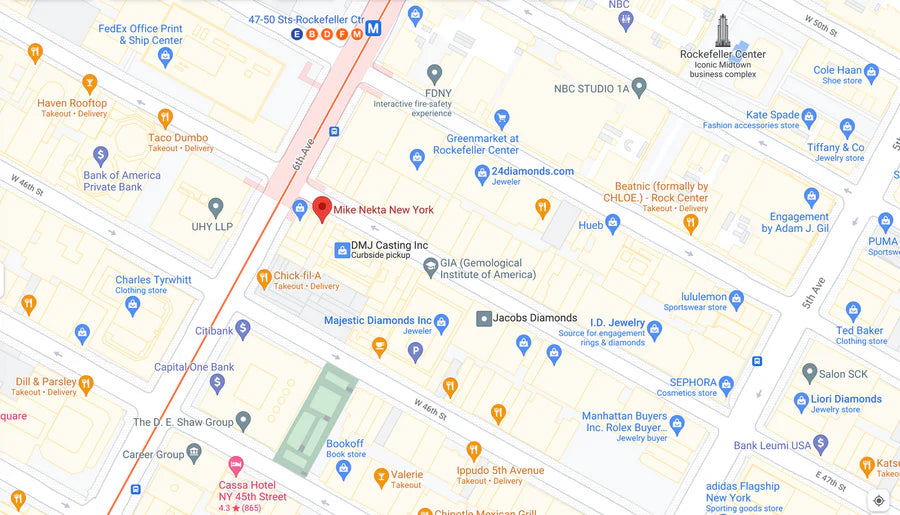
Book A Private Appointment With Mike Nekta New York
If you are considering a custom engagement ring, a large-carat diamond, or a high-end diamond piece where precision truly matters, I would love to help you evaluate options and build something that feels effortless and lasts.
For a discreet, high-touch experience, book an appointment with me, Mike Nekta, at Mike Nekta New York.