
Why Engagement Rings with Princess Cut Diamonds Are a Modern Classic
I’ve spent my entire life around diamonds. I’m a third-generation jeweler, a GIA-certified gemologist, and I’ve worked hands-on in the diamond industry for over 20 years. In that time, I’ve watched trends come and go, and I’ve also watched a few designs quietly earn something more permanent than “popular.”
Princess cut diamond engagement rings are one of those rare cases.
They feel modern, they look sharp, they photograph beautifully, and they can be designed to fit almost any personal style. But what makes them a true modern classic is that they deliver the clean geometry people love today while still carrying the emotional weight and elegance we expect from an engagement ring.
In this guide, I’m going to explain what makes the princess cut so enduring, how to choose a great one, what settings bring out its best, and what I look for when I’m sourcing or designing a princess cut engagement ring for a client at Mike Nekta New York.
What A Princess Cut Diamond Really Is

A princess cut is a square (or slightly rectangular) diamond with brilliant-style faceting designed to maximize sparkle. Most people recognize it instantly because it has a crisp outline with pointed corners and a modern, architectural look.
A few core traits define it:
- Square silhouette (often close to a 1.00 length-to-width ratio, though slightly rectangular can be beautiful too)
- Brilliant faceting that’s meant to produce a lively, high-contrast sparkle
- Sharp corners that create that signature “princess” geometry, but also require protection in the setting
The princess cut rose to prominence in the late 20th century and quickly became one of the most popular diamond shapes for engagement rings. It offered something the market wanted: the light performance and brilliance people love in round diamonds, combined with a fresh, angular shape that felt current.
Today, it’s still the go-to choice for many couples who want something timeless, but not traditional in the old-fashioned sense.
Why Princess Cut Engagement Rings Feel So Modern
When clients tell me they want a ring that feels “clean,” “elevated,” and “not too vintage,” the princess cut comes up a lot. It has a design language that fits modern taste naturally.
It Matches Contemporary Design
Modern style is often about:
- clean lines
- symmetry
- minimal clutter
- intentional details
A princess cut supports that instantly. Even in a simple solitaire, the geometry does the talking. In more elaborate settings, it acts like a strong centerpiece that keeps the design grounded.
It Looks Strong And Romantic At The Same Time
There’s a reason the princess cut works so well for engagement rings. It balances two things that don’t always coexist:
- the strength of a square silhouette
- the romance of brilliant sparkle
That combination is a big part of why it feels like a “modern classic.” It’s not delicate in shape, but it’s still undeniably emotional.
It Photographs Beautifully
We live in a visual era. Rings are photographed in daylight, restaurants, rooftops, and close-up videos. Princess cuts tend to perform well in this world because they:
- show crisp outlines in photos
- reflect light with bold flashes
- look impressive even in clean, understated settings
It’s a shape that reads clearly from a distance, but still rewards you up close.
Why It’s A Classic (Not Just A Trend)
A modern classic has staying power. It doesn’t need to be “everywhere” to remain relevant. Princess cuts have earned that status for a few reasons.
It Has True Engagement Ring Presence
When people picture an engagement ring, they picture a center stone that feels meaningful. Princess cuts deliver presence in a way that’s obvious without being loud.
The shape gives you:
- strong finger coverage
- clean visual impact
- high sparkle potential
In the right proportions, it can look substantial and refined at the same time.
It Works With Almost Every Setting Style
Some diamond shapes demand a specific aesthetic. Princess cuts are flexible. They can be:
- minimalist and sleek
- bold and dramatic
- romantic with halos
- edgy with east-west accents (yes, even with squares, in creative designs)
- classic with side stones
When a diamond shape is that adaptable, it tends to outlast trends.
It Has A Balanced Value Proposition
I’m careful with the word “value,” especially in fine jewelry, because value is emotional as much as it is financial. But in the practical sense, princess cuts often offer an attractive balance of:
- strong visual impact
- excellent sparkle
- potentially favorable pricing compared to rounds in similar grades
That’s not a promise, because the market moves and each stone is unique, but in many cases you can allocate your budget more strategically with a princess cut, especially if you prioritize what actually matters visually.
Princess Cut Sparkle: What Makes It Different

A princess cut is a brilliant-style cut, but it doesn’t sparkle exactly like a round. It has its own personality.
What You’ll See In Real Life
In a great princess cut, you’ll typically notice:
- bright flashes rather than a soft glow
- high contrast between light and dark areas (this is part of what makes it look crisp)
- sharp “on-off” scintillation when it moves
This can feel more “modern” than the round’s classic, uniform brilliance. It’s not better or worse, it’s simply different.
Why Cut Quality Matters More Than People Expect
With princess cuts, cut quality can be the difference between “electric” and “flat.” Two diamonds can have the same carat, color, and clarity, but the one with better proportions and symmetry will look more alive.
I always tell clients: if you want a princess cut that truly performs, don’t treat cut as an afterthought.
How To Choose A Beautiful Princess Cut Diamond (My Practical Checklist)
This is where I put my gemologist hat on.
A princess cut can be a dream diamond, but it also has more variability than many people realize. Here’s what I look at when I’m sourcing stones for clients at Mike Nekta New York.
1) Length-To-Width Ratio
Most clients want a square look.
- 1.00 to 1.05 tends to look nicely square
- 1.06 to 1.10 can still look square to the eye depending on the setting
- 1.10+ starts to read more rectangular
There is no “correct” ratio, but you should choose intentionally. If you love symmetry, stay closer to 1.00. If you like something slightly elongated, you can lean rectangular.
2) Cut Performance (What To Actually Look For)
Princess cut grading can be less straightforward than rounds because different labs present cut information differently, and visual performance can vary widely.
What I look for:
- strong brightness across the face of the diamond
- lively sparkle in normal indoor lighting, not just spotlight lighting
- minimal “dead zones” that stay dark when you tilt the stone
- clean symmetry when viewed face-up
If you’re buying remotely, high-quality videos are essential. In-person viewing is even better.
3) Table And Depth (A Practical Approach)
There are many acceptable proportion sets for princess cuts, and I don’t like pretending there’s a magic formula that applies to every stone. That said, there are general ranges that often produce attractive results.
Many well-performing princess cuts fall somewhere around:
- Table: roughly mid 60s to low 70s
- Depth: often mid 60s to mid 70s
But I’m not choosing a diamond by numbers alone. I use proportions as a filter, then confirm beauty with actual light performance.
4) Corner Integrity (Chips, Wear, And Protection)
Princess cuts have pointed corners. Those corners are part of the beauty, but they need respect.
When evaluating a stone, I examine:
- the corners under magnification
- the girdle thickness at the corners
- any existing abrasions, chips, or durability concerns
This is also why setting choice matters. A well-designed setting doesn’t just hold the stone, it protects it.
5) Color: Where You Can And Can’t Compromise
Princess cuts can show color a bit more than rounds in certain lighting, especially in larger stones. The good news is that they can still look beautifully white without chasing the highest grades.
A common approach I recommend:
- If you want an icy, crisp look in platinum or white gold: consider G-H or higher depending on your sensitivity
- If you’re setting in yellow or rose gold: you can often go H-I and still love the look, sometimes even lower depending on the stone
But this is personal. Some clients see warmth instantly. Others don’t. This is why I prefer to compare stones side by side.
6) Clarity: Choose Smart, Not Extreme
Princess cuts can hide inclusions well because of their faceting and sparkle, but corner inclusions and certain types of crystals can still matter.
In many cases:
- VS2 to SI1 can be an excellent sweet spot if the diamond is truly eye-clean
- For larger carat sizes, you may want to stay a bit cleaner depending on inclusion type and location
I always evaluate clarity in context, not just by grade. An “SI1” can be stunning, and a “VS2” can still have something you don’t like if it’s placed in the wrong area.
The Most Flattering Settings For Princess Cut Diamonds

A princess cut is versatile, but certain settings bring out its best and protect what needs protecting.
The Classic Solitaire (Clean And Powerful)
A princess cut solitaire is a statement of simplicity. If you like modern elegance, this is often the purest expression of the shape.
I typically recommend:
- V-prongs at the corners for protection
- a well-balanced basket that doesn’t sit too high
- a band width that matches the visual weight of the diamond
This setting style is also ideal if you want the diamond to do all the talking.
Halo Settings (Maximum Presence, Still Refined)
A halo around a princess cut can be extremely glamorous, and when designed correctly, it can still look sophisticated, not “busy.”
Keys to a great princess halo:
- precise alignment with the square outline
- clean micro-pavé work (this is craftsmanship-critical)
- a halo thickness that complements the center stone rather than overpowering it
For clients who want a big look with a balanced budget, halo designs can deliver a lot of visual impact.
Three-Stone Settings (Elegant And Symbolic)
A princess cut center stone with side stones can look timeless and architectural.
Side stone options I love with princess centers:
- trapezoids for a strong, tailored look
- tapered baguettes for sleek elegance
- rounds for a softer contrast
This style also offers meaning, traditionally tied to past, present, and future.
Bezel And Partial Bezel (Sleek And Protective)
If you want modern minimalism and real-world durability, bezels deserve more attention.
A full bezel can feel bold and contemporary. A partial bezel can protect corners while keeping more of the diamond visible.
This is a great option for:
- active lifestyles
- clients who want a clean, design-forward look
- anyone who is hard on jewelry but still wants luxury
Cathedral And Raised Settings (Classic Drama)
A cathedral setting can add height and presence, framing the center stone with arches that feel elegant and intentional.
With princess cuts, I like cathedral settings that:
- keep the diamond stable
- protect corners with strong prongs
- avoid excessive height that catches on everything
Comfort matters. A ring should feel beautiful on day one and still feel good years later.
Metal Choice: Platinum Vs Gold With Princess Cuts
Metal choice changes how a princess cut reads.
Platinum
Platinum is naturally white, dense, and durable. It gives princess cuts a crisp, clean framing. If you love a bright, modern look, platinum is hard to beat.
It’s also a favorite for high-end settings because it holds stones securely over time.
White Gold
White gold can look similar to platinum at a glance, but it’s typically rhodium plated to maintain a bright white finish. It’s a great choice for clients who want a white metal look with a different price point than platinum.
Yellow Gold
Yellow gold paired with a princess cut creates a beautiful contrast: warm metal, sharp modern diamond. It can feel both classic and fashion-forward.
Rose Gold
Rose gold can soften the geometry of a princess cut in a really romantic way. It’s a great choice if you want modern design with warmth.
Princess Cut Vs Round: The Real Differences That Matter

I’m asked this constantly, and the answer is not about which one is “better.” It’s about your priorities.
Choose A Princess Cut If You Want:
- a modern, angular silhouette
- strong finger coverage
- brilliant sparkle with bold flashes
- a shape that looks clean and architectural
Choose A Round If You Want:
- the most consistent light performance overall
- a shape that’s universally classic in the most traditional sense
- maximum brilliance across a wider range of proportion sets
Both can be extraordinary. The deciding factor is aesthetic and how you want the ring to feel.
The Durability Question: Are Princess Cuts Safe For Everyday Wear?
Yes, with the right setting and craftsmanship.
The only real vulnerability is the corners. That’s why I prefer:
- V-prongs or well-built corner protection
- secure, correctly aligned seats
- quality metal work that doesn’t thin out over time
A princess cut in a well-made setting is perfectly suited for daily wear. I build rings for real life, not just for a ring box photo.
Custom Princess Cut Engagement Rings: Where The Magic Happens

Princess cuts are popular, but that doesn’t mean your ring has to look like anyone else’s.
Custom design is where you can:
- tailor the proportions of the setting to your exact diamond
- decide how bold or minimal the ring should feel
- choose side stones that match your lifestyle and taste
- refine details like prong shape, basket design, band thickness, and profile
In my work, I pay attention to the details most people don’t notice at first, but always feel over time. How the ring sits. How it balances. How it catches light from the side. How the prongs look from every angle, not just from above.
That’s what separates a generic ring from a piece that feels like it was made for you, because it was.
What I Recommend If You’re Shopping For A Princess Cut Ring Right Now
If you want a quick, practical plan, this is what I’d do.
Step 1: Decide Your Non-Negotiables
Examples:
- “I want it to look square, not rectangular.”
- “I want a clean, modern solitaire.”
- “I want a halo but nothing too bulky.”
- “I want the biggest look possible without compromising beauty.”
When you’re clear on your priorities, the choices become simpler and more satisfying.
Step 2: Focus On Beauty First, Then Paper
Certificates matter, and I rely on them, but the diamond has to perform in real light.
If you can view stones in person, that’s ideal. If you’re buying remotely, insist on:
- high-quality video
- multiple lighting conditions
- clear, honest information about any inclusions and corner integrity
Step 3: Match The Setting To The Diamond (Not The Other Way Around)
Princess cuts can vary. The setting should be designed around the specific stone’s measurements, corner structure, and face-up personality.
That’s especially true for custom work, but it’s also true when selecting a semi-mount.
Why I Still Love The Princess Cut After 20+ Years
I’ve worked with every shape you can name, and I’ve handled diamonds at every level, from everyday engagement rings to large-carat luxury pieces.
The princess cut keeps earning its place because it does something rare:
- It looks modern without trying too hard.
- It feels timeless without feeling dated.
- It can be minimal, bold, romantic, or architectural depending on how we design it.
When someone chooses a princess cut, it usually means they know what they like. They want clarity in the design. They want sparkle with structure. They want something that feels current, but still worthy of a lifetime.
That’s exactly what a modern classic should be.
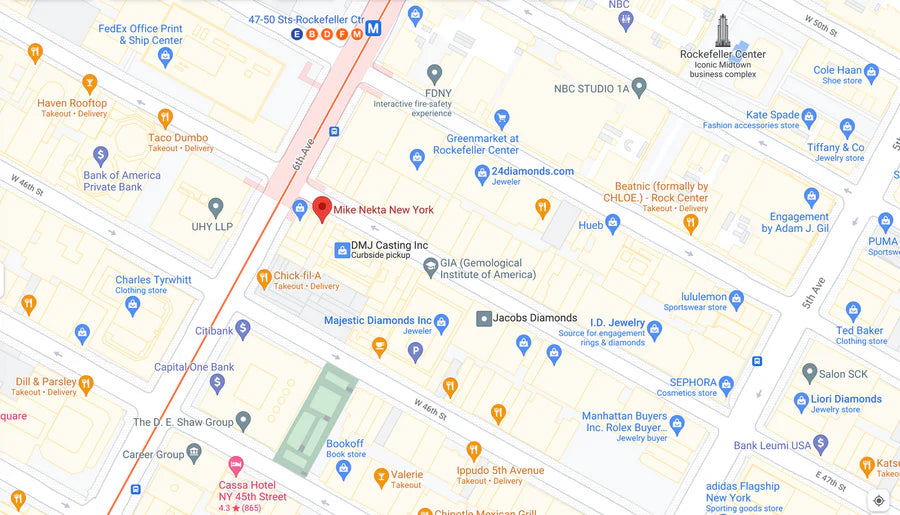
Book An Appointment With Mike Nekta New York
If you’re considering a princess cut engagement ring and you want guidance that’s practical, design-focused, and rooted in real gemological standards, I’d love to help.
At Mike Nekta New York, I work with clients who care about craftsmanship, diamond quality, and getting the details right. Whether you’re looking for a perfectly cut princess diamond, a custom setting built around your stone, or a complete engagement ring designed from scratch, we can walk through it together in a relaxed, private setting.
If you’d like to take the next step, book an appointment with me, Mike Nekta, and we’ll explore options that fit your taste, your lifestyle, and your budget, without pressure and without guesswork.