
Why Diamond Buying Regret Lasts Longer Than the Price
I’ve sold a lot of diamonds in my life, and I’ve also helped a lot of people quietly fix purchases they wish they could rewind.
And here’s the part most people don’t expect: diamond buying regret almost never starts with the price tag.
Sure, people notice the price first. They remember the number. They might even feel a little sick to their stomach when the credit card charge hits.
But the regret that actually lingers for years tends to come from something else.
It comes from the feeling that you missed something important.
That you did not fully understand what you were buying.
That you made a “forever” decision based on a rushed explanation, a sales pitch, a trending spec list, or a romantic moment where no one wanted to slow down and ask hard questions.

I’m Mike Nekta, a third-generation jeweler and a GIA-certified gemologist based in New York. I’ve spent more than 20 years in the diamond industry, specializing in large-carat diamonds, custom engagement rings, and luxury investment pieces. I’ve seen what makes people fall in love with their ring for decades, and I’ve seen what makes them quietly stop wearing it.
This article is about why regret lasts longer than the price, how it sneaks in, and how to make sure you never feel it.
The Real Cost Is Not The Receipt
Most buyers think the “cost” of a diamond is the number on the invoice.
In reality, you pay in three currencies:
- Money
- Confidence
- Meaning
Money is obvious. The other two are where regret lives.
If you buy a diamond and feel genuinely confident about the choice, the price fades quickly. It becomes part of the story. A big purchase, yes, but a good one.
If you buy a diamond and feel uncertain, you keep paying for it in your head. You pay when someone compliments it and you wonder if they are just being polite. You pay when you compare it to a friend’s ring and think, Did I mess up? You pay when you find the same specs online for less and you spiral into, Did I get taken?
And then there’s meaning.
A diamond is rarely just a diamond. It is a symbol, a milestone, a public statement, a family heirloom in the making. If the ring does not match the story in your mind, or it does not match the person wearing it, that mismatch can feel surprisingly heavy.
That weight lasts longer than the price.
The Biggest Regret Trigger Is “I Bought Specs, Not Beauty”
If there is one sentence I wish every buyer understood, it is this:
The diamond you love is not always the diamond with the best numbers.
People get pushed into buying a checklist:
- D color, or close to it
- IF or VVS, because “clarity is everything”
- Ideal cut, because the certificate says so
- Excellent polish, excellent symmetry, triple-ex
- Fluorescence is “bad” (not always)
- Table and depth must fit a “perfect” range
Specs matter. I’m a gemologist. I care about specs. I use them every day.
But specs are not beauty. Specs are a map. They are not the destination.
A diamond can look stunning with a grade that is not “top,” and a diamond can look underwhelming with grades that look elite on paper.
Regret often begins when a buyer realizes the diamond does not have the presence they imagined, even though the grading line looks impressive.
That is why I always bring people back to three questions:
- How does it perform in real light?
- How does it face up on the hand?
- Does it feel like “you” or does it feel like a compromise?
When you buy beauty, you wear the diamond with pride.
When you buy specs without understanding, you wear the diamond with questions.
Cut Quality Is The Most Misunderstood Source Of Regret

Everyone has heard “cut is king.”
Most people still do not know what that means.
They assume “Excellent cut” on a lab report is the end of the story. It is not.
Cut is not just a grade. Cut is the entire engineering of how light enters, bounces, and returns to your eye. It is sparkle, brightness, contrast, fire, and life.
Two diamonds can both be “Excellent” and still look noticeably different.
That difference becomes regret when someone sees a diamond that outperforms theirs and thinks, Wait, why does that one look more alive?
This is where real vetting matters:
- Proportions that work together, not just inside “acceptable ranges”
- Optical symmetry you can actually see, not just a line item
- Light performance in different environments (office lighting, daylight, restaurant lighting, low light)
- Face-up size relative to carat weight (some diamonds hide weight in depth)
When cut is not vetted properly, the buyer pays for carats and grades but does not get the visual payoff they expected.
That is a classic regret pattern.
Carat Weight Regret: Bigger Is Not Always Better, Smaller Is Not Always Safer
Carat is emotional. It is also social.
Some people regret not going bigger because they were guided into a “safe” option that did not match their original dream.
Other people regret going bigger because they chased a number and ended up with a stone that looks dull, tinted, or poorly matched to the setting and lifestyle.
Here is the truth I tell clients in my office in New York:
Carat weight should be a result, not a goal.
Start with presence.
Start with how it looks on the hand, how it fits the wearer’s style, how it balances with the setting, and how it performs visually.
A well-cut diamond with strong face-up spread can look larger than a heavier diamond with poor proportions.
A diamond that fits someone’s hand and aesthetic will feel “right” every day, not just impressive on day one.
When you choose carat without context, regret finds a way in.
Color And Clarity Regret Usually Comes From Paying For What You Cannot See
A lot of people overpay for color and clarity because they think they are supposed to.
Let me break that down in a way that is actually useful.
Color Regret
Many buyers pay premiums to move from, say, G to D because they believe any warmth is “bad.”
But on the hand, in a well-chosen cut, set in the right metal, the visible difference between certain color grades can be subtle.
Color matters more in some shapes than others. It also matters depending on size, setting style, and personal sensitivity.
Regret happens when someone later learns they could have chosen a slightly warmer grade, kept the diamond looking white in real life, and upgraded cut, size, or setting craftsmanship instead.
Clarity Regret
Clarity is one of the most expensive places to buy “invisible” value.
If a diamond is eye-clean, it can be a smart purchase even if the clarity grade is not in the top tier.
Regret happens when someone buys VVS or IF for peace of mind, then realizes:
- they cannot see the difference without magnification
- they could have put that money into cut performance or design
- they bought a grade, not an experience
I am not saying high color and high clarity are wrong. In the world I work in, high grades are often the right choice, especially for larger stones and certain client preferences.
I am saying regret starts when you pay for something you do not understand and cannot appreciate.
The Certification Trap: “It Has A Report, So It Must Be Great”

A grading report is important.
It is not a guarantee that the diamond will look great, and it is not a guarantee that you paid the right price.
Regret happens when buyers treat a certificate like a substitute for expertise.
Here is what I see all the time:
- Someone buys based on the report alone.
- They ignore light performance, visual personality, and proportions in context.
- They feel good for a while because they can point to “Excellent” and “D” and “VVS1.”
- Then they see a diamond that outshines theirs, or they learn more, and the questions start.
A report is a tool.
What matters is interpretation, selection, and how the stone behaves in real life.
Setting Regret: The Diamond Was Fine, The Ring Was Not
This one is painful because it is so avoidable.
Sometimes the diamond is a solid choice, but the ring is not executed well.
And the wearer feels it every day.
Setting regret shows up as:
- a ring that sits too high and catches on everything
- prongs that feel bulky, uneven, or poorly finished
- a band that feels sharp or uncomfortable
- a head that does not match the diamond’s shape and proportions
- a design that looked good in a photo but feels wrong on the hand
- craftsmanship details that look “mass produced” up close
When you are buying something meant to last a lifetime, craftsmanship matters. The setting is not a placeholder. It is the architecture that holds the symbol.
A beautiful diamond in a mediocre setting is like a luxury watch on a cheap strap. You might tolerate it, but you will always know.
Social Comparison Is A Regret Multiplier
Even if you do everything right, comparison can still creep in.
But comparison hits hardest when the buyer already felt uncertain.
Social media makes this worse:
- perfectly lit close-ups
- influencer “ring reveals”
- people casually dropping carat sizes like they are sharing coffee orders
- edited videos that make mediocre diamonds look incredible
A diamond is not a screen. It is a physical object interacting with light, skin tone, and movement.
If you choose the ring thoughtfully, comparison becomes background noise.
If you choose the ring under pressure, comparison becomes a daily audit.
The Proposal Pressure Creates Rushed Decisions
A lot of regret begins with good intentions.
Someone wants the proposal to be perfect. They have a date in mind. They are excited, nervous, and trying to keep it a surprise. They do not want to “mess it up.”
That emotional urgency pushes people into rushed buying:
- buying without seeing enough options
- over-trusting the first confident salesperson
- prioritizing speed over selection
- not asking the uncomfortable questions about returns, upgrades, and long-term service
- buying a ring that is “good enough” because the deadline is close
Then later, when the adrenaline fades, reality sets in.
A diamond is not like booking a hotel. This is not something you want to choose while rushing.
If you want a surprise proposal, I still recommend a thoughtful process. You can plan the surprise while keeping the selection grounded.
The Hidden Regret: Not Knowing What You Own

This might be the biggest one.
It is not glamorous, but it matters.
Many people regret that they cannot clearly answer:
- Why this diamond?
- Why this price?
- What are the trade-offs?
- What makes it rare or special?
- How would I explain its value to someone else?
- What is my upgrade path if we want to change it later?
- What maintenance does it need, and who is responsible for it?
When you cannot explain your own purchase, you do not fully own it emotionally.
You might own it legally, but not psychologically.
That is regret waiting to happen.
Diamond Buying Regret Shows Up In Quiet Ways
Not everyone says, “I regret my ring.”
Most people keep it private.
Here are the quiet signs I see:
- They stop wearing the ring daily.
- They avoid close-up photos.
- They bring it in “just to check it” and keep asking the same questions.
- They focus on small flaws, like they are searching for permission to dislike it.
- They talk about upgrading unusually early.
- They keep shopping online even after buying.
- They ask friends what they think, but in a way that sounds like they want reassurance.
The price is already paid.
But the mental loop keeps charging interest.
How I Help Clients Avoid Regret Before It Starts
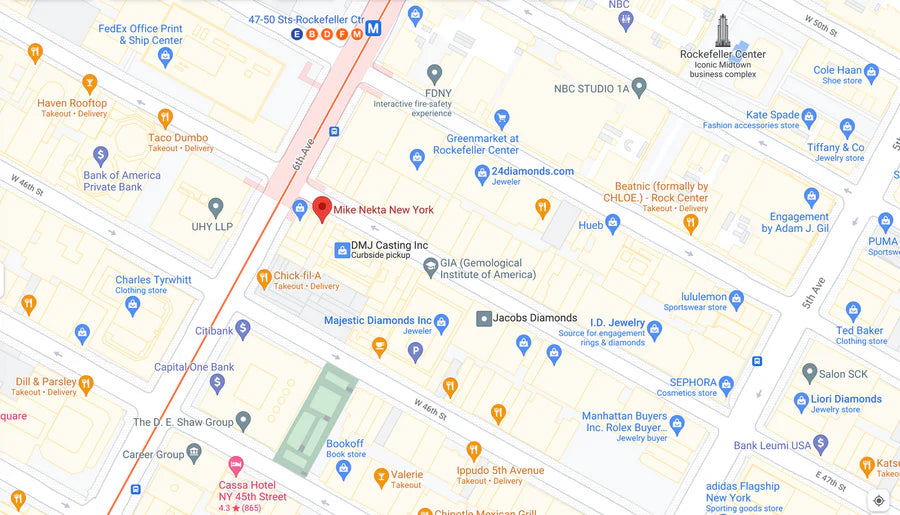
When someone comes to see me at Mike Nekta New York, I’m not trying to push them into a stone. I’m trying to get them to clarity.
My process is simple in principle, but detailed in execution:
Start With Lifestyle And Taste, Not A Lab Report
Do you want classic, modern, bold, quiet luxury, or something architectural?
Do you wear your ring daily? Do you work with your hands? Do you travel constantly? Do you want a low profile?
The “best diamond” is not universal. It is personal.
Define The Non-Negotiables
For some clients, it is size.
For others, it is cut performance and sparkle.
For others, it is icy color, or a specific shape, or a clean minimalist setting.
Regret happens when buyers do not know what they truly care about, so they buy what someone else tells them to care about.
Compare Options Side By Side In Real Light
This is where confidence is built.
When you see two diamonds next to each other, the differences become real. You stop guessing. You stop relying on hype.
You start making a decision you can defend to yourself, which is the only defense that matters.
Make The Setting Worthy Of The Stone
The diamond is the headline. The setting is the lasting experience.
I care about the way a ring feels, the way it ages, how it holds up, and how it looks years later after real life hits it.
Good craftsmanship is quiet, but it is never invisible.
Plan For The Future
People change. Taste evolves. Life happens.
A thoughtful purchase includes:
- resizing options
- maintenance expectations
- insurance guidance
- upgrade pathways
- design flexibility for future anniversary additions
When the future is considered, regret loses oxygen.
How To Buy A Diamond Without Regretting It Later
If you want a practical checklist, here is what I would do if I were buying today.
1) Do Not Buy Until You See Multiple Diamonds In The Same Category
If you are shopping for a round brilliant around 2 carats, do not see one and decide.
See several.
Your eye calibrates quickly when you compare.
2) Prioritize Cut Performance Over Paper Perfection
Use the report, but do not worship it.
Look for life, not just labels.
3) Choose Clarity You Can Live With, Not Clarity You Can Brag About
If it is eye-clean, you are often in a strong place.
If you want higher clarity for personal reasons, do it intentionally, not because you were scared into it.
4) Make The Setting A Design Decision, Not An Afterthought
A ring is a wearable object, not a display case.
Comfort, profile, durability, and finishing details matter.
5) Understand Your Return, Warranty, And Service Policies In Writing
If you do not know what happens after the sale, you are buying anxiety.
6) Do Not Let A Proposal Deadline Force A Lifetime Decision
If time is tight, there are smart ways to handle it without settling. But settling creates regret, and regret is expensive.
When Regret Is Already There, Here Is What You Can Do

If you already bought the diamond and you are feeling that heavy doubt, you have options.
The first step is to identify what kind of regret it is:
- Visual regret: It does not sparkle the way you hoped, or it looks smaller than expected.
- Value regret: You think you overpaid, or you found “better deals.”
- Design regret: The setting does not feel like the wearer.
- Quality regret: Something feels off about the diamond, the report, or the craftsmanship.
- Meaning regret: The ring does not match the story you wanted it to tell.
Sometimes the fix is simple, like a setting redesign that transforms how the diamond looks and feels.
Sometimes it is an upgrade strategy.
Sometimes it is education, where you realize you made a great purchase and your anxiety came from comparison and noise.
And sometimes, yes, it means correcting a mistake.
What matters is getting honest and getting real guidance. Regret thrives in isolation.
What Quiet Luxury Actually Means In Diamond Buying
A lot of brands talk about luxury.
To me, quiet luxury in diamonds looks like this:
- a stone chosen for beauty, not just stats
- craftsmanship that looks effortless because it was done right
- a ring that fits the wearer’s life and style
- a buying experience that makes you feel calm, not pressured
- long-term support so the ring stays as beautiful as day one
Quiet luxury is confidence.
And confidence is the opposite of regret.
Book An Appointment With Mike Nekta New York
If you’re shopping for a diamond and you want to avoid the kind of regret that lingers for years, the best move is to slow down and do it properly once.
If you want my eyes on it, my standards on it, and a process built around confidence, you can book an appointment with me, Mike Nekta, in New York.
Whether you’re looking for a large-carat diamond, a custom engagement ring, or a luxury investment piece, I’ll help you make a decision you will feel proud of every time it catches the light.