
How to Choose the Perfect Diamond Pendant
A diamond pendant is one of the few pieces of jewelry that earns its place in your daily rotation. It sits close to the heart, it photographs beautifully, and it can be styled up or down without trying too hard.
But choosing the right one can feel confusing fast. There are dozens of setting styles, chain types, diamond shapes, and quality levels, and the “best” option depends on how you actually live, what you wear, and what you want the pendant to say about you.
I’m Mike Nekta of Mike Nekta New York, and in this guide I’ll walk you through how I help clients choose the perfect diamond pendant in a way that feels simple, confident, and genuinely personal.
What “Perfect” Really Means For A Diamond Pendant
When people say “perfect diamond pendant,” they usually mean one of these things:
- A pendant that looks stunning at normal viewing distance, not just under a microscope.
- A piece that sits correctly on the neck and complements the wearer’s proportions.
- A diamond that reads bright and lively in everyday lighting.
- A setting that fits the wearer’s lifestyle and doesn’t snag, tilt, or feel fussy.
- A design that still feels right five years from now.
So instead of chasing a spreadsheet of specs, I like to start with three practical questions:
- Is this for everyday wear or special occasions?
- Do you want subtle elegance or visible sparkle across the room?
- Do you want timeless, trendy, or somewhere in between?
Once you answer those, the “right” pendant becomes much easier to narrow down.
Choose The Pendant Style First (It Controls The Whole Look)
Most clients start by shopping diamonds first. I actually prefer choosing the style first, because the setting determines how large the diamond appears, how it performs in light, and how it fits into a wardrobe.
Solitaire Pendant (Classic And Always Right)
A single diamond, usually in a 3-prong, 4-prong, or bezel setting. This is the cleanest look and the easiest to wear.
- Best for: daily wear, minimal style, gifting, first diamond piece
- Visual effect: the diamond is the main character
- My note: if you want one pendant that works with everything, this is it
Halo Pendant (Bigger Look Without A Giant Center Stone)
A center diamond surrounded by small diamonds. Halos can make a pendant look noticeably larger and more “dressy.”
- Best for: maximum sparkle, evening wear, glam aesthetic
- Tradeoff: can feel less timeless depending on the halo shape and thickness
Station Or Drop Pendant (More Fashion, Still Elegant)
A diamond “drop” below the chain or a station set along the chain. These can elongate the neckline and feel more styled.
- Best for: layering, V-necks, cocktail looks
- My note: a drop pendant is gorgeous, but chain length matters a lot more here
Bezel Pendant (Sleek, Secure, Modern)
A thin rim of metal wraps the diamond. Bezel settings are smooth, secure, and very wearable.
- Best for: active lifestyles, travel, low-maintenance luxury
- Visual effect: slightly less edge-to-edge sparkle than prongs, but very refined
- My note: ideal if you hate snagging or you want something understated and expensive-looking
Pick The Diamond Shape That Matches Your Style
Diamond shape changes the entire vibe, even at the same carat weight.
Round Brilliant (The Brightest, Most Popular)
Round brilliants tend to give the most fire and sparkle because of their cutting style.
- If you want: classic luxury, maximum light return, timeless appeal
- Good to know: rounds often cost more per carat than fancy shapes
Oval (Elegant And Flattering)
Ovals look larger than rounds at the same carat weight and they elongate the neckline.
- If you want: a modern-classic look and a slightly bigger visual presence
- Tip: pay attention to bow-tie effect (a dark band across the center) in some ovals
Pear (Soft Drama, Very Chic)
Pear shapes feel feminine and fashion-forward while still being classic.
- If you want: a pendant that’s delicate but noticeable
- Style tip: pears look beautiful in a simple prong setting, point-up or point-down depending on preference
Emerald Cut (Quiet Luxury)
Emerald cuts don’t “sparkle” like rounds. They glow with broad flashes and feel very upscale.
- If you want: understated wealth, clean lines, a designer look
- Important: clarity matters more here because the facets are open and transparent
Princess Or Cushion (Bold Or Romantic)
Princess cuts feel crisp and modern. Cushions feel softer and more vintage-inspired.
- If you want: a square look (princess) or pillow-like sparkle (cushion)
- My note: cushion pendants can look incredible in a bezel or halo
Understand The 4Cs The Way Real People Wear Them
The 4Cs matter, but not equally, and not in the same way for every pendant. Here’s the practical version.
Prioritize Cut (This Is What Makes A Diamond Look Alive)
Cut is the biggest driver of sparkle. For round diamonds, I generally recommend Excellent cut grades from reputable labs. For fancy shapes, cut quality is more nuanced, so I focus on proportions, symmetry, and how the stone performs in real light.
If you only “splurge” on one C, make it cut.
Choose Carat Based On The Look You Want (Not Just The Number)
Carat is weight, not size, and different shapes face up differently. Also, the setting can make a diamond look larger or smaller.
Here’s a simple starting point for solitaire pendants:
- 0.25–0.50 ct: subtle, refined, easy daily wear
- 0.75–1.00 ct: noticeable sparkle, still very wearable
- 1.25–2.00 ct: statement without being over the top for most people
- 2.00 ct+: high-impact and luxurious, chain and setting must be strong
If you want the pendant to be your “signature piece,” 0.75 to 1.50 carats is often the sweet spot, depending on the wearer’s frame and style.
Get Smart About Color (Most People Don’t Need D)
For most solitaire pendants in white gold or platinum, a G to I range often looks bright and clean, especially when the diamond is well cut. In yellow gold, you can often go even warmer while still looking beautiful.
If you are sensitive to warmth, or you love icy-white diamonds, then D-F can make sense. Otherwise, you can usually put that budget into carat or cut, where you will see it more.
Be Practical With Clarity (Because Pendants Sit At A Distance)
Earrings and pendants are viewed a bit farther away than rings, so you can often choose slightly lower clarity without noticing inclusions.
For many clients, VS2 to SI1 can be a great value range, assuming the diamond is eye-clean. Emerald cuts and other step cuts typically need higher clarity than rounds because they show more.
My rule is simple: if you can see the inclusion without magnification at normal distance, it will bother you later.
Always Ask For A Real Lab Report (And Verify It)
For natural diamonds and lab-grown diamonds alike, insist on a reputable grading report. The most common labs clients rely on include GIA and IGI (especially for lab-grown). The report number should be verifiable on the lab’s website.
If you ever feel like a seller is vague about grading, that’s a sign to slow down.
Decide Between Natural And Lab-Grown (Based On Your Values And Budget)
This is one of the first questions I ask, and there is no one right answer.
Natural Diamonds
- Pros: rarity, traditional prestige, long-term sentiment value
- Consideration: generally higher cost for the same size and quality
Lab-Grown Diamonds
- Pros: larger look for the budget, often excellent quality available
- Consideration: market pricing behaves differently than natural diamonds
If your goal is maximum size and brilliance for the spend, lab-grown can be a smart choice. If your goal is legacy, rarity, and tradition, natural is hard to replace.
Choose The Right Metal (It Changes The Diamond’s “Mood”)
Platinum
Cool-toned, durable, and substantial. It feels like true luxury and wears beautifully over time.
White Gold
A bright white look at a lower price than platinum, usually rhodium plated for a crisp finish.
Yellow Gold
Warm, timeless, and fashionable again in a big way. Yellow gold can make a pendant feel more “jewelry-forward,” especially with round or oval diamonds.
Rose Gold
Soft, romantic, and modern. It’s stunning, but it’s more style-specific than yellow or white metals.
If you want your diamond to look as white as possible, platinum or white gold typically supports that. If you want contrast and a warmer vibe, yellow gold can look incredible.
Don’t Ignore The Chain (This Is Where Most Pendants Fail)
A beautiful pendant on the wrong chain looks off, flips, or doesn’t sit right. I pay close attention to these details because they affect daily comfort and how the piece photographs.
Pick The Right Chain Style
- Cable chain: classic, light, versatile
- Box chain: strong, sleek, modern
- Wheat chain: textured, elegant, durable
- Rolo chain: slightly bolder links, timeless feel
For a solitaire, I usually prefer a clean cable or box chain depending on the look.
Choose The Right Thickness
Too thin looks fragile and can break. Too thick can overpower the pendant.
As a general rule: the larger the diamond, the more you need a chain that visually and structurally supports it.
Get The Length Right (This Changes Everything)
Common lengths:
- 16 inches: sits higher, great for petite frames and layering
- 18 inches: the most popular, sits around the collarbone
- 20–22 inches: more relaxed and modern, great for larger stones or layering
If you are buying a gift and you are not sure, 18 inches is usually the safest starting point.
Choose A Setting That Matches Your Lifestyle
This is where I see clients regret purchases most, especially when they fall in love with a look that does not fit their day-to-day.
- If you work with your hands, travel often, or want zero fuss: bezel is hard to beat.
- If you want maximum sparkle and a classic jewelry look: prong solitaire is the standard.
- If you want high glam: halo delivers, but make sure the craftsmanship is excellent so it doesn’t look bulky.
Also think about hair, sweaters, and scarves. Anything that snags becomes annoying quickly.
Pay Attention To Craftsmanship (Because Small Details Read As Luxury)
Two pendants can have the same specs and look totally different in real life. What separates soft luxury from “just fine” is craftsmanship:
- Clean prongs that are even and secure
- A centered stone that doesn’t tilt
- A bail that looks intentional, not like an afterthought
- Smooth finishing on the back so it sits comfortably
- Balanced proportions between chain, bail, and diamond
If possible, view the pendant in multiple lighting environments: indoor soft light, bright retail light, and natural daylight.
Match The Pendant To The Occasion (Especially If It’s A Gift)
For An Anniversary Or Milestone
I lean timeless: round, oval, emerald cut. Solitaire or a clean bezel. Something that still makes sense decades later.
For A Push Present
Comfort and wearability matter because it will likely be worn daily. A bezel or low-profile prong setting is often a great choice.
For A Graduation Or First “Real” Jewelry Piece
A classic solitaire around 0.25 to 0.75 carat is a beautiful start and can be layered later.
For Bridal Or Wedding Jewelry
Consider how it pairs with the ring and neckline. An 18-inch chain works well for many necklines, but strapless dresses and V-necks can change what looks best.
Set A Budget The Smart Way
Here’s a simple framework I use with clients:
- Decide your non-negotiable (size, natural vs lab, or a specific shape).
- Put the money into what creates visible beauty (cut and overall presence).
- Stay flexible on what does not show much (slight color or clarity adjustments).
- Invest in a setting and chain that can handle daily wear.
A pendant is not just a diamond. It’s a piece you’ll live in. The goal is to love it on a random Tuesday, not just when you first open the box.
Book A Private Appointment With Mike Nekta New York
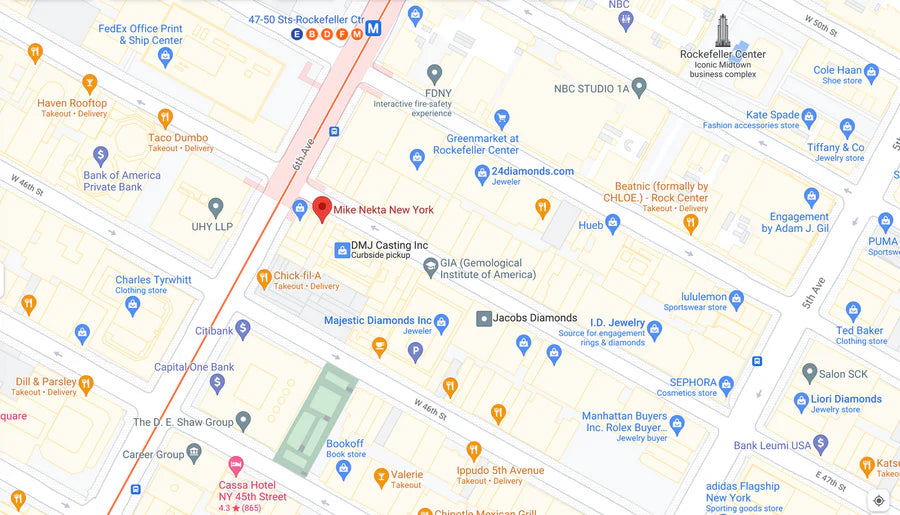
If you want help choosing the perfect diamond pendant, I can make the process simple. I’ll help you compare options side by side, explain what actually matters for your budget, and guide you toward a piece that fits your lifestyle and taste.
If you’d like a soft, private luxury experience, book an appointment with me, Mike Nekta, at Mike Nekta New York, and we’ll select a diamond pendant that feels personal, timeless, and genuinely worth wearing every day.