
Buying a Large Carat Diamond: What to Check Before You Commit
Buying a large carat diamond is not just about size. Before you commit, you need to confirm the diamond is honestly graded, eye clean for its shape, well cut (not just “excellent” on paper), and that it will actually perform in the real world, in real light, on a real hand.
I’m Mike Nekta, a third generation diamond jeweler and GIA certified expert based out of 74 West 47th Street in NYC’s Diamond District. In my office, I guide clients through the intricacies of purchasing larger carat diamonds.
What does “large carat” change, besides the price?
A lot changes.
With smaller stones, you can sometimes “get away” with a little bit. With a large diamond, everything gets louder. Inclusions are easier to see, tint is easier to pick up, proportions matter more, and the setting has to be engineered, not just “picked.”
Also, big diamonds tend to attract compromises that look good on a certificate but disappointing in real life. The most common one I see is a diamond that weighs heavy but faces up small or a stone that has the right numbers but looks sleepy because the cut is not doing its job.
So yes, the price goes up. But the risk goes up too unless you check the right things.
Is the diamond graded by a lab I actually trust?
If you’re spending real money on a large stone like this 6-carat Asscher cut diamond engagement ring or this 13-carat emerald cut diamond engagement ring, you want a grading report that holds weight. Period.
In my day-to-day work, the certificate is a starting point, not the finish line. I still put the diamond under a loupe, look at it in different lighting, and check if what I’m seeing matches what the paper claims.
What I’m looking for right away:
- The report number matches what’s laser inscribed on the girdle (if it’s inscribed).
- Clarity characteristics on the plot make sense with what’s visible under magnification.
- Measurements match what I’m holding because they affect how big it looks.
- Any comments that hint at durability issues, treatments or transparency concerns.
If something feels off, I slow the whole process down. When you’re buying large, you don’t “push it through.” You verify.
Does it look big on the hand, or does it just weigh big?
Carat is weight. Visual size is a combination of measurements and proportions.
This is one of the most common frustrations I see: someone buys a “big” diamond online, then comes in for a setting and they’re disappointed because it doesn’t have the presence they expected.
A few reasons that happens:
- The stone is cut too deep, carrying weight in the belly instead of the face.
- The shape has proportions that hide spread.
- The outline is slightly off, so it doesn’t present cleanly from the top.
In my office, I’m always talking about “spread.” Not because we’re trying to cheat anything. Just because you deserve to know what you’re actually getting visually.
If you want, bring your inspiration photos. I’ll tell you if the diamond you’re looking at is going to give that look, or if it’s going to feel smaller than the number suggests.
Is the cut actually great, or just labeled great?
Cut is where a lot of large diamond money gets wasted.
People see words like “Excellent” and feel safe. But cut quality is more nuanced than a single line on a report. A diamond can have a top cut grade and still show issues in person, depending on the combination of angles, table, depth, lower halves, star facets, and also how the diamond is carrying its weight.
Here’s how I evaluate it in practice, shop floor style:
- I look for brightness and contrast patterning, not just “sparkle.”
- I check for windowing and dead zones by moving it slowly under light, not shaking it like a maraca.
- I check edge to edge performance, because large stones love to look good in the center and weak at the edges if the cut isn’t balanced.
- I look at it in softer lighting too, not just jewelry store spotlights. Big difference.
And yes, sometimes I’ll tell a client: “This one is technically fine. But it’s not a beautiful stone.” That’s not me being dramatic. That’s me saving you from buyer’s remorse.
Will I see inclusions with my eyes, in real life?
Clarity is personal. But with large carat diamonds, you have to be more strict about what “eye clean” means.
When I say eye clean, I don’t mean “if you squint from a foot away under perfect lighting.” I mean normal conversation distance, normal indoor lighting, looking down at your own hand. That’s where you’ll live with this diamond.
What I check, every time:
- Location: inclusions under the table are more noticeable than near the edge.
- Type: crystals, feathers, needles, clouds, twinning wisps. Not all inclusions behave the same.
- Color and reflectivity: a black crystal is different than a wispy feather.
- Risk: feathers near the girdle can be a setting and durability conversation, not just a clarity conversation.
And I always look at it face up and from the side. Side view matters more on large stones because you see the profile constantly in a ring.
If you’re buying a large diamond for an engagement ring like the Genesis 13 Carat Radiant Cut F Color VS1 Clarity Diamond Engagement Ring, clarity also affects how confident you’ll feel showing it to people. That’s real. Clients say it out loud all the time.
What color should I choose so it still looks white when it’s set?
Color is another area where large diamonds expose the truth.
A color that looks “fine” in a small carat can start showing warmth in a larger stone, especially in certain shapes. Also, your setting choice changes the whole equation.
Here’s how I talk about it:
- Platinum or white gold tends to make warmth more noticeable because the metal is so white.
- Yellow or rose gold can make a slightly warmer stone look intentional and rich.
- Step cuts (emerald, Asscher) show color more easily because they’re like clean mirrors.
- Brilliant cuts (round, oval, cushion) can hide a bit more warmth because the facet pattern breaks up body color.
For instance, if you're considering an 11 Carat Oval Cut Diamond Engagement Ring, it's important to note that certain shapes may reveal more color than others.
In person, I’ll often place the diamond upside down next to a master set reference. That’s the quickest way to see tint without getting distracted by sparkle.
The right answer depends on your eye, your setting, and your priorities. I’m not here to push you into a letter grade. I’m here to make sure you love how it looks on day one and year ten.
Am I choosing the right shape for size, sparkle, and “forgiveness”?
Different shapes behave differently at larger carat.
Some shapes face up big and dramatic. Some show inclusions more. Some show color more. Some carry weight in ways that affect spread. And some have common issues that you should specifically screen for.
A few shop notes I bring up a lot:
- Oval and pear: check for bow tie. Some bow tie is normal, but if it’s strong, the center will look dark.
- Radiant and cushion: can hide inclusions well, but make sure you like the facet pattern. Some look “crushed ice,” some look chunkier.
- Emerald cut: clarity and color sensitivity. You’re buying clean lines, so any disruption shows.
- Round: most consistent performance, but you still need to verify it’s not cut deep or leaking light.
If you’re on the fence, I like putting two or three shapes next to each other in the same size range. Your eyes decide fast when they see it, and that’s usually the right decision.
Does the diamond have fluorescence, and should I worry?
Fluorescence is not automatically bad.
I’ve seen fluorescent diamonds that look gorgeous and fluorescent diamonds that look hazy. The key word is hazy. If a diamond looks oily or sleepy in daylight, that’s a problem, and it can happen with strong fluorescence in some stones.
So what do I do?
- I view it in daylight conditions, not only office light.
- I compare it side by side with a similar stone without fluorescence.
- I look for transparency issues. Not on paper. With my eyes.
If it’s a beautiful diamond, fluorescence can be a non issue. If it’s hurting transparency, we move on.
Is the diamond’s girdle and durability being ignored?
When you go big, you can’t ignore durability details.
I look at:
- Girdle thickness: too thin and you have chipping risk. Too thick and you might be paying for hidden weight.
- Naturals, extra facets, chips: not all are dealbreakers, but I want them disclosed and understood.
- Feathers near points: especially in shapes with corners or tips. Those areas are vulnerable in a ring.
Then we match the diamond to the setting style. A large stone in a delicate setting can be gorgeous, but it needs to be built right. I’ve repaired too many rings that were “pretty” and structurally weak.
Is it natural or lab grown, and what am I actually optimizing for?
Clients ask me this every week, especially when they’re shopping large.
Natural and lab grown can both be beautiful. The checks are similar, but your “why” matters. Are you optimizing for rarity, origin story, long term value considerations, or purely for size and look?
Either way, don’t buy a large diamond in a vacuum. You want the full picture: cut performance, transparency, setting plan, and what you’re trying to accomplish emotionally. Because yes, this is an emotional purchase. It’s supposed to be.
If you want to talk it out, I do that all day. No pressure. Just clarity.
What should I ask for before I send a wire or commit to a purchase?
Here’s the short list I want buyers to have in their pocket:
- The grading report and confirmation the diamond matches it.
- Clear videos in normal lighting, not only intense spotlighting.
- Confirmation of eye cleanliness, and what “eye clean” means to that seller.
- Return or exchange terms in writing.
- A plan for the setting, including how the diamond will be protected.
- If it’s being shipped, make sure it’s shipped fully insured and that you understand who carries risk during transit.
And if you’re buying in person, ask to see it under a loupe, and also just with your eyes. Take your time. Big diamonds are not impulse buys.
Can the setting make a large diamond look better or worse?
Absolutely. The setting is not just decoration. It’s engineering and optics.
A few examples I see constantly:
- A poorly made halo can make a big center stone look messy, not bigger.
- Prongs that are too heavy can visually shrink the diamond.
- A low set head can hide the diamond’s profile and make it feel smaller.
- A head that’s not aligned can make the diamond look crooked even if the stone is perfectly shaped.
With large stones, I’m particular about the basket, the prong geometry, and how the diamond sits. I want it secure, but I also want it to look clean. Not bulky. Not overbuilt. Just right.
This is where custom work shines, because we build around your exact diamond, not a generic measurement on a chart.
Where should I buy a large carat diamond if I want it vetted properly?
I’m biased because I do this for a living, but I’ll still say it plainly.
Buy large diamonds from someone who will put it under magnification in front of you, explain what you’re seeing in normal language, and take responsibility for the final result, including the setting. When the diamond and the setting are separated, that’s when people get stuck. Or worse, surprised.
If you’re in New York, you can come see me by appointment at 74 West 47th Street. I’ll pull options, we’ll compare them side by side, and we’ll slow it down until you feel confident.
Book time here: https://www.nektanewyork.com/pages/book-online
Or call my office: +1 212-921-4647
And if you want to start by browsing a style direction first, here’s a real collection page on my site: https://www.nektanewyork.com/collections/engagement-rings
To see what a jump in size really looks like side by side, watch my video Comparing 6 carat Emerald Cut Diamonds with a 7 carat Emerald Cut diamond on YouTube.
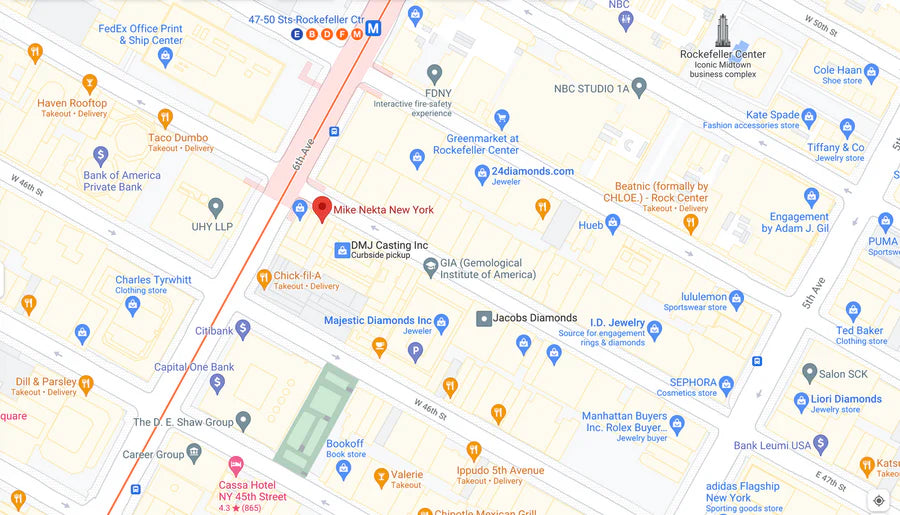
Map (74 W 47th St, NYC Diamond District)
FAQs (Frequently Asked Questions)
What should I consider besides carat size when buying a large diamond?
When purchasing a large carat diamond, it's crucial to ensure the diamond is honestly graded, eye clean for its shape, well cut beyond just an 'excellent' paper grade, and that it performs beautifully in real-world lighting on your hand. Size alone doesn't guarantee beauty or value.
How does buying a large carat diamond differ from buying smaller stones?
Large diamonds amplify every detail— inclusions become more visible, color tint is easier to detect, proportions matter significantly, and the setting must be engineered specifically. Additionally, compromises that look good on certificates can result in disappointing real-life appearance with larger stones.
Why is verifying the grading lab important when buying a large diamond?
For high-value large diamonds, trusting the grading report is essential. The certificate should be a starting point; you must verify that the report number matches the laser inscription, clarity characteristics align under magnification, measurements correspond to actual size, and no comments hint at durability or treatment issues.
Does a higher carat weight always mean the diamond looks bigger on the hand?
Not necessarily. Visual size depends on measurements and proportions. A diamond cut too deep or with certain shapes may carry weight in less visible areas ('the belly') rather than face-up size. Evaluating 'spread' helps determine how big a diamond actually appears when worn.
How can I tell if a large diamond's cut quality is truly excellent?
Cut quality is nuanced. Beyond report grades like 'Excellent,' evaluate brightness and contrast patterns, watch for windowing or dead zones by viewing under various lighting conditions, check edge-to-edge performance since large stones can look good centrally but weak at edges, and assess appearance in softer lighting—not just spotlights.
Will I see inclusions with my eyes in a large carat diamond?
Clarity perception varies but for large diamonds you need stricter standards for 'eye clean.' This means no visible inclusions at normal conversation distance under typical indoor lighting on your own hand. Factors like inclusion location (under table vs near edge), type (crystals, feathers), color, reflectivity, and risk to durability all affect visibility.