
Buy a Loose Diamond Online and Set It in NYC: Costs and Choices
Decide how the diamond will be set before buying it. If you’re asking, “Should I buy a loose diamond online and have it set in NYC?” the answer is yes, provided your jeweler agrees to work with the specific stone before you purchase it. Review the grading report, return terms, and setting arrangements in writing so expectations are clear for both the diamond and the finished ring.
Comparing online selection with the personal experience of Manhattan’s Diamond District is understandable. A custom setting can make an online-sourced stone feel uniquely yours, but the process goes more smoothly when you know who will handle the diamond and what the written terms cover.
This guide explains how to screen Diamond District sellers, confirm setting services and written terms, and weigh the trade-offs between sourcing a diamond online and choosing one with a custom setting in NYC. You’ll also learn the practical warning signs that can help you avoid a costly mistake.
Key Takeaways
- Use a diamond grading report to compare a loose stone with its documented characteristics, and understand what a laser inscription can help you identify.
- Review return terms and warranty coverage before buying, then put any separate setting arrangements in writing.
- Confirm the jeweler is willing to set a diamond bought elsewhere before you purchase it, and watch for offers that seem implausibly low.
- Compare the flexibility of online stone selection with the in-person experience of choosing a custom setting in New York City.
1. Will Your Jeweler Set a Loose Diamond?
Yes, a jeweler who accepts customer-supplied stones can set a loose diamond purchased online. Agree on the setting plan before buying, including how the stone will be handled and whether the setting will fit its measurements. This helps prevent a mismatch between the diamond and the design.
An online diamond may cost less on its own, but the total also includes the setting and its workmanship. Compare the complete cost, not just the loose-stone price. A lower-priced diamond, for example, may not mean a lower overall cost once you add the setting you want.
Before paying, review the grading report from a recognized laboratory. GIA and the American Gem Society are named as organizations that set diamond-grading standards. Online lab-grown diamonds may come with an IGI or GIA report documenting cut, color, clarity, and carat weight. Compare those details across stones, then consider whether each diamond’s proportions and appearance suit your preferred setting.
To verify a report, match its number and diamond details to the stone. If the diamond has a laser inscription, use magnification to compare the number on its girdle with the report. Then look up the report using the issuing laboratory’s report-checking service. A matching number helps identify the stone, while the report’s cut, color, clarity, and carat details help confirm its listed grading.
Some NYC jewelers set diamonds purchased elsewhere, but acceptance and fees vary with the design, work involved, and materials. There is no single setting fee for every ring. Get the cost and handling terms in writing before buying the diamond. If you’re deciding whether to buy a loose diamond online and have it set in NYC, confirm that your jeweler will work with your specific stone first.
2. Return policies, warranties, and written terms
A 30-day return window can give you time to assess an online diamond after delivery. Read the policy before paying, not after the stone arrives. Check when the period starts, whether the diamond must remain unaltered, and which return conditions could affect eligibility. A video can also help you compare the stone’s visible appearance with its grading report before purchase.
Review shipping terms as carefully as the return window. Check how the seller ships the diamond, whether the shipment is insured, and who arranges and pays for return shipping. Keep tracking details and delivery records with your order documents. If a return requires a particular carrier, packaging, or authorization, follow the seller’s instructions.
Read the return policy separately from any warranty. The return policy explains whether you can send the diamond back; a warranty describes which issues may be covered after purchase and under what conditions. For an engagement ring, review the terms for both the loose stone and the finished setting. Keep the invoice or receipt as a record of any agreement with the jeweler, including the setting work, handling responsibilities, and applicable return terms.
- Save the listing, grading report, stone video, and checkout terms.
- Keep shipping and insurance details with the order record.
- Get any separate setting agreement written on the invoice or receipt.
For a diamond shipped to New York City, review the seller’s itemized sales-tax amount at checkout and on the invoice. Tax treatment depends on the transaction and delivery details, so compare the tax line with the final order total before paying.
Once the written terms are clear, compare the stone with the setting you have in mind. Browsing loose GIA certified diamonds can help frame that choice alongside the return and documentation details.
3. How to Avoid Scams in the NYC Diamond District?
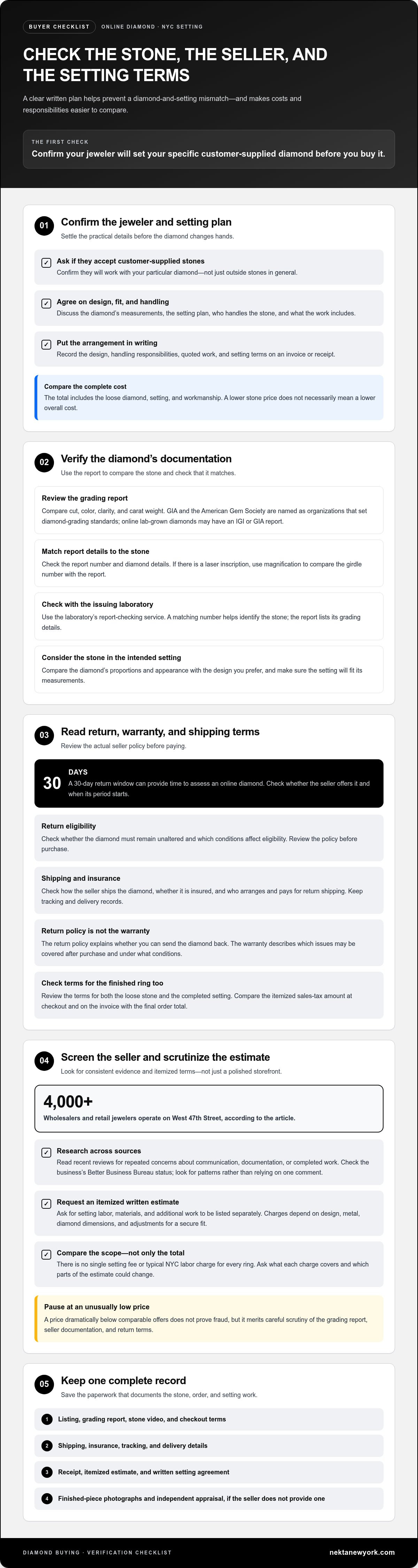
Before buying an online diamond, get a clear agreement with the NYC jeweler who will set it. Confirm that the jeweler accepts customer-supplied diamonds and will work with your specific stone. Put the arrangement in writing, including the design, handling responsibilities, and what the quoted work covers. A verbal agreement can leave important details unresolved.
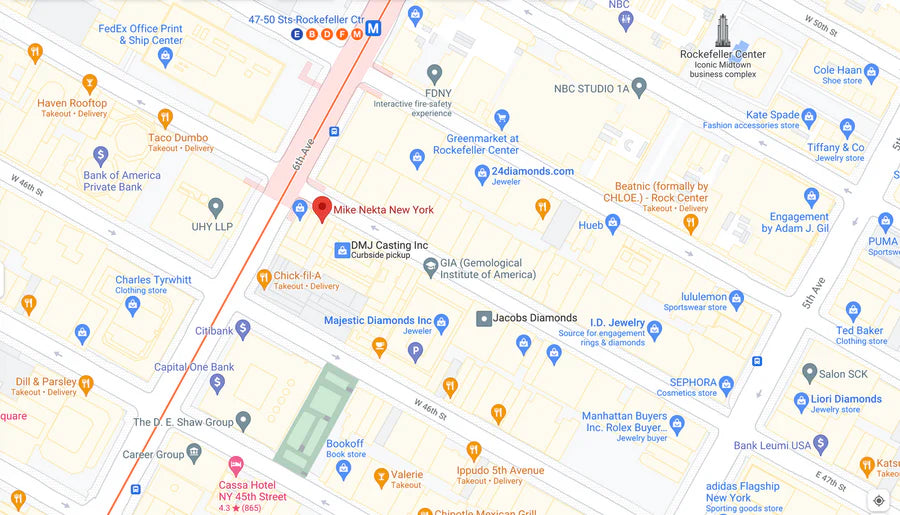
Research the jeweler before visiting West 47th Street, where more than 4,000 wholesalers and retail jewelers operate. Read recent online reviews for repeated concerns about communication, documentation, or completed work. Review the business’s Better Business Bureau status as another part of your research. Look for patterns across sources rather than relying on a single comment or an impressive storefront.
Work directly with the person responsible for your jewelry transaction. Request an itemized written estimate that separates setting labor, materials, and additional work. Labor depends on the mounting’s design, the metal, the diamond’s dimensions, and any adjustments needed for a secure fit. There is no single typical NYC labor charge for every ring, so compare estimates by scope, not just by total.
Use negotiation to clarify value, not obscure the terms. Ask what each charge covers and which parts of the estimate could change. If a diamond’s price seems dramatically lower than comparable offers, pause to examine its grading report, seller documentation, and return terms. An unusually low price does not prove fraud, but it merits careful scrutiny.
After purchase, keep the receipt, grading report, and setting invoice together. If the seller does not provide an appraisal, obtain an independent jewelry appraisal for insurance purposes. The appraiser’s written description can document the finished piece and its identifying details. Keep that record with photographs and the original purchase documents.
Before committing, get the setting agreement and itemized estimate in writing. This gives you a clear basis for comparing jewelers and resolving questions about the work before handing over the diamond.
4. Finding a custom setting or sourcing a diamond
Online sourcing and an NYC custom setting are distinct choices, and you can coordinate them before committing. An online retailer with live inventory can show thousands of certified stones, while a well-stocked showroom might carry a few hundred across shapes and grades. A broader online selection helps when you have a precise combination in mind. An in-person visit helps you judge how a diamond looks beyond a screen.
For a center stone of 3 carats or more, in-store comparison can be especially useful. Subtle differences in cut quality can be harder to evaluate from video. Compare the diamond’s face-up appearance, proportions, and light performance, then consider how its shape will sit in your chosen engagement ring. A setting should match the stone’s outline and measurements, hold it securely, and suit how you plan to wear the ring.
Choose a setting with the diamond’s shape and dimensions in mind. Prongs, a bezel, and other designs frame the stone differently, so discuss how the setting will hold its edges and keep it secure. Ask the jeweler to assess the stone’s measurements and fit before work begins. Written design details help ensure the finished ring matches your expectations.
Use this sequence to keep the process organized:
- Decide on the diamond shape, grading priorities, and setting direction.
- Compare certified stones online or view options in person.
- Share the selected stone’s report and measurements with the NYC jeweler.
- Agree on the setting design, work scope, and written terms before purchase.
- Review the completed engagement ring and keep its documentation together.
The practical takeaway is to settle the setting plan before purchasing the diamond. That lets you compare a sourced stone against the design it must fit, rather than choosing a stone without a clear setting path. Explore loose diamond options as you consider which stone and setting direction suit your ring.
Mike Nekta New York: Round Brilliant Cut Engagement Rings
Mike Nekta New York offers engagement rings in round brilliant, cushion, oval, and emerald cuts for buyers considering a center stone and finished design. If you’re comparing an online diamond with a ring selected in person, think about how each cut’s shape and proportions will work with the setting you have in mind.
Round brilliant cuts offer a classic outline, while cushion, oval, and emerald cuts have distinct silhouettes. Comparing these options can help you define the look you want before choosing a stone or setting. Explore the available ring styles and consider which shape best reflects your priorities.
For a closer look at engagement ring options, visit nektanewyork.com or contact Mike Nekta New York.
Choose the Ring That Feels Like Yours
The final choice is personal. Picture the ring not only in a photograph, but as part of the life it will accompany. Consider which shape feels most natural to you and which details you’ll appreciate over time. If you’re still asking whether you should buy a loose diamond online and have it set in NYC, let your priorities guide the decision rather than one comparison or trend.
Mike Nekta New York offers Round Brilliant Cut, Cushion Cut, and Oval Cut Engagement Rings, with distinct silhouettes to consider as you refine your preference. Knowing the look you want can make your next conversation more focused and thoughtful.
Contact Mike Nekta New York to explore your engagement ring options. Take the next step at your own pace, with a vision that feels distinctly yours.
Frequently Asked Questions
How to Avoid Scams in the NYC Diamond District?
Research the seller and check the paperwork before committing. Look for consistent patterns in online reviews, then review the business’s Better Business Bureau status. A dramatic price gap is a reason for caution, not proof of a problem on its own.
How to Shop Around?
Compare stones with the same shape and similar grading details, then assess each option’s appearance and documentation. For example, a 1.5-carat oval may look different on a hand than it does in a listing photo. Keep a simple comparison record with the report details, return conditions, shipping terms, and setting plan. This makes the full purchase easier to evaluate than comparing stone prices alone.
What if You Can’t Find A Setting You Like?
Refine the design instead of settling for a setting that doesn’t suit the stone. Decide what matters most, such as a low profile, a particular metal, or a clean outline, then discuss how those choices affect the diamond’s placement and security. A custom-designed engagement ring gives you room to shape the look. Compare round brilliant, cushion, and oval silhouettes to clarify your preferred direction.
Will Your Jeweler Set a Loose Diamond?
Before purchasing, confirm that the jeweler will work with a customer-supplied diamond. Share the stone’s report and measurements, then discuss how the chosen setting will fit its shape and proportions. Clarify who will handle the diamond and record the agreed work on the invoice. This gives you a written reference if the setting plan changes.
What should I look for in a diamond grading report from GIA or IGI?
Check that the report identifies the stone and records its cut, color, clarity, and carat weight. Compare those details with the online listing and any available images. If the diamond has a laser inscription, match its number to the report. GIA and IGI reports can document diamond characteristics, but the details should still correspond to the specific stone you’re considering.
How do online diamond return policies, warranties, and shipping insurance compare?
Compare these terms separately because they address different parts of the purchase. A return policy explains whether and how the diamond can be sent back; a warranty describes coverage after purchase. Some reputable online retailers offer a 30-day return window. Review shipping insurance, responsibility for return shipping, and packaging instructions alongside the policy, then keep the terms and tracking records with your order documents.