
Birthstone of July: The Significance of the Ruby
If you ask me what gemstone truly owns its reputation, it’s the ruby.
I’m Mike Nekta, and I’ve spent years around fine jewelry, stones, and the real-world questions people ask when they’re choosing something meaningful. July’s birthstone is one of the easiest to recognize, but it’s also one of the most misunderstood. People know rubies are red. They know rubies are “valuable.” But they don’t always understand why a ruby feels different from other gems, or what separates an ordinary ruby from a great one.
In this guide, I’m going to walk you through the significance of the ruby as July’s birthstone, what it symbolizes, what makes it rare, how to judge quality, and how to choose the right ruby for your budget and your story.
Why July’s Birthstone Is Ruby
July sits in the heart of summer. Long days, heat, energy, celebration. Ruby fits that perfectly.
Historically, rubies have been connected with vitality, strength, love, and protection. Across cultures, the stone’s rich red color naturally linked it to blood, life force, and the heart. That symbolism is a big reason ruby became the classic birthstone of July.
Today, that same meaning still shows up in how people buy rubies:
- As a birthday gift for someone who’s bold, warm, and confident
- As an anniversary stone, especially the 15th and 40th anniversaries
- As a “life moment” gemstone, when someone wants a piece that feels powerful and lasting
And unlike some birthstones that feel niche or seasonal, ruby holds its own in any setting. It works for everyday wear, and it also works as a centerpiece stone that turns heads.
The Meaning and Symbolism of Ruby
A ruby is more than a red gemstone. It carries a set of meanings that have stayed consistent for centuries, which is pretty rare in itself.
Ruby and love (the serious kind)
When people say ruby symbolizes love, they usually mean devotion, not just romance. Rubies have long been associated with passion, loyalty, and commitment. That’s why you’ll see rubies chosen for deep relationship milestones, not only engagement rings.
Ruby and protection
In many older traditions, rubies were seen as protective stones. Warriors, royalty, and leaders wore them as symbols of strength and as talismans meant to guard against harm or misfortune.
Ruby and power
Rubies were associated with status for a reason. Great rubies are genuinely rare, and historically they were harder to access than diamonds in many parts of the world. When a gem is scarce, durable, and visually intense, it naturally becomes tied to authority and wealth.
Ruby and vitality
The “life force” symbolism is still the one I hear people connect with most. A ruby feels energetic. Even small rubies can look alive when they’re well cut and have strong color.
What Exactly Is a Ruby?
Rubies are the red variety of the mineral corundum. The same mineral forms sapphires, but ruby is specifically corundum colored red by chromium.
A ruby’s toughness is one of the reasons it’s so loved in jewelry:
- Mohs hardness: 9 (diamonds are 10)
- Excellent resistance to scratching for daily wear
- Strong durability when set properly
That combination of beauty and wearability is a big deal. You can actually live your life in ruby jewelry without constantly worrying about babying it.
Why Ruby Color Matters More Than Anything
If you remember only one thing, remember this: color is king in ruby.
When clients show me two rubies that are the same size but priced wildly differently, the reason is usually color. Not carat weight. Not setting. Color.
The best ruby color
The most prized rubies are often described as:
- Vivid red
- Slightly purplish red
- Strong saturation without looking too dark
You’ll hear the phrase “pigeon blood” in the gem world. It’s a traditional term used for a top-range vivid red with a subtle blue undertone. Not every seller uses that term responsibly, so I focus less on labels and more on what I can see: vivid, balanced red that glows.
Too dark vs too light
- If it’s too dark, it can look maroon or brownish in low light.
- If it’s too light, it can start to look pink. At that point, you may be dealing with what the market calls a pink sapphire instead of a ruby, depending on the grading standard.
Fluorescence can be your friend
Some rubies show fluorescence under certain lighting, and that can make the stone appear to glow. In many cases, that glow is part of the magic.
Clarity: What “Eye-Clean” Means for Rubies
People get tripped up on clarity because they’re comparing ruby to diamond standards.
Rubies almost always have inclusions. In fact, completely inclusion-free rubies are rare enough that they can raise suspicion. The question is not “does it have inclusions?” The question is “do the inclusions hurt the beauty or durability?”
Here’s what I look for:
- Eye-clean or near eye-clean appearance from normal viewing distance
- Inclusions that do not create obvious haziness
- No major surface-reaching fractures that weaken the stone
Some inclusions even create a unique fingerprint. For collectors, that can be part of the appeal.
Cut: How Ruby Should Handle Light
Ruby isn’t just about being red. A well-cut ruby has life.
Cut affects:
- brightness
- sparkle
- face-up size (how big it looks from the top)
Rubies are often cut to preserve weight because rough can be expensive. That means you’ll sometimes see stones with deep pavilions or shapes that aren’t ideal from a light-performance standpoint.
My advice is simple: choose the ruby that looks best in real lighting, not the one with the “best stats” on paper. Mastery ages well. Trends don’t
Carat Weight: Why Bigger Gets Expensive Fast
Rubies jump in price dramatically as size increases. A fine 2-carat ruby can be exponentially more expensive than a fine 1-carat ruby.
That’s not hype. That’s scarcity.
If you want a practical strategy, look at:
- just under “milestone” sizes like 0.90ct, 1.80ct, 2.90ct
- slightly elongated shapes that face up larger
- settings that enhance presence (halo, three-stone, east-west, etc.)
Natural vs Lab-Created Ruby
This is a big one, especially now.
Natural ruby
A natural ruby is formed in the earth. Natural rubies can still be treated (more on that next), but they originate naturally.
Pros:
- rarity and long-term value perception
- unique character
Lab-created ruby
Lab rubies are chemically the same material, made in controlled environments.
Pros:
- budget-friendly
- consistent appearance
- great option for fashion jewelry or bold designs
Neither is “good” or “bad” universally. What matters is honesty, documentation, and choosing based on your goal. If you want a legacy stone, you usually want natural. If you want the look and durability at a lower cost, lab can make sense.
Treatments: What You Need to Know Before You Buy
Most rubies on the market are treated. The key is knowing what kind of treatment, and whether it’s disclosed clearly.
Heat treatment (common and accepted)
Heat can improve color and clarity. This is widely accepted in the trade when disclosed.
Fracture filling or lead-glass filling (be cautious)
Some rubies are filled to improve transparency. These stones can look impressive for the price, but they are typically less durable and require more care. They should be priced accordingly, and the treatment should be disclosed.
If you’re buying a ruby for an engagement ring or daily wear piece, I’m much more careful about filled rubies.
Origins: Does Where a Ruby Comes From Matter?
Origin can affect value, but it shouldn’t replace your eyes.
Some famous sources include:
- Myanmar (Burma): historically associated with top red rubies
- Mozambique: a major modern source with beautiful stones
- Thailand: important historically and in cutting centers
- Madagascar, Tanzania, Sri Lanka: varied qualities and colors
A well-documented origin can add value, especially in higher-end stones. For most buyers, color and overall beauty will matter more than chasing a location name.
Ruby Jewelry: The Most Popular July Birthstone Choices
Ruby rings
Ruby rings are bold and timeless. If you want a daily-wear ring, durability and setting design matter. I usually recommend protective settings like:
- bezel or semi-bezel
- halos
- prongs with smart coverage (not snaggy, not delicate)
Ruby necklaces and pendants
A ruby pendant can feel personal and elegant without being flashy. Great for gifts.
Ruby earrings
Rubies in studs or small drops are an underrated choice. They add color in a way that still feels classic.
Ruby bracelets
Rubies in tennis bracelets or mixed gemstone bracelets are beautiful, but they need secure construction. With bracelets, knocks happen.
Who Should Wear Ruby?
If you’re born in July, ruby is your birthstone, but I don’t think you need a birthday to wear it.
Rubies suit people who want something with presence. If you like stones that feel warm and confident, ruby is hard to beat.
Ruby also makes an incredible gift when you want the message to be clear: love, strength, admiration, commitment.
How to Care for Ruby Jewelry
Rubies are tough, but jewelry still needs care.
Here’s what I recommend:
- Clean with warm water, mild soap, and a soft brush
- Avoid harsh chemicals and abrasive cleaners
- Store separately from diamonds, because diamonds can scratch almost anything
- Get prongs and settings checked if you wear it often
If your ruby is filled or has more delicate treatment, you need to be more cautious with heat, chemicals, and ultrasonic cleaners.
How I Help Clients Choose the Right Ruby
When someone comes to me for a ruby, I don’t start with a sales pitch. I start with questions:
- Is this a daily-wear piece or special occasions?
- Do you want natural only, or are you open to lab-created?
- What matters more: size or color?
- What’s your budget range that feels comfortable?
- Is this a personal piece, or a gift with a specific meaning?
Once those answers are clear, choosing the right ruby becomes much easier. The goal is not to buy “a ruby.” The goal is to buy your ruby.
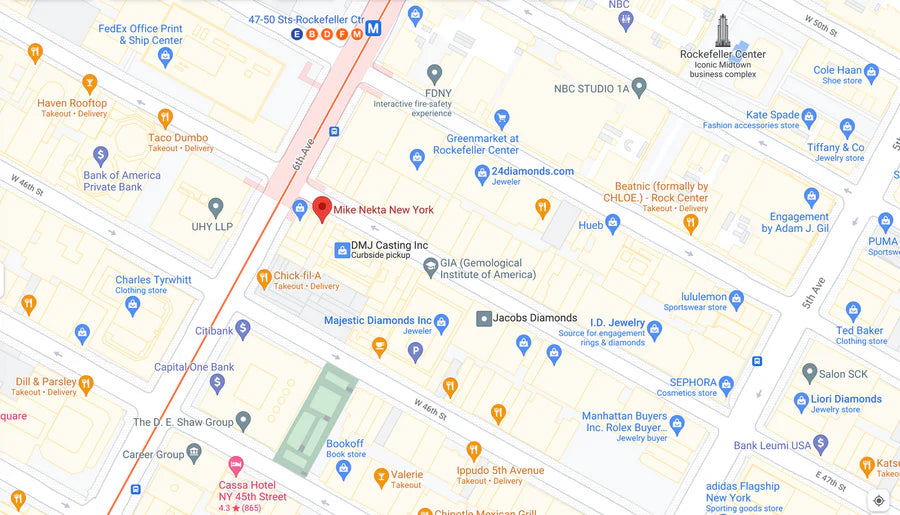
Book an Appointment With Me (Mike Nekta New York)
If you’re considering a ruby for a July birthstone gift, an engagement ring, or a personal piece you’ll keep for years, I can help you make a confident choice.
I’m Mike Nekta and I offer appointments where we go through ruby options based on color, quality, treatments, budget, and the style you actually want to wear.
Book an appointment with me, Mike Nekta, in New York, and I’ll help you find a ruby that looks incredible and makes sense for your goals. Book once — never look back.