
Radiant Cut Engagement Rings: The Connoisseur’s 2026 Guide to Hybrid Brilliance
Choosing between the explosive fire of a round brilliant and the sleek, architectural silhouette of an emerald cut is a compromise you no longer have to make. Most people assume they must sacrifice one for the other, yet the most discerning collectors know that radiant cut engagement rings offer a perfect hybrid of these two worlds. If you've ever worried about a diamond looking dull or glassy, you're likely sensing the difference between a standard stone and one that’s been precision-engineered for maximum light return.
You deserve a ring that reflects a sophisticated understanding of brilliance. This guide will help you master the technical nuances of this specific cut so you can choose a stone with total confidence. We'll explore the intricate 70 facet structure that gives the radiant its signature "crushed ice" look and finally clear up the confusion between radiant and cushion silhouettes. From identifying the ideal length to width ratio to selecting a GIA certified diamond that never leaks light, we’re providing the connoisseur’s roadmap to 2026’s most coveted style. You'll soon know exactly how to pair this cut with a handcrafted setting that honors its unique fire.
Key Takeaways
- Learn why the radiant cut is the ultimate hybrid, blending the architectural silhouette of an emerald cut with the explosive fire of a round brilliant.
- Master the technical differences between "crushed ice" and "chunky" facet patterns to find the perfect look for your radiant cut engagement rings.
- Understand how the radiant cut differs from cushion and emerald shapes, specifically focusing on its unique trimmed corners and superior light return.
- Discover how to navigate GIA certifications by prioritizing length-to-width ratios and cut quality over clarity to ensure your diamond never looks dull.
- Gain expert insight into pairing your diamond with a custom setting that enhances its 70-facet structure without overshadowing its natural brilliance.
What is a Radiant Cut Engagement Ring?
A radiant cut isn't just another diamond shape; it’s a masterclass in gemological engineering. Defined as a hybrid cut, it features the sophisticated, cropped corners of an emerald cut paired with the complex facet pattern of a round brilliant. This unique combination ensures that the stone retains a strong, architectural silhouette while emitting an intensity of light that few other shapes can match. It’s the definitive choice for those who refuse to choose between structural elegance and high-octane sparkle.
In 1977, master cutter Henry Grossbard changed the industry forever. Before his invention, rectangular diamonds were almost exclusively step-cuts, which prioritize clarity but often lack the "fire" modern brides crave. Grossbard’s vision was to maximize light return in elongated stones, effectively creating the first "brilliantized" rectangular cut. For those seeking radiant cut engagement rings, this history matters. It represents a bridge between tradition and modern performance, which is why collections at Eastpoint Jewelry often highlight these stones as a bold alternative for anyone who finds the round brilliant too conventional and the emerald cut too understated.
The Anatomy of 70 Facets
The secret to the radiant’s mesmerizing dance of light lies in its 70 facets. Most standard round diamonds possess 57 or 58 facets; the radiant adds significantly more complexity. These additional surfaces are strategically distributed across the crown and pavilion to break up light into thousands of tiny, energetic sparks. This creates a high degree of scintillation, often referred to as the "crushed ice" effect. Because the facets are so numerous and varied, the stone hides inclusions remarkably well, making it a practical choice for those prioritizing visual impact over technical purity.
Square vs. Elongated Radiant Silhouettes
You'll typically find two distinct personality profiles within this cut. Square radiants offer a symmetrical, modern look that competes directly with the princess cut. However, because of the trimmed corners, a square radiant is significantly more durable and less prone to chipping than its sharp-edged counterparts. It’s a robust choice for an active lifestyle that doesn't want to sacrifice a contemporary aesthetic.
Elongated radiants are currently the gold standard for elegance. With a higher length-to-width ratio, these stones create a graceful, slimming effect on the finger. They provide the finger-stretching benefits of an oval or marquise but with a more structured, confident presence. Whether you prefer the balanced stability of a square or the sophisticated stretch of an elongated stone, both versions of radiant cut engagement rings benefit from that signature Grossbard brilliance that defines the hybrid category.
Understanding Radiant Cut Sparkle: Crushed Ice vs. Chunky Facets
As you explore the world of radiant cut engagement rings, you'll quickly realize that not all brilliance is created equal. The visual character of a radiant diamond generally falls into two distinct categories: "crushed ice" or "chunky" facets. A crushed ice radiant features a dense sea of tiny, rapid-fire sparkles that appear to come from deep within the stone. This modern aesthetic is achieved through a specific pavilion facet arrangement that breaks light into smaller, more numerous reflections. It's a look that feels energetic and textured, perfect for those who want a diamond that never stops dancing.
In contrast, the "chunky" or distinct facet look offers larger, more deliberate flashes of light. These stones exhibit broader reflections that feel more organized and rhythmic. The primary driver behind these styles is the pavilion facet depth; shallower pavilion facets often lead to the chunky look, while deeper, more complex facet patterns create that signature crushed ice shimmer. Your choice of style should influence your final setting choice to ensure the ring's overall aesthetic is harmonious.
Consider these pairings for your diamond:
- Crushed Ice: These stones perform beautifully in halo settings, where the surrounding diamonds amplify the stone's intricate, high-frequency energy.
- Chunky Facets: These are ideal for clean solitaires or three-stone settings where the larger, individual flashes of light can command attention without distraction.
The Science of Scintillation
The way a radiant cut handles light is a true feat of geometry. Light enters through the table and crown, bouncing off the precisely angled corners before reflecting back to the observer. If the angles aren't perfect, you'll encounter "leakage," where light escapes through the bottom of the stone instead of returning to your eye. You can spot this by looking for a "dead" or dark spot in the center of the stone when viewed from above. Scintillation is the play of light and dark seen when the diamond moves.
Why Facet Pattern Matters for Color Retention
Radiant cuts are engineered to bounce light multiple times within the stone. While this maximizes sparkle, it also causes the diamond to hold onto its natural body color more than a round brilliant would. This characteristic is precisely why the radiant is the preferred cut for fancy colored diamonds; it intensifies the saturation of yellows and pinks. To ensure a crisp, "white" look in a colorless stone, aim for a GIA color grade of H or higher. Lower grades might reveal a slight warmth that is more noticeable in radiant cut engagement rings than in other shapes. For those who want to see how these color and light principles apply to a broader range of high-quality jewelry, Brilliant Diamonds Fine Jewelers offers a collection that showcases exceptional diamond quality.
When you're choosing between the premier rectangular shapes, the decision often comes down to the personality of the light. The Emerald Cut is defined by its step-cut facets, which produce long, mirror-like flashes that emphasize a stone's clarity. It's an understated, hall-of-mirrors effect. In contrast, radiant cut engagement rings offer a "sparkle-bomb" experience. Because the radiant is a brilliant-cut, it breaks light into thousands of tiny directions. If you want a ring that signals quiet luxury, you might lean toward the emerald cut. If you want a stone that commands the room with its fire, the radiant is your winner.
This difference in facet structure also impacts your budget. Emerald cuts are unforgiving; their open tables act like windows, making any inclusion immediately visible to the naked eye. Radiants are far more strategic. Their complex facet patterns act as a natural camouflage, effectively hiding minor imperfections. This allows you to prioritize a larger carat weight or a better color grade while potentially stepping down in clarity without sacrificing the stone's beauty.
The Cushion Cut presents a different challenge. While both shapes are brilliant-cuts, the cushion features rounded corners that lend it a soft, vintage romanticism. The radiant maintains its sharp, rectangular profile. It’s the choice for the modern minimalist who appreciates clean lines but still wants the maximum light return typically associated with a round stone.
Visual Weight: Which Cut Looks Larger?
One common concern when selecting radiant cut engagement rings is the "face-up" size. Radiants are typically cut deeper than many other shapes to achieve their signature brilliance. This means a 2-carat radiant might have a slightly smaller surface area than a 2-carat round brilliant or a shallow emerald cut. However, you can offset this by choosing an elongated ratio. Stones with a length-to-width ratio of 1.30 or higher create a powerful vertical presence. They cover more of the finger's width, often making the diamond appear significantly larger than its actual carat weight suggests.
Durability and Everyday Wear
For those with an active lifestyle, the radiant cut offers a distinct structural advantage. Unlike the Princess Cut, which has sharp, vulnerable corners prone to chipping, the radiant features beveled edges. These trimmed corners are much more resilient against daily knocks and snags. This design doesn't just improve the stone's longevity; it also allows for more creative setting options. You can securely set a radiant diamond in a variety of styles, knowing its most delicate points are protected by its very geometry.

The Professional’s Guide to Selecting a GIA Certified Radiant
Selecting the right stone for radiant cut engagement rings requires a shift in how you read a diamond report. Unlike round diamonds, where a "Triple Excellent" grade is the standard safety net, fancy shapes like the radiant require a more discerning eye. Your first decision is the Length-to-Width (L/W) ratio. For a perfectly square silhouette, look for 1.00 to 1.05. If you prefer the elegant, finger-slimming stretch, aim for 1.25 to 1.40. Anything in between often looks like an accidental rectangle, lacking the intentionality of a true elongated cut.
Once you've settled on the shape, shift your focus to light performance. You should prioritize cut quality and symmetry over clarity. Because of the 70-facet structure we discussed earlier, radiants are incredibly forgiving of inclusions. An Eye-Clean SI1 or VS2 often looks identical to a Flawless stone but allows you to invest that saved capital into a higher color grade. To ensure your diamond looks crisp and colorless in platinum or white gold, aim for an H color or better. If you’re considering a yellow gold setting, you can safely drop to an I or J grade without the stone looking tinted.
Decoding the GIA Report for Radiants
It surprises many buyers to learn that the GIA doesn't provide a "Cut Grade" for radiant diamonds. Instead, you must evaluate the stone's proportions yourself. Look for a Table percentage between 61% and 69% and a Depth percentage between 61% and 67%. These ranges generally ensure the best balance of fire and brilliance. Since the GIA won't do the work for you, pay close attention to the Polish and Symmetry grades; both should be "Excellent" or "Very Good" to ensure the facets align perfectly for maximum light return.
The Bow-Tie Effect in Elongated Cuts
Elongated stones are susceptible to the "bow-tie" effect, a dark shadow that stretches across the center of the diamond. This happens when light passes through the stone instead of reflecting back to your eye. While a faint bow-tie is a natural part of the radiant's anatomy, a deep black shadow is a dealbreaker that kills the stone's life. Always view high-definition videos of the stone rather than static photos, as the shadow often disappears and reappears as the diamond moves. If you want to ensure your selection is free from distracting shadows, you can browse our curated selection of GIA certified diamonds that have been hand-vetted for superior light performance by a third-generation expert.
Designing the Perfect Radiant Setting with Mike Nekta NYC
A diamond of this technical caliber requires a setting that understands its complex geometry. At Mike Nekta NYC, the design philosophy is centered on a single principle: the metal should serve the stone, never overshadow it. Because radiant cut engagement rings possess such intense internal fire, the setting must be precision-engineered to allow maximum light entry from every possible angle. Whether you're drawn to a minimalist aesthetic or a more ornate structure, the goal is to create a stage where the diamond’s 70 facets can perform without interference.
The choice of metal significantly influences the diamond's personality. Platinum remains the premier choice for those who want an icy, seamless brilliance where the prongs virtually disappear into the stone. However, for 2026, we're seeing a sophisticated shift toward high-polish yellow gold. This creates a warm, high-fashion contrast that makes the diamond’s white light "pop" with even greater intensity. A rising trend for the coming year is the "Hidden Halo." This subtle gallery detail adds a secret layer of sparkle visible only from the profile, providing a modern touch that preserves the clean, architectural lines of the radiant silhouette.
Solitaire vs. Three-Stone Settings
For elongated radiants, a minimalist solitaire with a whisper-thin band is often the most powerful choice. It emphasizes the stone's verticality and creates a striking, finger-slimming effect. If you prefer more presence, three-stone settings featuring tapered baguette side stones are the connoisseur's standard. The baguettes’ step-cut facets provide a rhythmic contrast to the radiant’s brilliant-cut fire. To complete the look, Mike Nekta specializes in creating Custom Wedding Bands NYC that are designed to sit perfectly flush against the unique cropped corners of your engagement ring.
The NYC Diamond District Experience
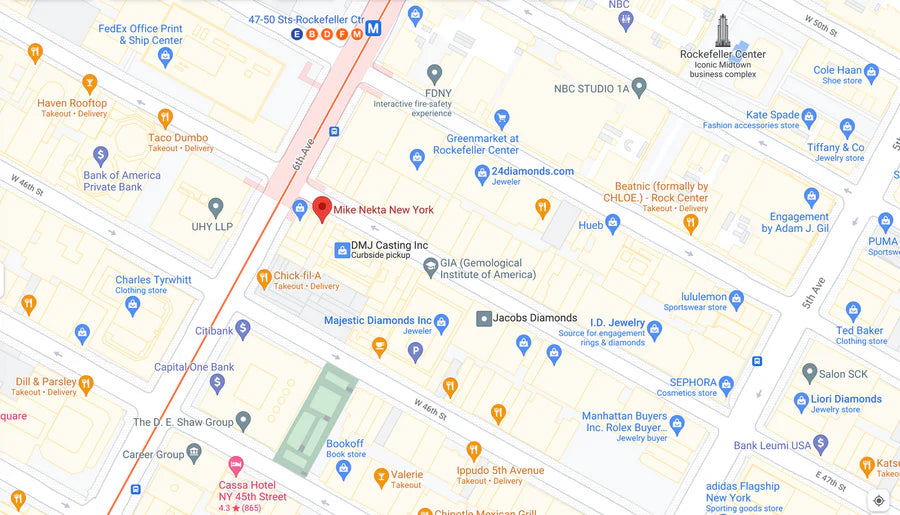
There's no substitute for seeing a diamond’s soul in person. Manhattan’s Diamond District is the global epicenter of gemological expertise, and a private consultation here offers access you simply won't find online. The "Nekta Selection Process" goes beyond the GIA report. As a third-generation expert, Mike hand-picks loose diamonds based on their real-world brilliance rather than just their "paper specs." You'll quickly learn that two stones with identical grades can look vastly different under the loupe. We encourage you to book a visit to our NYC showroom to experience the difference that three generations of handcrafted artistry can make in your selection process.
Secure Your Legacy of Brilliance
You now possess the technical insight to distinguish a mediocre stone from a masterpiece of light engineering. By mastering the nuances of facet patterns and length-to-width ratios, you’ve moved beyond surface-level aesthetics to true connoisseurship. You understand that the perfect diamond doesn't just happen; it's the result of precise selection and a handcrafted setting that honors its unique 70-facet structure. Whether you prefer the modern energy of crushed ice or the rhythmic flashes of chunky facets, your choice reflects a sophisticated standard of luxury.
At Mike Nekta, we bring third-generation diamond expertise to every bespoke creation. As GIA certified loose diamond specialists in the heart of the NYC Diamond District, we focus on real-world brilliance that "paper specs" simply can't capture. Choosing from our curated selection of radiant cut engagement rings ensures you’re receiving a piece that’s as durable as it is dazzling. Explore Mike Nekta’s Exclusive Radiant Cut Collection and let us help you find a diamond that truly resonates. Your perfect ring is waiting, and it’s time to see its fire in person.
Frequently Asked Questions
Do radiant cut diamonds look bigger than round diamonds?
Radiant cut diamonds typically don't look larger than round diamonds of the same carat weight. Because radiants are cut deeper to achieve their signature brilliance, more of the stone's weight is held in the pavilion below the girdle. While a round brilliant has a larger surface area, an elongated radiant can appear more substantial on the finger. The vertical orientation creates a lengthening effect that often mimics the visual impact of a higher carat stone.
Is a radiant cut more expensive than an emerald cut?
A radiant cut is often priced similarly to an emerald cut, but it offers better value for those prioritizing visual impact. While the rough diamond yield is comparable, the radiant's brilliant-cut facets allow you to choose a lower clarity grade without seeing inclusions. Emerald cuts require much higher clarity to look clean. This means you can often find radiant cut engagement rings that look more impressive for the same total investment.
What is the best length-to-width ratio for a radiant cut engagement ring?
The ideal ratio depends entirely on your personal aesthetic preference. For a perfectly square look that rivals a princess cut, aim for a ratio between 1.00 and 1.05. If you prefer the sophisticated, elongated silhouette that is trending for 2026, a ratio between 1.25 and 1.40 is the professional standard. Ratios in the middle range can sometimes look unintentional, so it's best to commit to one of these two distinct formats.
Can you have a crushed ice effect in a radiant cut diamond?
Yes, the "crushed ice" effect is one of the most desirable features of modern radiant diamonds. This visual phenomenon occurs when light bounces off a complex arrangement of small pavilion facets, creating a dense sea of tiny, rapid-fire sparkles. It differs from the broader flashes seen in step-cuts. Many collectors choose this specific cut for its energetic, textured light performance that makes the diamond appear constantly in motion as it catches the light.
Why does GIA not provide a cut grade for radiant diamonds?
GIA only provides a formal "Cut Grade" for round brilliant diamonds because their proportions are highly standardized. Fancy shapes like radiants are more subjective, with beauty often lying in the eye of the beholder. Instead of a single grade, you must evaluate the stone's individual proportions, such as table and depth percentages. Focus on the Polish and Symmetry grades on the report, as these are the best indicators of a stone's overall craftsmanship.
Are radiant cut engagement rings in style for 2026?
Radiant cut engagement rings are projected to be one of the most sought-after styles for 2026. Their hybrid nature appeals to modern couples who want the structured, rectangular shape of a traditional emerald cut but refuse to compromise on the high-level sparkle of a round brilliant. This cut bridges the gap between vintage elegance and modern performance. Its durability and versatility in custom settings make it a timeless choice that feels both current and classic.
Which setting is best for a radiant cut diamond?
The best setting depends on the stone's specific facet pattern and ratio. A minimalist solitaire is ideal for elongated radiants, as it highlights the diamond's clean lines and vertical presence. If your stone has a crushed ice effect, a halo setting can further amplify that intricate sparkle. Because of their beveled corners, these diamonds are also exceptionally secure in four-prong settings, allowing for creative designs like hidden halos or three-stone arrangements with tapered baguettes.
Does the radiant cut hide inclusions well?
The radiant cut is exceptional at hiding inclusions, making it one of the most "forgiving" diamond shapes available. The 70 facets create a complex pattern of light and shadow that naturally camouflages minor internal characteristics. This allows buyers to prioritize a larger carat weight or a better color grade while potentially selecting an SI1 or VS2 clarity stone. It's a strategic choice for those who want a diamond that looks eye-clean without the premium cost.