
Is a Pavé Band a Bad Idea for Durability? What to Know Before You Choose
What if the question isn’t whether pavé is fragile, but whether its design suits the way you wear a ring? If you’re asking, “is a pave band a bad idea for durability,” the concern is understandable: small accent diamonds are held by tiny beads or prongs, which can be vulnerable to knocks and snags. That doesn’t make pavé an automatic poor choice for everyday wear, but it does mean construction and care matter.
This guide explains the trade-offs to consider before choosing pavé. Learn how diamond coverage, setting details, and your daily habits can affect a band’s wear, and what to compare if you’re deciding between pavé and a simpler design.
We’ll also cover signs that a stone may be loose and why routine inspections matter. Mike Nekta brings third-generation diamond expertise to conversations about setting construction and personal priorities. Knowing what to look for can help you choose a band whose sparkle feels beautiful and whose care fits your life.
Key Takeaways
- Is a pave band a bad idea for durability? Not necessarily; construction and how you wear it both matter.
- Compare pavé with plain, channel, and bezel bands to weigh sparkle against how much metal surrounds the stones.
- Consider your daily activities and choose care habits suited to your ring’s metal and setting.
- Look at design details, including band coverage and stone exposure, to understand how the ring may meet everyday surfaces.
- Use your priorities around sparkle, comfort, and maintenance to guide a collaborative pavé band design conversation.
Is a Pavé Band a Bad Idea for Durability? Start With the Real Trade-Off
So, is a pave band a bad idea for durability? Not by default. Pavé can suit everyday wear when its construction matches the wearer’s routine and the ring receives thoughtful care. The trade-off is straightforward: closely set accent diamonds create a continuous field of sparkle, while each small stone and its securing metal add details that may need attention over time.
That distinction is more useful than calling pavé either “too fragile” or “indestructible.” A ring’s everyday suitability depends on how its stones are set, which parts of the band meet surrounding objects, and how the ring is worn. Someone whose hands are often occupied with strenuous work may have different priorities from someone who removes a ring for activities that could knock or snag it. The style alone doesn’t answer the durability question.
What makes a band pavé, and why does it sparkle?
Pavé is a setting style in which small accent stones sit close together along the band, held by tiny portions of metal, often formed into beads or prongs. The diamonds catch light across the surface, creating a richly textured shimmer. Look closely and small amounts of metal remain visible between stones: pavé creates a bright, detailed surface, not a seamless sheet of diamond. General stonesetting techniques explain how metal can secure gemstones in different ways.
Pavé describes how the stones are set, not the ring’s metal or a guaranteed level of durability. The accent diamonds are also distinct from a ring’s center diamond. A center stone may be prominent and set separately, while the smaller pavé stones add detail along the band. Each part has its own role in the design.
Is pavé inherently fragile compared with a plain band?
A plain band has no accent stones along its surface, so there are no pavé settings to inspect. Pavé introduces more individual settings, which means more points where wear or impact could affect a stone’s security. That’s a design consideration, not a prediction that stones will fall out. A plain band can also show signs of wear or be affected by impact.
Compare pavé designs as carefully as you’d compare pavé with a plain band. A low profile may sit closer to the finger, while a more exposed arrangement can meet surrounding objects differently. The setting’s placement and finish matter, as do daily habits. Thoughtful workmanship helps create a secure design, but sensible wear and periodic attention still play a part.
Pavé durability depends on construction, everyday contact, and maintenance, not on sparkle alone. Choose the look with an honest view of how you’ll wear it, rather than dismissing the style or assuming it needs no care.
How Pavé Construction Affects Stone Security and Everyday Durability
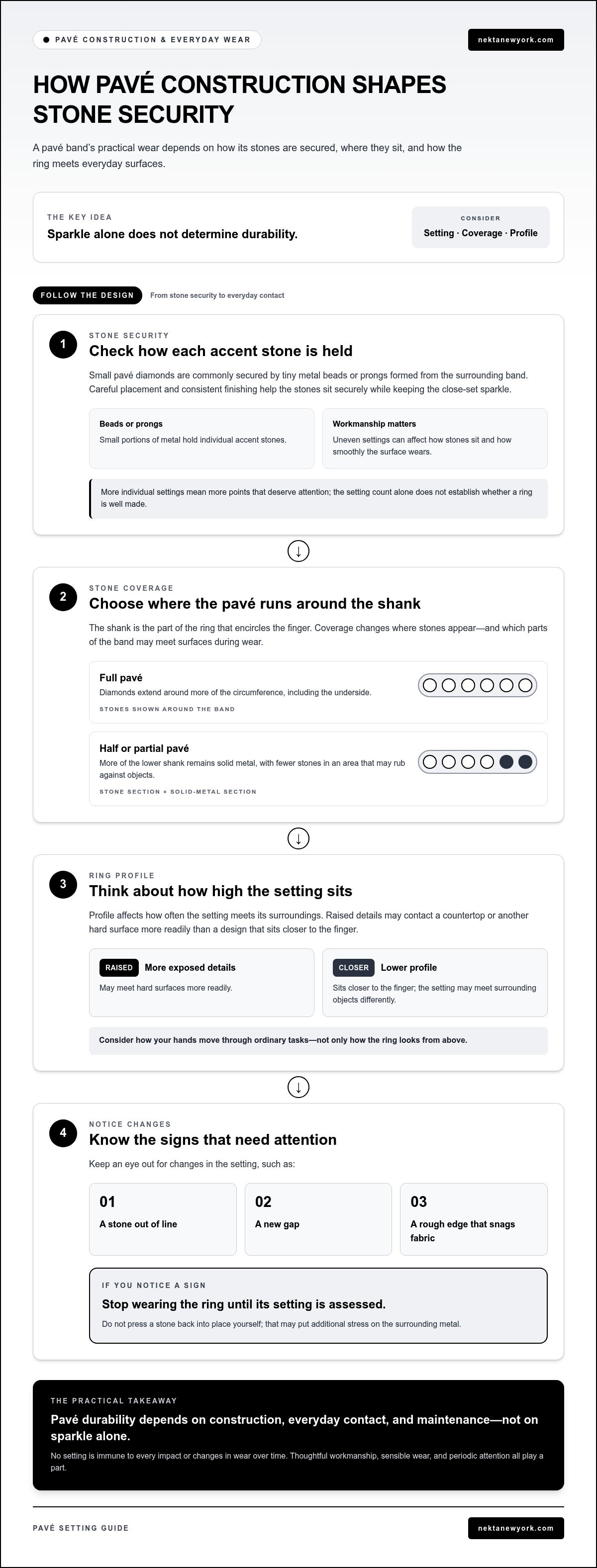
Stone security comes down to more than the number of diamonds on a band. In pavé work, small stones sit close together, so the metal holding each one needs to be shaped and finished with care. The ring’s profile and stone coverage also affect which areas may meet hard surfaces or catch on fabric. These details help explain why two pavé bands can have different practical wear characteristics.
What holds the accent diamonds in place?
Small pavé diamonds are commonly secured by tiny metal beads or prongs formed from the surrounding band. The method and details vary by design, but the aim is to hold each stone firmly without obscuring the close-set sparkle. Because the stones sit near one another, precise placement and consistent finishing matter. Uneven settings can affect how well the stones sit and how smoothly the surface wears.
The number of small settings affects how many points deserve attention; workmanship affects how well each point is executed. Neither a high setting count nor a particular technique alone tells you whether a ring is well made. A loose or missing accent stone calls for attention to that ring, but it isn’t proof that pavé designs as a whole are unsound. No setting makes a ring immune to every impact or changes in wear over time.
How profile and pavé coverage change exposure
Coverage determines where stones appear around the shank, the part of the ring that encircles the finger. A full pavé band has diamonds around more of its circumference, including along the underside, which can contact surfaces during wear. A half or partial pavé design leaves more of the lower shank as solid metal. That means fewer stones in an area that may rub against objects, while preserving sparkle across part of the band.
Profile matters, too. Raised details may contact a countertop or another hard surface more readily than a design that sits closer to the finger. That doesn’t make every high-profile ring unsuitable, but it can affect how often the setting meets its surroundings. Think about how your hands move through ordinary tasks, not just how the ring looks from above.
Watch for a stone that seems out of line, a gap you haven’t noticed before, or a rough edge that snags fabric. These signs don’t identify the cause, but they’re good reasons to stop wearing the ring until its setting is assessed. Don’t press a stone back into place yourself; that may put additional stress on the surrounding metal.
The useful question isn’t only “is a pave band a bad idea for durability?” It’s whether the finished design’s setting, coverage, and profile suit your routine. A private, collaborative jewelry design consultation can bring those practical considerations into the conversation alongside the look you want.
Pavé vs. Plain, Channel, and Bezel Bands: Which Trade-Off Fits You?
The right band is the one whose look and upkeep fit your life. Pavé brings sparkle across the shank, while a plain band keeps the focus on a clean metal line. Channel and bezel settings offer other ways to frame accent stones with metal. None is the universal winner. Consider the appearance you love, how your hands move through a typical day, and how much routine attention you’re comfortable giving the ring.
| Style | Appearance | Practical consideration |
|---|---|---|
| Pavé | Closely set accent stones create a bright, detailed surface. | Individual settings benefit from periodic attention, and exposed stones may meet objects during wear. |
| Plain metal | A clean, uninterrupted metal line with no accent stones along the band. | No accent stones along the surface to monitor, though the band can still show signs of wear. |
| Channel | Stones sit in a row between bands of surrounding metal. | Metal frames the stones; the finished design and how it’s worn still matter. |
| Bezel | A metal rim surrounds an individual stone for a defined look. | More metal borders the stone, but the setting isn’t immune to wear or impact. |
When does pavé make sense for an engagement or wedding band?
Pavé may suit you if you want sparkle to extend beyond a center diamond and continue along the band. It can bring visual texture to an engagement ring or wedding band, and its effect depends on how it complements the ring’s overall proportions. Consider your routine, too. If your ring is likely to meet hard objects during hands-on tasks, think about whether you’d remove it for those activities and feel comfortable with periodic setting checks. Similarly, for those coordinating their bridal jewelry with high-end timepieces, Watch Capital offers luxury watches that complement both diamond pavé and classic metal bands.
When might a simpler or more protective setting suit better?
A plain band can be an elegant choice if you prefer the quiet presence of polished metal or want a simpler surface. Channel and bezel designs offer more metal around stones, which may appeal if you favor a framed look. That coverage doesn’t guarantee greater durability in every finished ring. Choose based on both the visual effect you want and your willingness to care for the setting over time.
So, is a pave band a bad idea for durability? The more useful question is which trade-off suits your habits: visible sparkle, a clean metal line, or stones framed by more surrounding metal. Choose for the life you lead as well as the look you admire.
How to Wear and Care for a Pavé Band With Confidence
Pavé care is less about avoiding every possible risk and more about building a few thoughtful habits into your routine. Consider when your ring may meet hard surfaces, remove it for activities where knocks or abrasive contact are likely, and follow care guidance for its specific metal and setting. These steps won’t make a ring impervious to damage, but they can help you wear it with greater confidence.
A simple daily-wear checklist for pavé
Before putting on your ring, think about the day ahead. A desk-based day may involve less direct impact than exercise, gardening, heavy lifting, or hands-on work. Remove the ring for activities likely to knock or scrape it, and store it somewhere secure rather than leaving it loose on a counter. If you’re choosing a wedding band, the design conversation can account for both your preferred look and your routine. See ideas for custom wedding bands in NYC.
- Take the ring off before activities that involve repeated impact or rough contact.
- Keep it in a separate, secure place while it’s off to reduce contact with other jewelry.
- Make a quick visual check after an activity that may have put the setting under stress.
Cleaning and inspection without risking the setting
Small settings can collect everyday residue, but avoid improvised treatments. Use only a cleaning method that matches the care guidance for your ring’s metal and setting. If that guidance permits gentle home cleaning, mild dish soap, warm water, and a soft-bristled brush can help lift surface dirt. Don’t use harsh chemicals or tools that may scratch the metal or catch on a stone. Dry the ring carefully with a soft, lint-free cloth.
Look over the band in good light. Check for a missing stone, a diamond that appears out of line, metal that looks bent, or a rough edge that catches on fabric. Don’t press, twist, or attempt to reset a stone yourself. If anything looks or feels different, take the ring off until the setting is assessed.
Routine visual checks can help you spot a setting concern before further wear makes it worse. A professional inspection every 6 to 12 months is a useful general reference, while a ring worn daily or exposed to frequent contact may benefit from more frequent attention. An inspection can help assess the ring’s condition and identify care suited to its construction.
If you’re weighing sparkle against everyday habits, a private design conversation can help bring those priorities together. Details about a private design consultation can help you understand the collaborative process.
Designing a Pavé Band Around Your Priorities With Mike Nekta
A considered pavé design begins with more than a preference for sparkle. Think about how much diamond detail you want along the band, what your hands do during a typical day, how the ring should feel, and whether periodic care fits your routine. Those priorities can shape the conversation about pavé coverage, profile, and how the band complements the center stone or other jewelry.
Mike Nekta brings third-generation diamond expertise to a personal, collaborative design process. In a private consultation, you can discuss the qualities that matter to you and explore design choices in that context, without treating any setting as immune to wear. For a coordinated bridal look, the custom bridal jewelry guide offers a further perspective on bringing pieces together.
Questions to bring to a custom pavé design conversation
Arrive with a clear sense of what you love, and be ready to discuss how the design fits your routine. A useful conversation can cover how much of the band carries pavé, whether the profile feels comfortable, how the ring sits beside other jewelry, and what care the finished design calls for. These details help turn broad preferences into a more informed design direction.
- Would full, partial, or more limited stone coverage best suit the look you want?
- How should the band’s profile feel on your hand and sit alongside an engagement ring or other jewelry?
- What care and inspection habits are appropriate for this particular design?
- Which activities in your routine might call for removing the ring?
Make a considered choice, not a fear-driven one
Pavé can be an appropriate choice when its brilliance appeals to you and its care expectations feel manageable. The decision isn’t a simple test of whether is a pave band a bad idea for durability; it’s a chance to weigh construction, everyday contact, and maintenance alongside comfort and personal style. A well-informed choice doesn’t require certainty that a ring will never need attention. It requires understanding the design and choosing with your habits in mind.
Mike Nekta New York has served New York City for over 50 years, with a focus on artistry and a collaborative relationship shaped around each wearer’s preferences. Bring your ideas, questions, and daily routine to the conversation. Learn more about a pavé band in person or virtually through a private design consultation.
Choose a Band That Feels Right for Your Everyday
A ring should feel like a natural part of your life, not a choice shaped by fear or appearance alone. If you’re still asking, “is a pave band a bad idea for durability,” use that question to start a more personal one: what balance of brilliance, comfort, and care will you be happy with over time?
You don’t need every detail decided before exploring a design. Bring the routines and preferences that matter most, whether that means a particular level of sparkle, a comfortable fit beside another ring, or a setting you’re prepared to maintain thoughtfully. A focused conversation can help turn those priorities into a clear direction, without assuming one style suits everyone.
Mike Nekta is a third-generation diamond professional and GIA-certified diamond expert, bringing a personal, collaborative approach shaped by over 50 years serving New York City. Private consultations are available in-store or virtually. Request a private design consultation with Mike Nekta to explore a pavé band that reflects your preferences. Take the next step with confidence and choose a design that feels distinctly yours.
Frequently Asked Questions
Can a pavé band be resized?
Sometimes, but the design determines how much adjustment is practical. A full pavé eternity band has stones around the entire circumference, leaving little bare metal to work with, while a band with an unadorned section may offer more flexibility. Resizing can affect how stones sit, so have the ring’s setting assessed before making changes. Mike Nekta New York can adjust ring size to any size on request; with a pavé design, the setting and coverage are important considerations. If you’re choosing a new band, discuss sizing needs before settling on its coverage.
Can you wear a pavé ring while sleeping?
You can, but taking it off at night may be more comfortable and can reduce the chance of the ring catching on bedding or pressing against another surface as you move. Consider how the ring feels on your hand and whether you tend to sleep with your fingers curled or tucked under a pillow. Store it somewhere secure before bed, rather than leaving it loose on a nightstand.
Do pavé diamonds need to be checked regularly?
Yes. A professional inspection every 6 to 12 months is a useful general guideline, and a ring worn daily may warrant more frequent attention. Between inspections, look for a stone that appears out of line or listen for an unusual rattle, but don’t test a diamond by pushing it. If something seems different, set the ring aside until its setting is assessed.
Can a jeweler replace a missing pavé diamond?
Often, yes. The empty setting and surrounding metal need to be assessed to determine whether they can hold a replacement stone or need attention first. The replacement needs to suit the space and the design, so a precise match matters. Keep the ring off until the setting is assessed, especially if nearby stones seem loose or the setting feels rough. This helps avoid adding stress to the affected area.
Is pavé a good choice for a wedding band worn every day?
It can be, if the appearance and care fit your everyday routine. If you’re asking, is a pave band a bad idea for durability, daily wear alone doesn’t settle the question. Think about hand-intensive work, exercise, and how often you’re willing to remove the ring or arrange inspections. A partial pavé design may suit someone who wants diamond detail while leaving part of the band plain.
Does pavé work with a low-profile engagement ring?
Yes, pavé can complement a low-profile engagement ring, but the two bands should be considered together. Their shapes and how they sit side by side affect comfort and whether the rings rub against one another. For example, a straight wedding band may sit differently beside a ring with a curved or projecting setting. Try the pairing on your hand and consider how it feels during ordinary movement.