
The Perfect Wedding Band Pairings for a Pear Cut Ring
If you’re reading this, you probably already fell in love with a pear cut diamond. I get it. A pear has that rare mix of elegance and personality. It can look classic, modern, soft, bold, and sometimes all at once depending on how it’s set.
But here’s the part most people don’t realize until they’re deep in the process. Choosing the wedding band for a pear cut ring is not as straightforward as pairing a band with a round or oval.
The pear shape has a distinct point, a wider rounded end, and usually a setting style that creates gaps, angles, or height differences. That’s why the “perfect” wedding band pairing is less about following a trend and more about getting the geometry right for your exact ring.
I’m Mike Nekta, and I’ve helped a lot of clients in New York get this pairing right without compromising comfort, beauty, or longevity. Below, I’ll walk you through the wedding band options that actually work for pear cut engagement rings, what to avoid, and how to choose based on your setting and lifestyle. Information is free. Mastery is expensive.
Why Pear Cut Rings Are Trickier To Pair With A Wedding Band
Most pear cut rings are set in a way that creates at least one of these issues:
- A gap between the engagement ring and band because the pear’s point or basket protrudes.
- A height mismatch where the band can’t sit flush due to a low-set stone or bulky gallery.
- An awkward visual line where a straight band cuts across the pear and competes with its silhouette.
- Wear points where two rings rub in a way that causes long-term damage.
The goal is simple: you want the set to look intentional, feel comfortable on your hand, and wear well for years.
Start Here: Do You Want A Flush Fit Or Do You Like A Gap?
Before picking a band style, decide what look you’re going for.
Flush fit (no gap)
A flush fit means the band sits tight against the engagement ring. This is clean and “bridal set” traditional. It usually requires:
- A higher setting, or
- A band shaped to match the engagement ring, or
- A custom contour band
Small gap (intentional space)
A small gap can look modern and airy. It’s also sometimes the safest choice when forcing a flush fit would cause rubbing or awkward angles.
There’s no right answer here. What matters is that the gap looks intentional, not like something didn’t fit.
1) Straight classic band (yes, it can work)
A straight band is the most timeless choice, and it can absolutely pair beautifully with a pear.
Best for:
- Pears set a bit higher (cathedral settings often help)
- Minimalist solitaires
- People who want the engagement ring to stay the “hero”
What to watch for:
- If your pear is low-set, a straight band may leave a gap
- If the band is tall and the engagement ring is delicate, the band can visually overpower it
My practical tip: If you want a straight band, I usually recommend matching metal, keeping the band’s height similar to the engagement ring shank, and choosing a width that complements the pear’s finger coverage.
2) Contour band (my go-to recommendation for most pears)
A contour band is designed with a subtle curve so it nestles around your pear ring without a big gap.
Best for:
- Pears with baskets or prongs that block a flush fit
- Halo settings where the profile needs a shaped partner
- Anyone who wants “made for each other” without going overly custom
What to watch for:
- Some contour bands are too exaggerated and can look trendy fast
- A contour that doesn’t match your exact ring can still leave odd spacing
This is one of those cases where trying bands in person makes a huge difference.
3) V-shaped (chevron) wedding band (clean, sharp, very “pear-friendly”)
Chevron bands are popular with pear rings for a reason. The V shape echoes the pear’s point and frames it nicely, especially when the pear is worn point-up.
Best for:
- Pears worn point-up (the most common orientation)
- Modern styles, stack lovers, and geometric aesthetics
- People who want the band to add shape, not just sparkle
What to watch for:
- The V needs to align well with the pear’s point. If it’s too wide or too narrow, it can look off.
- If the chevron sits too high, it can interfere with the pear’s tip or prongs.
Style note: A slim chevron in plain metal can look incredibly high-end next to a pear. Diamonds are optional here, not mandatory.
4) Curved diamond band (adds sparkle without stealing the show)
If you love the idea of a diamond band but don’t want to compete with the pear, a gently curved pavé band can be the sweet spot.
Best for:
- Solitaires that need a touch more brilliance
- Pears with simple settings that can handle extra sparkle
- Anyone who wants a cohesive bridal look
What to watch for:
- Pavé bands can be delicate. You want quality setting work and appropriate stone size.
- If your engagement ring has pavé, match the style carefully so one doesn’t look “finer” than the other.
5) Matching pavé band (when you want the full bridal set look)
If your pear engagement ring has pavé on the shank, a matching pavé wedding band can look seamless and luxurious.
Best for:
- Pavé pear engagement rings
- People who love maximum sparkle
- Clients who want the set to read as one complete design
What to watch for:
- Two pavé rings side-by-side can increase wear if they rub
- Prong style matters. Shared prong vs micro pavé vs scallop-set all wear differently.
When clients come to me with a pavé pear ring, I always check how the rings will sit together long-term, not just how they look in a photo.
6) Eternity band (stunning, but not always practical)
A full eternity band can be breathtaking with a pear cut ring, especially when the band stones are well-matched and the finger coverage feels balanced.
Best for:
- People who love a statement band
- Slightly larger center stones where a substantial band still feels proportional
- Someone who doesn’t mind a higher-maintenance piece
What to watch for:
- Eternity bands are harder to resize
- They can feel bulkier between fingers
- They can accelerate wear when paired tightly with another ring
A half-eternity often gives the same look from the top while being more wearable day-to-day.
7) The “negative space” pairing (gap as a design choice)
Some pear settings simply don’t want to sit flush, and that’s okay. A straight band with a clean, consistent gap can look editorial and intentional.
Best for:
- Low-set pears
- East-west pears (yes, pears can be set horizontally)
- People who like modern styling and stacking
What to watch for:
- If the gap is uneven, it looks accidental
- If the rings constantly twist, the gap can shift and feel messy
A good jeweler can help you find a band that creates a stable, consistent line.
Pairing Based On Your Pear Setting Style
Here’s the fastest way to narrow it down.
Pear solitaire (simple, timeless)
- Straight classic band
- Slim pavé band
- Subtle contour band
Pear halo (more presence, more structure)
- Contour band (often best)
- Curved diamond band
- Chevron band for contrast
Bezel set pear (modern, smooth, clean)
- Straight band (plain or pavé)
- Chevron band (very sleek)
- Minimal contour if needed
Three-stone pear (already a statement)
- Plain straight band (let the ring speak)
- Very delicate pavé band
- Avoid overly dramatic contour unless it’s extremely well balanced
Metal Matching: Should The Band Match The Engagement Ring?
Most of the time, yes, but it’s not a rule.
- Platinum with platinum looks seamless and wears well.
- White gold with white gold keeps color consistent.
- Yellow gold with yellow gold looks classic and warm.
Mixing metals can look intentional if you commit to the look. The one thing I don’t love is accidental mismatch, where one ring looks like an afterthought.
Comfort And Durability Details People Overlook
This is the “unsexy” part, but it matters.
- Band height and edge profile: A comfort-fit interior and softened edges wear better.
- Pear tip protection: If your band puts pressure near the point, you risk snagging or loosening.
- Rubbing points: Two rings that grind can wear metal down over time, especially with pavé.
In my experience, the best-looking set is the one that still looks good five years later.
My Simple Process For Finding The Perfect Band Pairing
When someone comes into my studio, I keep it straightforward:
- Look at how the pear is set and where a band will hit.
- Decide whether we’re going flush or leaving a deliberate gap.
- Try straight, contour, and chevron options first (they cover most wins).
- Fine-tune width, metal, and diamond style for proportion.
- If nothing sits right, we go custom, but only if it truly improves the outcome.
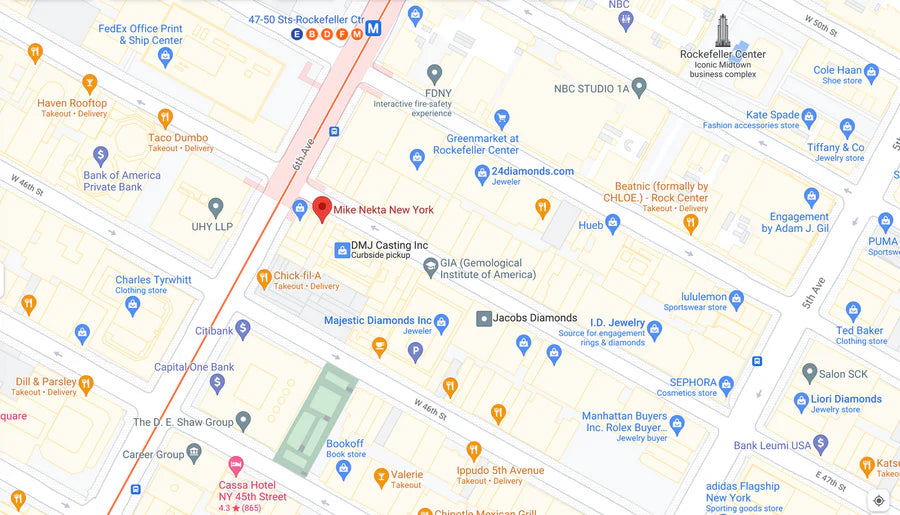
Book an Appointment with Me (Mike Nekta New York)
If you want a wedding band that actually fits your pear cut ring properly (and looks like it was meant for it), I can help you get there quickly.
Book an appointment with me, Mike Nekta, at Mike Nekta New York, and bring your engagement ring. I’ll guide you through the best wedding band pairings for your exact setting, your style, and how you wear your jewelry day to day. Come with questions. Leave with clarity.