
Traveling with Expensive Jewelry: 2026 Tips for Safer Trips
What if the safest choice is to leave a treasured piece at home? Deciding what deserves to travel is one of the most practical traveling with expensive jewelry tips, especially when a favorite ring or pair of diamond earrings carries personal meaning as well as value.
It’s natural to worry about loss, theft, or damage between airport security, hotel rooms, and busy days out. A plan can help you manage those risks without letting concern overshadow the trip. Before you pack, consider how often you’ll wear each piece, where you’ll store it, and whether your documentation and insurance address travel.
This guide will help you decide what to bring, pack and carry each piece carefully, and keep a clear inventory. You’ll also find practical guidance on airline screening, hotel storage, and what to do if jewelry goes missing or is damaged. With a little preparation, you can travel with greater confidence and enjoy the pieces you choose to bring.
Key Takeaways
- Choose pieces that serve a clear purpose on your trip, and leave those that add risk without adding meaning.
- Use these traveling with expensive jewelry tips to document each piece, store items separately, and carry them in a discreet, secure case.
- Decide whether to wear or store a piece based on your itinerary and comfort, knowing neither choice eliminates risk.
- Build a consistent routine for removing, storing, and checking jewelry during hotel stays and daily outings.
- If a piece goes missing, retrace your steps, record the details, and report it through the appropriate channels.
Traveling with Expensive Jewelry Starts with Choosing What to Bring
There’s a particular pleasure in wearing a meaningful ring, pendant, or pair of earrings while away from home. The goal isn’t to leave every treasured piece behind. Bring only jewelry that has a clear purpose, so you can enjoy it without carrying more valuables than your plans require. A useful starting point for traveling with expensive jewelry tips is to make the decision piece by piece, rather than packing out of habit.
Before packing, consider:
- Itinerary: Will the piece suit your planned activities, including transit and crowded settings?
- Occasion: Is it intended for a specific event, outfit, or practical need?
- Value: Would taking it add worry or require extra attention during the trip?
- Replacement difficulty: Could you readily replace it, or would its craftsmanship or personal significance be difficult to recreate?
How do you decide whether expensive jewelry belongs on the trip?
Give each item a role. A wedding band worn daily may feel essential, while a statement piece reserved for one dinner may not justify bringing it if you’d be anxious about wearing or storing it. Consider the full itinerary, not just the most elegant occasion. Beach days, outdoor activities, crowded attractions, and long transfers may make some pieces less practical. If airport screening is part of the journey, review current guidance. This general overview of airport security procedures explains passenger and baggage screening.
Pay particular attention to pieces that are valuable, sentimental, or difficult to recreate. Those qualities don’t automatically mean an item must stay home, but they raise the stakes of bringing it. If you’d spend the trip worrying about a piece, leaving it safely at home may be the more comfortable choice.
Build a small, versatile travel jewelry wardrobe
Choose a few pieces that work with several planned outfits and occasions. One pair of diamond stud earrings, for example, may suit daytime plans as well as a formal evening. A pendant can add a personal touch without requiring several similar necklaces. Aim for versatility, not a different accessory for every possibility.
Keep your selection proportionate to the trip. A short itinerary with one special event may call for a different edit than a longer journey with several planned occasions, but neither requires packing duplicates “just in case.” Lay out the pieces you’re considering, match each one to a real use, and remove anything without a clear role. A considered selection is easier to track and lets you focus on enjoying the moments you brought it for.
Packing Expensive Jewelry: Avoid Tangles, Scratches & Loss
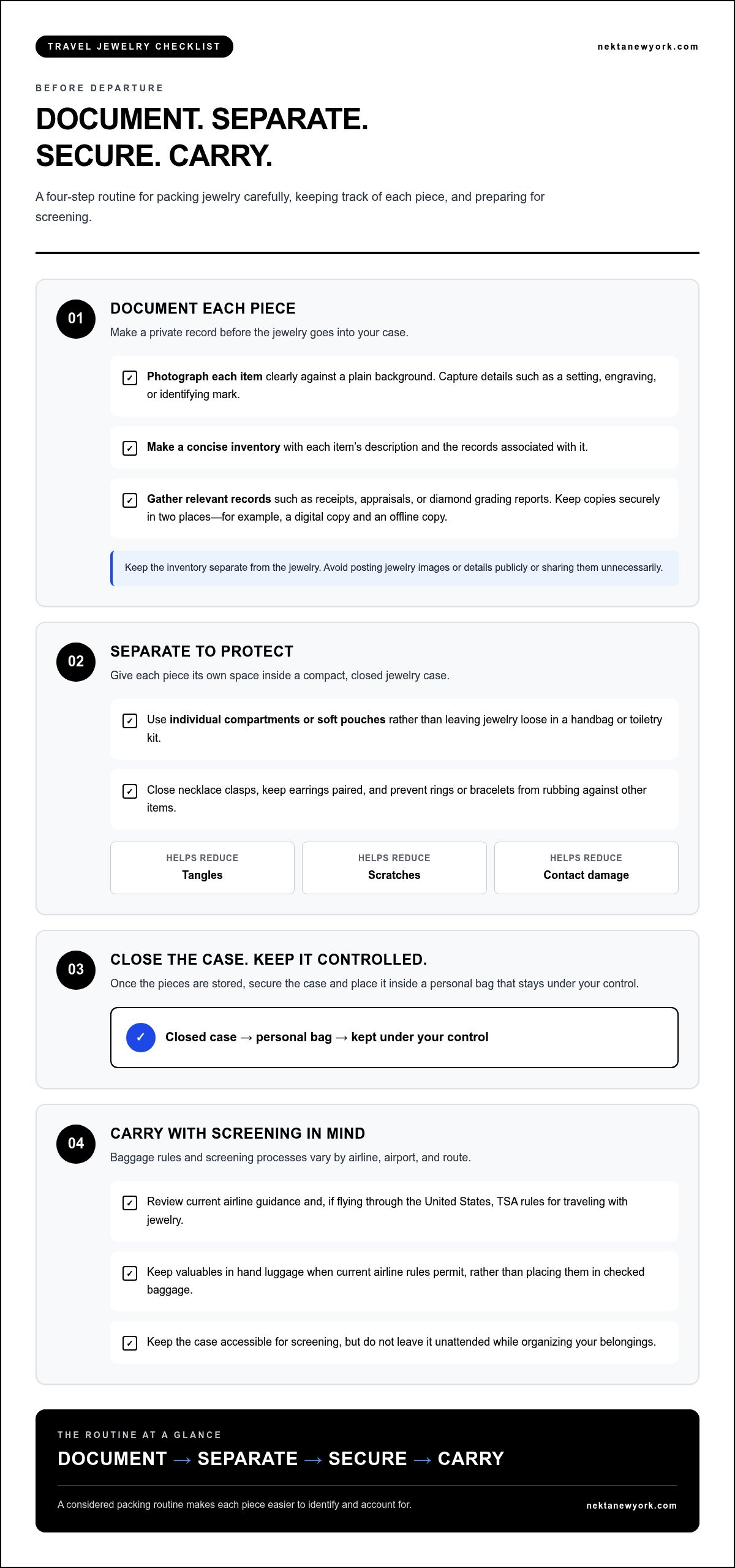
A careful packing routine helps prevent damage and makes it easier to account for each piece. Think of it as four steps: document, separate, secure, and carry. These traveling with expensive jewelry tips turn a small selection into a well-managed travel kit.
What is the safest way to pack jewelry for a flight?
Choose a compact, closed jewelry case with individual compartments or soft pouches. Give each piece its own space: close necklace clasps before storing them, keep earrings paired, and prevent rings or bracelets from rubbing against other items. Separate storage helps reduce tangles, scratches, and contact damage while your bag is moving.
Follow this sequence before departure:
- Document: Photograph each item and prepare a private inventory. Keep relevant receipts, appraisals, or grading reports with your travel records.
- Separate: Place every piece in its own compartment or pouch instead of leaving it loose in a handbag or toiletry kit.
- Secure: Close the case and place it inside a personal bag that stays under your control.
- Carry: Keep valuables in hand luggage when current airline rules permit, rather than placing them in checked baggage.
Screening processes and baggage rules vary by airline, airport, and route. Before departure, review current airline guidance and the TSA rules for traveling with jewelry if you’re flying through the United States. Keep the case accessible for screening, but don’t leave it unattended while organizing your belongings.
Which records should you prepare before departure?
Photograph each piece clearly against a plain background. Capture distinctive details, such as a setting, engraving, or identifying mark, so the images can help distinguish your jewelry from similar items. Store copies of appraisals, receipts, or diamond grading reports securely in two places, such as a digital copy and an offline copy, in case you can’t access your phone or an internet connection.
A travel jewelry inventory is a private record of the pieces you take, supported by descriptions and photographs, so you can identify and account for your belongings. Keep the list concise: note each item’s description and the records associated with it. Store the inventory separately from the jewelry, and avoid posting images or details publicly or sharing them unnecessarily.
Thoughtful documentation is part of caring for fine jewelry, just as careful handling is. Explore fine jewelry expertise and the craftsmanship behind pieces made to be treasured.
How to Carry and Wear Expensive Jewelry Through Airports and Busy Places
Whether to wear a valuable piece or keep it stored depends on your route, screening expectations, and comfort. Wearing a ring or small earrings may feel simple, but storing jewelry can make more sense if you’ll be navigating crowded transfers or would rather not draw attention. Neither option removes every risk. Choose the approach that lets you keep the piece under your direct control.
Should you wear valuable jewelry through airport security?
Consider whether wearing a piece is convenient for the journey or creates avoidable exposure. If you expect screening to require removal or closer inspection, allow extra time and keep your jewelry case easy to reach. Don’t place a ring, watch, or earrings loose in a tray, and don’t leave valuables unattended while gathering your belongings. Screening and baggage rules vary by airport, airline, and destination, so consult current official guidance before you travel.
From check-in through screening, transfers, and waiting periods, stay aware of where your jewelry is. If you remove a piece, put it directly into a secure compartment in your personal bag rather than a coat pocket or open pouch. Follow staff instructions, then move aside to repack without leaving your belongings behind.
How should jewelry habits change in crowded destinations?
Let the setting guide what you wear. A discreet pair of earrings may suit a full day of sightseeing better than several conspicuous pieces, while an elegant necklace might feel right for a planned event. Consider local dress expectations and activities, too. Jewelry that’s comfortable at dinner may be impractical for a crowded market or active excursion. The CDC offers advice on protecting valuables abroad, including guidance to avoid expensive accessories that may attract unwanted attention.
Keep your choices understated in unfamiliar or busy environments. Avoid displaying several high-value pieces together, and stay aware of your belongings while dining, sightseeing, or changing transport. Keep your bag closed and within sight instead of hanging it out of reach or setting it down unattended.
- At check-in: Keep jewelry with you and avoid placing it in checked baggage.
- During screening: Remove a piece only when instructed, and keep it in a secure, attended place.
- During transfers and outings: Choose jewelry suited to the setting and keep bags and valuables within view.
These practical traveling with expensive jewelry tips help you make deliberate choices in changing environments. Discretion and attention reduce avoidable exposure, while keeping each piece close makes it easier to enjoy the journey.
How to Protect Expensive Jewelry in Hotels and During Daily Outings
Travel habits matter after check-in, too. A hotel safe can be a useful temporary storage option, but it isn’t a guarantee of security. Decide where each piece belongs when you’re not wearing it, and follow the same routine each time you remove or put it back on. Consistency helps reduce the chance of misplacing jewelry or leaving it behind when plans change.
Is a hotel safe enough for expensive jewelry?
Treat a room safe as one option, not an automatic solution. Consider how long you’ll be away, who may have access to the room, and what storage options are available. For a piece you don’t plan to wear, weigh storing it in the room against keeping it secured with you. Your itinerary and comfort should guide that choice.
If you store jewelry, make a note of what went in and add retrieving it to your checkout routine. Before leaving the room, check the safe and your usual storage spot, then compare the pieces with your inventory. A brief, consistent check can help prevent a valued item from being forgotten in a drawer or safe.
What should travelers know about jewelry insurance?
Before departure, review your policy’s travel provisions, exclusions, coverage limits, and claim instructions. Don’t assume that a policy covers every kind of loss, damage, or theft while traveling. Jewelry coverage depends on the individual policy and its terms. Keep copies of appraisals, receipts, or other records separate from the jewelry and accessible if you need to make a claim.
Use a simple routine throughout your stay:
- When removing a piece: Return it to its designated case or storage place instead of setting it down casually.
- Before leaving for the day: Check that the jewelry you intend to wear is secure and that other pieces are stored as planned.
- Before checkout: Check the safe, drawers, and your inventory before leaving the room.
These traveling with expensive jewelry tips make everyday handling more deliberate without relying on any single measure to eliminate risk. For more on choosing fine diamond jewelry, explore pieces shaped by an expert understanding of craftsmanship and lasting value.
A Calm Plan for Traveling with Expensive Jewelry
A simple plan gives you clear next steps before departure, during transit, and once you’re home. Keep your jewelry inventory and supporting records accessible but private, and make checking your pieces part of the journey rather than an afterthought. These traveling with expensive jewelry tips help you prepare carefully and respond methodically if something goes wrong.
- Before departure: Confirm each piece has a purpose, photograph it, pack it separately, and review current travel guidance and your insurance policy’s terms.
- In transit: Keep jewelry under your direct control, and check that each piece is accounted for after screening and transfers.
- At your destination: Follow a consistent routine for removing, storing, and checking jewelry. Count pieces before leaving your accommodation.
- After returning: Compare your jewelry with your inventory, inspect each item, and note any damage or concern.
What should you do if jewelry goes missing while traveling?
Pause and retrace your steps calmly. Note when and where you last saw the piece, then check your designated storage place and the areas you’ve recently visited. Record what you remember, including a description and identifying details. Contact the accommodation, transport operator, or local authorities as the circumstances require, and keep any related reports or correspondence.
Next, review your policy’s claim instructions and follow the stated process. Gather relevant photographs, receipts, appraisals, and other documentation, and keep copies of anything you submit. Coverage depends on the specific policy, its terms, and the circumstances, so review the wording rather than assuming an incident is covered.
What belongs on a final travel jewelry checklist?
Before you leave, check that every item you’ve chosen has a clear purpose, a photograph, and secure individual packing. Review your itinerary, current airline or destination guidance, and applicable insurance terms. During the trip, account for your jewelry when leaving your accommodation. After returning home, check every piece against your inventory and note any change in condition.
Careful planning reflects the respect for craftsmanship that guides an experienced jeweler. Mike Nekta New York brings third-generation jewelry expertise to the consideration of fine pieces and their lasting value. Explore fine diamond jewelry and designs shaped by that perspective.
Travel with Confidence and Care
The best traveling with expensive jewelry tips begin with a considered choice: bring only pieces that have a clear purpose, then document and pack each one with care. Keep jewelry under your control through transit, use a consistent routine in hotels and during outings, and review your insurance terms before departure. If something goes missing, retrace your steps, record the details, and report it through the appropriate channels.
Fine jewelry carries more than material value. It may hold a personal story, reflect exceptional craftsmanship, or mark an important moment. That’s why thoughtful handling matters, whether you’re preparing for a short trip or a special occasion abroad.
Mike Nekta is a third-generation diamond expert, and the family business has served clients for over 20 years. To find a piece with lasting meaning, explore fine jewelry with guidance shaped by generations of expertise.
With a clear plan and attention at each stage, you can enjoy your journey and the jewelry you choose to bring.
Frequently Asked Questions
Should I travel with expensive jewelry?
Travel with an expensive piece only if it has a clear purpose and you’re comfortable keeping track of it throughout the trip. Consider your itinerary, planned occasions, crowded settings, and how difficult the jewelry would be to replace. A meaningful everyday item may feel worth bringing, while a highly sentimental piece you won’t wear may be better left safely at home. Make the decision item by item.
Can I put expensive jewelry in my carry-on bag?
Yes, valuable jewelry can generally go in carry-on luggage, and keeping it with you is preferable to placing it in checked baggage. Airline, airport, and destination procedures can vary, so review current official guidance before departure. Keep jewelry in a closed case inside a personal bag you can control, and follow screening staff instructions. Avoid setting pieces loose in a tray or leaving them unattended while reorganizing your belongings.
How do I pack jewelry without it getting tangled or scratched?
Place each piece in its own compartment or soft pouch inside a compact, closed jewelry case. Fasten necklace clasps before storing them, keep earring pairs together, and prevent chains, rings, and bracelets from rubbing against one another. Don’t leave jewelry loose in a handbag or toiletry kit, where it can shift and catch on other items. Photograph pieces before departure and keep a private inventory separately.
Is a hotel room safe secure enough for jewelry?
A hotel room safe can be a useful temporary storage option, but it isn’t a guarantee of security. Consider how long you’ll be away, room access, the value of the piece, and whether you’re comfortable leaving it there. If you use the safe, note what you put inside and check it before checkout. Keep pieces you need under your direct control rather than relying on one storage method.
Does jewelry insurance cover loss or theft while traveling?
It depends on the individual policy and its terms. Before leaving, review the travel provisions, exclusions, coverage limits, and instructions for making a claim. Don’t assume a policy covers every kind of loss, theft, or damage away from home. Keep appraisals, receipts, photographs, and other required records accessible but separate from the jewelry. If an incident occurs, follow the insurer’s stated reporting and documentation process.
Should I wear my engagement ring while traveling?
Wear your engagement ring if it suits your itinerary and you’re comfortable keeping it with you. For active plans, crowded transfers, or settings where it may attract attention, consider leaving it at home or storing it securely rather than wearing it. If you do wear it, build a consistent habit for removing and storing it, and avoid placing it loose in a pocket, sink area, or screening tray.
What should I do if I lose jewelry while traveling?
Stay calm, note when and where you last saw the piece, and retrace your recent steps, including your room and transport route. Contact the accommodation, carrier, or local authorities as the circumstances call for, and record relevant details or reports. Then review your insurance policy’s claim instructions and gather supporting documentation, such as photographs and receipts. Keep copies of communications and submit information through the applicable claims process.