
The Ultimate Guide to Oval Cut Engagement Rings: A Luxury Buying Perspective for 2026
33% of couples are now choosing oval cut engagement rings, a meteoric rise that has nearly dethroned the classic round brilliant for the first time in history. You’ve likely noticed why; they offer an unmatched ability to elongate the finger while providing a larger visual surface than almost any other shape. You want that signature sparkle, but you're likely concerned about the technical pitfalls that often plague this specific cut.
It's a valid concern. Selecting a luxury stone requires more than just looking at a GIA certificate. This guide will empower you to master the nuances of the oval shape, from identifying the "perfect" length-to-width ratio to ensuring your diamond is free from the dreaded dark bow-tie effect. Drawing on three generations of expertise from Manhattan’s Diamond District, we'll show you how to maximize brilliance for your investment. You'll also learn how to pair your stone with the ideal wedding band to create a seamless, high-end bridal set that reflects your personal legacy.
Key Takeaways
- Understand how the elongated silhouette of an oval diamond creates a slender finger appearance and provides a larger visual surface area than a round brilliant.
- Learn to navigate technical nuances like the bow-tie effect and length-to-width ratios to ensure your diamond possesses optimal fire and brilliance.
- Discover the most sought-after 2026 setting trends, from minimalist solitaires to intricate hidden halos that enhance the stone's profile.
- Master the art of pairing oval cut engagement rings with specialized contoured or curved wedding bands for a seamless, flush bridal set.
- Benefit from three generations of Manhattan Diamond District expertise to secure a hand-selected, GIA certified diamond that reflects true custom artistry.
Why Oval Cut Engagement Rings are the Premier Choice for 2026
In the curated world of high-end jewelry, the oval has transcended its status as a mere trend. By 2026, it has solidified its position as the premier alternative to the round brilliant. This evolution isn't accidental. It's the result of a sophisticated appreciation for how a diamond interacts with the wearer's hand. While a round stone offers classic symmetry, oval cut engagement rings provide a more tailored, editorial look that complements the natural lines of the finger. This shape has moved from a seasonal favorite to a cornerstone of luxury bridal collections because it balances traditional sparkle with a modern, elongated aesthetic.
The Modern Silhouette: Elongation and Elegance
The secret to this shape's allure lies in the vertical axis. Unlike square or round shapes that concentrate their weight in a central point, the oval draws the eye upward. This creates an immediate elongation effect, making the finger appear more slender and graceful. It's a design trick favored by Manhattan’s top artisans to create a sense of effortless elegance. When compared to traditional square cuts like the princess or cushion, the oval offers a softer, more fluid "spread" across the hand. This fluidity allows it to anchor a vintage Art Deco setting just as effectively as an ultra-minimalist modern band. Designers in 2026 are increasingly leaning into this versatility, using the oval's unique footprint to create rings that feel both timeless and ahead of the curve.
Maximizing Your Investment with Surface Area
From a technical standpoint, the oval is a masterclass in efficiency. Because of the way an expert cutter manages the stone's proportions, much of its carat weight is distributed across the top of the diamond. This is often referred to as the "face-up" size. When you evaluate diamond cut quality, you'll find that ovals typically have a shallower pavilion than round stones. This means an oval diamond will almost always look significantly larger than a round diamond of the exact same carat weight. It's a strategic way to achieve a high-impact look without necessarily increasing the budget for weight that remains hidden beneath the setting.
In a social setting, the impact is undeniable. You aren't just buying a stone; you're investing in presence. When selecting oval cut engagement rings, you're choosing a stone that performs beyond its weight class. A 1.5-carat oval can easily command the visual attention of a 2-carat round brilliant. This psychological advantage makes them the ultimate choice for the discerning buyer who values both prestige and intelligent value. Some collectors even choose to liquidate existing assets through services like Houston Empire Gold Buyers to increase their purchasing power for such a significant piece. It's about achieving maximum brilliance and a commanding silhouette without compromise.
Evaluating Quality: The Technical Nuances of the Oval Shape
Selecting oval cut engagement rings isn't just about the size on the finger. It's about the sophisticated mathematics behind the sparkle. Unlike round diamonds, which have standardized "Ideal" cut grades from the GIA, ovals are far more subjective. This makes a professional grading report and a trained eye non-negotiable for a luxury purchase. You shouldn't settle for anything less than a GIA certified stone; it's the only way to ensure the clarity and color you're paying for are accurately represented without hidden compromises. In NYC’s Diamond District, we look beyond the paper to find stones that possess true life.
Mastering the Bow-Tie Effect
The bow-tie effect is a dark, butterfly-shaped shadow across the center of the diamond caused by facet misalignment and light leakage. Almost every oval diamond will have some degree of this shadow due to its elongated geometry. However, there's a fine line between a stone with structural contrast and one with a distracting black hole in the middle. Mike Nekta hand-selects every diamond to ensure the bow-tie is minimal or virtually invisible to the naked eye. A slight, well-placed shadow can actually provide the contrast necessary to make the rest of the stone's facets pop. It requires a master's touch to find that balance between light and shadow. If you're feeling overwhelmed by technical specs, you can always consult with an expert to see these nuances in person.
Finding Your Ideal Ratio
The Length-to-Width (L/W) ratio defines the diamond's silhouette. A classic ratio typically sits between 1.35 and 1.50. These stones offer that iconic, balanced look that feels substantial and timeless. They're the ideal choice for those who want a softer, traditional appearance. If you're looking for something more dramatic, an elongated oval with a ratio of 1.55 or higher provides a sleek, avant-garde feel. These ovals mimic the elegance of a marquise cut but maintain the soft, rounded ends that define the shape. Matching the ratio to the wearer's hand proportions is a vital part of the custom process; longer fingers can carry higher ratios beautifully, while shorter fingers often benefit from the width and balance of a 1.40 ratio.
Symmetry is the final pillar of quality. Even with a perfect ratio, poor symmetry will make the stone look lopsided or "off" under close inspection. Always insist on "Excellent" symmetry on your GIA report. This ensures that light return is maximized across the entire surface, providing the fire and brilliance expected of high-end oval cut engagement rings. When the facets align perfectly, the stone doesn't just sit on the hand; it commands the room.
Selecting the Perfect Setting for Your Oval Diamond
The setting acts as the architectural foundation for your diamond. While the stone provides the fire, the setting determines the ring's character and longevity. For those seeking the purest expression of the shape, the solitaire remains a timeless standard. It allows the diamond's unique silhouette to take center stage without distraction. However, choosing between a prong or bezel setting requires a deeper look at your lifestyle. Prongs allow maximum light to enter the stone from all angles, enhancing the brilliance we've already secured through careful selection. We often recommend a six-prong configuration for larger ovals; it provides extra security and helps define the rounded shape. Conversely, a bezel setting offers a sleek, modern look that protects the diamond's edge from accidental chips. This is a vital consideration for a stone with such a large surface area.
The Rise of the Hidden Halo
The hidden halo has emerged as the defining trend for 2026. It appeals to the "minimalist luxury" seeker who wants a clean look from the top but a sophisticated surprise from the profile. This setting features a delicate wrap of micro-pavé diamonds just beneath the center stone's girdle. It adds a secret layer of sparkle that's only visible to the wearer and those close enough to see the ring's side view. Beyond the aesthetics, this metal wrap provides essential structural integrity. It reinforces the prongs and keeps the center stone secure, ensuring your investment is protected for generations. It’s a subtle way to enhance oval cut engagement rings without the "busy" look of a traditional top-down halo.
Side Stone Harmony: Pears and Marquises
Framing an oval requires a keen eye for geometry. Pear-shaped side stones are the natural partner for oval cut engagement rings because their rounded ends and tapered points mirror the oval's own curves. This creates a seamless "tapered" look that flows elegantly into the band, making the center stone appear even more prominent. We also see a rise in the use of "cadet" or trapezoid side stones for those who want a bit more architectural edge. This frames the oval with clean, straight lines that contrast beautifully with its soft edges.
For a bolder statement, some collectors are exploring the "Toi et Moi" style, pairing an oval with a contrasting shape like an emerald or pear. This asymmetrical approach is perfect for the client who wants a piece that feels like a custom work of art. Whether you choose a classic three-stone setting or a modern duo, the goal is always harmony. The side stones should support the oval, never compete with it. A well-designed setting doesn't just hold the diamond; it elevates it into a piece of high jewelry.

Completing the Set: Pairing Ovals with Wedding Bands
Selecting your center stone is a monumental milestone, but the journey doesn't end there. The architectural beauty of oval cut engagement rings presents a specific challenge when it's time to select a wedding band. Because of their elongated footprint, many ovals are designed with a lower profile to ensure they sit comfortably and securely against the hand. While this is practical, it often prevents a traditional straight wedding band from sitting flush against the engagement ring, creating a visible "gap." For some, this gap is a stylistic choice that adds a touch of modern negative space. For others, it’s a distraction from the cohesive bridal set they've envisioned. Solving this requires a master’s eye for proportions. You don't want your wedding band to compete with your diamond; you want it to frame the stone’s brilliance.
Contoured vs. Straight Bands
A contoured band is specifically engineered to "hug" the curve of the oval. These bands feature a gentle arc or a deep V-shape that allows the wedding ring to tuck perfectly under the head of the engagement ring. It creates a seamless, unified look that many luxury buyers prefer. However, you should keep in mind that a highly contoured band may look asymmetrical if you ever choose to wear it without your engagement ring. If you prefer the versatility of a straight band but don't like the gap, consider a "high-set" engagement ring. This elevates the diamond just enough for a standard band to slide underneath. If your heart is set on a low-set oval, we often suggest a delicate spacer ring or a custom-fitted band to bridge the two pieces. It’s about finding the balance that suits your daily lifestyle.
Metal Matching and Texture
The 2026 trend for bridal stacks is moving away from perfect uniformity. We're seeing more clients embrace "quiet luxury" by mixing a platinum engagement ring with a high-polish yellow gold wedding band. This adds a layer of curated texture that feels more personal and less like a pre-packaged set. If you're sticking to a single metal, pay close attention to the pavé millimeter width. A mismatch here can make the set feel disjointed. Matching the diamond weight on the band to the side stones of your engagement ring ensures a consistent river of light across the finger. While ovals offer a unique silhouette, you can see how they compare to more traditional pairings in our guide on round brilliant cut engagement rings.
Your bridal set is a reflection of your individual story. Don't feel restricted by tradition; instead, focus on how the pieces interact as a whole. You can explore our curated collection of luxurious wedding bands to find the perfect architectural match for your stone. If you're unsure which silhouette fits best, we invite you to consult with our experts to find a pairing that feels as timeless as the diamond itself.
The Mike Nekta Legacy: Custom Artistry in the Diamond District
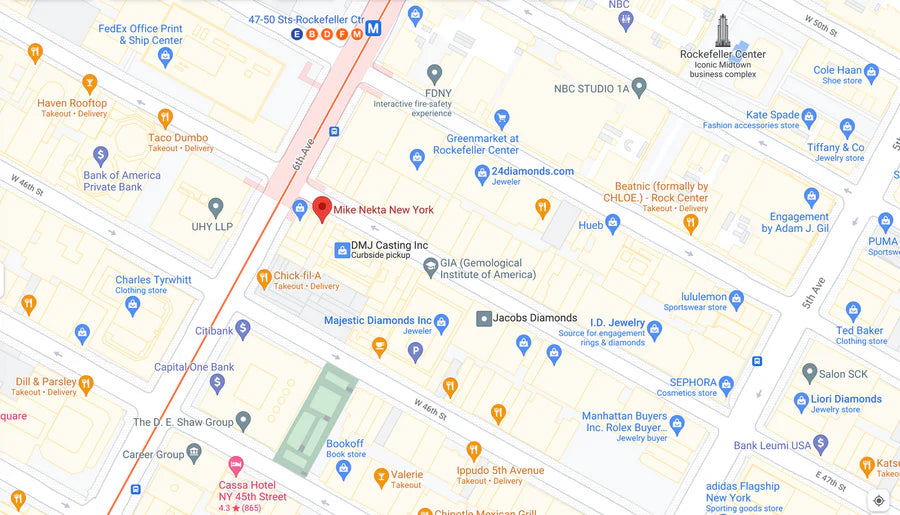
Heritage matters. Mike Nekta isn't just a name on a storefront; he's a third-generation diamond expert whose family has been a fixture in Manhattan’s Diamond District for decades. This legacy provides more than just a historical footnote. It offers the kind of institutional knowledge that can't be found in a textbook or an online search. When you're investing in oval cut engagement rings, you're looking for a stone that has been vetted by an eye trained through thousands of hours of direct observation. Being in the heart of NYC grants us immediate access to the world’s finest GIA certified loose diamonds. This allows us to secure the highest quality stones before they ever reach the mass market. Buying in the NYC Diamond District offers an unparalleled combination of value and quality that simply isn't available through traditional retail channels.
Hand-Selected GIA Certified Diamonds
A GIA certificate is a baseline, not a guarantee of beauty. Mike Nekta applies a personal, rigorous set of criteria to every stone, looking specifically for "eye-clean" clarity and exceptional light return. There's a profound difference between a stone that looks good on paper and one that possesses true "life" when it hits the light. We look for ovals that avoid the dullness often found in mass-produced inventory. It’s essential to verify GIA certificates in-person to ensure the diamond’s character and sparkle match its technical grade. This level of scrutiny ensures that your ring isn't just a commodity, but a masterpiece of nature and craft. We don't just sell diamonds; we curate the top 1% of what the market has to offer.
Crafting Your Custom Oval Ring
The custom design process at our Manhattan boutique is a collaborative journey. It starts with a vision and evolves through meticulous craftsmanship into a high-end jewelry piece. We take the time to understand your aesthetic, ensuring the proportions of the setting perfectly complement the specific length-to-width ratio of your oval diamond. This transition from a simple engagement to a lifetime of fine jewelry requires a partner who values your personal story as much as the technical specs. We use our custom design expertise to create a ring that feels like a natural extension of the wearer. Ready to complete your bridal set? Browse our exclusive wedding bands today.
Secure Your Legacy with an Oval Masterpiece
Choosing one of our oval cut engagement rings is a decision that balances timeless elegance with sophisticated optical performance. You've learned that the secret to a truly high-end stone lies in the delicate management of the bow-tie effect and the selection of a length-to-width ratio that complements the wearer's hand. These technical details, combined with the right architectural setting, ensure your diamond commands attention from every angle. It's about more than just a certificate; it's about the life within the stone.
At Mike Nekta, we bring three generations of expertise to every selection. By focusing exclusively on GIA certified diamonds and hand-selecting each stone in the heart of the NYC Diamond District, we guarantee a level of brilliance that mass-market retailers simply can't match. Your ring is a handcrafted work of art designed to endure for generations. We take pride in guiding you through this process with the transparency and precision your investment deserves.
Once you have secured a ring that reflects your personal legacy, your focus will naturally shift toward the celebration itself. For those planning a luxury wedding in the city, you can explore Event Venue Rental Fees to see how a modern Manhattan space like Glasshouse Downtown can serve as the perfect setting for your debut as a couple.
If you are making a trip to the city to select your diamond, consider taking some time to explore the iconic scenery of the surrounding neighborhoods; you can check out Brooklyn Giro for a professional guided bicycle tour that showcases the best of the New York boroughs.
Planning for a secure future in New York often involves protecting your lifestyle and your family; just as you seek expert guidance for your jewelry, you can explore Car Accident Legal Representation if you ever need dedicated legal support after an unexpected road incident.
Now that you've mastered the nuances of the oval shape, it's time to envision the complete set. We invite you to Find the Perfect Wedding Band to Complement Your Oval Ring and finalize a bridal look that is uniquely yours. Your perfect diamond is waiting to be discovered.
Frequently Asked Questions
Do oval diamonds have a bow-tie effect?
Yes, nearly every oval diamond displays some degree of a bow-tie effect due to the way light interacts with its elongated facets. The key isn't necessarily finding a stone with zero shadow; instead, you should select one where the shadow is minimal and well-blended. A master jeweler hand-selects stones to ensure this contrast enhances the diamond's brilliance rather than creating a distracting dark void in the center of the stone.
What is the best length-to-width ratio for an oval engagement ring?
The most sought-after length-to-width ratio for a classic oval silhouette typically ranges from 1.35 to 1.50. This range provides the perfect balance of width and elongation that many luxury buyers prefer. If you desire a more dramatic, slender look that mimics a marquise shape, you might opt for a ratio of 1.55 or higher. The choice ultimately depends on how the diamond proportions complement the unique lines of your hand.
Are oval diamonds more expensive than round diamonds?
Oval diamonds are generally more cost-effective than round brilliant diamonds of the same carat weight and quality. Because the cutting process for ovals utilizes more of the original rough diamond, there's less waste; this translates to a lower price per carat. This allows you to invest in a larger or higher-quality stone for the same budget. It's a strategic way to maximize your visual investment without sacrificing luxury or sparkle.
What wedding band looks best with an oval engagement ring?
A contoured or curved wedding band often looks best with oval cut engagement rings because it follows the natural arc of the center stone. This specialized design eliminates the "gap" that usually occurs with a traditional straight band. If you prefer a more eclectic look, a multi-band stack featuring different textures like micro-pavé or high-polish gold can add a curated, personal touch to your bridal set while maintaining a sophisticated silhouette.
How do I make my oval diamond look bigger?
To maximize the visual size of your diamond, prioritize a slightly higher length-to-width ratio and a slim, minimalist band. These elements draw the eye vertically, creating the illusion of greater surface area. Additionally, a hidden halo setting adds a layer of secret sparkle that enhances the stone's profile without overwhelming the center diamond. Choosing a thin prong setting also ensures that more of the diamond's face is visible to the observer.
Are oval engagement rings a trend or a classic style?
Oval engagement rings are a timeless classic that has recently seen a surge in popularity, nearly equaling the market share of round cuts for 2026. While they're currently a top choice, their elegant, finger-elongating silhouette has been favored by royalty and collectors for centuries. This shape transcends fleeting trends; it's a secure investment for someone who values both modern style and enduring, multi-generational appeal that will never feel dated.
Is a 4-prong or 6-prong setting better for an oval diamond?
A 6-prong setting is generally superior for an oval diamond, as it provides enhanced security and better defines the stone's rounded edges. The extra prongs offer vital protection against accidental chips while maintaining the diamond's structural integrity. While a 4-prong setting provides a cleaner, more minimalist look, it can sometimes make an oval appear slightly squared off. For a high-carat investment, the added peace of mind of six prongs is often preferred.
Can I get a GIA certified oval diamond at Mike Nekta New York?
Yes, every center stone at Mike Nekta New York is a GIA certified diamond. We believe that professional grading is non-negotiable for high-end oval cut engagement rings, as it provides an objective verification of the stone's quality. Our 3rd generation expertise goes a step further; we hand-select only the stones that possess exceptional "life" and brilliance, ensuring that your diamond's beauty far exceeds what is simply listed on its technical grading report.