
The Elongated Cushion Cut: A Masterclass in Modern Luxury Silhouettes (2026 Guide)
Why settle for a traditional square silhouette when you can command attention with a shape that bridges the gap between classic romance and contemporary edge? You've likely noticed that the most captivating engagement rings of 2026 share a common trait: a graceful, stretched profile that elongates the finger while retaining those iconic soft corners. It's a look that feels both vintage and incredibly current. However, choosing an elongated cushion cut diamond isn't as simple as picking a stone from a tray.
It's understandable to feel overwhelmed by technical terms like "crushed ice" or "chunky" faceting, especially when you're worried about paying a premium for a stone that might have hidden dead spots. You want a diamond that balances modern length with timeless brilliance, not one that loses its sparkle in the corners. This guide simplifies the selection process, ensuring you understand exactly how light interacts with different ratios to create that coveted hall of mirrors effect.
We'll break down the ideal length-to-width ratios for maximum impact and show you how to distinguish between different faceting styles with confidence. You'll also learn the essential steps for sourcing a GIA-certified elongated diamond in NYC, drawing on three generations of expertise to help you find a stone that truly stands out.
Key Takeaways
- Learn why a length-to-width ratio between 1.15 and 1.30 is the gold standard for creating a balanced, finger-flattering silhouette.
- Master the distinction between brilliant and crushed ice faceting so you don't compromise on a stone's light performance or fire.
- Understand how to evaluate face-up size to ensure your diamond doesn't hide its weight, and learn why GIA certification is essential for a high-quality elongated cushion cut.
- See how this versatile shape stacks up against ovals and radiants to help you choose the right balance of soft romance and geometric edge.
- Explore how different setting orientations can dramatically change the look of your ring, from classic vertical stacks to avant-garde horizontal placements.
Defining the Elongated Cushion Cut: Why Length is the New Luxury
The elongated cushion cut represents a sophisticated evolution of one of the world's most enduring diamond shapes. While the classic cushion is traditionally associated with a square 1:1 ratio, the elongated variant stretches that silhouette into a graceful rectangle. It's a modified brilliant cut that retains the signature rounded corners and curved sides that diamond enthusiasts have loved for centuries. By extending the length, the stone gains a modern architectural edge without sacrificing the soft, romantic appeal that defines the cushion category.
In our Manhattan showroom, we've observed a significant shift toward these stretched profiles. Most clients seeking an elongated look gravitate toward a length-to-width (L/W) ratio between 1.15 and 1.30. This specific range creates the perfect "squoval" balance. It's enough of a stretch to be distinct from a square, yet it doesn't become so thin that it loses the "pillow" effect. From the Mike Nekta perspective, this cut is the ultimate hybrid. It marries the vintage soul of a hand-cut Old Mine diamond with the laser-like precision of 21st-century artistry.
The Aesthetic Appeal of the Rectangular Silhouette
The primary reason this silhouette is dominating 2026 engagement trends is its remarkable ability to maximize finger coverage. Because the diamond's mass is spread across a longer surface area, an elongated cushion cut often appears larger than a round or square stone of the same carat weight. This creates a slimming effect on the hand, drawing the eye along the finger in a way that mimics the elegance of an oval but with more structural substance.
Psychologically, the soft corners offer a different experience than the sharp, geometric intensity of a Radiant cut. While a Radiant feels bold and perhaps a bit aggressive, the elongated cushion feels approachable and refined. It's a look favored by high-end designers who want to create pieces that feel substantial yet effortless. It's no surprise that this shape has become the premier choice for those who want their jewelry to reflect a sense of quiet luxury.
Historical Roots: From Old Mine to Modern Elongated
To understand the modern elongated stone, one must look back to the 19th-century. The Cushion cut finds its ancestry in the "Old Mine Cut," a deep, chunky shape designed to sparkle under the warm glow of candlelight. These early diamonds were rarely perfectly square; they were often slightly irregular and elongated based on the natural shape of the rough crystal.
Today, we use advanced computer modeling to achieve that same historic charm with far greater light performance. We can now precisely control the elongation to ensure the diamond remains bright from edge to edge, avoiding the "dead spots" that often plagued older rectangular stones. The modern elongated cushion stands as a masterful bridge between Victorian romance and Manhattan modernism.
The Anatomy of an Elongated Cushion: Ratios, Faceting, and Fire
Technical precision is the foundation of true luxury. When you're selecting an elongated cushion cut, you aren't just buying a diamond; you're investing in a specific interplay of light and geometry. The beauty of this silhouette lies in the nuance of its proportions. A few millimeters can be the difference between a stone that looks like a slightly stretched square and one that commands the room with a bold, rectangular presence. Understanding these metrics allows you to move beyond the surface and select a diamond with intentionality.
Mastering the Length-to-Width Ratio
The length-to-width (L/W) ratio determines the diamond's "footprint" on your finger. It's a simple calculation of length divided by width, but the visual impact is profound. We generally categorize these ratios into three distinct tiers:
- 1.10 - 1.15 (Subtle Elongation): This range is ideal for those who admire the classic cushion but want a slight "lift." It offers a hint of length that makes the stone feel more modern than a standard 1:1 square.
- 1.20 - 1.25 (Classic Elongated): This is the industry sweet spot. It provides that coveted "squoval" look, offering significant finger coverage while maintaining the soft, pillowy essence of the cushion shape.
- 1.30+ (Dramatic Rectangle): For a high-fashion, architectural statement, ratios above 1.30 create a striking rectangular profile. These stones are rarer and require expert cutting to maintain brilliance across their extended surface.
Faceting Styles: Chunky vs. Crushed Ice
The internal architecture of the diamond dictates how it speaks to the light. The "Cushion Brilliant" style features larger, broader facets. This creates a "chunky" look reminiscent of antique diamonds, producing bold flashes of rainbow light known as fire. It's a choice for those who value traditional elegance and high-contrast sparkle.
Conversely, the "Cushion Modified Brilliant" often produces the "crushed ice" effect. These stones have smaller, more numerous facets on the pavilion. The result is a continuous, shimmering wall of sparkle that looks like sunlight hitting a frozen lake. This style is exceptionally good at masking small inclusions. If you're unsure which light profile suits your hand, you can view loose GIA diamonds in person at our Manhattan office to compare these effects side by side.
Beyond ratios and faceting, the depth percentage is a critical factor we evaluate. If an elongated cushion cut is too shallow, it may exhibit a "bow-tie" effect, a dark shadow across the center. If it's too deep, the diamond "hides" its weight in the bottom of the stone, making it look smaller than its actual carat weight. The Mike Nekta Selection Process focuses on sourcing stones with a balanced depth, ensuring every point of light is reflected back to the eye with maximum intensity.
Elongated Cushion vs. The Competition: Choosing Your Silhouette
Selecting a diamond is often a process of elimination. As you refine your search for the perfect rectangular stone, you'll inevitably find yourself comparing the elongated cushion cut to its closest rivals: the oval and the radiant. While all three offer the benefit of finger elongation, they communicate very different aesthetic messages. The cushion remains the unique choice for those who want the length of a rectangle without the harshness of sharp lines or the predictability of a standard oval.
The Oval Comparison: Softness vs. Symmetry
Ovals have long been the default choice for buyers wanting to slim the appearance of their hand. However, the elongated cushion cut offers a distinct structural advantage. While an oval has pointed, fully rounded ends, a cushion features flatter sides and pillowy, curved corners. This "squoval" shape provides a more substantial feel on the finger; it occupies more visual space because it doesn't taper as aggressively as an oval does.
From a value perspective, cushions often present a more attractive entry point than ovals or the traditional round brilliant cut engagement rings. In the 2026 market, natural cushion diamonds generally trade at a 25% to 30% discount compared to round stones of similar quality. When compared to ovals, cushions frequently offer a better "face-up" value, meaning you can often secure a slightly larger stone for the same investment without sacrificing that high-end, elongated look.
The Radiant Rivalry: Brilliance vs. Scintillation
The choice between a cushion and a radiant cut usually comes down to your preference for "vintage" or "modern" vibes. Radiant cuts are known for their truncated, clipped corners and intense scintillation. They're geometric and sharp. In contrast, the elongated cushion uses rounded corners to create a softer, more romantic silhouette. It's the "softest" member of the elongated diamond family, making it ideal for settings that emphasize fluid lines and ethical artistry.
When it comes to hiding inclusions, both shapes perform exceptionally well due to their complex faceting. However, the "crushed ice" style of a modified cushion can sometimes mask small imperfections even better than a radiant's facet-heavy arrangement. If your heart is set on a stone that reflects the hall-of-mirrors clarity of an emerald cut, the cushion won't be the right fit. Emerald cuts rely on long, step-cut facets that prioritize transparency, whereas the elongated cushion is all about the dance of fire and brilliance.
Ultimately, the cushion remains the premier choice for the sophisticated buyer who finds the radiant too aggressive and the oval too common. It sits in that perfect middle ground, offering a masterclass in balance. You get the modern luxury of a rectangular silhouette, but it's tempered by the timeless, gentle curves that have defined the world's most famous diamonds for generations.

The Mike Nekta Selection Process: Curating Your Elongated Diamond
Sourcing a high-performing diamond requires more than just a filter on a database. At our Manhattan showroom, we believe that an elongated cushion cut must be curated, not merely stocked. While the 4Cs provide a helpful baseline, they don't capture the "life" or personality of a stone. A diamond can look perfect on a grading report but appear dull or "leaky" when viewed in person. Our selection process is designed to filter out these technical underperformers, ensuring that every stone we present possesses the fire and brilliance expected of a third-generation master jeweler.
The Importance of GIA Curation
For any significant investment, GIA certification is the industry's non-negotiable gold standard. However, reading a GIA report for a cushion is different than reading one for a round stone. The GIA labels cushions as either "Cushion Brilliant" or "Cushion Modified Brilliant." These labels dictate the faceting arrangement, which directly impacts the light profile. We personally inspect every stone to ensure the symmetry is visually perfect; machines often miss subtle misalignments in the rounded corners that can disrupt the flow of light. If you want to understand the nuances of these reports, our guide to loose gia certified diamonds offers a deeper look at expert curation.
One of the most critical factors we evaluate is "face-up" size. Because cushions are naturally deep stones, they often hide a significant portion of their carat weight in the pavilion, the bottom part of the diamond. This means a 2-carat stone might only look like a 1.5-carat stone from the top. We prioritize stones with a balanced depth that maximize their surface area, giving you the largest possible visual impact for your investment. This ensures you aren't paying for weight you can't actually see.
Maximizing Value: Color and Clarity Tips
Cushion cuts are known for holding onto color more than other shapes. While a Round Brilliant might mask a hint of yellow, the broad facets of an elongated cushion cut can make color more apparent. To maximize your budget, we recommend finding the "eye-clean" sweet spot in clarity, typically in the VS1 to VS2 range, where inclusions aren't visible to the naked eye. This allows you to allocate more of your budget toward a higher color grade or a larger carat weight.
Setting your diamond in platinum or white gold requires a colorless grade in the D-F range to maintain a crisp look, while a yellow gold setting allows you to safely move into the G-I range as the metal's warmth masks the diamond's slight tint. Finally, ethical artistry is the heartbeat of our work. Every diamond we source in the NYC Diamond District comes with a clean provenance, ensuring your ring represents both modern luxury and a commitment to responsible sourcing. To begin your journey, you can view our collection of GIA certified diamonds and experience the Mike Nekta difference in person.
Designing Your Custom Elongated Cushion Engagement Ring in NYC
The final stage of your journey is the architectural realization of your vision. Once you've secured a premier elongated cushion cut, the setting becomes the frame that either whispers or shouts its brilliance. In our Manhattan workshop, we treat the design phase as a collaborative masterclass. We don't just set a stone; we engineer a piece of wearable art that respects the unique geometry of the diamond while ensuring it stands the test of time. Whether you're drawn to a minimalist solitaire or a complex multi-stone arrangement, the goal is to highlight the stone's rare proportions.
Orientation plays a pivotal role in the ring's final character. While the vertical "North-South" orientation is the timeless standard for those seeking maximum finger elongation, the horizontal "East-West" setting has emerged as a favorite for clients wanting an avant-garde, architectural look. It's a bold choice that emphasizes the width of the stone and feels decidedly modern. For those who want a blend of both worlds, a three-stone design featuring cadillac or trapezoid side stones can create a powerful, tapering effect that leads the eye directly to the center masterpiece.
Setting the Stage: Prongs and Halos
Technical details often define the luxury of a custom piece. We frequently recommend double-claw prongs for an elongated cushion cut. These delicate, split prongs accentuate the curved corners of the stone, providing a secure grip without overbearing the diamond's surface. They add a vintage, handcrafted feel that pairs beautifully with the cushion's romantic history.
If you desire additional sparkle without distracting from the main stone's length, a hidden halo is the premier solution for 2026. By placing a circle of pave diamonds just beneath the girdle, we add a secret layer of fire that's only visible from the side profile. This allows the top view to remain clean and focused on the center stone's silhouette. Throughout the bespoke process, we prioritize structural integrity, a principle as vital in fine jewelry as it is in the high-tech equipment manufactured by Anteng México, ensuring that the delicate appearance of the band never compromises the safety of your investment.
The Manhattan Diamond District Experience
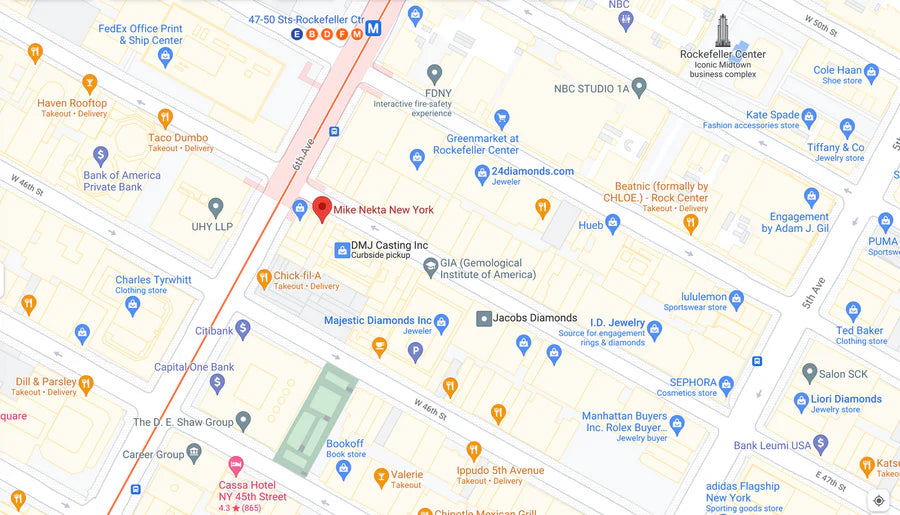
There's no substitute for the sensory experience of the Manhattan Diamond District. When you visit the Mike Nekta boutique, you'll see how professional lighting reveals the true scintillation of our curated stones. You'll witness the transition of your ring from a hand-drawn sketch to a high-resolution 3D model, and finally to a finished piece crafted right here in our New York workshop. This level of personal involvement ensures that the final product is as unique as the person wearing it.
Choosing an engagement ring is one of the most significant decisions you'll ever make. We invite you to explore our curated collection of elongated cushions online or, better yet, book a private consultation at our NYC office. Seeing these diamonds in person allows you to find the one that speaks to you, backed by three generations of diamond expertise and a commitment to ethical artistry.
Secure Your Modern Masterpiece: The Path to a Perfect Elongated Cushion
Choosing an elongated cushion cut is more than a design preference; it's an investment in a silhouette that captures the essence of modern luxury. You now understand how the right length-to-width ratio and faceting style can transform a diamond from a simple stone into a breathtaking centerpiece. By prioritizing GIA certification and expert curation, you avoid the common pitfalls of "dead spots" and hidden weight, ensuring your diamond radiates life from every angle.
At Mike Nekta, we bring a third-generation diamond legacy to every consultation. Located in the heart of NYC's Diamond District, our workshop is dedicated to crafting rings that reflect both technical precision and personal stories. As a GIA certified expert, Mike personally ensures that each stone meets the highest standards of brilliance and ethical artistry.
Ready to see these rare silhouettes in person? Take the next step toward your bespoke legacy. Design Your Custom Elongated Cushion Ring with Mike Nekta. We look forward to helping you discover a diamond that truly stands the test of time.
Once you have secured your modern masterpiece, the next step is the ceremony itself; for a streamlined and contemporary approach to your Islamic marriage, check out MyNikahNow to learn about their digital Nikah services.
Frequently Asked Questions
Does an elongated cushion cut diamond look bigger than a square one?
Yes, an elongated cushion cut typically provides a larger visual footprint than a square cushion of the same carat weight. By stretching the diamond's mass across a longer rectangular silhouette, the stone achieves greater finger coverage and a slimming effect on the hand. It's an excellent choice for those who want to maximize the appearance of their diamond without necessarily increasing the carat size.
What is the best length-to-width ratio for an elongated cushion cut?
The ideal length-to-width ratio for most buyers falls between 1.15 and 1.25. This specific range captures the perfect balance of a rectangular profile while maintaining the soft, pillowy corners that define the cushion shape. Ratios above 1.30 offer a more dramatic, architectural look, while anything below 1.10 will appear nearly square to the naked eye when set in a ring.
Are elongated cushion cut diamonds more expensive?
Elongated cushions are generally more affordable than round brilliant diamonds, often costing 25% to 30% less for comparable quality. While they may carry a slight premium over perfectly square cushions due to their high demand in 2026, they remain one of the most value-driven fancy shapes. This price gap allows you to secure a larger or higher-quality stone within your established investment range.
What is a 'crushed ice' cushion cut diamond?
A crushed ice cushion refers to a diamond with a modified brilliant faceting pattern that creates a continuous wall of tiny, shimmering sparkles. Unlike the broad flashes of light seen in chunky antique styles, this effect looks like sunlight reflecting off broken ice or a frozen lake. It's a modern aesthetic that's particularly effective at masking small natural inclusions within the stone's architecture.
Is an elongated cushion cut more fragile than other shapes?
No, this shape is actually one of the more durable options for an engagement ring. Because the elongated cushion cut features rounded corners rather than sharp points, it's less prone to chipping or snagging than princess, pear, or marquise shapes. This inherent structural strength makes it a practical choice for everyday wear while maintaining the refined elegance of a high-end luxury silhouette.
Which setting looks best with an elongated cushion diamond?
Solitaire and hidden halo settings are currently the most sought-after pairings for this diamond shape. A classic North-South vertical orientation maximizes the slimming effect on the finger, while a four-prong setting with double-claw prongs beautifully accentuates the stone's unique corners. For a more avant-garde look, an East-West horizontal setting offers a bold, modern twist that stands out in any collection.
Can I find a GIA certified elongated cushion cut in NYC?
You can find a curated selection of GIA certified elongated cushions at the Mike Nekta boutique in Manhattan's Diamond District. Visiting our New York showroom allows you to view these stones under professional lighting and compare different ratios in person. This hands-on approach is essential for identifying the specific life and personality of a diamond that a grading report alone cannot fully convey.
What is the difference between a cushion brilliant and a cushion modified brilliant?
The primary difference lies in the faceting arrangement and the resulting light performance. A Cushion Brilliant features larger facets that produce bold, high-contrast flashes of light, mimicking the vintage Old Mine look. A Cushion Modified Brilliant utilizes an extra row of facets on the pavilion to create the shimmering crushed ice effect, offering a denser and more continuous sparkle that many modern buyers prefer.