
The Art of Handcrafted Engagement Rings: A Guide to Bespoke Luxury in 2026
Most engagement rings marketed as "bespoke" in 2026 are actually mass-produced casts that have never felt the direct touch of a master's tool. It's a frustrating reality for anyone seeking a symbol of love that's as unique as their own story. You want more than a digital template; you want a piece that carries the soul of the maker. If you're worried about paying a premium for handcrafted engagement rings that are actually just finished by a machine, you aren't alone.
I understand the anxiety that comes with choosing a diamond and a setting that must last for generations. You're looking for a marriage of technical perfection and generational expertise. In this guide, I'll show you how true bespoke luxury transcends the standard retail experience. We'll explore the meticulous artistry found in a Manhattan atelier and clarify the confusing terminology that often leads to buyer's remorse. By the end, you'll have the expert validation you need to invest in a GIA-certified masterpiece that serves as a genuine family heirloom.
Key Takeaways
- Learn why genuine handcrafted engagement rings are forged from raw metal wire rather than pre-made molds to ensure lifelong structural integrity.
- Discover the critical distinction between simply "customizing" a digital template and the blank-canvas artistry of a true bespoke atelier.
- Identify the physical hallmarks of luxury, including the substantial weight of hand-forged platinum and the complete absence of casting flaws.
- Understand how a third-generation diamond master evaluates metal properties to perfectly complement the unique geometry of a GIA-certified stone.
- Explore how the heritage of the Manhattan Diamond District provides a level of precision that mass-market online retailers can't replicate.
The Essence of Handcrafted Engagement Rings vs. Mass-Produced Jewelry
When you hold a piece of jewelry, you're feeling more than just the weight of the metal. You're feeling the method of its creation. In a market flooded with digital templates, true handcrafted engagement rings stand apart because they begin as raw metal wire or solid plate. They aren't poured into a pre-made mold; they're built from the ground up. This distinction is vital for anyone who values longevity over convenience. While mass production relies on the repetition of a digital file, a master jeweler interprets the metal's resistance to create something enduring.
Most commercial rings are machine-cast. This process involves injecting molten metal into a mold, which often traps microscopic air bubbles. This "porosity" creates a brittle structure that's prone to cracking or losing stones over time. Hand-forging eliminates this risk entirely. By starting with solid material and shaping it through heat and pressure, the jeweler ensures the metal is dense, consistent, and remarkably strong. Throughout the history of engagement rings, this manual approach was the only way to ensure a piece could survive the rigors of daily wear for a lifetime.
Beyond the technical specs, there's an undeniable emotional weight to a ring that has a "soul." Every hammer strike and every hand-filed edge carries the intent of the artisan. This manual artistry creates a personal connection between the maker and the wearer that a factory line simply can't replicate. Handcrafted jewelry represents the pinnacle of structural integrity and artistic intent, where every curve is forged by a master's hand rather than a machine's calculation.
The Structural Superiority of Hand-Forged Metal
The secret to a ring that lasts 100 years lies in a process called work-hardening. As a jeweler hammers and rolls the metal, the molecular structure becomes more compact. This makes the finished piece significantly harder and more resistant to scratches than a cast equivalent. Whether you choose platinum or 18K gold, a hand-forged setting provides a superior grip on your diamond. Prongs that are work-hardened don't pull back or snag as easily, keeping your investment safe through decades of movement.
Why "Unique" Style Requires a Human Touch
CAD software is a powerful tool, but it lacks the ability to "see" how light interacts with a specific stone. A machine follows a code; a master jeweler follows the fire of the diamond. When crafting a bespoke piece, the artisan adjusts the height, angle, and thickness of the setting to perfectly complement the nuances of the individual gem. This level of precision is especially important for classic styles. If you're considering a traditional center stone, I recommend exploring our Ultimate Guide to Round Brilliant Cut Engagement Rings to see how the right setting maximizes brilliance.
Anatomy of Excellence: How a Master Jeweler Crafts Your Ring
In the heart of the Manhattan Diamond District, the creation of handcrafted engagement rings begins with silence and focus. Unlike mass factories that rely on automated casting, a master atelier uses wire-drawing and soldering to build a structural masterpiece. Wire-drawing involves pulling metal through progressively smaller holes to increase its tensile strength. This isn't a fast process. It's a deliberate transformation of raw metal into a secure, elegant frame. Each solder point is a structural reinforcement, ensuring the ring remains a solid unit for generations.
The Mike Nekta philosophy flips the traditional retail model on its head. Most jewelers pick a setting and find a stone that fits. I believe the center stone is the soul of the piece. We start by selecting an exceptional GIA certified diamond, then we build the world around it. This ensures the metal never overshadows the gem; it only enhances it. By matching the metal’s properties to the diamond’s specific cut, we create a harmony that machine-made rings simply can't achieve.
Starting with the Diamond: The GIA Advantage
GIA certification is the gold standard for a reason. When you invest in a diamond, you're buying a unique set of characteristics defined by global diamond quality standards. Handcrafted rings allow us to account for the exact depth and girdle thickness of your specific stone. We don't force a diamond into a pre-made seat. We hand-carve the seat to cradle that specific gem, providing a level of security that mass-produced jewelry can't match. This approach also ensures that every stone is ethically sourced and verified before it ever reaches the workbench.
The Setting Process: Prongs, Bezels, and Pavé
The final brilliance of a ring depends on the master setter. For pavé designs, diamonds are set under high-powered microscopes to ensure every tiny stone is perfectly aligned. Handcrafted prongs are a hallmark of this excellence. They're thinner and more delicate than cast prongs, yet because they're work-hardened, they're significantly stronger. This is crucial for fancy shapes like Emerald or Pear cuts, where symmetry is everything. One millimeter of misalignment can ruin the visual balance of a high-end stone. A master setter knows how to move the metal so it catches the light without obstructing the diamond's natural fire.
If you're ready to see how a master's touch changes the fire of a gem, I invite you to explore our selection of loose GIA certified diamonds to begin your bespoke journey.
Handcrafted vs. Custom Engagement Rings: Clearing the Confusion
The jewelry industry often uses the word "custom" as a marketing shield to hide a lack of true artistry. It's confusing for a first-time buyer. To most retailers, a custom ring simply means they took a pre-existing digital file and swapped a cushion cut for an oval. To a master jeweler in the Manhattan Diamond District, this isn't bespoke; it's merely a minor modification of a mass-market template. True handcrafted engagement rings represent a blank-canvas approach where every wire, prong, and bezel is original to your specific stone.
Choosing between "customized" and "handcrafted" is a choice between a product and a process. A customized ring uses pre-made parts that are assembled like a kit. A handcrafted ring is forged from a solid block of platinum or gold. While the initial investment in hand-forging may be higher, the value lies in the metal's longevity. Hand-forged metal doesn't fatigue or thin out like cast metal does. Every Mike Nekta piece is custom to the wearer's vision, but only the elite commissions are truly handcrafted from raw metal to ensure they become permanent family legacies.
The Three Levels of Ring Personalization
- Level 1: Off-the-shelf Designer Rings. These are ready-to-ship pieces with no modifications. They're convenient for immediate proposals but offer no personal connection to the maker.
- Level 2: CAD-Designed Custom Rings. This is the modern industry standard. A jeweler creates a 3D model, 3D prints a wax, and casts the metal. It's precise, but it still carries the structural risks of porosity mentioned earlier.
- Level 3: Artisan Handcrafted Rings. This is the Mike Nekta standard for bespoke luxury. No molds are used. The jeweler uses heat, hammers, and hand-tools to build a unique structural masterpiece.
Choosing the Right Path for Your Proposal
Your timeline and goals should dictate your choice. If you're planning a surprise proposal for next week, a ready-to-ship Round Brilliant in a classic setting is a timeless, sophisticated choice. However, a fully handcrafted bespoke commission requires more patience. This process typically takes several weeks as we source the perfect GIA-certified diamond and begin the meticulous forging process. Balancing your budget with the desire for a one-of-a-kind signature piece is a dialogue we'll have during your consultation. If you want a ring that no one else on earth owns, the artisan path is the only way to achieve it.

Quality Indicators: How to Spot a Genuine Handcrafted Masterpiece
Identifying the difference between a mass-produced cast and a genuine artisan piece requires more than a casual glance. It requires an understanding of how metal behaves under pressure. A genuine handcrafted masterpiece reveals itself through its weight and balance. Hand-forged platinum, for instance, possesses a distinct heft that casting can't replicate. Because the metal has been compressed and hammered, it's denser and lacks the internal air pockets common in factory settings. When you hold one of these pieces, it feels substantial and centered, a physical testament to its structural integrity.
One of the most telling signs of a cheap, mass-produced ring is "pitting." These are microscopic holes on the surface of the metal caused by air bubbles escaping during the casting process. In high-end handcrafted engagement rings, pitting is non-existent. The surface is smooth, reflecting light with a mirror-like clarity that only comes from hand-burnishing. Symmetry is another hallmark. While a machine follows a rigid, sometimes clunky path, a master jeweler ensures that every curve is intentional and every angle is perfectly aligned with the center stone's geometry.
Inspecting the Metalwork Under Magnification
To truly verify quality, you must look where most people don't: the "galleries" and the under-bridge of the ring. In a bespoke piece, these hidden areas are as polished and refined as the visible surfaces. Look closely at the prongs. Handcrafted prongs are often hand-filed to delicate, eagle-claw points that secure the diamond without blocking its light. This is a level of detail that machines simply can't achieve. Furthermore, a hand-burnished finish creates a deep, lasting luster that is fundamentally different from the superficial shine of a quick machine polish.
The GIA Appraisal: Your Final Trust Signal
A handcrafted setting is only as good as the diamond it holds. Every bespoke commission must be accompanied by a full GIA dossier. This isn't just a certification of the 4Cs; it's the blueprint that the jeweler used to forge the metal. As a third-generation expert, I don't just hand you a piece of paper. I interpret the GIA data to show you how the setting maximizes your diamond's specific proportions. We look at the crown angles and the girdle thickness to ensure the ring is a perfect structural match for the stone. This technical validation ensures your investment is protected for a lifetime.
If you want to experience this level of precision firsthand, I invite you to view our latest handcrafted engagement rings and see the difference that master-level forging makes.
The Mike Nekta Experience: Handcrafted in the NYC Diamond District
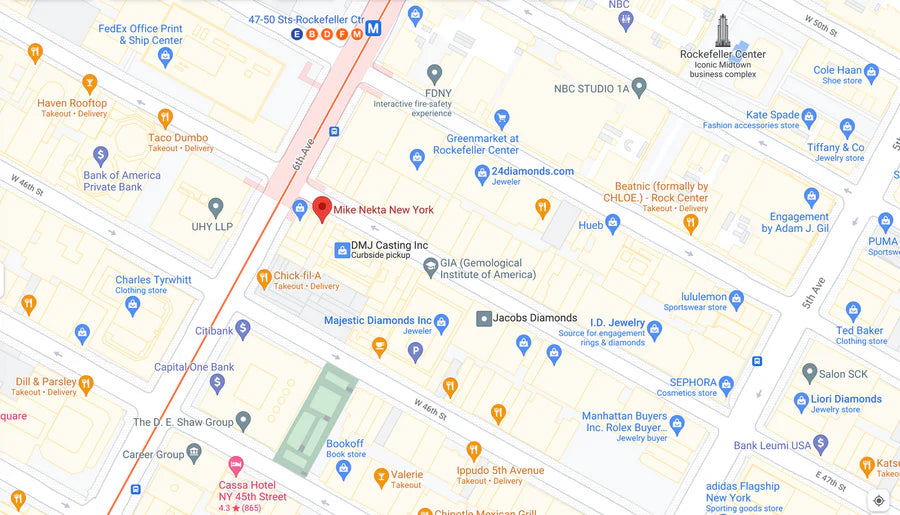
The Manhattan Diamond District is more than a location; it's the global heartbeat of jewelry excellence. Within these few blocks, the world’s most skilled artisans preserve techniques that have vanished from the mass market. Choosing handcrafted engagement rings from this historic enclave means you're accessing a level of precision that online retailers simply can't simulate. It's an environment where the standard isn't "good enough," but "absolute perfection." When you step into my atelier, you aren't just entering a store; you're entering a lineage of craftsmanship that spans three generations.
This culture of excellence is reflected across the city's specialized trades; for those who seek the same level of bespoke quality in their living spaces, Interior Design & Building Inc provides luxury remodeling and new construction for high-end residences throughout New York.
Collaborating with me is a personal dialogue. As a third-generation diamond expert, I don't see jewelry as a transaction. I see it as a structural and artistic challenge. We start with the fire of a loose GIA-certified diamond and build a world around it that reflects your specific story. This journey from raw metal and loose stone to a finished masterpiece is a transformation you won't find in a traditional retail setting. You're part of the process, ensuring the final piece carries the weight of your intent and my family’s heritage.
For those who wish to see how this same level of generational skill is applied to other forms of adornment, you can explore Fine Jewelry from Juwelier Risch, a master goldsmithing house with its own six-generation legacy of perfection.
Similarly, those who appreciate the fusion of traditional techniques with modern aesthetics can discover KaMila Fine Jewellery, an Israeli brand dedicated to the art of handcrafted fine pieces.
The Legacy of the Third-Generation Diamond Expert
With over 20 years of personal experience at the bench, I've seen how the industry has shifted toward automation. My response has been to double down on the human element. The "Mike Nekta" signature is a blend of timeless NYC polgári elegance and modern technical precision. It’s why clients travel from across the globe to our Manhattan office. They aren't just looking for a ring; they're looking for the soul of the maker. Every hammer strike and every hand-filed edge is informed by decades of observing how light interacts with the finest fancy cuts and brilliant rounds.
Your Bespoke Journey Begins Here
The creation of your ring follows a methodical, proven path to excellence. We don't rush the process because true luxury requires patience. Your journey includes:
- The Initial Vision: We discuss your aesthetic preferences and select a center stone that meets our rigorous standards.
- The Artisan Sketch: Translating your ideas into a structural blueprint that honors the diamond’s proportions.
- The Forging: Building the ring from raw wire and plate, ensuring the metal is work-hardened for lifelong durability.
- The Final Polish: A hand-burnished finish that provides a deep, mirror-like luster.
We pay special attention to the perfect fit, utilizing hand-sizing techniques that account for the unique geometry of your finger and the ring's balance. If you're ready to move beyond the ordinary and own a piece of NYC history, the next step is a private consultation. Design your handcrafted masterpiece with Mike Nekta today and secure a legacy that will be cherished for generations.
Forging Your Future with Timeless Precision
Choosing an engagement ring is one of the most significant investments you'll ever make. It's a commitment to quality that should last as long as your vows. We've explored how genuine handcrafted engagement rings offer a level of structural integrity and artistic soul that mass-produced casts simply can't match. By prioritizing hand-forged metal and GIA-certified diamonds, you're ensuring that your heirloom remains as radiant and secure in fifty years as it is today. This is the standard of excellence that defines a true legacy piece.
My third-generation expertise in the NYC Diamond District is dedicated to this level of perfection. We don't just assemble jewelry; we build masterpieces around the unique fire of each ethically sourced stone. This is the fundamental difference between a generic retail product and a Manhattan-made treasure. You aren't just buying a ring; you're securing a piece of artisan history that carries the weight of generational knowledge. I invite you to consult with Mike Nekta for your handcrafted engagement ring and begin the journey of creating something truly one-of-a-kind. Your story deserves a setting that is as enduring and brilliant as the love it represents. Let's create your masterpiece together.
Frequently Asked Questions
Are handcrafted engagement rings more expensive than machine-made ones?
Hand-forged pieces typically require a higher investment because they demand dozens of hours of labor from a master jeweler. Unlike mass-produced casts that are poured in batches, these rings are built from scratch. You're paying for the artisan's time and the superior density of the metal. While the initial cost is higher, the longevity and lack of structural repairs over time provide much better long-term value.
How long does it take to create a handcrafted engagement ring?
A genuine handcrafted piece usually takes between four to six weeks to complete. This timeline allows for the meticulous selection of the GIA-certified center stone and the manual forging of the setting. Every step, from drawing the metal wire to the final hand-burnishing, is performed with precision. We don't rush the process because a lifetime commitment deserves a setting that hasn't been compromised by speed.
Can I use my own diamond for a handcrafted setting at Mike Nekta?
We primarily focus on building masterpieces around our curated selection of loose GIA-certified diamonds to ensure the highest quality standards. This allows us to guarantee the structural integrity of the entire piece. If you have a specific heirloom diamond, we recommend a private consultation to evaluate the stone's dimensions. We must ensure the diamond can withstand the pressure of a hand-forged setting process.
Is a handcrafted ring more durable than a cast ring?
Yes, handcrafted engagement rings are significantly more durable than cast alternatives. The process of hand-hammering and rolling the metal compacts its molecular structure, making it harder and more resistant to bending. Cast rings often suffer from microscopic porosity, which can lead to brittle prongs. Hand-forged metal is "work-hardened," ensuring your diamond remains secure even after decades of daily wear.
What is the difference between custom-made and handcrafted jewelry?
"Custom-made" refers to the design, while "handcrafted" refers to the physical construction. A custom ring can still be machine-cast from a digital file. In contrast, a handcrafted ring is forged from raw metal wire or plate without using a pre-made mold. While many jewelers offer custom designs, only a select few Manhattan ateliers possess the expertise to create a truly handcrafted piece from the ground up.
Why is GIA certification important for handcrafted engagement rings?
GIA certification provides the exact technical blueprint an artisan needs to forge a perfect setting. We use the diamond's specific depth, table percentage, and girdle thickness to hand-carve the metal seat. Without this precise data, the setting is just a generic frame. A GIA dossier ensures the diamond's quality is verified, allowing the jeweler to maximize the stone's brilliance through a tailored, bespoke setting.
Do handcrafted rings have a higher resale or appraisal value?
Handcrafted rings often command higher appraisal values because of their superior metal density and artisan pedigree. Appraisers recognize the difference in structural quality and the labor-intensive nature of hand-forging. While resale value always depends on market conditions, a piece with a documented history of master craftsmanship in the NYC Diamond District retains its prestige. It's viewed as a one-of-a-kind work of art rather than a commodity.
How do I care for a hand-forged platinum or gold engagement ring?
Caring for a hand-forged ring is straightforward, though the metal is more resilient to scratches than cast jewelry. We recommend a professional check-up once a year to ensure the prongs haven't moved. For home cleaning, use warm water and mild dish soap with a soft brush. Because the metal is denser, it holds its luster longer, but a professional hand-polish every few years will restore its original mirror-like finish.