
Ruby Engagement Rings: A Bold Alternative to Diamonds
For a long time, engagement rings have had this unspoken rule. Diamond first. Diamond always. If you wanted to “do it right”, you did a diamond. And honestly, that tradition still means something to a lot of people.
But more couples are stepping back and asking a pretty normal question.
Does the ring actually feel like us.
That’s where ruby engagement rings come in. Not as a gimmick. Not as a loud trend that’s going to look weird in five years. Rubies are one of the oldest, most respected gemstones in fine jewelry. Royals wore them. Collectors chase them. And when you see a good one in real life, it does something diamonds just do not do. It has presence.
Ruby is bold, romantic, timeless. It reads like passion without trying too hard. And it’s also practical, which surprises people. Rubies are durable enough for everyday wear, and they give you a lot of room to customize the design around your style, your skin tone, your budget, your lifestyle.
One more expectation to set early, because it matters. There are natural rubies and lab grown rubies. Both can be beautiful. Natural rubies can be untreated or treated. Treatments range from normal and accepted to… let’s call it “run away”.
And the value of a ruby is not just about carat weight. Color, clarity, cut, origin, and treatment all play a role. Sometimes the biggest ruby is the worst ruby. It happens.
Ruby vs Diamond: The Real-World Differences That Matter
Look and vibe (what people notice first)
Diamonds are about sparkle. White light, flashes, fire. They’re crisp, bright, and kind of “clean” visually.
Rubies are about color. That saturated red is the whole point. A ruby doesn’t need to throw rainbow flashes across the room to be noticed. It just sits there and glows. The vibe is warmer, more intimate, more emotional.
And yes, visually they signal different things.
- A diamond tends to signal classic, traditional, minimal risk.
- A ruby tends to signal confidence, individuality, “we picked this on purpose.”
Neither is better. But they are different, and you feel it.
Lifestyle compatibility (gym hands, travel, cooking, all of it)
If you’re active with your hands, a ruby can still be a great choice. You just want to design it like you live in the real world.
Things to think about:
- Do you lift weights or do yoga daily?
- Do you cook a lot, clean a lot, garden, work with tools?
- Do you wear gloves often (medical, winter, workouts)?
- Do you travel constantly and want something less “expected” than a diamond?
Rubies hold up well, but you want a secure setting, and usually a lower profile if you’re rough on rings. A bezel can be amazing here. A well designed halo can also protect the edges depending on the shape.
And practical note. Red hides little day to day smudges better than a diamond. Diamonds show everything. Lotion. Soap film. That slight haze. Rubies can look great even when life is happening.
Rarity and uniqueness
This one is big.
Most diamonds you see, especially in the common engagement ring range, live in a pretty standardized world. The differences are real, but visually a lot of them blend together unless you’re comparing side by side.
Fine rubies do not blend together.
Color varies. Tone varies. Saturation varies. Some glow. Some go dark. Some lean pinkish red. Some lean purplish red. And when you find a ruby that hits that sweet spot, it feels personal, like you found it.
Also, truly fine natural rubies are rare. Especially in larger sizes with beautiful color and minimal treatment. That rarity is a big part of the appeal.
Budget realities (rubies price differently than diamonds)
With diamonds, people get used to a pricing logic where carat weight is everything and there’s a strong standardized grading ecosystem.
With rubies, carat weight matters, but it’s not the main driver. Two rubies of the same size can be wildly different in price because:
- Color quality is king
- Treatment can make or break value
- Cut quality affects brilliance and color return
- Origin can matter in higher end stones
- Clarity is judged differently than diamonds
So yes, you can absolutely do a ruby ring on a sensible budget. But the way to spend smart is different. Sometimes a slightly smaller ruby with better color looks more luxurious than a bigger stone with dead color.
Choosing the Right Setting for a Ruby Center Stone
Settings change everything with rubies, because settings affect color. They affect security. They affect whether the ring feels “fine jewelry classic” or “modern statement”.
Prong vs bezel vs halo
Prong setting
- Lets in more light
- Shows more of the stone
- Feels classic and airy
- Needs well done prongs for security, especially if you’re active
Bezel setting
- Very secure, protects the edges
- Smooth, comfortable, low snag
- Can feel modern and sleek
- Slightly changes how light enters the stone, but a great ruby still looks incredible
Halo setting
- Makes the center look larger
- Adds sparkle around the ruby
- Can protect edges depending on the design
- Works best when it’s tasteful and not too busy
A halo with a ruby is a whole vibe. It reads regal. But the halo has to be proportioned correctly or it can overwhelm the ruby. The ruby should still feel like the main character.
Metal choice (this changes the ruby’s personality)
- Yellow gold warms the ruby. It can make reds look richer, more vintage, more romantic.
- White gold or platinum creates contrast. It makes the red pop in a cleaner, sharper way.
- Rose gold softens everything. It can make pinkish reds look dreamy and subtle, and deeper reds look warmer.
There’s no universal best. But there is a best for your ruby. And for your skin tone. And for your wardrobe, honestly.
How Much Do Ruby Engagement Rings Cost? (And What Actually Drives the Price)
People ask price first, and I get it. But the honest answer is that ruby pricing is less predictable than diamond pricing, because quality spreads out a lot.
Here’s what actually drives cost.
The main price drivers
- Color quality: the biggest factor. A vivid, balanced red with strong saturation is where value lives.
- Origin: this matters more in higher end natural rubies, especially when paired with strong documentation.
- Treatment: critical. Heat treatment is common and generally accepted. More aggressive treatments reduce value and can create durability concerns.
- Size: larger fine rubies get rare fast. Prices climb quickly with size when quality is strong.
- Cut quality: a ruby with a lazy cut can look dark or lifeless even if the material is good.
- Ring craftsmanship: setting quality is not just aesthetics. It’s security and longevity.
Realistic budget bands (without locking into numbers)
In broad terms, ruby engagement rings tend to fall into a few buckets:
- Entry level: smaller stones, lab grown options, or natural rubies with commercial grade color and common treatments. Still can be beautiful if chosen carefully.
- Mid range: stronger color, better cut, higher quality settings, possibly a natural ruby with acceptable treatments and better visual presence.
- High jewelry: fine natural ruby with exceptional color, size, minimal treatment, strong documentation, plus custom craftsmanship.
The key is that a ring can look expensive without being in the top tier, if the ruby color is right and the design supports it.
Total ring cost breakdown (how it usually adds up)
Most ruby engagement rings are basically:
- Center stone
- Setting
- Side stones (if any)
- Custom work (if you’re designing from scratch or modifying a design)
If you’re trying to control budget, decide where you want the “wow” to come from. Some people want a knockout ruby and a simple setting. Others want a modest ruby with a design that makes it look larger and more detailed.
Designing a Custom Ruby Engagement Ring in New York (What the Process Looks Like)
Custom makes a lot of sense with rubies, because rubies are not one size fits all. The center stone drives the design. And the design can either elevate the ruby or fight it.
Why custom works so well for rubies
- You can match the ruby color to the metal and setting style
- Proportions can be built around the stone, not forced
- You can design for your lifestyle, lower profile, smoother edges, more security
- Stone sourcing becomes part of the process, not a compromise
The typical custom journey
Most custom ruby engagement rings follow a flow like:
Inspiration
You bring ideas. Photos. A vibe. Even random screenshots.
Stone selection
Often the ruby comes first, because the exact shade and size shapes everything.
Sketches or CAD
You see the design before it’s made. You can tweak the proportions.
Wax or approval step
Depending on the project, you may approve a model before final production.
Final setting and finishing
This is where craftsmanship shows. Prongs, polish, symmetry, comfort.
How to bring references (and not overwhelm the process)
Bring:
- 3 to 6 photos of rings you love
- 2 to 3 things you hate (this helps a lot)
- Notes on your daily wear habits
- If you know it, your preferred metal color and band width
And you do not have to speak jewelry. You can just say, “I want it bold but not huge,” or “I hate when rings snag,” or “I want something that feels vintage but clean.” That’s enough to start.
Timeline expectations and decision points
Custom takes time, and that’s good. Rushing is where mistakes happen.
Big decision point is usually:
- Stone first: best when you care deeply about ruby color and quality.
- Setting first: works if you already know the exact style, and you want the stone selected to fit it.
A New York jeweler can also help you compare ruby options quickly, because sourcing and logistics are part of the job, not something you have to figure out alone.
Book an Appointment With Mike Nekta (Mike Nekta New York)
If you’re even slightly curious about a ruby engagement ring, the best next step is simple. See them in person. Compare color and quality side by side. Try different metals. Look at how a halo changes the vibe versus a solitaire. It clicks fast once you’re actually holding the options.
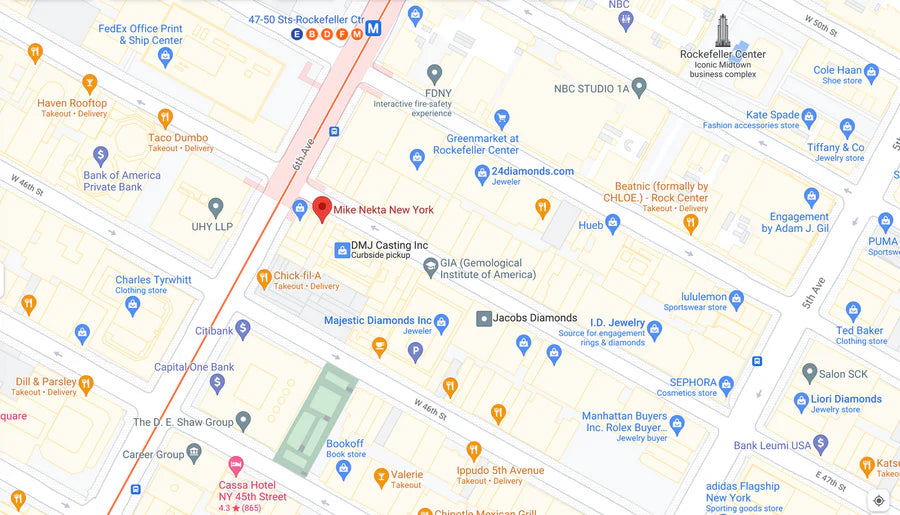
If you’re in New York, book an appointment with Mike Nekta New York.
You’ll get personalized guidance on choosing the right ruby, natural or lab grown, the right setting for your lifestyle, and a design that feels bold in the right way. Not loud. Just confident.
Book an appointment with Mike Nekta and let’s find the ruby that feels like yours.