
The Most Popular Lab Grown Diamond Shapes for Engagement Rings
If you’re shopping for an engagement ring right now, you’ve probably noticed something: lab grown diamonds aren’t a “trend” anymore. They’re mainstream.
And once you decide to go lab grown, the next big decision hits you fast: shape.
In my experience working with couples, the diamond shape is the choice that affects everything. It influences the ring’s overall vibe, how large the diamond looks for the carat weight, how it performs in different settings, and even how practical it is for everyday wear.
So in this guide, I’m going to walk you through the most popular lab grown diamond shapes for engagement rings, why people choose them, and what you should watch out for with each one.
Why Diamond Shape Matters More Than Most People Think
Before we jump into the list, here’s the quick reality.
Shape is not the same as cut grade.
Shape is the outline: round, oval, emerald, pear, etc. Cut grade applies mainly to round brilliant diamonds (and sometimes is loosely discussed for other shapes, but grading is not standardized in the same way).
Shape impacts:
- Visual size: Some shapes “face up” larger than others at the same carat weight.
- Sparkle style: Some shapes are all about brilliance, others are about clean flashes of light.
- Setting options: Not every shape works equally well in every setting.
- Durability: Pointed corners and tips need protection.
That’s why it’s worth picking your shape first, then optimizing the rest around it.
1. Round Brilliant (the #1 most popular shape)
If you want the safest choice, the most universally loved look, and the highest sparkle potential, round brilliant is still the top pick.
Why it’s so popular
- It’s engineered for maximum light return and brilliance.
- It looks great in almost every setting: solitaire, halo, three-stone, pavé, you name it.
- It’s the easiest shape to match for wedding bands and stackable looks.
What to know before you buy
- Rounds usually cost more per carat than most fancy shapes because demand is high and cutting waste is higher.
- The big value move is to focus on the basics that actually show: cut quality first, then color and clarity that fit your taste.
Best for
Anyone who wants a classic engagement ring that will never feel dated.
2. Oval (the “bigger-looking” modern classic)
Oval has exploded in popularity for one simple reason: it delivers a lot of visual presence without requiring a massive carat weight.
Why people love oval lab diamonds
- It tends to look larger than a round of the same carat because it has more surface area.
- The elongated shape can create a flattering look on the hand.
- It hits that sweet spot between timeless and modern.
The main issue to watch for: the bow-tie
Many ovals show a darker area across the center called a bow-tie. A little bit is normal, but a strong bow-tie can make the diamond look less lively.
The fix is not a magic proportion. It’s careful selection, ideally reviewing real visuals and how the stone performs in motion.
Best for
Someone who wants elegant sparkle, a slightly elongated look, and strong “looks bigger” value.
3. Emerald (clean, high-end, and understated)
Emerald cut diamonds have a very different vibe from brilliant cuts. Instead of “sparkle everywhere,” emerald cuts give you bold, mirror-like flashes that look refined and architectural.
Why emerald is so popular now
- It feels sophisticated and expensive even in simple settings.
- It shows off the diamond’s clarity in a very honest way.
- It pairs beautifully with minimalist solitaires and art-deco inspired designs.
What to know before you buy
Emerald cuts show inclusions more easily than brilliant shapes. You typically want a cleaner-looking stone, especially in the center.
Also, emerald cuts are very sensitive to proportions. A slightly awkward outline can make the diamond feel “off,” even if the specs look fine on paper.
Best for
Someone with a clean, classic style who wants a luxury look without over-the-top sparkle.
4. Princess (sharp, bright, and classic 2000s to now)
Princess cut has been popular for decades because it blends a modern square shape with brilliant sparkle.
Why people still choose princess
- Strong brilliance and fire, similar to round but with a geometric outline.
- Often priced competitively compared to round.
- Looks amazing with halos and pavé settings.
What to watch for
Princess cuts have corners that can be vulnerable if they aren’t protected well. A smart setting choice (like V-prongs) matters.
Also, some princess cuts can look smaller face-up than elongated shapes at the same carat weight.
Best for
Someone who wants a square shape with lively sparkle and a clean, modern look.
5. Cushion (soft, romantic, and very versatile)
Cushion cuts are a favorite because they feel romantic and timeless, and they come in a wide range of styles.
Why cushion is loved
- Soft rounded corners give a gentle, vintage-inspired feel.
- Cushions can look great in both modern and antique-style settings.
- You can find different “flavors” of cushion: chunkier facets or more crushed-ice sparkle.
The big decision: chunky vs crushed ice
- Chunky cushions show broader flashes and a more vintage personality.
- Crushed ice cushions look more glittery, with finer sparkle.
Neither is “better.” It’s about what your eye prefers.
Best for
Someone who wants something softer than a princess, but not as traditional as a round.
6. Radiant (maximum sparkle in a clean shape)
Radiant cuts are like the high-energy cousin of emerald cuts. You get the rectangular (or square) outline, but with brilliant-style faceting designed to throw off a ton of sparkle.
Why radiant is trending
- It sparkles hard, especially under spot lighting.
- It hides inclusions better than emerald cut.
- It looks amazing with halos, double halos, and bold settings.
What to watch for
Radiants can sometimes show uneven patterns or dark zones depending on the cut. I like to look for a lively center and balanced facet pattern.
Best for
Someone who wants a rectangular shape but refuses to compromise on brilliance.
7. Pear (unique, flattering, and surprisingly versatile)
Pear shapes have a distinctive teardrop silhouette that can look both classic and fashion-forward depending on the setting.
Why people love pear
- Elongated look can flatter the finger.
- You can wear it point-up or point-down depending on preference.
- It stands out without being “too different.”
What to watch for
Like oval, pear shapes can show a bow-tie. The tip also needs protection, so the right prong design matters.
Pear symmetry is huge. If the shoulders are uneven, your eye will notice.
Best for
Someone who wants a recognizable engagement ring, but not the same thing everyone else has.
8. Marquise (the bold comeback shape)
Marquise is making a real comeback, especially for people who want something distinctive and elongated.
Why marquise is popular again
- It can look very large for the carat weight because it’s long and wide.
- It has a regal, editorial feel.
- It works beautifully in east-west settings for a more modern twist.
What to watch for
Marquise tips are delicate, so protection is important. Also, because it’s elongated, a poorly cut marquise can show light leakage and look sleepy.
Best for
Someone who wants a standout shape with a big visual footprint.
9. Asscher (geometric, vintage, and collector-level cool)
Asscher cuts are like the sharper, more geometric cousin of emerald cuts. Think art deco, clean symmetry, and those hypnotic step facets.
Why people choose Asscher
- It’s rare enough to feel special.
- It has a very intentional, design-forward look.
- It pairs incredibly well with vintage-style settings and side stones.
What to know before you buy
Asschers show inclusions and body color more easily than brilliant shapes. Many clients go slightly higher in clarity and color, depending on their sensitivity.
Also, Asschers face up smaller than elongated shapes. The payoff is the distinctive look, not maximum spread.
Best for
Someone who loves symmetry, vintage inspiration, and a diamond that feels curated.
Which Lab Diamond Shape Looks Biggest?
If “looks big” is part of your goal, here’s the general ranking I often see from biggest face-up appearance to smaller, assuming equal carat weight (this can vary with proportions):
- Marquise, Oval, Pear: typically the biggest visual spread
- Radiant: strong spread, especially elongated
- Emerald: can look large, but depends heavily on depth and cut
- Round: balanced, but not the largest spread
- Cushion, Princess, Asscher: often look smaller face-up than elongated shapes
If your priority is presence, elongated shapes usually win.
Which Lab Diamond Shapes Sparkle The Most?
Sparkle depends on faceting style:
Highest brilliance (most “sparkly” look)
- Round
- Radiant
- Princess
- Oval (can be very brilliant when cut well)
Bold, glassy flashes (less glitter, more “hall of mirrors”)
- Emerald
- Asscher
If your partner loves that intense, dancing sparkle, lean brilliant cuts. If they love clean lines and sophisticated flashes, lean step cuts.
The Most Practical Shapes For Everyday Wear
Engagement rings get worn a lot, and some shapes are simply easier to live with.
Most durable shapes (generally)
- Round
- Oval
- Cushion
- Radiant (corners still matter, but less risky than sharp points)
Shapes that need extra protection
- Princess (corners)
- Pear and marquise (tips)
- Heart (cleft and tips)
This doesn’t mean you should avoid them. It just means the setting and prongs should be chosen intentionally.
My Quick Recommendations (If You’re Stuck)
If you’re torn between a few shapes, here’s a simple way I guide people:
- If you want the safest, most classic option: Round
- If you want it to look bigger without going huge: Oval
- If you want luxury and clean elegance: Emerald
- If you want sparkle with a modern edge: Radiant
- If you want romantic and soft: Cushion
- If you want something unique but still mainstream: Pear
- If you want bold and distinctive: Marquise
- If you want vintage geometry: Asscher
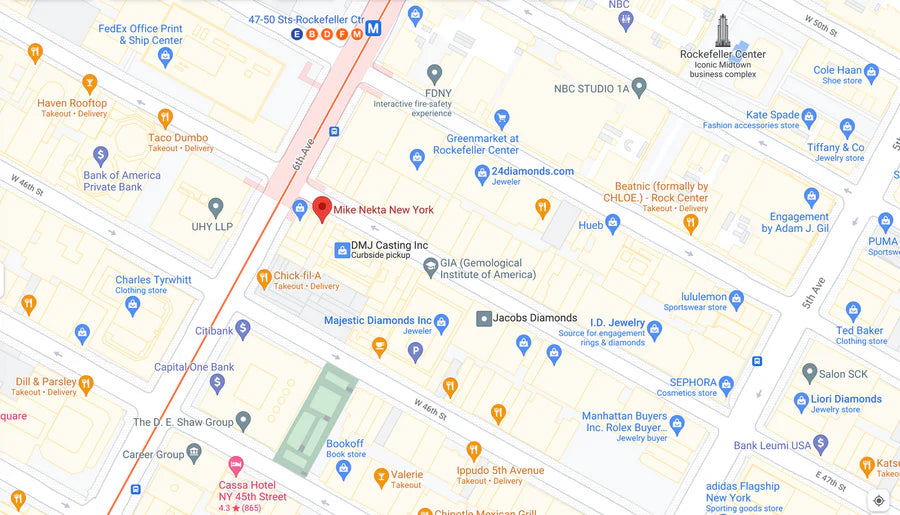
Book an appointment with Mike Nekta New York
If you want a second opinion, or you want me to help you pick the best diamond shape for your budget, lifestyle, and setting style, book an appointment with me, Mike Nekta, at Mike Nekta New York.
I’ll walk you through:
- which shapes fit your partner’s style and hand
- what specs actually matter for that shape
- how to avoid common issues like bow-ties, dead zones, and awkward proportions
- how to choose a setting that protects the diamond and looks balanced
Book an appointment with Mike Nekta New York and I’ll help you get this right the first time.