
How Light Reflects in a Pear Cut Diamond and Why It Matters
I’ve noticed something after years of looking at diamonds with clients. Most people think they’re buying a shape, but what they’re really buying is light.
That’s especially true with a pear cut diamond.
A pear shape can look absolutely electric, bright, crisp, and lively across the entire stone. Or it can look a little sleepy, with areas that go dark, a dull “dead zone,” or a bow-tie that distracts you every time the diamond moves.
And the difference usually comes down to one thing: how the diamond reflects light.
In this guide, I’ll break down how light behaves inside a pear cut diamond, what you should look for (and what to avoid), and why it matters so much for beauty, size appearance, and value. If you can’t see the difference, you’ll feel it later in repairs.
What “Light Performance” Really Means in a Pear Cut
When light hits a diamond, three things can happen:
- It can reflect back to your eye (that’s what you want).
- It can leak out through the bottom or sides (that’s lost brightness).
- It can bounce around and create contrast patterns (that’s what gives the diamond its crisp “sparkle structure,” not just random glitter).
For pear shapes, the goal is balanced light return from the rounded end through the center and out to the point, without big areas of darkness or washed-out glassiness.
A great pear has three things working together:
- Brightness: strong white light return across the face
- Fire: flashes of color in certain lighting
- Scintillation: the on-off sparkle pattern as the diamond moves
If one of these is weak, the diamond can still look “fine,” but it won’t have that high-end life you notice immediately.
How Light Moves Inside a Pear Cut Diamond
A pear cut is essentially a hybrid of a round brilliant and a marquise. That sounds simple, but optically it’s more complicated than a round because the shape is asymmetrical.
Here’s what’s happening inside:
- Light enters through the table (the big top facet) and other crown facets.
- It bends (refracts) and hits the pavilion facets (the lower facets).
- If those angles are right, light reflects internally and returns back out through the crown to your eye.
- If the pavilion angles or facet relationships are off, light escapes through the bottom, creating light leakage.
Because a pear has a narrow point and a wider rounded end, the angles and facet structure have to “transition” across the stone. That’s why two pears with the same carat weight can look dramatically different in brightness and pattern.
The Bow-Tie Effect: What It Is and Why It Shows Up in Pear Shapes
If you’ve ever seen a pear diamond with a dark band across the center, that’s the bow-tie effect.
What causes it?
It’s a contrast pattern created when certain facets reflect dark areas of the environment rather than bright light sources. Some bow-tie presence is normal in pears, ovals, and marquises because of the shape and facet geometry.
When is it a problem?
The bow-tie becomes an issue when it looks like:
- a thick, permanent shadow
- a dead strip that doesn’t brighten as you move the diamond
- a distracting dark shape that dominates the center
When is it acceptable (or even good)?
A soft bow-tie that shifts and breaks up with movement can actually add nice contrast, which makes the sparkle look sharper. The key is whether it’s dynamic and balanced, not heavy and stuck.
If you’re viewing a pear in person, tilt it slightly and watch the center. A well-cut pear will “turn on and off” in a pleasing way, not stay dark.
Light Leakage: The Silent Killer of Pear Diamond Beauty
Light leakage is exactly what it sounds like. Light enters the diamond but leaks out through the pavilion instead of returning to your eye.
In a pear cut, leakage often shows up in predictable places:
- near the shoulders (the upper curved sides)
- around the belly (the widest part)
- near the tip if the point area isn’t supported by the facet structure
In real life, leakage can make the diamond look:
- watery or glassy in sections
- less bright overall
- “flat” even when it’s clean and high clarity
A diamond can have an excellent color and clarity grade and still look underwhelming if the cut leaks light.
Why Pear Cut Proportions Change the Way Light Reflects
Pear cuts don’t have a single universal ideal, but some proportion ranges tend to produce stronger light return and better visual balance.
Here are the proportion factors that influence light reflection the most:
1) Length-to-width ratio (L/W)
This affects both aesthetics and optics.
- 1.45 to 1.60 is a popular range for a classic pear look.
- Longer pears (higher ratio) can show more bow-tie risk if not cut carefully.
- Shorter pears can look chunkier and sometimes mask leakage better, but they can also lose elegance if too squat.
I always recommend choosing the outline you love first, then being strict about light performance within that outline.
2) Table percentage
The table influences how light enters and how fire presents.
- A table that’s too large can reduce fire and make the center look more “windowed.”
- Too small can darken the diamond and reduce brightness.
3) Depth percentage
Depth affects both brilliance and face-up size.
- Too deep can make the diamond face up smaller than it should for the carat weight.
- Too shallow can cause leakage and a weaker sparkle pattern.
4) Pavilion and crown relationship
This is where the magic is.
Two pears can have similar tables and depths on paper and still look totally different because the facet relationships and angles don’t interact the same way across the shape.
That’s why I never rely on the certificate alone for pear cuts. You need visuals, performance images if possible, and ideally an expert eye.
How Facet Patterning Affects Sparkle in a Pear Cut
Pear shapes can have slightly different facet designs even within the “brilliant” style. That facet pattern changes how the diamond breaks up light.
- Some pears produce bolder flashes (bigger, slower sparkle)
- Others produce splintery scintillation (more tiny flashes, faster sparkle)
Neither is “right” universally. It depends on taste, setting style, and how the diamond looks in real lighting.
What I look for is consistency: brightness that doesn’t collapse in one area, and a clean pattern that isn’t chaotic or dull.
The Tip (Point) Area: Why It’s Tricky for Light and Durability
The point of a pear is iconic, but it’s also the most sensitive area optically and physically.
Optically:
If the cut isn’t balanced, the point can appear:
- dark
- glassy
- separated from the rest of the diamond (like the sparkle stops before the tip)
Structurally:
The point is vulnerable to chipping if it isn’t protected.
That’s why most pear engagement ring settings use a V-prong on the tip. It’s not just a design choice. It’s practical protection.
Why Light Reflection Matters Beyond “Sparkle”
A beautiful pear cut isn’t just about looking shiny under jewelry store lighting. Light performance affects real, everyday things:
1) It affects how big the diamond looks
A well-cut pear can face up larger and brighter, while a leaky or deep pear can hide weight in the bottom and look smaller.
2) It affects how noticeable color is
Stronger brightness and better light return can make a diamond appear “whiter” face-up compared to a poorly cut stone with the same color grade.
3) It affects how visible inclusions are
Better sparkle and stronger light return can help mask tiny inclusions. Poor light performance can make the diamond look more transparent, which sometimes makes inclusions easier to spot.
4) It affects how premium the diamond feels
This is the part people don’t always expect. Two diamonds can have similar lab grades, but the one with superior light performance looks more expensive instantly.
How I Evaluate Light Performance in Pear Cut Diamonds
When I’m helping someone choose a pear, I’m looking at the diamond in a way that goes beyond the basic report.
Here’s what I pay attention to:
- Face-up brightness across the entire stone, not just the edges
- A bow-tie that is present but not dominant, and ideally dynamic with movement
- Minimal leakage in the belly and shoulder areas
- A tip that stays lively, not dark
- Visual symmetry when viewed face-up (even though pears are asymmetrical, they should still look balanced)
- Strong performance in multiple lighting environments, not only spotlights
If you’re shopping online, videos help, but they can also hide problems depending on lighting and rotation speed. In-person viewing remains the most reliable way to judge a pear.
Common Mistakes People Make When Buying a Pear Cut
I see these a lot:
- Buying based on carat weight only and ignoring face-up size and cut quality
- Trusting the lab report as if it grades pear cut performance the way it grades rounds (it doesn’t)
- Accepting a heavy bow-tie because “all pears have one” (not like that)
- Ignoring the outline (an uneven shoulder or awkward bulge will bother you forever once you notice it)
- Skipping the right setting (a pear needs protection at the tip and good support so it sits beautifully)
Let’s Wrap Up
A pear cut diamond is all about light. When the proportions, angles, and facet pattern work together, light reflects back to your eye with brightness, fire, and crisp scintillation. When they don’t, you get leakage, dull areas, and a bow-tie that steals the show.
If you’re considering a pear shape and you want help choosing one that performs beautifully in real life, I can help you narrow it down quickly and confidently.
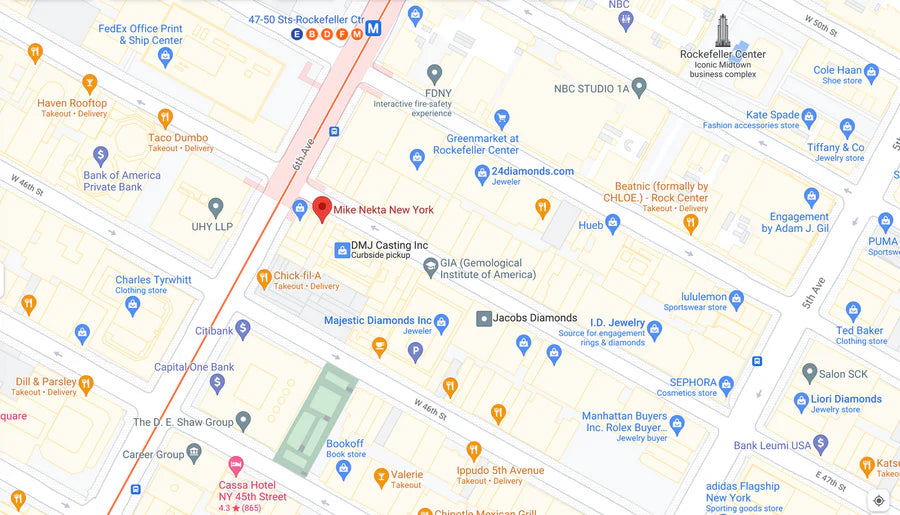
Book an Appointment With Mike Nekta (New York)
If you want my eyes on your shortlist, or you want me to source and compare pear cut diamonds for you, book an appointment with me, Mike Nekta New York. I’ll walk you through light performance, the bow-tie, proportions, and setting options so you end up with a pear that truly shines. Don’t guess — bring it to someone who knows.