
Layering Diamond Necklaces: A Guide to Effortless Luxury
I’ve noticed something interesting over the years working with clients: the most “expensive-looking” jewelry styling is rarely about one oversized piece.
It’s usually about composition.
Layering diamond necklaces is one of the simplest ways to look polished, intentional, and quietly luxurious without feeling overdone. When it’s done right, it frames the face, elevates even a plain outfit, and gives you that effortless glow people can’t quite pinpoint.
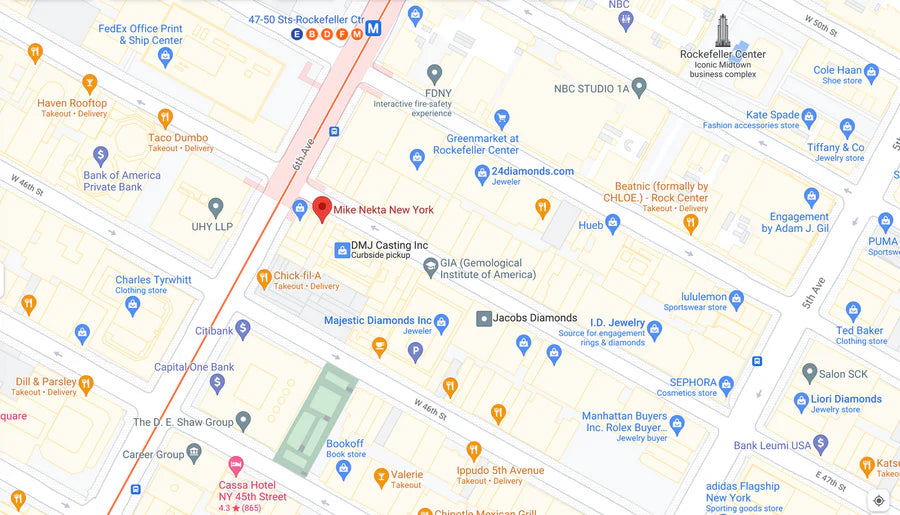
I’m Mike Nekta of Mike Nekta New York, and in this guide I’m going to walk you through how I layer diamond necklaces in a way that looks natural, balanced, and personal.
Why Layered Diamond Necklaces Look So Luxurious
Diamonds catch light in a way that creates movement. When you layer necklaces, you multiply that effect, but the real luxury comes from control:
- Different lengths create dimension.
- Different textures create contrast.
- Different diamond sizes create rhythm.
- Negative space keeps everything looking clean instead of crowded.
The goal is not to stack as many pieces as possible. The goal is to create a look that feels like it belongs to you.
Start With The “Anchor” Necklace
Every good layered set has one piece that sets the tone. I call it the anchor.
Your anchor necklace is usually one of these:
- A classic tennis necklace (diamond line necklace)
- A single diamond pendant (solitaire, bezel, or prong)
- A diamond station necklace (diamonds spaced along the chain)
- A diamond collar or short statement piece if you want a stronger top layer
If you already own one diamond necklace you love, start there. The rest of the stack should support it, not compete with it.
Choose The Right Lengths (This Is The Real Secret)
Most layering mistakes come down to length. If necklaces sit too close together, they tangle and visually blur into one line. If they’re too far apart, the look loses cohesion.
Here are the lengths I use most often as a foundation:
- 14–16 inches: sits at the base of the neck (great for collars and short tennis styles)
- 17–18 inches: classic “everyday” length (ideal for a pendant or station necklace)
- 20–22 inches: creates that second drop (perfect for pendants and delicate diamond details)
- 24 inches and up: adds drama and elongation (works well when the neckline is simple)
A reliable rule: keep about 2 inches of separation between layers so each piece has its own space to shine.
Easy Layering Formulas That Always Work
If you want a shortcut, use one of these:
- 2-Layer Set: 16" + 18" (clean and minimal)
- 3-Layer Set: 16" + 18" + 20" (most flattering on most necklines)
- Statement 3-Layer Set: 15" + 17" + 22" (more “editorial,” still wearable)
- 4-Layer Set: 15" + 17" + 20" + 24" (best with plain tops and open necklines)
Mix Styles, Not Chaos
Layering doesn’t mean everything needs to match. In fact, the most elevated stacks usually mix types of diamond necklaces in a controlled way.
Here are combinations I style often:
Tennis Necklace + Pendant
This is classic luxury. The tennis necklace reads “polished,” the pendant reads “personal.”
Tip: keep the pendant slightly longer so it drops cleanly under the tennis line.
Station Necklace + Tennis Necklace
Station adds softness and spacing. Tennis adds continuous brilliance.
Tip: choose one as “lighter sparkle” and one as “full sparkle,” so they don’t blur together.
Two Pendants (Different Scale)
Two pendants can look incredible if the scale is intentional.
Tip: one should be small and subtle, the other slightly larger or a different shape. If they’re too similar, it looks accidental.
Bezel Diamonds + Prong Diamonds
Bezel settings feel modern, clean, and understated. Prong settings feel classic and bright.
Tip: mixing bezel and prong creates contrast without introducing new “themes.”
Pay Attention To Diamond Size And Visual Weight
Luxury is often about restraint. If every necklace is equally bright and bold, the look can feel busy.
Instead, I like a “weight plan”:
- Top layer: light and refined (small diamonds, thin chain, shorter length)
- Middle layer: signature sparkle (pendant or station)
- Bottom layer: either a focal pendant or a longer diamond line that elongates the look
If you want an easy guideline, try this: one statement layer, two supportive layers.
Match Your Layers To Your Neckline
Necklines are the “frame” for your necklace stack. Here’s how I approach it:
Crew Neck / T-Shirt
This is the perfect canvas.
- Use 3 layers.
- Keep the longest piece above the fabric line, or commit to a longer drop for contrast.
V-Neck
Let the jewelry follow the V.
- Choose a longer pendant as the bottom layer.
- Avoid a bulky collar that fights the neckline.
Button-Down Shirt
This is where layering looks expensive fast.
- Use 2–3 layers.
- Let a pendant sit just inside the open collar.
- Consider mixing one diamond piece with a clean chain for an effortless “off-duty” look.
Strapless / Off-Shoulder
This neckline needs balance.
- A shorter diamond line (14–16") looks beautiful.
- Add one longer pendant if you want length, but keep it elegant and not too heavy.
High Neck / Turtleneck
Diamonds over a turtleneck can look incredibly editorial.
- Use longer lengths (20"+).
- A diamond station necklace can look especially refined here.
How To Prevent Tangling (Without Overthinking It)
Tangles happen when lengths are too close or chains are too similar in weight and texture. A little planning goes a long way.
What I recommend:
- Separate lengths by about 2 inches
- Mix chain types slightly (for example: one is a fine cable chain, one is a slightly sturdier chain)
- Use a layering clasp if you wear the same set often
- Choose one “stiffer” necklace (like a tennis necklace) as a stabilizer
Also, if you constantly adjust your necklaces during the day, it’s usually a sign the lengths are competing. A small length change often fixes the whole stack.
Yellow Gold, White Gold, Or Mixed Metals?
If you’re building a long-term wardrobe of diamond necklaces, metal color matters because it affects the overall softness or sharpness of the look.
Here’s how I see it:
- White gold or platinum: crisp, bright, very “New York” modern
- Yellow gold: warm, romantic, timeless
- Rose gold: soft and feminine, best as an accent rather than the whole stack for most people
- Mixed metals: can look high-end when it’s intentional
My approach to mixed metals: keep the diamonds as the common thread, and make sure one metal is dominant. If it’s 50/50 with no plan, it can feel scattered.
Build A Capsule Collection (So You Always Have A Stack)
If you want “effortless luxury,” the easiest way is to own a small set of layering staples that work together in different combinations.
If I were building a capsule for a client, I’d start with:
A short diamond necklace (14–16")
A delicate tennis style or a refined diamond line.
A versatile pendant (17–20")
Solitaire, bezel, or a subtle motif you actually connect with.
A station necklace (18–22")
Adds texture and spacing, very wearable.
One longer piece (22–24"+)
Creates elongation and gives you that layered “finish.”
You don’t need all of this at once. But if you build intentionally, you’ll always have options that feel elegant instead of random.
Common Layering Mistakes I See (And How To Fix Them)
Everything Is The Same Length
If two necklaces sit on top of each other, it reads messy, not luxe.
Fix: adjust one by 2 inches, or add a small extender.
Every Piece Is A Statement
Too much sparkle can flatten the look because the eye has nowhere to rest.
Fix: make one necklace the hero, keep the rest supporting.
The Bottom Layer Is Too Heavy
A heavy bottom piece can pull everything forward and create tangles.
Fix: choose a lighter chain for the longest layer, or shorten it slightly.
The Stack Doesn’t Fit Your Lifestyle
If you’re constantly taking it on and off, you’ll stop wearing it.
Fix: build an “everyday stack” first (comfortable, minimal, secure), then add a statement layer for evenings.
How I Style Diamond Layers For Day vs Night
I like to think of it like this:
- Daytime: refined sparkle, clean lines, fewer pieces
- Usually 2–3 layers, lighter diamonds, simple shapes.
- Evening: stronger contrast, bolder diamond presence
- Add one piece with visual weight: a tennis necklace, a larger pendant, or a more pronounced drop.
A small styling trick that works: keep your daytime base the same, and swap only the anchor necklace for something more dramatic at night.
When To Customize Instead Of Buying “Off The Shelf”
If you’ve ever tried layering and felt like something was always “almost right,” it’s usually because of proportion.
Customization helps when:
- You need a very specific length that stores don’t carry.
- You want two necklaces to sit perfectly without tangling.
- You’re trying to match diamond color and clarity across pieces.
- You want an heirloom look that still feels modern.
This is also where craftsmanship matters. The difference between “pretty” and “luxurious” is often in details you feel more than you see: how the chain lays, how the clasp sits, how the diamonds face up, how the piece moves on the body.
A Soft Luxury Note From Me
Layering diamond necklaces should feel like getting dressed well, not like solving a puzzle. Once you understand length spacing, visual weight, and how your neckline frames the stack, it becomes second nature.
If you want help putting together a layered look that fits your wardrobe, your lifestyle, and the way you actually like to wear jewelry, you can book an appointment with me, Mike Nekta, at Mike Nekta New York. I’ll help you refine the pieces you already own, recommend what to add next, and dial in the exact proportions so the final look feels effortless and elevated.