
Jewelry for Millionaires: Investment-Grade Pieces
There’s “expensive jewelry” and then there’s investment grade jewelry. They look similar to most people from across the room. Up close, they’re not even in the same universe.
One is built to sell fast. The other is built to last, hold value, and quietly signal that the person wearing it understands quality. Not just price.
And yes, millionaires buy both.
Some people want a logo, a trend, a quick hit of status. Fine. But the clients who come to me asking for investment grade pieces, they’re thinking differently. They’re thinking about materials, provenance, liquidity, craftsmanship, serviceability, and what happens five or ten years from now when the piece needs work, gets insured, gets resold, gets passed down, or gets scrutinized by someone who actually knows what they’re looking at.
That’s the real game.
Mastery ages well. Trends don’t.
What “Investment-Grade” Actually Means (In Plain English)
Investment grade doesn’t mean “it will go up in value no matter what.” Jewelry isn’t a stock chart. It’s not a guaranteed return. Anyone selling it that way is selling you a story.
Investment grade means the piece has the fundamentals that give it staying power:
- Rare, desirable materials that are consistently in demand.
- Top tier craftsmanship you can verify under magnification, not just with marketing.
- Strong documentation and clean provenance.
- Market recognition (certain stones, cuts, designers, eras) that collectors actually chase.
- Serviceability so the piece can be maintained properly without destroying value.
- Pricing discipline so you’re not paying a fantasy markup that you’ll never recover.
You’re buying an asset you can enjoy wearing. But it still needs to be an asset.
The Millionaire Mistake: Confusing Retail “Luxury” With Real Value
Retail jewelry is designed for one thing. Margin.
The lighting is perfect, the velvet is perfect, the sales pitch is rehearsed, and the numbers on the tag are… let’s call them optimistic.
A lot of “luxury” pieces are mass produced, assembled quickly, and finished just well enough to look clean in a box. They can still be beautiful, sure. But investment grade is built differently.
Here’s the problem. Most buyers don’t know what they’re not seeing.
The under gallery that’s too thin. The prongs that are shaved down for speed. The melee diamonds that don’t match. The center stone that looks great face up but leaks light from a sloppy cut. The chain that feels substantial until a clasp fails. The ring that sits slightly crooked because the head was set off center.
And later, the repair bill. Or the heartbreak. Or the resale disappointment.
If you can’t see the difference, you’ll feel it later in repairs.
The Core Categories That Hold Up Best
If you’re building a serious jewelry portfolio, you don’t start with everything. You start with what the market consistently respects.
1) Natural diamonds (but only the right ones)
Diamonds are still a global language. But not all diamonds behave the same in value retention.
Investment leaning diamonds tend to have:
- Strong cut quality (this is non negotiable)
- Desirable shapes with long term demand (round, oval, emerald cut in many markets)
- Clean grading, respected labs
- No funny business in transparency
The wrong diamond is easy to buy. The right diamond is harder, because it requires patience and someone who will tell you “no” more than they tell you “yes.”
2) Colored gemstones with real rarity
This is where serious collectors live. Not “pretty blue stone.” Actual rarity.
Think:
- Kashmir like sapphires (and yes, the paperwork matters)
- Burmese rubies with top color
- Colombian emeralds with the right balance of color and clarity
Colored stones are complicated. Treatments matter. Origin matters. Color matters more than size, sometimes. And two stones with the same carat weight can be priced worlds apart for reasons you’ll miss if you’re not trained.
3) Signed pieces and heritage brands (selectively)
A signed piece can carry premium value, but only if it’s the right piece from the right era, in the right condition, with the right documentation.
Not everything stamped with a famous name is an “investment.” Some of it is just branding on average craftsmanship.
The pieces that hold up tend to be:
- Iconic designs with collector demand
- Excellent condition
- Original parts, minimal alterations
- Clear provenance
4) High jewelry craftsmanship (even without a big name)
Here’s something most people don’t realize until they handle the real stuff. A masterfully made piece can outperform a mediocre “brand” piece, because connoisseurs can see the work.
Hand fabricated settings. Balanced geometry. Seamless finishing. Stone matching that looks like it came from one crystal. Engineering that makes a heavy piece wear comfortably.
When it’s right, it’s right.
The Checklist I Use When Judging A Piece
You can call it picky. I call it standards.
Cut quality and optical performance
Especially in diamonds. The best stone on paper can still look dead if the cut is wrong. I look at how it handles light, not how it photographs.
Make of the setting
Prongs. Seats. Symmetry. Thickness where it matters. Weight distribution. Clean solder points. Alignment under magnification.
This is where value either gets protected or destroyed over time.
Matching and calibration
Side stones should match. Not “close enough.” They should match. Color, size, cut style, brightness. When they don’t, it’s obvious to anyone who knows.
Wearability and engineering
A piece that sits wrong, snags, flips, or feels unstable is not investment grade. It’s an eventual repair job.
Documentation and credibility
Lab reports. Invoices. Brand papers. Appraisals done right. Service history. If the paper trail is messy, resale gets messy.
Pricing logic
This is huge. A beautiful piece can still be a bad buy if you’re paying the wrong number. Investment grade buying requires discipline. Sometimes the best move is walking away.
Clients aren’t loyal to price, they’re loyal to expertise.
What “Value Retention” Really Looks Like In Jewelry
Let me be blunt. Most jewelry depreciates the second you buy it, the same way a car does. That doesn’t mean it’s not worth buying. It means you need to buy with your eyes open.
Investment grade jewelry is about minimizing regret.
It’s the difference between:
- Selling later and saying, “Okay, that held up.”
- Selling later and realizing you paid for a box, not an asset.
Pieces that retain value best usually have:
- High quality center stones with strong demand
- Classic, timeless design
- Minimal treatment issues
- High end workmanship
- Clean documentation
And also… they’re purchased correctly. Price paid matters.
Why Repairs And Maintenance Are Part Of The “Investment” Conversation
Nobody likes talking about repairs when they’re shopping. But serious buyers talk about it early, because maintenance is where value gets protected or ruined.
Bad repairs are value killers:
- Re tipping done too aggressively
- Re polishing that destroys edges and detail
- Resizing that warps the shank
- Re plating that hides underlying issues
- “Quick fixes” that create structural weakness
Investment grade pieces should be built so they can be serviced properly, by someone who respects the original work.
That’s why I’m not impressed by a piece that only looks good new.
The Psychology Behind Millionaire Jewelry Buying (The Part Nobody Says Out Loud)
A lot of wealthy people are busy. They don’t want a hobby. They want certainty.
They want to know:
- Is this real quality, or am I being sold a story?
- Is this priced correctly?
- Can this be serviced correctly?
- Will it still look right after years of wear?
- If I need to liquidate, will the market respect it?
That’s why “investment grade” is really shorthand for trust, standards, and execution.
They’re selling jewelry. I’m solving problems.
How To Build A Tight, Serious Collection Without Wasting Money
If you want a portfolio approach, here’s what I typically recommend. Not as a rulebook, more like a clean structure that avoids chaos.
Start with one anchor piece
Usually a diamond ring, a diamond tennis piece, or a standout colored stone piece. Something you can wear often, insure properly, and build around.
Keep designs classic, then add personality later
Classic holds value. Personal pieces can be incredible, but you earn those after the foundation is set.
Buy fewer pieces, better pieces
This is where people get it wrong. They buy quantity, then later want to “upgrade.” Upgrading is expensive. Buying right the first time is cheaper.
Document everything
Receipts, lab reports, appraisals, service records. Your future self will thank you.
Work with one expert who can say no
If your jeweler never says no, you don’t have a jeweler. You have a cashier.
What To Ask Before You Buy (Use These Questions)
If you’re about to spend serious money, ask questions that force real answers:
- Who graded the stone and what lab report comes with it?
- Any treatments? Any clarity enhancements? Any heating? Any fillings?
- What’s the make quality of the setting and who manufactured it?
- What’s the service plan over the next five to ten years?
- If I needed to sell this, what market would buy it and how would it be positioned?
- What’s the downside risk here?
You’re not being difficult. You’re being smart.
A Quick Word On “Flex Pieces” Vs “Forever Pieces”
Flex pieces are fun. They’re loud. They’re trendy. They photograph well.
Forever pieces are quieter, and they age like money.
If you’re a high net worth buyer, you can do both. But don’t pretend the flex piece is an investment just because it was expensive.
Information is free. Mastery is expensive.
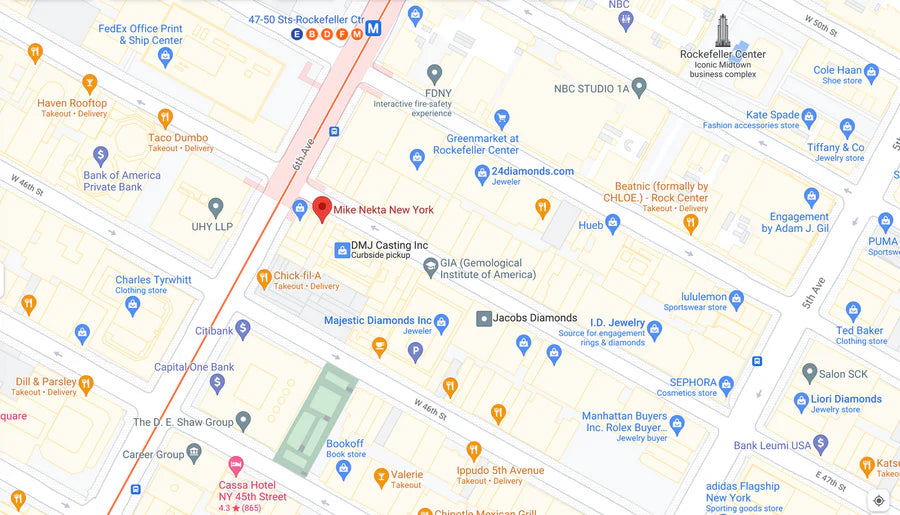
Book an appointment at Mike Nekta New York
If you’re looking at investment grade jewelry and you want the truth, not the showroom version, book an appointment with me.
I’m Mike Nekta and I bring what you’re considering, or tell me what you want to build. We’ll go stone by stone, detail by detail, and make sure you’re buying something that holds up in the real world.
Come with questions. Leave with clarity. Book an appointment with Mike Nekta New York.