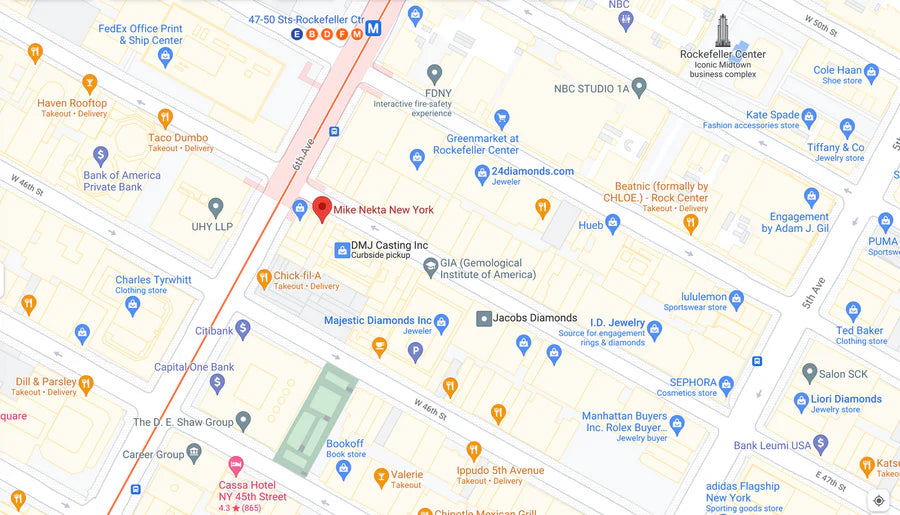

How Long Does It Take to Make a Custom Ring? A Clear Timeline
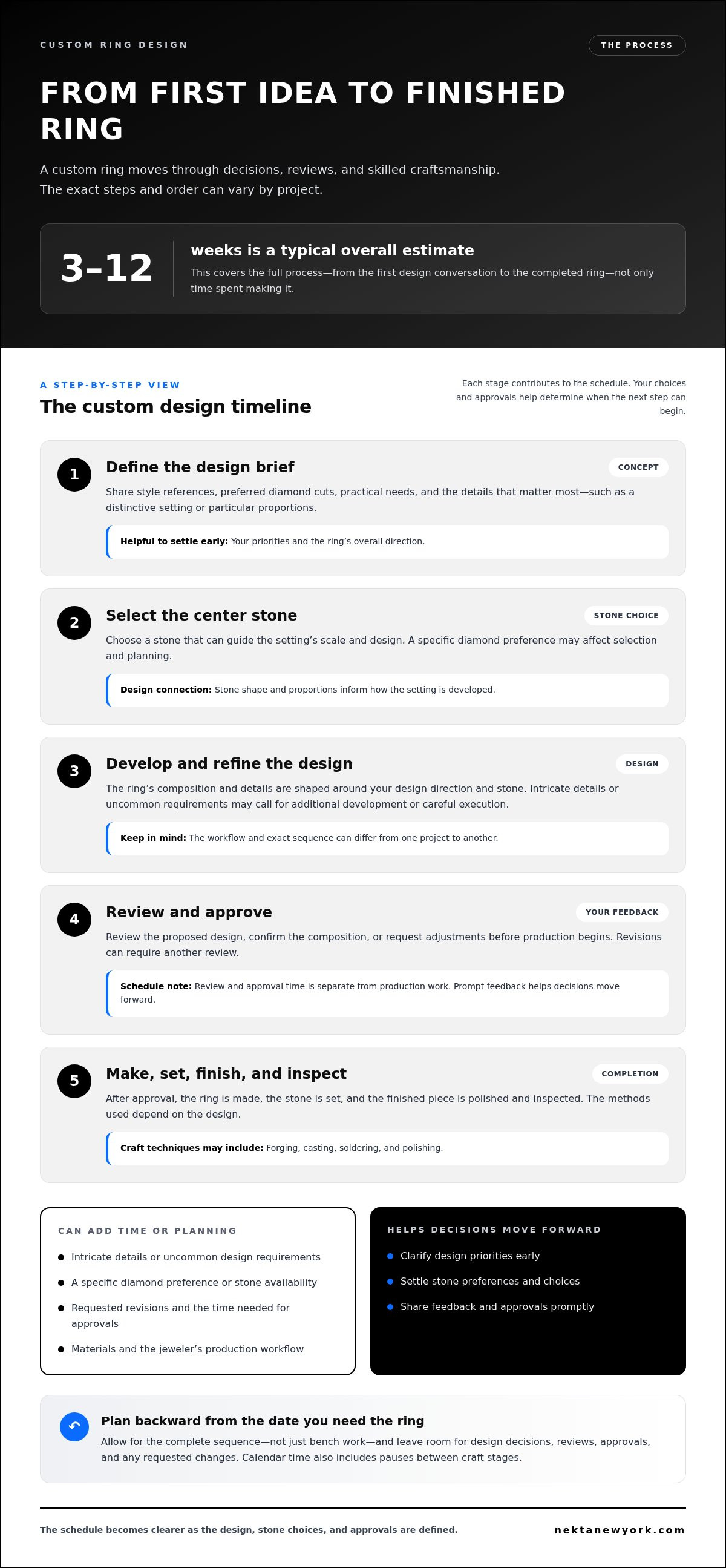
How far ahead should you begin if the ring needs to be ready for a proposal? The answer to “how long does it take to make a custom ring” is typically 3 to 12 weeks, depending on the design, stone selection, and time needed for decisions and approvals. Unlike a ready-to-ship piece, a custom ring takes shape through a series of choices, reviews, and skilled craftsmanship.
A design revision or a specific diamond preference can affect the schedule, so it helps to plan backward from your proposal date and leave room for decisions. This guide walks through the usual stages, the factors that influence timing, and practical ways to plan. At Mike Nekta New York, custom ring design is a collaborative process informed by third-generation diamond expertise and more than 20 years of operation in Manhattan’s Diamond District. Knowing what to expect, from the first conversation through completion, can help you plan with confidence.
Key Takeaways
- The answer to “how long does it take to make a custom ring” depends on the design, stone selection, approvals, and production workflow.
- Plan for the full sequence of design choices, reviews, and making, not only the time spent crafting the ring.
- Intricate details, specific stone preferences, and requested revisions can affect timing. Clear priorities and timely feedback help keep decisions moving.
- Work backward from the date you need the ring, leaving room for design approvals and completion.
- A design conversation can help clarify stone choices and project considerations with guidance informed by Mike Nekta’s diamond expertise.
How long does it take to make a custom ring? The realistic answer
There isn’t one fixed answer to how long does it take to make a custom ring. Timing depends on the design’s complexity, the selected stone and materials, how quickly decisions are made, and the jeweler’s workflow. A useful estimate covers the full process, from the first design conversation to the completed ring, rather than just the time spent making it.
A ready-to-ship ring has already been made and may only need preparation before delivery. Modifying an existing design may involve fewer stages than creating a ring from the ground up, depending on the changes and work involved. For either option, clarify what the estimate includes and which decisions still need to be made.
What does the custom-ring timeline include?
A custom project may include concept development, design refinement, client approvals, making, stone setting, finishing, and final inspection. The exact steps and their order vary by project. A ring with intricate details and a carefully selected diamond can involve different design decisions and work from a simpler piece.
Calendar time also includes the pauses between craft stages. Choosing a stone, reviewing a design, sharing feedback, and approving changes can all affect when the next step begins. The craft itself draws on the skills of a skilled goldsmith, whose techniques can include forging, casting, soldering, and polishing. The techniques used depend on the design, so the total schedule is not simply a count of hours at the bench.
Why there is no single guaranteed turnaround
Intricate details or uncommon design requirements may call for additional development or careful execution. Stone selection can affect the sequence, especially when the design depends on finding a specific diamond. Revisions can also change the plan, while timely feedback and approvals help decisions move forward. Materials and the jeweler’s production workflow matter as well.
Published timelines can be useful planning references, but they do not predict every project. For example, BR Diamonds gives a four-to-twelve-week estimate for custom work and a four-to-six-week estimate for many fully custom rings. Those are that jeweler’s estimates, not universal standards or a schedule for every ring. Treat an industry benchmark as a starting point, then use the schedule for your specific design.
A custom ring’s completion date depends on the design, materials and stone, approval pace, requested changes, and the jeweler’s workflow. An early estimate helps set expectations. The schedule becomes more useful once the design, stone choices, and required approvals are clear.
From first idea to finished ring: the custom design stages
A custom ring develops through a series of decisions and craft stages, with your input helping shape the design. The workflow and timing depend on the project. To understand the schedule, look at which decisions need to be settled before the next stage can begin.
Design brief, inspiration, and stone selection
The first conversation helps define what you want the ring to look and feel like. Share style references, preferred diamond cuts, practical needs, and details that matter most, such as a distinctive setting or particular proportions. If you’re considering a loose diamond, choosing the center stone early can help guide the setting’s scale and design. A specific stone preference may also affect selection and planning. For inspiration, explore our guide to custom bridal jewelry in New York City.
Design approvals, making, and final inspection
Once the design direction and stone are established, review and approve the proposed design before the ring is made. This is the time to confirm the composition or request adjustments. After approval, the work progresses through making, setting the stone, finishing, and inspecting the completed piece. The order and methods can vary by project, but each stage contributes to the finished ring.
Your review and approval time is separate from production work, and both contribute to the overall schedule. Responding promptly to design questions helps keep decisions moving. If you request revisions, allow time for another review before making proceeds.
In broad terms, the sequence often looks like this:
- Concept: Share references, preferences, and priorities.
- Stone selection: Choose a center stone that informs the setting and proportions.
- Design development: Refine the ring’s composition and details.
- Review and approval: Confirm the design before production begins.
- Making and completion: The ring is made, the stone is set, and the piece is finished and inspected.
This is a guide, not a fixed sequence for every project. A conversation with a diamond expert can connect your stone choice, design priorities, and practical considerations early in the process. To explore a custom engagement ring, start with a personalized design conversation.
What can make a custom ring take longer or move more smoothly?
A custom ring does not automatically take longer simply because it is made to order. A focused design and settled stone preferences can involve different decisions from a piece with intricate details or a specific diamond in mind. Understanding which choices affect the project helps you plan more effectively than assuming every custom design follows the same pace.
Design complexity, materials, and diamond availability
Intricate settings, several design elements, or an uncommon requirement may call for more development to make sure the details work together. The center stone matters, too: its shape and proportions influence the setting, and a design based on a particular diamond needs to account for selecting that stone. Timing depends on the project, so avoid treating sourcing or production as a fixed-duration step without a project-specific schedule.
Approvals, revisions, and scheduling
Your decisions are part of the calendar. A pause while you review a design can hold up the next stage, and a requested change may require another round of development and approval. Before reviewing a design, gather your preferences and decide which features are priorities. At each approval point, send clear, consolidated feedback rather than changing instructions over several separate messages.
| Schedule influence | Why it matters | Practical planning response |
|---|---|---|
| Intricate details or multiple elements | More components may require careful design development to create a cohesive piece. | Prioritize the details that matter most and discuss how they work together. |
| Uncommon design requirements | A distinctive request can affect design development and the work involved. | Explain the desired look and practical needs early in the conversation. |
| Stone selection and availability | A chosen stone informs setting proportions; a specific preference can shape selection. | Decide whether the design depends on a particular cut or stone characteristic. |
| Settled brief versus repeated late-stage changes | A clear direction supports review and approval; revisions can mean revisiting earlier decisions. | Consolidate feedback at each review and raise concerns before approving the design. |
| Approval pace | Production steps may depend on customer decisions being finalized. | Set aside time to review proposals and respond clearly at each stage. |
So, how long does it take to make a custom ring? The answer depends on the jeweler’s work, your design decisions, stone selection, and the approval process. A thoughtful brief and timely feedback can help the project move smoothly, although they cannot remove every factor that may affect its schedule.
How to plan a custom ring backward from your proposal date
Start with the date you need the ring in hand, then work backward using the schedule for your project. Include time for design review and approvals, making, setting, finishing, inspection, and any final arrangements. The sequence and timing vary, so an online average is a starting reference, not a dependable plan for your particular ring.
A proposal-date planning checklist
- Set your must-have date. Identify when the ring needs to be ready, with room for anything you need to do before the proposal.
- Gather useful context. Collect inspiration, preferred design details, and clues about the recipient’s style, such as the jewelry they wear regularly—exploring distinctive collections from luxury designers like ZAAFAR Atelier can help pinpoint their aesthetic preferences.
- Discuss stone preferences early. Mention a preferred diamond cut or a specific stone in the initial conversation because it may influence the design and selection process.
- Allow time for decisions. Set aside time to review design proposals, consolidate feedback, and approve each stage without rushing important choices.
- Build in a contingency buffer. Leave flexibility for design changes, stone-selection variables, and final arrangements rather than planning around the tightest possible schedule.
Use the estimate for your actual design as the planning anchor. Discuss how the stages fit together, which approvals are needed, and when the ring is projected to be complete. If you’re considering how long does it take to make a custom ring, a project-specific sequence is more useful than a general industry range.
If the date is approaching
Begin the conversation promptly and state your deadline clearly. The available approach depends on the design, chosen stone, and project schedule, so do not assume that an adjustment will guarantee a shorter timeline. Simplifying details or staying flexible about stone preferences may make the design easier to plan, but the effect depends on the project. Keep the features that matter most and be clear about which elements can change.
Still deciding on a diamond cut? Our round brilliant engagement ring guide can help you compare this classic option as you shape your preferences.
For a practical starting point, bring your date, design ideas, and stone priorities to a custom ring planning conversation. Mike Nekta’s third-generation diamond expertise can help you consider how those choices fit together and plan around the specific design.
Planning a custom ring with Mike Nekta New York
A custom engagement ring is both a personal design decision and a purchase tied to an important date. At Mike Nekta New York, the design conversation is guided by third-generation diamond expertise and more than 20 years of operation in Manhattan’s Diamond District. This guidance can help bring design preferences and diamond considerations into focus. Each project has its own schedule, based on its design, selections, and approvals.
Expert guidance for a considered design
Choosing a center stone and shaping a setting are connected decisions. The diamond’s cut and proportions can influence the ring’s overall composition, while the intended style helps clarify which details deserve priority. Mike Nekta New York offers ethically sourced diamonds, including GIA-certified loose diamonds, for clients considering stone options as part of a custom design.
A design conversation can help you compare preferences, understand how stone choices relate to the design, and identify decisions that may affect planning. Bring what you already know, such as a preferred cut, inspiration images, or a sense of the recipient’s everyday style. It is just as useful to identify what remains flexible. You do not need to arrive with every detail settled.
Begin with your vision and timing
Share the date the ring needs to be ready at the start of the discussion. It gives the design conversation a practical reference point and helps shape the schedule around the chosen design and its decisions. A ring with distinctive details or a specific stone preference may call for different planning from a more straightforward concept. The schedule should reflect the project, not a generic online estimate.
If you’re still refining your idea, begin with three things: the proposal date, the design details you feel strongly about, and the choices where you’re open to guidance. From there, discuss stone selection, design priorities, and the approvals needed to move forward. This is more useful than relying on a timeline that may describe a different jeweler’s process when asking how long does it take to make a custom ring.
Start a custom ring design conversation with your vision and timing in mind, and build a plan around the ring you want to create.
Start planning your custom ring with confidence
There is no single timeline that fits every custom ring. Design complexity, stone selection, approvals, and the jeweler’s workflow all shape the journey from the first conversation to the finished piece. Plan backward from your proposal date, use the project-specific schedule as your guide, and leave room for decisions and final arrangements.
A personalized design conversation can bring your priorities into focus, from the details you envision to the diamond that will shape the setting. At Mike Nekta New York, that guidance is informed by third-generation diamond expertise and more than 20 years of operation. Ethically sourced diamonds and GIA-certified loose diamonds can also inform your stone-selection decisions.
If you’re still asking how long does it take to make a custom ring, begin with your desired date and design ideas. Begin a custom ring design conversation with Mike Nekta New York and take the first step toward a ring that feels distinctly yours.
Frequently Asked Questions
How long does it usually take to make a custom engagement ring?
There’s no universal schedule for a custom engagement ring, so how long does it take to make a custom ring depends on the project. Design development, stone selection, approvals, making, setting, and finishing all contribute to the timeline. A simpler concept and a specific stone choice can involve different planning needs. Use the schedule for your project and plan backward from the date you need the ring rather than relying on a general estimate.
Can a custom ring be made in a few weeks?
It may be possible for some simpler projects, but do not assume a few weeks is enough for every custom ring. Timing depends on the design, the preferred stone, how quickly design decisions are approved, and the jeweler’s current workflow. Even a straightforward design needs time for the work and completion checks. Share your required date at the beginning of the design conversation so the plan reflects the actual project.
What takes the longest when making a custom ring?
The longest stage varies by project. Design development may need further refinement, finding a suitable stone can affect the sequence, and approval rounds depend partly on when decisions are made. Making or setting intricate details may also require careful work. Your review time contributes to the overall calendar, too. Consider the full schedule and its dependencies rather than assuming one stage always takes the longest.
Does choosing a diamond affect how long a custom ring takes?
Yes. A diamond can affect the project’s sequence because the setting may be designed around the stone’s shape and proportions. Availability and sourcing needs can also influence planning, though there is no reliable sourcing duration to assume in advance. Discuss your preferred cut, shape, and priorities early. That gives the design conversation a clearer starting point and helps identify the next decisions for your ring.
Do design changes delay a custom engagement ring?
They can affect timing, particularly if a change alters an approved design or requires another review before work proceeds. The impact depends on the revision and when it is requested; a considered refinement does not automatically create a major delay. Gather your preferences before reviewing the design, assess the proposal carefully, and provide clear, consolidated feedback. This gives the jeweler a clear direction while leaving room for thoughtful adjustments.
How far in advance should I order a custom ring before a proposal?
Begin as early as practical, then plan backward from the date you need the ring. Design complexity, stone selection, approval timing, and the jeweler’s schedule all influence how much lead time the project needs, so an online average cannot replace a project-specific plan. Share your proposal date at the start of the design conversation. This helps the schedule account for your ring’s choices and the time needed for each step.