Fancy Vivid Yellow Diamonds Compared: What I Look For In Real Canary Yellows (In Hand)
By Mike Nekta
Third-generation jeweler · 25+ years in the NYC Diamond District
Author of the Fancy Yellow Diamond Price Guide
My In-Hand Comparison: What I Look For In A Fancy Vivid Yellow
When you're buying a serious natural Fancy Vivid Yellow diamond, photographs only tell you part of the story.
Most buyers see yellow diamonds online through edited photos, controlled lighting, or individual product images. That's not how I make my final decision with a client.
In my showroom, I want to put the diamonds next to each other and look at them in hand.
I've spent more than 25 years working in the NYC Diamond District, and when clients fly into New York to compare serious diamonds, I look beyond the grading report. I want to see how the color sits across the diamond, how the stone handles light, how the shape changes its appearance, and whether the clarity is actually distracting when the diamond is moving.
For this comparison, I looked at four natural Fancy Vivid Yellow diamonds side by side.
All four have strong color, but they don't look the same. They don't have the same personality, and they don't necessarily appeal to the same buyer.
That's exactly why I believe an in-hand comparison is so important.
Watch The Main Video: Four Fancy Vivid Yellows Side By Side
Rather than trying to explain every difference with photographs alone, I wanted to show these diamonds the way I would actually compare them with a client.
In the video below, you can see the four Fancy Vivid Yellow diamonds side by side and in motion. Pay attention to the face-up color, sparkle, shape, and how each diamond responds as it moves.
Seeing the stones together makes one thing clear: even when diamonds share the same Fancy Vivid color grade, they can still have very different appearances.
What Makes A Fancy Vivid Yellow Diamond Different?
Fancy color diamonds are graded differently from traditional white diamonds.
For yellow diamonds, GIA's color scale ranges from lighter levels through Fancy, Fancy Intense, and Fancy Vivid. Fancy Vivid is the level many serious buyers are looking for when they want a strong, saturated "canary yellow."
But the words Fancy Vivid Yellow on a report don't tell you exactly how the diamond will look in your hand.
Two diamonds can have the same color grade and still look noticeably different. Color distribution, cut, shape, proportions, clarity, and fluorescence can all influence the way the diamond presents face-up.
This is why I don't recommend buying a fancy yellow diamond from the report alone.
The report establishes important facts about the diamond. Your eyes still need to decide whether the actual stone has the color, life, and appearance you're looking for.
For buyers who want to understand how Fancy Yellow diamonds are priced across different levels of intensity, I've put together my Fancy Yellow Diamond Price Guide.
Use The Fancy Yellow Final Decision Checklist
Before making a final decision, this Fancy Yellow Diamond Final Decision Checklist gives you a practical way to compare the details that matter most.
Use it while looking at diamonds side by side so you can evaluate the stone itself, not just the information on the report.

The Four Diamonds, Compared In Hand
Now let's look at the four diamonds individually.
These are all natural Fancy Vivid Yellow diamonds with no brown or green modifiers on these options. What separates them is the shape, clarity, size, fluorescence, and most importantly, what I see when I look at each stone in hand.
1.74 ct Radiant — My #1 Pick For Sparkle And Color
- Color: Fancy Vivid Yellow
- Clarity: SI2
- Fluorescence: None
- GIA: 1236458983
- Measurements: 7.27 x 6.05 x 4.14 mm
- Table: 69%
- Depth: 68.3%
This is my #1 pick for sparkle and color from these four.
The Radiant shape gives the stone a lively appearance, and the combination of its color and light performance is what makes it stand out to me.
The SI2 clarity is worth considering, but I don't make the decision from the clarity grade alone. What matters is whether the inclusions affect what you actually see when the diamond is moving.
The stone is a cut-cornered rectangular modified brilliant with Excellent polish and Very Good symmetry. There is some light windowing around the edges, but it is relatively mild. In the overall comparison, this was my top pick for its combination of sparkle and color impact.
1.71 ct Asscher — A Unique Square Look With High Clarity
- Color: Fancy Vivid Yellow
- Clarity: VVS2
- Fluorescence: None
The Asscher gives you a completely different look.
Its square shape and step-cut style create a more structured appearance than the Radiants or the Oval. For someone who specifically likes that geometric look, this diamond has a personality that the other stones don't have.
The VVS2 clarity is another strong point for a buyer who places a high value on clarity.
I wouldn't call it better simply because it has a higher clarity grade. It's a different type of diamond for a different type of buyer.
This is an Asscher mixed-shape cut with a unique square, emerald-style look. The VVS2 clarity gives it an exceptionally clean appearance. In my overall comparison, it stood out for its combination of shape uniqueness and clarity.
1.80 ct Elongated Oval — A Long, Distinctive Shape
- Color: Fancy Vivid Yellow
- Clarity: SI1
- Fluorescence: None
- GIA: 1162272004
- Measurements: 10.77 x 6.40 x 4.05 mm
- Table: 63.3%
- Depth: 63.3%
The elongated Oval, or Moval, has a very different presence.
Its long outline gives it a distinctive face-up appearance and plenty of visual length across the finger.
But this is also the diamond where I want to be particularly honest about what I see.
For some reason, the black inclusion is visible depending on how I rock the stone — surprising for an SI1 from GIA.
That doesn't automatically make the diamond a bad choice. It means you need to look at it properly.
Eye-clean in motion matters.
A diamond can look completely clean from one angle and reveal something when it moves. That's why I don't want a client making a decision based on the clarity grade alone.
This is technically a Moval, an elongated shape that combines characteristics of an oval and marquise. Its 10.77 × 6.40 mm dimensions give it a particularly long face-up appearance. It has Good polish and Good symmetry, with a medium culet.
2.02 ct Radiant — Larger Face-Up Presence
- Color: Fancy Vivid Yellow
- Clarity: VS2
- Fluorescence: Faint
The 2.02 ct Radiant gives you a larger face-up presence.
For a buyer who wants more visual size, that difference matters. But I would still compare it directly with the 1.74 ct Radiant rather than assuming the larger carat weight automatically makes it the better diamond.
When you're comparing serious fancy color diamonds, the actual face-up appearance needs to be part of the decision.
This stone is slightly above the original 1.60–1.90 ct target, but the additional weight gives it a larger face-up presence. It has VS2 clarity and faint fluorescence.
The 1.80 ct Oval SI1: Why Eye-Clean In Motion Matters
The 1.80 ct Oval is a good example of why I believe buyers should look beyond the certificate.
An SI1 can be a very good clarity choice when the inclusions aren't distracting. But you can't assume every SI1 will look the same.
With this particular Oval, the black inclusion becomes visible depending on how I rock the stone — surprising for an SI1 from GIA.
If you're spending serious money on a natural Fancy Vivid Yellow diamond, I don't think you should have to discover something like that after you've already made the purchase.
The question isn't simply whether the report says SI1.
The question is whether you can live with what you see when the diamond is moving.
That's why in-hand comparison matters so much.
What Fluorescence Can Do To A Yellow Diamond In Daylight
Fluorescence is another detail that deserves attention when you're comparing yellow diamonds.
Medium, Strong, and Very Strong fluorescence can react to ultraviolet light in daylight. In some yellow diamonds, this can affect the appearance of the color and make the yellow look weaker or more washed out than it did under controlled indoor lighting.
I made a short video showing what I mean by this effect. Watch how the appearance of the yellow can change when the diamond is exposed to UV-rich daylight.
This is one more reason I prefer looking at a diamond in different lighting rather than judging it from a single photograph.
How to Buy a Fancy Yellow Diamond Like a Seasoned Diamond Dealer
Buying a Fancy Yellow diamond is about more than finding the highest color grade on a report. You need to know how to judge the stone in front of you and understand the details that can affect how it looks, performs, and holds its appeal.
I put together this guide to help buyers approach Fancy Yellow diamonds with the same practical questions I consider when comparing stones for clients. It covers the details worth paying attention to before you commit to a diamond.
How to Buy a Fancy Yellow Diamond Like a Seasoned Diamond Dealer, use this guide as a reference while comparing stones, asking questions, and reviewing your options.

My Buying Rules For Fancy Vivid Yellow Diamonds
After years of comparing diamonds with clients, these are the rules I would follow when buying a natural Fancy Vivid Yellow.
1. Color comes first.
Look for a rich, even, vivid yellow. If possible, avoid unwanted brown, gray, or green modifiers when they aren't part of the look you're trying to achieve.
2. Trust your eyes over the PDF.
A grading report is important, but it cannot tell you everything about how a diamond looks in motion.
3. Compare face-up size in millimeters.
Don't judge size by carat weight alone. Put the diamonds next to each other and compare their actual measurements.
4. Watch the cut performance.
Look for windowing, dead zones, and areas where the diamond isn't returning light properly.
5. Judge clarity in motion.
Don't simply look at SI1, VS2, or VVS2 and assume you know what you'll see. Move the diamond and look carefully.
6. Pay attention to fluorescence.
Especially with medium to very strong fluorescence, look at the diamond in daylight and understand whether it changes the appearance of the yellow.
7. Think about the setting.
Yellow gold baskets and prongs can help support the yellow appearance of a fancy yellow diamond. White metal can create a different visual effect and may make the yellow appear less strong.
8. Buy natural with proper documentation.
For a significant natural fancy color purchase, I recommend a GIA Colored Diamond Report. If a diamond is being marketed as "vivid" at an unusually low price, find out why. Make sure you understand whether the color is natural or treated.
The biggest mistake I see is buying from the specifications first and the diamond second.
With fancy color diamonds, the stone itself has to earn the decision.
If you're seriously comparing natural Fancy Vivid Yellow diamonds, I recommend seeing them side by side and making the decision based on color, performance, shape, and what your eyes actually see.
Book a Private Consultation With Mike Nekta
If you're seriously considering a natural Fancy Vivid Yellow diamond, the next step is to see and compare the stones in person. Photos and grading reports provide important information, but they don't show everything I look for when evaluating a diamond.
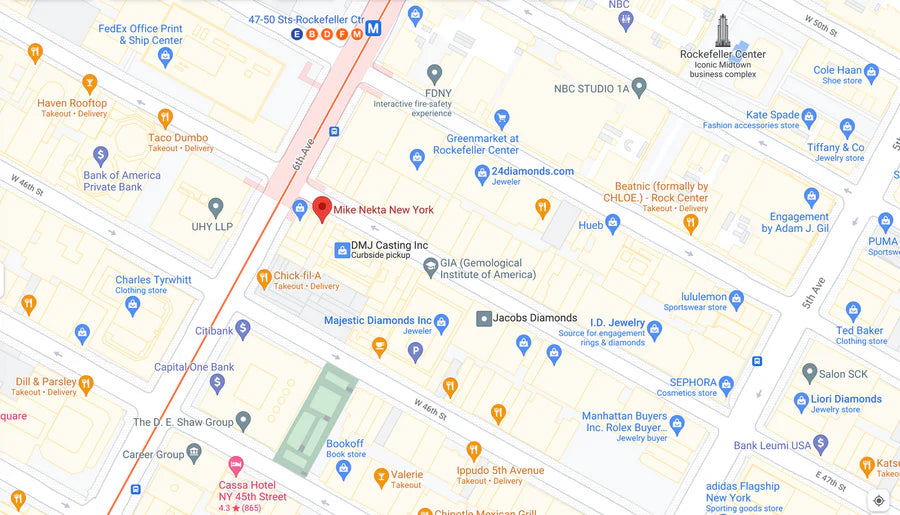
Call or WhatsApp me at +1 (212) 921-4647 to schedule a private consultation, or visit my showroom:
Mike Nekta
Nekta New York
74 West 47th Street
New York, NY 10036
You can learn more about my work, diamond collections, and services at https://www.nektanewyork.com/.
For more in-hand comparisons and practical diamond-buying advice, watch my videos on https://www.youtube.com/@MikeNekta5.
If you're still researching Fancy Yellow diamonds, my https://www.nektanewyork.com/pages/fancy-yellow-diamond-price-guide covers pricing, color intensity, and the factors I recommend considering before you buy.