
Engagement Stories: Why Modern Brides Love the Pear Cut
I’ve seen trends come and go in this industry, but the pear cut is different. It doesn’t rely on hype. It wins because it works.
When a modern bride walks into my studio, she usually has two goals that sound simple but are actually hard to nail at the same time: she wants a ring that feels timeless, and she wants it to feel like her. The pear cut does that beautifully. It’s romantic without being predictable, flattering without being loud, and it carries a kind of quiet confidence that photographs well and wears even better.
And yes, I’ll say it plainly because it matters in real life: Mastery ages well. Trends don’t.
The Pear Cut Has A Story Built Into Its Shape
The pear is a hybrid of two classics, the round and the marquise. You get the softness and light performance that people love in rounds, plus the elongated silhouette that gives marquise its drama. The result is a shape that feels elegant and expressive without looking like it’s trying too hard.
That’s why pear engagement rings photograph like a dream. The pointed tip creates direction and style, the rounded end keeps it feminine, and the overall shape naturally draws your eye.
Modern brides like rings that look intentional, not random. The pear looks intentional.
Why Pears Feel “Modern” Right Now (Without Being Trendy)
Here’s what I notice from real appointments: modern brides are not looking for the loudest ring in the room. They’re looking for the ring that makes sense for their lifestyle and looks right on their hand.
The pear is modern because it solves problems:
- It elongates the finger and flatters almost every hand.
- It can look larger per carat compared to many other shapes because of its spread.
- It offers versatile styling: minimal solitaire, halo, three-stone, east-west, you name it.
- It lets you create something distinct without going into “fashion ring” territory.
That last point matters more than people admit. Brides want unique. They just don’t want risky.
The “Engagement Story” Factor: Pears Feel Personal
I’ve worked with plenty of clients who didn’t pick a pear because it was popular. They picked it because it matched a personal detail.
Sometimes it’s a nod to vintage jewelry in the family. Sometimes it’s because they want something softer than an emerald cut but more distinctive than a round. Sometimes it’s simply the way the shape sits on their finger and feels like it belongs there.
A pear ring has presence, but it doesn’t shout.
And when you combine it with the right setting and proportions, it becomes the kind of ring people comment on for the right reasons.
Pear Cut 101: What You Need To Know Before You Buy
Most disappointment with pear diamonds comes from people choosing with their eyes only and not understanding the mechanics. Pears are less forgiving than some shapes, and that’s why expertise matters.
Here are the big factors I walk clients through.
1) Length-to-width ratio: the personality of the pear
This ratio affects whether the diamond looks slender, balanced, or wider.
There’s no single “best” ratio, but in my experience:
- Slender pears feel sleek and fashion-forward.
- Balanced pears feel classic and universally flattering.
- Wider pears feel bold and a bit more romantic.
The right ratio depends on your finger shape, your setting style, and how you want it to feel when you look down at it every day.
2) The bow-tie: the make-or-break detail
Most pears show some degree of “bow-tie,” that darker band across the center that can appear depending on how the diamond is cut and how it interacts with light.
A small bow-tie that blends in can be totally fine. A heavy, dead bow-tie that stays dark in multiple lighting environments is a problem.
This is where videos, multiple lighting checks, and a trained eye separate a smart buy from a regret.
3) Tip protection: beauty needs structure
The point is the signature of the pear, and it’s also the most vulnerable area. In a proper engagement ring, the tip should be protected, usually with a V-prong. Not always, but most of the time.
If you’re active with your hands, if you travel a lot, if you’re not delicate with jewelry, this matters.
Because here’s a line I live by: If you can’t see the difference, you’ll feel it later in repairs.
4) Symmetry: pears should not look “tilted”
A pear needs to look balanced. If one shoulder is heavier, if the tip doesn’t align cleanly with the centerline, or if the curves don’t mirror properly, you’ll notice it forever once you see it.
I’ve had clients tell me, “I can’t unsee it,” after comparing two pears side by side. That’s why you compare. That’s why you don’t rush.
Why Pears Look Bigger (And Why That Matters For Real Budgets)
A lot of modern couples are value-driven, even when the budget is healthy. They want the ring to look impressive, but they also want to feel smart about the purchase.
Pears tend to face up larger than many shapes of the same carat weight because of their elongated outline and surface area distribution.
So if you love the presence of a bigger look, but you want to stay disciplined on budget, the pear can be a strong strategic choice.
And I’m going to be direct here, because it’s part of how I work: They’re selling jewelry; I’m solving problems. Budget is one of those problems, and the solution should still look and wear like luxury.
Setting Styles Modern Brides Keep Choosing For Pear Rings
A pear diamond is expressive, which means the setting has to support it, not compete with it. Here are the most requested approaches I’m seeing right now.
The clean solitaire (the modern classic)
A pear solitaire is minimal, but not plain. It puts the shape front and center and keeps the look sharp and timeless.
When it’s executed correctly, it looks high-end because it’s not hiding behind extra metal or extra sparkle.
The halo (when you want presence and softness)
A halo can make the pear look larger and add a romantic glow. The key is making it proportional, not bulky, and ensuring the pear shape stays crisp.
This is also where craftsmanship shows. A messy halo makes an expensive center stone look cheaper than it is.
Three-stone pears (the “story” setting)
A pear center with side stones can be stunning, especially when the proportions are right. Side stones can be tapered baguettes, half-moons, rounds, or even pears that mirror the center.
Three-stone rings are popular with brides who want symbolism and balance, and they tend to wear beautifully over time.
East-west pears (for the bride who wants something different)
Turning a pear sideways can look bold and modern, especially in a sleek setting. It’s not for everyone, but for the right person it looks intentional and editorial.
The key is making sure it still feels comfortable and secure on the hand.
Pear Cut Plus Wedding Band: What You Should Plan For
This is one of the most overlooked parts of the buying process. A pear engagement ring can sit in ways that make band pairing tricky, especially if the setting is low or the stone is sizable.
Some brides want a flush fit, some prefer a gap, and some like a curved band that nests perfectly. There’s no wrong preference, but you should decide early so the engagement ring and band don’t fight each other later.
I build and recommend with the full stack in mind, because it’s not just about how it looks in the box. It’s about how it looks on your hand in year five.
Orientation: Point Up Or Point Down?
Most pears are worn point-up, and that’s what most people think of when they picture a pear ring.
But some brides choose point-down because it feels softer, more grounded, or simply more “them.”
Neither is wrong. What matters is how it looks on your hand and whether the setting is designed to protect the stone properly in that orientation.
What I Tell Brides Who Are Choosing Between Round, Oval, And Pear
Round is classic and bright. Oval is popular and smooth. Pear is expressive and elegant.
If you want a shape that looks refined but not expected, the pear is usually the one that makes a bride pause, smile, and say, “That’s it.”
Not because it’s louder. Because it feels like a signature.
Buying Advice From My Bench-level Perspective
I’m going to keep this practical. If you’re considering a pear cut, don’t skip these steps:
- View the diamond in multiple lighting environments (not just showroom lighting).
- Check symmetry by looking at the shoulders and the alignment from tip to rounded end.
- Evaluate the bow-tie across movement, not just one still angle.
- Plan tip protection and overall durability based on your lifestyle.
- Choose a setting style that supports the pear, not one that hides it.
This is also where I’ll give you a line that’s true in every category of luxury: Clients aren’t loyal to price, they’re loyal to expertise.
The Real Reason Modern Brides Love The Pear Cut
It comes down to this. A pear cut gives you:
- Romance without being overly traditional
- Presence without being flashy
- Elegance without being boring
- A silhouette that feels personal
And when it’s cut well and set correctly, it doesn’t just look good in photos. It wears beautifully, it lasts, and it stays flattering year after year.
That’s what modern brides actually want. Not a trend. A decision they never regret.
Book an Appointment With me in New York
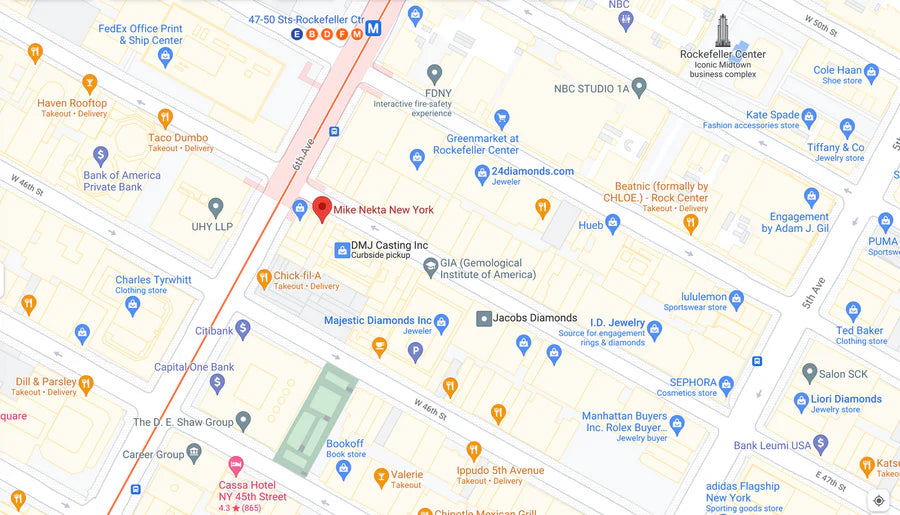
If you’re considering a pear cut and you want to get it right the first time, book an appointment with me, Mike Nekta, in New York. I’ll help you compare options, understand what matters, and leave with a clear plan instead of guesses.
Come with questions. Leave with clarity.