
Emerald and Diamond Combinations: A Perfect Contrast of Fire and Earth
Emerald and diamond is one of those combinations that looks expensive even when the design is simple. The reason is built-in contrast. Emerald brings depth, body color, and that grounded “earth” feeling. Diamond brings “fire,” meaning crisp brightness and sparkle that catches the light from across a room. When you put them together, the look reads luxurious, not loud.
Here’s what I mean by “fire and earth” in normal jewelry terms:
- Diamond fire and brilliance: the flashes and sparkle you see when the stone moves.
- Emerald saturation and body color: the rich, velvety green that holds its presence even in softer light.
Diamonds don’t compete with emeralds the way some colored gemstones can. Instead, they act like a frame and a spotlight at the same time. A good emerald looks greener next to clean white sparkle, and a good diamond looks sharper next to a saturated green center.
In this guide, I’m going to keep it practical, like I would if you were in front of my counter. I’ll show you when this combo works best, what to watch out for (especially with emerald durability and treatment), and how to choose a piece you’ll still love years from now.
Emerald Gemstones 101: What Makes a Great Emerald (Beyond Just “Green”)
When clients tell me, “I just want a nice green emerald,” I get it. But the difference between an okay emerald and a great emerald isn’t subtle once you know what to look for.
Color comes first (hue, tone, saturation)
Color is the whole game with emeralds.
- Hue: You want a true green. Many fine emeralds have a slight blue modifier (bluish green), which can be beautiful and even more “lush” looking.
- Tone: This is how light or dark the emerald appears. Too light can look weak. Too dark can look inky or closed off indoors.
- Saturation: This is the intensity. High saturation is what gives that vivid, lively green that people associate with top emerald jewelry.
If you remember one thing, remember this: A smaller emerald with great color often looks better than a larger emerald with dull color.
Clarity realities (the “jardin” is normal)
Emeralds are famous for inclusions. You’ll hear the term jardin, which is French for “garden,” describing the natural internal features that can look mossy, feathery, or branch-like.
Some inclusions are acceptable and expected. Others are red flags.
- Acceptable: dispersed inclusions that don’t reach the surface aggressively, and don’t create obvious weak points.
- Concerning: large fractures, surface-reaching fissures in vulnerable spots, or inclusions that make the stone look cloudy and lifeless.
Clarity in emerald is not about perfection. It’s about beauty plus durability.
Cut and shape (why step cuts look so “emerald”)
The classic emerald cut is a step cut for a reason. Step cuts emphasize broad flashes and show off color like a pane of stained glass. The tradeoff is they can reveal inclusions more easily.
Other shapes can change the look:
- Oval and cushion: often boost brightness and hide inclusions a little better, and they can look bigger face-up.
- Pear: elegant, slightly more delicate style-wise, but can be stunning with diamond accents.
- Round: less common for emerald, but can look lively if cut well.
Carat weight vs face-up size (emeralds often look bigger)
Emerald has a different density than diamond, and many emerald cuts have a larger surface area relative to weight. In plain English: a 2.00 ct emerald often looks larger than a 2.00 ct diamond when viewed from the top.
This matters in design balance. If you’re pairing an emerald center with diamonds, you want the diamonds to support the emerald, not accidentally overpower it with too much spread or too much sparkle concentration.
Treatments (oiling is common, but you need disclosure)
Most emeralds are treated. The standard treatment is oiling, which can improve apparent clarity by filling tiny fissures with oil or resin-like substances.
What you should know:
- Light oiling is common and generally accepted in the market.
- More aggressive fillers (especially if they are less stable) can impact long-term appearance and care requirements.
My advice is simple: ask for treatment disclosure in writing. If you’re spending serious money, request documentation from a credible lab or at least a clear seller statement that specifies the level and type of treatment.
Diamondsin the Mix: The “Fire” That Makes Emeralds Look Even Greener
Diamonds do three things next to emeralds: they brighten the whole piece, sharpen the outline, and make green look greener by comparison.
Fire, brilliance, scintillation (plain language)
- Brilliance: white light return. The “brightness.”
- Fire: colored flashes in strong light.
- Scintillation: the sparkle pattern when the stone moves.
Around an emerald, you usually want diamonds that look crisp, lively, and well-matched. Even small accents can change the entire feel of the piece.
Diamond shapes that pair best with emeralds (and what each does)
Different diamond shapes create different visual “energy” around the green.
- Round brilliants: classic sparkle, they add maximum light and contrast.
- Baguettes: clean, architectural, and perfect for an Art Deco look. They echo the geometry of emerald cuts.
- Tapered baguettes: one of my favorite pairings for emerald-cut centers because they guide the eye inward.
- Pears: elegant and slightly soft, great for halos, side stones, or drops in earrings.
- Marquise: dramatic, elongated, and great for a vintage or regal silhouette.
If you want the emerald to feel like the hero, baguettes and tapered baguettes are often the easiest win. If you want more “glam sparkle,” rounds do that instantly.
Diamond color considerations (near-colorless vs warmer)
With emeralds, near-colorless diamonds (think G-H range, sometimes I depending on the piece) tend to complement best because they keep the contrast clean.
Warmer diamonds can be intentional, especially in yellow gold or vintage-inspired designs. If your goal is antique warmth rather than icy contrast, you can lean into that. The key is making it look like a choice, not a compromise.
Diamond clarity considerations (where you can be flexible)
For small accent diamonds, you can be practical. Many settings and sizes won’t show tiny inclusions. For center diamonds (if you’re doing a diamond center with emerald accents, or a three-stone design), clarity becomes more noticeable.
My general approach:
- Accent diamonds: prioritize cut and matching, be flexible on clarity within reason.
- Center diamonds: don’t cut corners on what you’ll see every day.
Choosing the Right Metal: Yellow Gold, White Gold, or Platinum?
Metal color is not just a preference. It changes how the emerald reads.
Yellow gold
Yellow gold adds warmth and can make emeralds look richer and more classic. It’s especially flattering with emeralds that have a slightly warmer green.
If you want a regal, timeless look, yellow gold is hard to beat.
White gold or platinum
White metals create a crisp, modern contrast. They make diamond accents look icier and the edges of the design look sharper.
If your emerald has a blue-green tone, white metal can amplify that cool, clean vibe.
Two-tone settings (my practical favorite for many clients)
Two-tone is a smart compromise when you love warmth but still want diamonds to look bright.
A common approach:
- White head (prongs/halo) for diamonds
- Yellow shank for warmth and wearability
It can also make future matching with wedding bands easier, depending on your stack.
Durability and maintenance
- Platinum: durable, develops a patina over time (a softer sheen). Many people love this, some prefer it freshly polished.
- White gold: usually needs rhodium plating to stay bright white. Over time, it may need re-plating depending on wear.
Metal can subtly shift emerald color
This surprises people. The same emerald can look:
- slightly greener in yellow gold,
- slightly bluer or more crisp in white metal,
- slightly darker depending on how enclosed the setting is and how much light enters.
How to Buy Emerald + Diamond Jewelry Without Regret (My Practical Checklist)
I’m going to give you the checklist I use mentally when I’m helping someone choose or build an emerald and diamond piece.
1) Start with your non-negotiable
Decide what matters most:
- If it’s emerald color, choose the emerald first and design around it.
- If it’s overall sparkle and brilliance, build the diamond layout first and select an emerald that holds its own.
People get disappointed when they try to optimize everything at once with a fixed budget. Pick the priority and the rest becomes easier.
2) Request documentation
- Diamonds: ask for a lab report when appropriate (GIA is the most commonly requested in my world, especially for center stones).
- Emeralds: ask for treatment disclosure and identification notes from a credible source.
You don’t need to turn it into a science project, but you do want transparency.
3) Make sure the diamonds support the emerald
This is the biggest design mistake I see: diamonds that are too large, too sparkly, or too busy for the emerald’s personality.
The emerald should feel intentional, not like it got lost inside a diamond setting.
4) Budget strategy (where to spend vs save)
Where I’d spend:
- emerald color
- craftsmanship (settings that are clean, strong, and aligned)
- a protective design if it’s a ring you’ll wear often
Where you can often save:
- accent diamond clarity (within reason)
- simplifying the metal choice or reducing complexity in the setting
- choosing a slightly smaller emerald with better color instead of chasing carat weight
5) Try-on and lifestyle fit
If it’s a ring, think about:
- daily wear vs occasions
- how high the center sits (high-profile rings get knocked)
- whether it will sit flush with a wedding band
- whether it’s glove-friendly and practical for your hands
A beautiful ring that annoys you every day will end up in a drawer.
Real-World Styling: How to Wear Emerald + Diamond Pieces So They Always Look Intentional
This combo is naturally high-contrast, so styling is mostly about restraint and balance.
Everyday styling
My rule: one statement piece, minimal supporting cast.
If you wear an emerald and diamond ring, keep earrings simple. If you wear emerald and diamond studs, keep your necklace clean and let the studs do the talking.
Formal styling
For events, you can build a set without overpowering the emerald by using symmetry:
- necklace + simple diamond studs
- emerald ring + diamond tennis bracelet
- emerald earrings + a delicate diamond pendant
Keep the silhouettes clean. Emeralds do not need chaos around them.
Mixing with other gemstones
This can work beautifully with:
- pearls (soft, classic, elegant)
- onyx (graphic black contrast, very intentional)
Be careful mixing with lots of other saturated colors unless you’re going for a maximalist look. Emerald already carries a lot of visual weight.
Pairing with wedding bands
If you have an emerald and diamond engagement ring, rubbing is the enemy.
Common solutions:
- a curved band that hugs without touching the emerald
- a thin diamond band that sits correctly and doesn’t grind against prongs
- a plain band for a clean, safe everyday stack
This is something I like to solve early, not after the ring is finished.
Design It With Me in New York: A Custom Emerald + Diamond Combination That Fits You
If you want the right emerald, the right diamonds, and a setting built for your lifestyle, I can help you design it properly from the start.
When you book an appointment with me, we’ll typically cover:
- choosing emerald tones and shapes that fit your taste (and your real-world wear plans)
- comparing diamond options that actually complement the emerald
- sketching and refining the setting so it looks intentional from every angle
- selecting the metal (yellow gold, white gold, platinum, or two-tone)
- aligning the design with your budget without sacrificing the important parts
If you have inspiration photos, bring them. If you already own an emerald and want to redesign around it, bring that too.
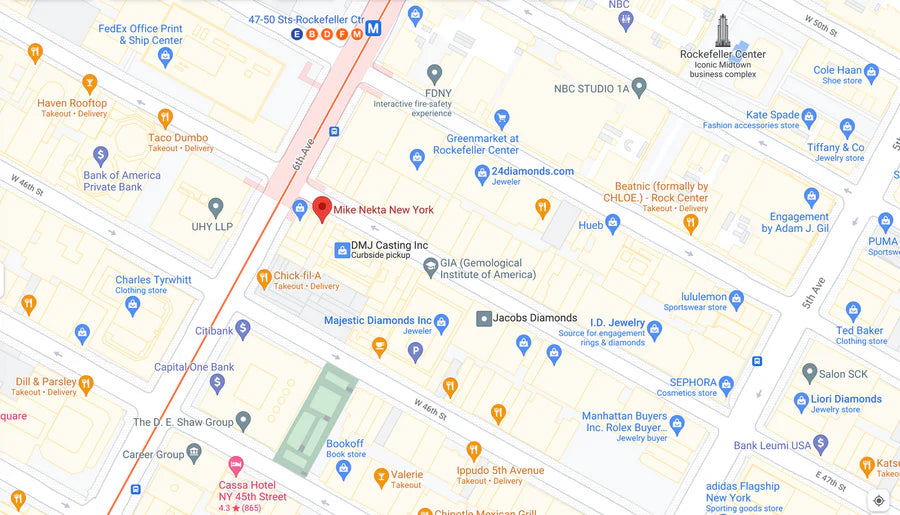
Book an appointment with me, Mike Nekta, in New York. If you’re searching for Mike Nekta New York, this is exactly the kind of project I love doing: emerald and diamond combinations that feel timeless, wearable, and unmistakably high-end.