
Diamond Tennis Bracelet Buying Guide: Choose Your Ideal Style
A higher total carat weight doesn’t automatically mean a bracelet will look or feel right on your wrist. In this diamond tennis bracelet buying guide, start with the design: a tennis bracelet typically has a flexible line of diamonds, while a diamond bangle has a more structured silhouette. That difference affects how a piece looks on its own and how it pairs with other jewelry.
Carat weight is only one part of the comparison. Cut, color, clarity, setting, metal, and fit all contribute to a bracelet’s overall look and feel. The right balance depends on your preferences, whether you’re drawn to a refined row of stones or a bolder bangle outline. This guide explains what to compare, how to weigh diamond origin and cut, and how gold choices influence style. By the time you browse, you’ll have a clearer idea of which silhouette appeals to you and what details matter beyond the carat total.
Key Takeaways
- Use this diamond tennis bracelet buying guide to compare diamond quality, design, metal, and fit together rather than relying on one specification.
- The 4Cs describe different aspects of diamond quality. Total carat weight refers to the combined weight of the diamonds in a bracelet.
- Compare bangle designs by their listed cuts, settings, carat weights, and 10K, 14K, or 18K gold options.
- Build a shortlist by choosing your preferred silhouette and diamond origin, then comparing the stated details with your fit preferences.
- Explore varied diamond bangle designs, including Lucina, featuring 11.61 carats of lab-grown emerald- and round-cut diamonds in 18K white gold.
Diamond Tennis Bracelet Buying Guide: Start with the Design You Want
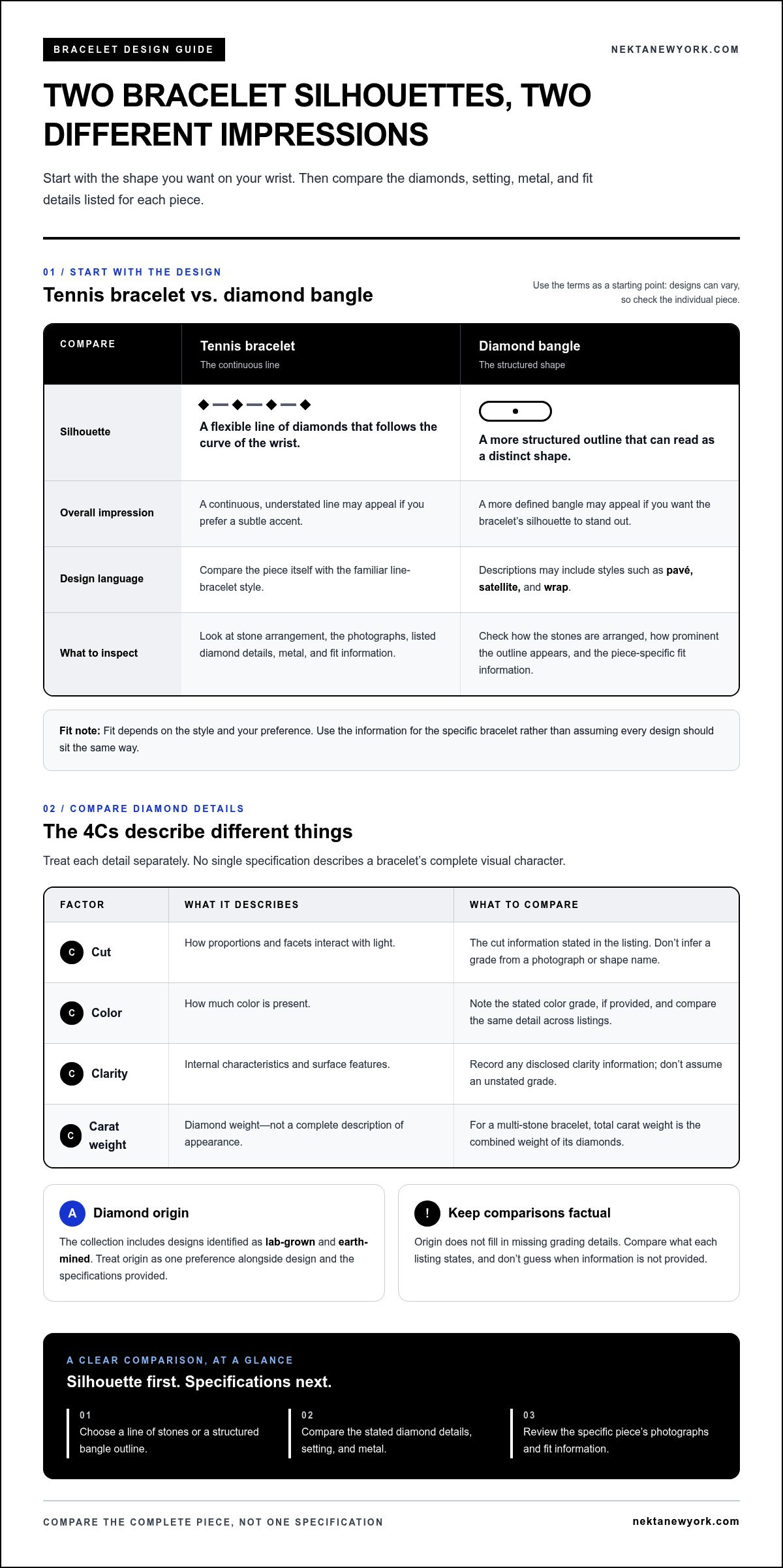
Bracelet terminology can make comparing luxury pieces more complicated than it needs to be. “Tennis bracelet” usually refers to a familiar diamond line, while a diamond bangle has a more structured shape. Begin with the silhouette you want on your wrist, then compare the diamonds, setting, and metal. This diamond tennis bracelet buying guide starts with that visual distinction to make your search more focused.
A traditional tennis bracelet has a flexible line of individually set stones, while a bangle has a more defined, structured silhouette. Designs vary, so use these terms as a starting point and look at the piece itself. For broader context, History and types of bracelets, including tennis bracelets offers a general overview of bracelet styles. Mike Nekta New York offers diamond tennis bracelets, and its collection also features diamond bangles described as pavé, satellite, wrap, and other styles.
Tennis bracelet or diamond bangle: what is the difference?
Imagine a line of stones following the curve of your wrist. That continuous look is the familiar tennis-bracelet style. A bangle, by contrast, has a more structured outline and may read as a distinct shape rather than a line of stones. Mike Nekta New York’s diamond bangle designs give you another silhouette to consider alongside classic line-bracelet styles.
Which bracelet style feels right for your occasion?
Think about the impression you want the piece to make. A continuous, understated line may suit you if you prefer a subtle accent. A more defined bangle may appeal if you want the bracelet’s silhouette to stand out. These are styling preferences, not predictions about how a piece will perform. Consider how you plan to wear it, from an everyday detail to a more noticeable finishing touch.
- Look at the silhouette: Decide whether you prefer a line of stones or a more structured bangle shape.
- Read the design description: Terms such as pavé, satellite, and wrap distinguish different visual directions in the collection.
- Study the photographs: Look at how the stones are arranged and how prominent the overall outline appears.
- Compare the specifications: Review the listed diamond details, gold option, and fit information for each piece.
Fit deserves as much attention as appearance. A bracelet’s fit depends on its style and your preference, so use the information for that specific piece instead of assuming every design should sit the same way. Comparing the description, diamond details, metal, photographs, and fit information gives you a practical basis for choosing a bracelet that feels right, not just impressive on paper.
How to Compare Diamond Quality in a Tennis Bracelet
The 4Cs are easier to use when you treat them as four separate details, not as one score for how a bracelet will look. Cut, color, clarity, and carat weight describe different characteristics. None stands in for all the others. When comparing diamond bracelets, use the grading information and specifications stated for each piece. Don’t assume a detail that isn’t provided.
Carat weight alone can’t describe a bracelet’s complete visual character. For a multi-stone piece, total carat weight means the combined weight of its diamonds, not the weight of one stone. It helps you compare overall diamond weight, but it doesn’t show how the stones are arranged or what other quality details are disclosed. The Gemological Institute of America provides background on GIA’s role in diamond grading and the 4Cs, a useful foundation for reading product details carefully.
How cut, color, and clarity shape the overall impression
Cut describes how a diamond’s proportions and facets interact with light. Color refers to how much color is present, while clarity describes internal characteristics and surface features. Carat weight measures weight, not appearance. For a fair comparison, record the same disclosed details for every piece you’re considering. Don’t fill gaps by guessing about the diamonds.
- Cut: Compare the cut information stated in the listing. Don’t infer a grade from a photograph or shape name.
- Color: Note the stated color grade, if provided, and compare it with the same detail on other listings.
- Clarity: Record any disclosed clarity information. Don’t assume an unstated grade matches another piece.
- Carat weight: Check whether the figure describes total diamond weight rather than the weight of each stone.
Use this checklist to build a measured shortlist, not to declare one bracelet superior based on a single number. When two pieces disclose different information, compare what is stated and keep the difference in mind as you review their designs.
Lab-grown or earth-mined diamonds: what should you compare?
The collection includes designs identified as lab-grown and designs identified as earth-mined. Treat origin as one preference among several, alongside cut, design, and the specifications stated for the piece. Origin doesn’t supply missing grading details, so consider any listed information separately rather than assuming a particular grade or grading report.
Once you’ve considered origin and the 4Cs separately, focus on the combination that best reflects your priorities. Browse the diamond bangle designs and compare the details provided for each piece.
Compare Diamond Bangle Designs, Cuts, and Gold Options
Once you’ve chosen a silhouette, compare the details that give each bangle its character. The collection includes round, emerald, oval, pear, baguette, and multi-cut diamond designs, as well as pieces described as pavé, satellite, or wrap. These terms suggest different visual directions. The product description provides the specific design, carat weight, and gold option for each piece.
Use the comparison below to understand the range of designs, not to assume that every cut is available in every metal or weight. Gold options include 10K, 14K, and 18K; each piece’s listed option is shown in its description.
| Product | Listed carat weight | Cut or setting description | Gold option |
|---|---|---|---|
| Round-cut diamond bangle | Varies by listing | Round-cut diamonds | 10K, 14K, or 18K, depending on the listing |
| Emerald-cut diamond bangle | Varies by listing | Emerald-cut diamonds | 10K, 14K, or 18K, depending on the listing |
| Oval- or pear-cut diamond bangle | Varies by listing | Oval- or pear-cut diamonds | 10K, 14K, or 18K, depending on the listing |
| Baguette or multi-cut diamond bangle | Varies by listing | Baguette or multiple diamond cuts | 10K, 14K, or 18K, depending on the listing |
| Pavé, satellite, or wrap design | Varies by listing | Described as pavé, satellite, or wrap | 10K, 14K, or 18K, depending on the listing |
How diamond cuts and settings change the look
Round cuts have a familiar shape, while emerald, oval, pear, and baguette cuts create different outlines and visual rhythms. A multi-cut design combines more than one shape. Pavé, satellite, and wrap describe certain designs in the collection. Use the product description and photographs to understand the specific arrangement, rather than reading more into a label than it says. Let the shapes and composition guide your preference instead of relying on carat weight alone.
How to compare gold colors and karat options
Gold color and karat are separate considerations. Compare the 10K, 14K, and 18K labels shown for each piece, without treating one as universally best. If a listing specifies white, yellow, or rose gold, consider which tone complements the wearer’s existing jewelry and personal style. For coordinated choices, pairing a bracelet with daily essentials like solid 18k gold huggie earrings can help you see how different designs and gold tones work together.
For a clear shortlist, note each candidate’s stated cuts or setting description, carat weight, and gold option. Compare those details with the photographs, keeping each specification tied to its own design. This makes it easier to weigh the differences and choose the visual direction that suits your taste.
Shortlist a Diamond Tennis Bracelet That Fits Your Priorities
A shortlist turns a broad selection into a considered decision. Start with how you want the bracelet to sit and look on your wrist, then narrow your options by diamond origin and the details provided for each piece. Fit should come near the end of your comparison, but not as an afterthought: a structured bangle and a flexible line bracelet can feel and sit differently. Assess the specific design instead of relying on its category name.
A practical shortlist for comparing bracelet candidates
- Choose a silhouette. Decide whether you prefer a line bracelet, structured bangle, wrap design, or another style described for the piece. This gives your comparison a clear visual direction.
- Set your diamond-origin preference. Narrow the options to designs identified as lab-grown or earth-mined. Then compare the cut or cuts and listed carat weight for each candidate.
- Compare the stated details. Note the gold color and karat option, along with any diamond specifications provided. Review the photographs and description together, since one headline detail won’t show the whole design.
- Assess fit and wearability. Read the sizing and closure details for the piece. Consider how you prefer a bracelet to sit and move, taking its particular style into account.
This sequence keeps your priorities visible. If silhouette and gold color matter most, use them to narrow your options first, then compare the disclosed diamond details among the remaining designs. If the bracelet is part of wedding-day styling, coordination with other pieces can also help guide your choice. The custom bridal jewelry guide offers a wider perspective on bringing jewelry choices together for the occasion.
Common buying mistakes to avoid
- Choosing by total carat weight alone: Total weight describes the combined weight of the diamonds, not a complete quality grade or the appearance of the whole bracelet.
- Assuming every bracelet wears alike: A structured bangle and a flexible line design may sit differently on the wrist. Compare the listed style with your own fit preference.
- Reading details into a product name: Don’t infer a grading report, clasp type, or exact sizing from a name or design description. Use the specifications provided for that piece.
A disciplined comparison helps separate stated details from assumptions. This diamond tennis bracelet buying guide approach keeps your decision grounded in silhouette, diamond specifications, metal, and fit. Explore diamond bangle designs and use those priorities to narrow your selection.
Explore Mike Nekta New York’s Diamond Bangle Designs
With your preferred silhouette, diamond origin, and metal in mind, compare the details of individual designs. Mike Nekta New York’s diamond bangle collection brings together varied cuts, settings, listed carat weights, and gold options. The examples below show how those details can shape your choice. They aren’t rankings; the right piece depends on the design you prefer.
Standout designs for different style preferences
Consider which diamond shapes and arrangements match your taste. Lucina pairs emerald- and round-cut lab-grown diamonds in 18K white gold, while other pieces take different approaches to shape and setting. Compare each design’s description and options.
- Lucina: Listed with 11.61 carats of lab-grown emerald- and round-cut diamonds in 18K white gold. Its combination of shapes gives the design a distinct, statement-making direction.
- Luxa: A 4.78-carat lab-grown design featuring round- and pear-cut diamonds. Its listing presents gold-color variants for shoppers comparing metal tones.
- Lunara: Another lab-grown option, with gold-color variants shown in its listing. Compare its design details with those of other pieces.
- Lazara: Listed with 6.03 carats and a triple-row pavé description, creating a different visual arrangement from the mixed-cut examples.
- Nerida: A 5.50-carat earth-mined diamond design featuring baguette and round cuts, bringing two diamond shapes together in one piece.
- Priya: Listed with 8 carats and a full-pavé design description. Compare the photographs and specifications to understand its particular look.
These examples turn broad style preferences into more concrete comparisons. If you like mixed shapes, Lucina, Luxa, and Nerida each pair cuts differently. If you prefer a repeated or row-based design, Lazara and Priya offer distinct pavé directions. Use “pavé” as the design description and refer to each piece’s details for its specific features.
Browse the collection with an expert eye
Compare each listing’s stated carat weight, diamond origin, cuts or setting description, gold option, and photographs as a group. Don’t let one detail make the decision for you. Gold options across the collection include 10K, 14K, and 18K, with the listed choices varying by piece. The product description provides the details for each design.
Mike Nekta New York is led by third-generation diamond expert Mike Nekta, and the family business has operated for more than 20 years. That experience informs a collection with varied design directions, while your preferences remain central to the decision. This diamond tennis bracelet buying guide has focused on looking beyond a single specification. Now compare the pieces that match your priorities. Explore the diamond bangle collection and review the details of each design.
Choose the Bracelet That Feels Like Yours
The most satisfying choice reflects your taste, not simply the biggest number on a product page. As you use this diamond tennis bracelet buying guide, let your preferred shape, metal tone, and silhouette lead the decision. Picture the piece with jewelry you already enjoy wearing. Consider whether you want it to complement your everyday style or add a distinct accent for a special occasion. A thoughtful shortlist gives you room to choose with confidence.
There’s no need to settle on one “ideal” design right away. Take time to compare the pieces that appeal to you, then revisit their details with your priorities in mind. Mike Nekta New York’s collection reflects the perspective of a third-generation diamond expert and a family business with more than 20 years of operation. Explore both lab-grown and earth-mined diamond designs.
Browse the diamond bangle collection and take the next step toward a bracelet that feels distinctly your own.
Frequently Asked Questions
Is a diamond bangle the same as a diamond tennis bracelet?
Not usually. A tennis bracelet is commonly understood as a line of individually set stones, while a bangle has a more structured silhouette. Retailers and shoppers may use the names broadly, so look at the piece rather than relying only on its category label. Product photographs and descriptions can help you tell whether a bracelet appears flexible or more defined, making similar-looking designs easier to compare.
Can lab-grown diamonds be used in a diamond tennis bracelet?
Yes. Lab-grown diamonds are used in some diamond jewelry, and Mike Nekta New York’s collection includes bangle designs identified as lab-grown. Treat origin as one comparison point, not a verdict on quality or suitability. Consider the stated origin alongside cut, total carat weight, metal, and other disclosed specifications. Don’t assume every design has the same origin or details.
How should a diamond bracelet fit on the wrist?
A comfortable fit depends on how much movement you prefer and whether the piece is a structured bangle or a flexible bracelet. Review the individual listing’s sizing information and follow its stated fit guidance. If you’re comparing different styles, assess each separately rather than assuming a fit that works for one will suit another. Choose a feel that’s comfortable for you and appropriate to the design.
Can you wear a diamond tennis bracelet every day?
Some people wear a diamond bracelet often, while others reserve it for selected occasions. The right routine depends on the design, your activities, and how you prefer to care for jewelry. Follow the care instructions provided for your piece. Remove it before activities that could expose it to impact, chemicals, or abrasion, such as household cleaning or hands-on sports. Don’t assume any bracelet suits every daily routine.
What happens if a diamond bracelet’s clasp becomes loose?
Stop wearing the bracelet until a qualified jewelry professional has assessed and secured the closure. A loose clasp can open unexpectedly, and continued wear may increase the chance of losing the piece. Store it carefully while it’s out of use, and don’t try to tighten or modify the clasp yourself. The appropriate next step depends on the bracelet’s condition, so don’t assume a particular repair or outcome before it has been examined.
Can you stack a diamond bangle with a tennis bracelet?
Yes, stacking can be a personal styling choice, though not every pairing will sit comfortably together. Consider how the bangle and line bracelet differ in silhouette, whether their metal colors complement one another, and how visually dense the combination feels. Try the pieces together gently and check whether they rub, overlap awkwardly, or catch on one another. If they don’t sit well, wear them separately rather than forcing the pairing.
Why is it called a tennis bracelet?
The name is widely associated with tennis player Chris Evert’s 1978 US Open match, when her diamond bracelet reportedly came loose and play paused while it was found. The incident helped popularize the term “tennis bracelet,” but it didn’t create the design. Similar line-bracelet styles were worn before the name became familiar, so the story explains the label’s rise, not the origin of diamond line bracelets themselves.