
Diamond Ring Buying Guide: Why Education Protects Clients
Buying a diamond ring is supposed to feel exciting. But in real life, it can feel like walking into a room where everyone speaks a language you have never learned.
I have seen it from every angle. I’m Mike Nekta, a third generation jeweler and a GIA certified gemologist. I’ve spent over 20 years working in the diamond industry, specializing in large carat diamonds, custom engagement rings, and luxury investment pieces. And if there is one thing I have learned, it is this: education is the single best form of protection a client can have.

Not because diamonds are “scary,” but because the market is complicated. Sales tactics are real. Certificates can be misunderstood. Prices can vary wildly for stones that look similar to the untrained eye. When you understand what you’re looking at, you stop relying on hope and start making decisions with clarity.
This guide is the way I explain diamond buying to my clients at Mike Nekta New York. It’s practical, it’s honest, and it’s designed to help you protect your money and your peace of mind.
The Real Risk Is Not Overpaying, It Is Buying Blind
Most people think the big danger is paying too much. That’s part of it, but it’s not the whole story.
The bigger risk is buying blind. Here’s what that looks like in the real world:
- You buy a diamond that looks great under showroom lights, then it goes dull in normal lighting because the cut is mediocre.
- You focus on carat weight and miss that the stone faces up small because of proportions.
- You get a “deal” on a lab report you do not fully understand, and later realize the clarity grade hides a durability issue.
- You choose a setting that looks beautiful on a tray, but sits too high, catches on everything, or does not protect the stone.
- You buy based on a buzzword like “excellent” without realizing it still leaves room for meaningful quality differences.
Education protects you from all of that. It also protects you from the feeling no one talks about enough: the regret that shows up months later when you finally understand what you bought.
How I Think About A Diamond Ring Purchase
A diamond ring is emotional, symbolic, and personal. But it is also a purchase in a global commodity market.
When my clients come to me for a custom engagement ring or a large carat investment stone, I’m balancing three things:
- Beauty: How it performs in real life lighting, not just on a counter.
- Integrity: What the stone actually is, supported by credible documentation and transparent sourcing.
- Value: Not just the price, but the quality for that price, and how well it holds up over time.
When you approach it this way, your decision gets calmer. You stop chasing numbers and start choosing the diamond that actually fits your priorities.
The Four Cs Are The Start, Not The Finish
Everyone has heard of the Four Cs: Cut, Color, Clarity, and Carat. They matter, but they are not equal, and they are not the full story.
Most buying mistakes happen when someone treats the Four Cs like a checklist instead of a framework.
Here is how I prioritize them in practice.
Cut Is The Most Important C For Beauty
Cut is the reason a diamond looks alive. It controls brightness, fire, and sparkle. Two diamonds can have the same carat, color, and clarity, and still look completely different because of cut quality.
If you care about the diamond looking bright in real life, cut is your foundation.
What I look at beyond the word “Excellent” on a report:
- Table percentage
- Depth percentage
- Crown angle and pavilion angle relationship
- Star and lower girdle facets (for round brilliants)
- Girdle thickness and consistency
- Light performance and patterning (how the diamond handles contrast)
A report can say “Excellent,” but the diamond can still be a weak performer if the proportions are not working together.
Color Is About Preference And Sensitivity
Color is graded from D (colorless) down the alphabet. The right color depends on the shape, the setting metal, and your personal sensitivity to warmth.
A few practical truths:
- Round diamonds hide color better than many fancy shapes.
- Yellow gold makes warmth less noticeable, while platinum and white gold can make color easier to spot.
- Larger diamonds show color more easily, especially in step cuts like emerald and Asscher.
I have clients who want icy white. I have others who prefer a touch of warmth because it looks romantic and soft. There is no universal “correct” choice. The educated choice is the one you can clearly see, compare, and feel confident wearing.
Clarity Is About What You Can See And What Can Break
Clarity is where education really protects you, because it is not just about beauty.
Most clients want a diamond that looks clean to the eye. That’s a reasonable goal. But I also evaluate clarity for durability, especially for daily wear engagement rings.
Inclusions that matter more:
- Surface reaching feathers near the girdle
- Large crystals under the table
- Twinning wisps that create haze in some stones
- Needles or clouds that reduce transparency
A stone can be a “higher clarity” grade and still have an inclusion in an unfortunate location. That’s why I do not shop by clarity grade alone. I shop by what the diamond actually looks like.
Carat Is Size, But Not The Whole Visual Story
Carat is weight, not face up size. Two diamonds can weigh the same and look different in size due to cut and proportions.
If size is a priority, I look at:
- Millimeter measurements
- Face up spread
- Depth and where the weight is carried
- Shape specific considerations (oval and pear can look larger per carat, but are more sensitive to cut issues)
Carat is emotional for a lot of people, and I understand that. But I want you to feel the impact on the finger, not just see a number on paper.
The Certification Conversation Most People Never Get

A grading report is essential, but it’s not a guarantee of beauty. It is also not a guarantee that the diamond is the “best option” for the price.
Education protects you by helping you understand what a report does and does not say.
What A Lab Report Does Well
A reputable lab report gives you:
- A standardized assessment of color and clarity
- Measurements and proportions
- Cut grade (for rounds, depending on the lab)
- Symmetry and polish grades
- Fluorescence
- A plotting diagram or inclusion map
- A report number that can be verified
This is crucial. But it is still incomplete.
What A Lab Report Does Not Tell You
A report does not tell you:
- Whether the diamond is lively in normal lighting
- Whether it has a “crushed ice” or “splintery” look that you might love or hate
- Whether an inclusion is visible without magnification
- Whether there is transparency loss that the grade does not fully communicate
- Whether the stone is a smart value compared to other options available right now
This is why I always tell clients: the report is step one. Seeing and evaluating the actual diamond is step two.
Choosing A Diamond Lab You Can Trust
In my work, I lean on labs with strong reputations for consistency. If you are comparing stones graded by different labs, you need to be careful. The same diamond can appear “better” on paper depending on where it was graded.
That paper difference can translate directly into your money.
Cut Quality: The Difference Between A Diamond That Shines And One That Just Sits There
If you want one section to read twice, make it this one.
Most disappointment comes from cut.
What “Excellent Cut” Can Still Hide
For round brilliants, “Excellent” is a range. Some stones sit at the top of that range and some sit at the bottom. They both get the same label, and they can still look noticeably different.
I look for a balanced combination of:
- Strong brightness
- Clean patterning
- Pleasing contrast (not too dark, not too washed out)
- Fire that shows in spot lighting but does not disappear elsewhere
If you are buying remotely, you want strong support: clear videos in multiple lighting environments, magnified imagery, and a seller who can explain why the stone performs the way it does.
Fancy Shapes Need Extra Care
Ovals, pears, marquises, cushions, radiants, and emerald cuts do not have a universal cut grading system like rounds. That means education matters even more.
Common issues:
- Bow tie in ovals and pears (a dark band across the center)
- Mushy light return in some cushions and radiants
- Windowing where you can see through the stone in certain angles
- Dead zones where the stone lacks brightness
- Uneven symmetry where the outline looks lopsided on the finger
A fancy shape can be spectacular, but you have to choose it with your eyes, not just the report.
Natural Vs Lab Grown: How Education Keeps This Simple

This is one of the most common questions I get.
Both natural and lab grown diamonds can be beautiful. They are also valued differently by the market.
Education protects you here by getting you to a decision based on reality, not marketing.
What Matters Most For Your Decision
Ask yourself:
- Is long term value retention important to you?
- Do you want rarity and natural origin?
- Is size the priority at a fixed budget?
- Are you buying purely for wear, or also as a luxury asset?
In general, natural diamonds have a long established market for resale and long term value behavior. Lab grown diamonds are real diamonds with different market dynamics and typically different depreciation patterns.
I’m not here to push you in one direction. I’m here to make sure you understand the tradeoffs clearly before you commit.
Diamond Shape: What Looks Best On The Hand
Shape is personal, but each shape has practical implications for appearance, durability, and pricing.
Round Brilliant
- Most consistent sparkle and brightness
- Usually the highest price per carat
- Easiest to shop because cut grading is more standardized
Oval
- Elongated, flattering on the finger
- Can look larger per carat than rounds
- Must manage bow tie and symmetry
Emerald Cut
- Quiet, mirror like elegance
- Shows color and inclusions more easily
- Needs high quality material and strong craftsmanship in setting
Cushion
- Soft, romantic outline
- Many facet styles exist, so performance varies widely
- Can range from chunky to crushed ice looks
Radiant
- Bright and bold, strong scintillation
- Hides inclusions well
- Color can show in larger sizes depending on facet structure
Pear And Marquise
- Dramatic, elongated silhouette
- Need protection at the tip
- Symmetry and bow tie matter a lot
If you are unsure, I usually recommend trying on a few shapes in similar carat weights. Your hand tells the truth faster than your brain.
Ring Setting: The Part That Protects The Diamond Every Day
Even a perfect diamond can feel wrong in the wrong setting.
Your setting affects:
- Security of the stone
- How high the ring sits
- Comfort and snagging
- Maintenance needs
- How large the diamond appears
- How much light enters the stone
Prong Settings
Classic and light. Great for maximizing visible diamond. But prong quality matters. I see rings with thin, sharp, or uneven prongs more often than you would expect.
For daily wear, I pay attention to:
- Proper prong thickness
- Even pressure points
- Clean finishing so it doesn’t catch
- Future retipping considerations
Bezel Settings
A bezel can be incredibly elegant and practical. It protects the edges and can sit lower. It also changes the look. Some clients love the modern feel, others want more visible diamond edge.
A well made bezel is a craftsmanship piece. If it’s too heavy, it can swallow the diamond visually. If it’s too thin, it can deform over time.
Halo Settings
A halo can add presence and a luxurious frame. But it needs precision. Poorly set halos can look uneven, collect dirt quickly, and create maintenance issues.
Cathedral And Hidden Halo Details
I love subtle luxury details when they are executed properly. A hidden halo or refined cathedral can add architecture without shouting.
That’s the point of true luxury to me. It’s not loud. It’s intentional.
Metal Choice: Platinum Vs Gold In Real Life

Metal choice is more than color. It’s lifestyle, maintenance, and feel.
Platinum
- Naturally white, dense, and durable
- Develops a patina over time rather than wearing away quickly
- Great for prong security, especially for larger stones
White Gold
- Bright white finish due to rhodium plating
- Typically needs replating over time depending on wear
- Slightly lighter feel on the hand
Yellow Gold
- Warm, timeless, and very flattering
- Helps mask warmth in diamonds
- Strong design contrast when paired with white prongs for the diamond head
Rose Gold
- Romantic tone, especially on certain skin tones
- Can make diamond warmth more noticeable in some cases
- Beautiful in vintage inspired designs
I ask clients how they live, how hard they are on jewelry, and what visual vibe they want. Then we choose the metal that supports that reality.
Budget Strategy: Where To Spend And Where To Save Without Regret
Education protects you from spending in the wrong places.
Here are a few strategies I use with clients.
Prioritize Cut And Face Up Beauty
If you want the ring to look stunning every day, cut quality is where you get the most return.
Consider Slight Color Flexibility
In many settings, moving slightly down in color can free up budget without changing the beauty in a meaningful way, especially in rounds and in yellow gold.
Buy Eye Clean, Not “Paper Perfect”
Many clients do not need the highest clarity. You need a diamond that looks clean and performs beautifully. The “best” clarity grade is only best if it serves your goals.
Think In Millimeters, Not Carats
A diamond that faces up large can deliver the look you want more efficiently than chasing a carat number.
Do Not Ignore The Setting
A poorly made setting is an expensive problem later. If you are investing in a great diamond, set it like it matters.
Red Flags I Want You To Recognize Immediately
This is where education can save you quickly.
The Seller Avoids Showing The Diamond In Normal Lighting
If everything is shown only under intense showroom lights, be cautious. You want videos in multiple lighting environments, including softer lighting.
The Conversation Is Only About Discounts
Luxury purchases can include negotiation, but if the entire experience is anchored to “percent off,” something is off.
The Report Is Treated Like The Whole Story
A report matters, but if the seller cannot explain light performance, proportions, and real world appearance, you are not getting guidance.
The Ring Feels Rushed
A ring is not a toaster. If you feel pushed, pause. A good jeweler will help you slow down enough to make a confident choice.
How I Educate Clients During A Diamond Selection
When you sit with me at Mike Nekta New York, I’m not trying to impress you with jargon. I’m trying to make sure you understand what you are buying.
My process is simple:
- Clarify priorities: size, sparkle, rarity, shape, budget, timeline.
- Compare options side by side: not one diamond, but a few, so your eyes learn quickly.
- Explain tradeoffs clearly: what you gain, what you give up, and why.
- Review documentation: lab report details that actually matter for your stone.
- Confirm ring design and lifestyle fit: comfort, height, durability, maintenance.
- Build the final piece with craftsmanship standards: finishing, prongs, alignment, symmetry, polish.
Education is not a speech. It’s a collaboration. The goal is that you leave feeling calm, proud, and certain.
Large Carat Diamonds: Where The Stakes Get Higher

Large carat diamonds are my specialty, and they come with their own set of realities.
As size increases:
- Color becomes easier to see
- Inclusions become easier to see
- Cut performance becomes even more important
- Price differences between small quality changes become significant
That’s why I’m meticulous about sourcing and evaluation in this category. With large stones, you do not want surprises. You want certainty.
For clients looking at luxury investment pieces, I also consider market behavior, desirability factors, and how certain attributes can affect liquidity. This is not about making promises. It’s about buying in a way that makes sense if you ever need options later.
Custom Engagement Rings: Education Protects The Design Too
Custom is not just choosing a pretty picture and recreating it.
A real custom ring involves decisions that affect how it wears and how it lasts:
- Shoulder width and taper
- Height and gallery structure
- Hidden details that do not weaken the ring
- Stone protection and prong style
- Band thickness that can handle daily wear
- Future resizing considerations
I love custom because it lets us build something that feels personal and intentional. But I also take a protective approach. I want it to look incredible on day one, and still look incredible years later.
Maintenance And Care: What To Expect After You Buy
A diamond is hard, but a ring is still a piece of fine craftsmanship that needs care.
What I recommend to most clients:
- Clean the ring regularly at home with gentle methods
- Bring it in for professional cleaning and inspection
- Check prongs, especially if you wear it daily
- Remove the ring for heavy lifting, gym work, cleaning chemicals, and impact activities
Education protects you long after the purchase because you understand how to keep the ring looking and wearing the way it should.
A Practical Diamond Buying Checklist
If you want a simple, protective checklist, this is mine:
- Decide your top priorities: size, sparkle, shape, rarity, budget.
- Choose a reputable lab report and verify the report number.
- Evaluate cut beyond the headline grade.
- Review measurements and face up spread.
- Confirm the diamond is eye clean and not hazy.
- Ask for videos in multiple lighting environments.
- Understand fluorescence and how it affects the specific stone.
- Choose a setting that fits your lifestyle and protects the diamond.
- Confirm craftsmanship details: prongs, symmetry, finishing.
- Get everything documented: specs, receipts, warranties, and any upgrade policies.
Book An Appointment At Mike Nekta New York
If you want help choosing a diamond with clarity, I’d love to work with you.
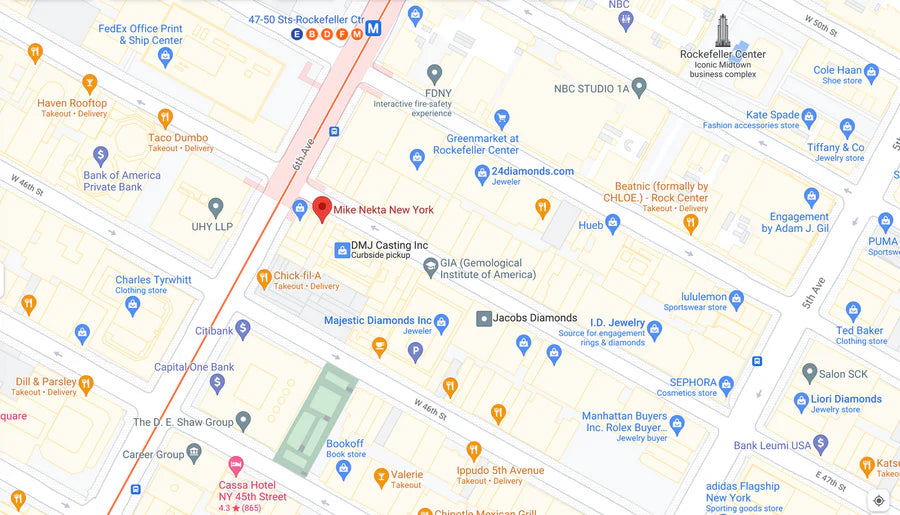
At Mike Nekta New York, I offer a private, education first experience where we compare diamonds properly, discuss real tradeoffs, and design a ring that feels as luxurious as it looks. Whether you’re shopping for an engagement ring, a large carat statement piece, or a luxury investment diamond, I’ll guide you with the same standard I’d use for my own family.
Book an appointment with me, Mike Nekta, and we’ll make sure you leave with a ring you understand, love, and feel proud to wear.