
Diamond Engagement Rings for Doctors: Smart Buying Guide
If you’re a doctor, chances are you make high-stakes decisions all day. You don’t “wing it” in the OR, in clinic, or with a patient’s chart.
So why would you guess when you’re buying a diamond engagement ring?
I’m Mike Nekta in New York, and I’ve helped a lot of professionals buy engagement rings that look incredible, wear well for decades, and make sense financially. Doctors in particular tend to want the same thing: a ring that’s objectively high quality, not overpriced, and built to survive real life.
This guide is how I’d walk you through it if you were sitting across from me.
Clients aren’t loyal to price — they’re loyal to expertise.
Why Doctors Tend To Overpay For Engagement Rings (And How To Avoid It)
Most doctors are busy, decisive, and used to paying for convenience. That’s exactly why retail jewelry stores love selling to medical professionals.
Here’s how overpaying usually happens:
- You walk into a well-lit store with a big brand name.
- You get shown “ideal” diamonds with vague explanations.
- You’re quoted a number that feels high, but you don’t have time to comparison shop.
- You buy for speed, not for certainty.
The fix is simple: decide what actually matters (and what doesn’t), then buy with a structure.
Step 1: Set a budget like a professional (not like a movie)
Forget “three months’ salary.” That’s marketing, not strategy.
Here’s how I recommend doctors set a ring budget:
- Start with comfort, not ego. Choose a number you can spend without resentment.
- Separate the diamond budget from the setting budget. A great diamond in a weak setting is a future repair.
- Plan for the whole purchase. Setting, diamond, tax, insurance, sizing, and any custom work.
A practical starting range
I’m not here to tell you what to spend, but most doctor clients I see are usually deciding between:
- A clean, strong “sweet spot” ring (high value, great look)
- A “statement” ring (bigger presence, higher premium)
The difference is not just size. It’s how you allocate specs.
Step 2: Choose the shape based on lifestyle and visual impact
Doctors tend to wear their rings hard. Gloves, sanitizers, constant hand washing, and daily movement matter.
Here’s a quick, real-world breakdown:
Round brilliant
- Best sparkle return
- Easiest to resell or upgrade
- Usually costs more per carat
Oval
- Looks larger than it weighs
- Elegant and very popular
- Needs attention to bow-tie and symmetry (this is where people get fooled)
Emerald and Asscher (step cuts)
- Clean, sharp, luxury look
- Show flaws more easily
- Require higher clarity and better cutting discipline
Cushion
- Softer, romantic shape
- Can vary wildly in performance depending on cut
Princess
- Sharp corners mean higher risk if not protected by the setting
- Can be a good value when chosen correctly
If you’re wearing gloves constantly, we also need to think about profile height and prong design, not just the diamond.
Step 3: Understand the “doctor-proof” diamond criteria (the real 4Cs)
Everybody knows the 4Cs. Most people still buy wrong because they don’t know which C is the trap.
1) Cut: the only C that creates sparkle
Cut quality is not negotiable. I don’t care how high the color or clarity is if the diamond doesn’t return light properly.
For round diamonds, I prioritize:
- Excellent cut (and yes, I still verify beyond the label)
- Strong proportions that perform in real lighting, not just jewelry-store lighting
For fancy shapes (oval, emerald, cushion), you can’t rely on a single grade the same way. You need judgment and comparison.
2) Color: don’t pay for invisible upgrades
Most doctors can safely live in the near-colorless range and never see warmth once the diamond is set, especially in yellow or rose gold.
If you’re setting in platinum or white gold, you may want to stay a bit higher depending on the shape and size. Step cuts show color more.
3) Clarity: buy eye-clean, not microscope-clean
This is where smart buyers win.
If the diamond is eye-clean, you’re done. Paying extra for a clarity grade you can’t see is like ordering an MRI when the diagnosis is already clear.
I look for:
- No visible inclusions face-up
- Inclusions positioned away from critical durability zones
- Clean look without paying for unnecessary perfection
4) Carat: size matters, but optics matter more
Carat is weight, not visual size. Two diamonds with the same carat weight can look very different depending on proportions.
Doctors tend to appreciate measurable outcomes, so here’s the truth:
- A slightly smaller diamond with a stronger cut often looks better than a heavier diamond with lazy proportions.
Step 4: Lab-grown vs natural diamonds (how I advise doctors)
Doctors ask this constantly, and the right answer depends on your priorities.
Natural diamonds
- Rarity and long-term market tradition
- Strong emotional value for some buyers
- Higher price per carat
Lab-grown diamonds
- Lower price for the same visual appearance
- Lets you allocate budget into cut quality, size, or a better setting
- Different resale dynamics (this matters if you care about upgrade paths)
I’m not ideological about it. I’m practical. My job is to help you buy the right stone for your goals, not someone else’s opinion.
They’re selling jewelry; I’m solving problems.
Step 5: Choose a setting that survives sanitizer, gloves, and time
This is where I see doctors make expensive mistakes.
A beautiful setting that bends, snags, or loses stones is not “luxury.” It’s a liability.
My go-to setting recommendations for doctors
Solitaire (but built correctly)
- Clean, timeless, easy to maintain
- Needs proper prong work and a secure head
- Consider a lower profile if you’re constantly in gloves
Cathedral solitaire
- Adds strength and presence
- Can protect the center better depending on design
- Still needs correct structure
Hidden halo (with restraint)
- Adds detail without changing the top view
- Must be constructed to avoid catching and future micro-stone loss
Bezel or partial bezel
- One of the most secure options for active hands
- Sleek, modern, and practical
- Requires precise craftsmanship to look “high-end,” not heavy
Three-stone
- Great symbolism and finger coverage
- Must be balanced to avoid side-stone damage
Metal choice: platinum vs gold
- Platinum is durable and dense, excellent for prongs, but develops a patina.
- 18k gold is rich in color, premium feel, and strong, but prongs should be thoughtfully designed.
- 14k gold is tougher in daily wear and can be a smart choice for medical lifestyles.
If you’re washing hands 50 times a day, we build for that reality.
Step 6: Don’t get fooled by certificates and buzzwords
A report matters, but it’s not the whole story.
Here’s what I see:
- People trust a grading label and ignore performance.
- People buy “excellent” and still end up with a dead-looking diamond.
- People overpay for branded terms they can’t verify.
My process is performance-first:
- Verify the diamond visually and proportionally
- Compare options side-by-side
- Match stone and setting for long-term wear
If you want to buy like a professional, don’t buy from one photo and a certificate alone.
Step 7: Insurance and maintenance (the part doctors appreciate later)
You insure everything important. Your ring should be no different.
Insurance basics
- Insure it the day you buy it or immediately after pickup
- Use documentation that reflects realistic replacement value
- Make sure the policy covers loss, theft, and damage
Maintenance schedule I recommend
- Quick inspection every few months if it’s worn daily
- Professional cleaning and prong check at least once or twice a year
- Address snags or looseness immediately, not “later”
If you can’t see the difference, you’ll feel it later in repairs.
Smart Buying Scenarios (How I’d Structure The Decision)
Here are three common doctor buyer profiles I see, and how we build around them.
1) “I want maximum sparkle and timeless.”
- Round brilliant
- Excellent cut priority
- Eye-clean clarity
- Strong solitaire or cathedral setting
- Platinum prongs if you want maximum security
2) “I want it to look bigger without overpaying.”
- Oval or elongated cushion
- Strict screening for light performance and symmetry
- Thoughtful setting that protects edges and keeps it low-profile
3) “I want quiet luxury.”
- Emerald cut or Asscher
- Higher color and clarity emphasis
- Clean setting, minimal distractions
- Precision is everything here
What I’d do if you were my client
If you came to me as a doctor, I’d keep it simple:
- Identify your priorities: size, sparkle, shape, natural vs lab, lifestyle.
- Choose diamonds that actually perform, not just “grade well.”
- Build a setting that doesn’t become a future repair project.
- Deliver a ring you’re proud of every time you look down at your hand.
Because this isn’t a casual purchase. It’s something you’ll live with for decades.
Information is free. Mastery is expensive.
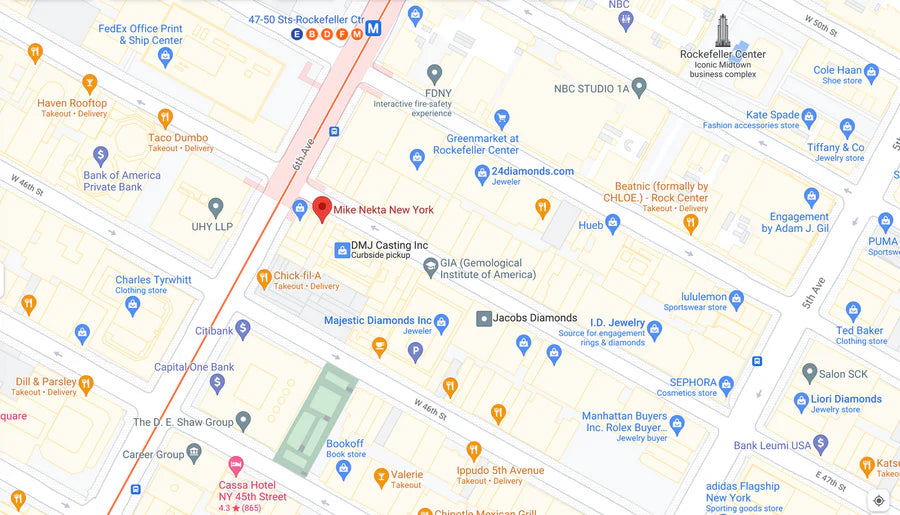
Book an Appointment with Mike Nekta (New York)
If you want to stop guessing and buy the ring the smart way, book an appointment with me.
I’m Mike Nekta in New York, and I’ll help you choose a diamond and setting that fit your lifestyle, your standards, and your budget, without the usual retail pressure.
Don’t guess — bring it. Book an appointment with me, Mike Nekta, and come with questions, leave with clarity.