
Diamond Anniversary Rings for Dentists: Modern Classics
Dentists have a funny relationship with detail.
You spend your whole day zoomed in. Tiny margins. Tiny adjustments. The difference between “fine” and “perfect” is sometimes a fraction of a millimeter, and you still see it. You feel it. You can’t unsee it once you know what you’re looking at.
So when it’s time to buy an anniversary ring. A diamond anniversary ring, specifically. A piece that is supposed to last, not just photograph well for a weekend.
Most dentists I meet are not looking for “more jewelry.” They’re looking for the right answer.
And that’s where modern classics come in. Rings that have the clean lines and permanence of traditional design, but with current precision. Better settings. Better stone matching. Better comfort. Better wear. Stuff that looks calm and confident on the hand, but is built like it actually has to survive real life.
Also, let’s get one thing out of the way.
They’re selling jewelry; I’m solving problems.
That is the lens for this whole post. If you want a diamond anniversary ring that looks good today and still makes sense after years of wear, it is not about chasing whatever is trending on TikTok. It is about choosing a design that ages well, and building it correctly.
Why Dentists Usually Hate “typical” Ring Shopping
You’re analytical. You ask follow-up questions. You want to see the work.
Walk into a random jewelry store and you get the opposite experience. Bright lights. Vague promises. “This one is popular.” Cool. Popular with who. For how long. And why.
Dentists don’t like mystery meat. You want to know:
- What will this look like after 5 years of daily wear?
- What fails first in this design?
- Can this be resized later without compromising the structure?
- Will the diamonds loosen?
- Is it comfortable, or is it one of those rings that looks great until it cuts into the next finger?
And you’re right to ask.
Because if you can’t see the difference, you’ll feel it later in repairs.
Modern classics are basically the answer to that. They’re the rings that don’t need to shout. They’re engineered. Intentional. Built to wear.
What “Modern Classic” Actually Means (In Ring Terms)
A modern classic anniversary ring isn’t weird. It isn’t experimental. It’s not trying to reinvent jewelry.
It’s a timeless silhouette done with modern standards.
So instead of bulky settings, you get cleaner profiles. Instead of sloppy stone matching, you get calibrated diamonds. Instead of sharp edges that chew through prongs, you get better finishing and smarter construction.
Think of it like dentistry, honestly. The concept is old. The materials and execution keep improving.
A modern classic anniversary ring usually has:
- A simple, recognizable layout (eternity, half-eternity, five-stone, shared prong, channel)
- Proportions that sit well on the hand
- A setting style that protects the stones without looking heavy
- Diamonds matched for cut and visual performance, not just “same size”
- A band shape designed for comfort and stacking
That last part matters more than people think. A lot of anniversary rings end up paired with an engagement ring or a wedding band. If it doesn’t stack nicely, the client lives with a gap forever. Or worse. They stop wearing it.
The Dentist-proof Checklist: What To Prioritize
If you want a ring that behaves like a modern classic, here’s what you prioritize. Not in a romantic way. In a practical way.
1) Comfort and profile height
High-set eternity rings look impressive in a box. Then they snag on sweaters. Gloves. Hair. Scrubs. Everything.
Most dentists prefer a lower profile ring with smooth edges and a clean underside. Something that doesn’t feel like an appliance on the hand.
Look for:
- Low to medium height settings
- Rounded interior comfort fit
- No sharp gallery edges
- No exposed “knife” prongs
2) Stone security, not just sparkle
Yes, sparkle matters. But if you want sparkle for decades, you need stone security.
Shared prong designs can be gorgeous. They can also be fragile if they’re built thin, rushed, or over-polished. Channel settings are protective, but can look boxy if the proportions are wrong.
What you want is balance. Enough metal in the right places. Clean seats. Prongs that are formed correctly, not mashed into place.
This is where craftsmanship separates “pretty” from “reliable.”
3) Diamond matching, especially in eternity rings
Eternity rings expose sloppy matching instantly. One stone a little sleepy. One stone slightly warmer in color. One cut with a different pattern. You will see it. Dentists always see it.
Proper matching is about:
- Cut quality consistency (not just shape and size)
- Similar brightness and contrast pattern
- Similar color appearance in real lighting
- Clean symmetry across the row
A modern classic ring should look calm. Even. Balanced. Like it was meant to be that way.
4) Future maintenance and resizing reality
Full eternity rings are beautiful. But they are also harder to resize. Sometimes not possible. Sometimes possible but not ideal. Half-eternity gives you more flexibility long-term.
If you’re buying for an anniversary, you’re buying for the next chapter, not just this year. Weight changes, lifestyle changes, comfort preferences, all of it.
A good jeweler tells you this before you buy. Not after.
The Modern Classic Styles That Make The Most Sense (And Why)
Let’s get into the designs that consistently work for dentists. Not just because they look good, but because they wear well and keep their integrity.
1) Five-stone diamond anniversary ring
This is the quiet killer. The five-stone ring looks traditional, but it’s incredibly modern in how wearable it is. You get presence without the full circumference commitment of an eternity.
Why dentists like it:
- Easy to wear daily
- More comfortable than many full eternity styles
- Often resizable later
- High visual impact with fewer failure points
Stone choice matters a lot here. You can go with larger individual diamonds for a bolder look, or smaller matched stones for something sleek.
A five-stone ring also stacks beautifully with most engagement rings because the layout is centered and intentional.
2) Half-eternity shared prong band
This is probably the most requested “modern classic” style right now. It looks like an eternity from the top, but it’s engineered for real life.
Why it works:
- Sparkle across the visible top of the finger
- Less irritation on the palm side
- Resizing is usually possible
- Better durability than many full eternity bands
The caution: shared prong is not automatically strong. It has to be built correctly. Proper prong thickness, correct metal, proper finishing, correct seats.
Otherwise it becomes a repair plan disguised as a ring.
3) Channel-set diamond band (done right)
Channel settings got a reputation for being a bit… corporate. Or dated. But when they’re done clean and modern, they’re incredible.
Channel set is a modern classic when:
- The channel walls are slim, not bulky
- The diamonds are properly matched and sit level
- The top surface is clean and smooth
- The ring has a balanced height, not a brick
For dentists who want zero snagging and maximum protection, channel is a strong option. It’s also great for people who are hard on their hands.
4) French cut pavé anniversary band
This is for the detail people. Which, yeah. Dentists.
French pavé can look insane in person when it’s executed correctly. The micro-details give you more scintillation. More life. But it has to be done by someone who actually knows pavé, not someone who just “offers pavé.”
The upside:
- Elegant, refined sparkle
- Very modern look while still classic
- Pairs well with engagement rings
The reality:
- It requires maintenance over time
- It needs strong craftsmanship and correct metal thickness
- You should expect occasional inspections
I’m not saying avoid it. I’m saying respect it. It’s like choosing a high-performance material. It performs. But you don’t abuse it.
5) Alternating diamond and gemstone anniversary rings
This is where a modern classic becomes personal. Alternating diamonds with sapphires, emeralds, or even a subtle color like champagne diamonds can make the ring feel like a signature, not a copy.
But keep it grounded. The best versions are still clean and symmetrical. Color as an accent, not chaos.
For dentists who like precision, alternating patterns can be very satisfying visually. Repetition. Rhythm. The hand sees it immediately.
Metal Choice: The Part People Underthink
Most people pick metal like they’re ordering a car color.
For an anniversary ring, metal choice is function.
Platinum
Heavy. Durable. Great for prongs. Great for longevity. It develops patina, which some love and some polish out. If you want the “forever” metal, platinum is the classic for a reason.
18k gold
Richer color, still strong, slightly softer than platinum depending on alloy. Beautiful for warmer tones and classic luxury feel.
14k gold
Harder, often a bit more scratch resistant in day to day wear, very practical. A lot of modern classic bands are excellent in 14k because it holds detail and resists wear well.
If you’re someone who uses your hands constantly and wants less stress about it, 14k can be a smart decision.
How to choose diamond specs for a band (without getting lost)
Anniversary rings are different from solitaire shopping. You’re not hunting one “perfect” stone. You’re building a line of stones that must work together.
Here’s what matters most.
Cut consistency
In bands, cut quality drives sparkle. If the diamonds are mixed cut quality, the ring looks uneven. Even if the grades on paper look fine.
Color appearance
Many bands look best when the color is consistent across the row. If your partner wears other diamonds already, you usually want the band to blend, not fight.
Clarity
For small diamonds, you can often choose slightly lower clarity without visible issues, as long as they are eye clean and well cut. But avoid stones with durability risks.
Calibration and matching
This is the real “expert” area. Stones need to match visually, not just by measurement. This is what makes a band look expensive even if the specs are similar to something cheaper.
Clients aren’t loyal to price, they’re loyal to expertise.
Stacking: the part that makes or breaks the whole look
An anniversary ring is almost never worn alone. It sits next to something. Engagement ring, wedding band, another anniversary band.
Stacking issues are common:
- The band doesn’t sit flush, leaving a gap
- Prongs rub against the other ring, causing wear
- The combined stack feels too tall and uncomfortable
- The look becomes cluttered instead of clean
A modern classic stack looks effortless. Like it was always meant to be that way.
That’s why, if you’re buying an anniversary ring, you should bring the rings it will sit next to. Always. Photos help, but in-person pairing is the real test.
What I See Dentists Choose Most Often (And Why)
This is the pattern I’ve noticed.
Dentists tend to prefer:
- Clean symmetry
- Low snag designs
- Stones that are bright and crisp
- Rings that look expensive quietly, not loudly
- A piece that feels engineered, not “decorated”
It’s not about being conservative. It’s about being certain.
You don’t want to wonder if it will hold up. You want to know it will.
Mastery ages well. Trends don’t.
The “Modern Classic” Mistake That Costs The Most Later
People buy the look. Not the build.
They see a pretty band online. They see sparkle. They assume all settings are basically the same.
Then:
- prongs wear down fast
- stones loosen
- the band warps
- the ring can’t be resized
- repairs start stacking up
- the original “deal” becomes expensive
You can copy my style, but not my standards.
That’s the difference. A modern classic is not only about the design. It is about the standard.
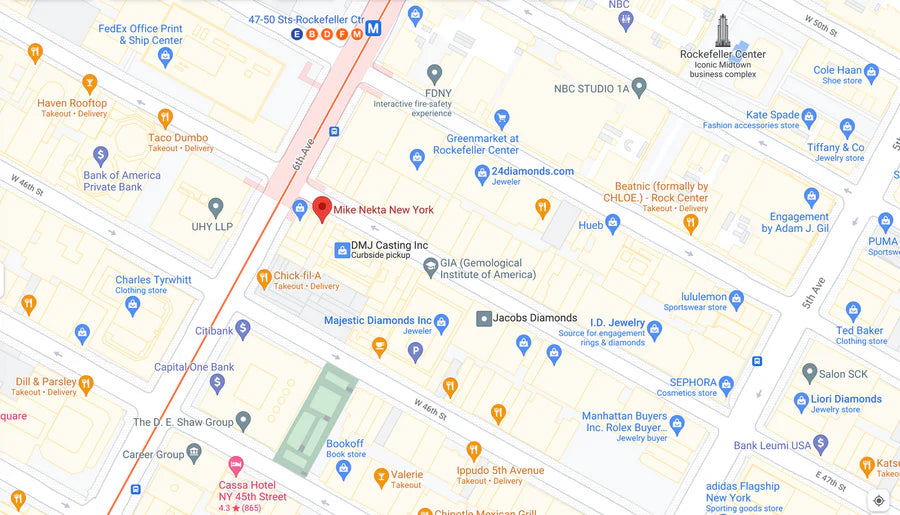
Book An Appointment With Mike Nekta New York
If you’re a dentist and you’re shopping for a diamond anniversary ring, bring your questions. Seriously. The specific ones. The annoying ones. The ones most salespeople dodge.
Come with questions. Leave with clarity.
Book an appointment with me, Mike Nekta, and we’ll build the right modern classic for your hand, your lifestyle, and your existing rings. Not guessing. Not rushing. Not selling you “popular.” Just solving it properly.