
Choosing Diamond Jewelry When You Live in the Spotlight
When you live in the public eye, jewelry stops being decoration and becomes part of your personal brand.
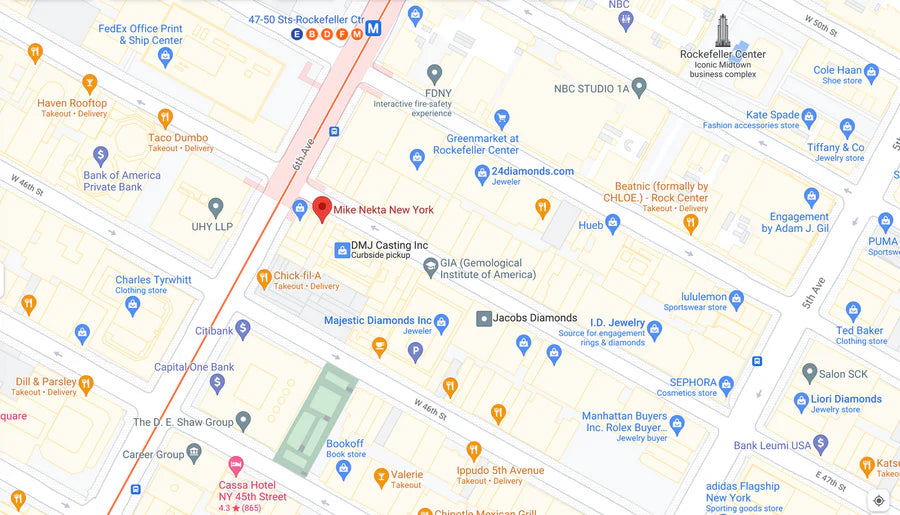
In my showroom in New York’s Diamond District, I work with high-visibility individuals every week—musicians, models, fighters, and public figures whose appearance is constantly captured under studio lights, red carpets, paparazzi flashes, and phone cameras held inches away.
For these clients, jewelry isn’t worn occasionally. It’s worn under scrutiny.
What works for private collectors often fails in front of cameras. And what trends online rarely survives real-world exposure. After more than 20 years as a diamond jeweler in New York, I’ve learned that choosing diamond jewelry for life in the spotlight requires a different mindset—one rooted in craftsmanship, restraint, and durability rather than novelty or excess.
The Problem With Overexposure
Cameras Reveal Everything
Modern cameras are unforgiving. High-definition lenses, harsh lighting, and post-production color grading amplify every flaw—not only in diamonds, but in design.
I’ve seen pieces that looked impressive in a boutique fall apart on camera:
- Diamonds that appear cloudy despite high carat weight
- Thin prongs that cast shadows or catch glare
- Settings that reflect light harshly due to poor metal finishing
In the spotlight, more isn’t better. Precision is.
Certain diamonds that look fine in ambient light can underperform under flash photography. Strong fluorescence, extreme proportions, or borderline clarity grades often reveal themselves immediately in close-ups. Camera performance matters just as much as how a stone looks in person.
Camera Performance Is Not the Same as Sparkle
Why Excessive Brilliance Can Work Against You
Many buyers are taught to chase sparkle. For high-visibility clients, that’s often a mistake.
Overly aggressive proportions can cause “blowout” on camera—white flashes that wash out detail rather than enhancing it. Instead of refined light return, the stone loses definition.
Diamonds that perform best on camera typically feature:
- Balanced proportions
- Excellent symmetry and polish
- Controlled, intentional light return
These stones don’t shout. They hold their composure.
That composure translates into elegance on screen—whether it’s a red carpet photo, an interview, or a live broadcast.
Discretion Is a Form of Power
Presence Without Exposure
Many of the people I work with want presence without drawing unnecessary attention. There’s a difference.
Oversized diamonds, trend-heavy designs, or overly recognizable styles can turn jewelry into a distraction rather than an accent. On camera, that often shifts focus away from the individual.
Restrained, well-crafted pieces:
- Photograph as intentional, not flashy
- Age well as personal style evolves
- Avoid being tied to a specific trend or era
I often advise clients to choose diamonds that feel quiet up close but unmistakably refined as a whole. People who know, know.
Movement Changes Everything
Jewelry Must Perform in Real Life
Jewelry doesn’t exist in a vacuum. Models move. Fighters train. Musicians perform. Cameras capture motion—and motion exposes weakness.
I’ve seen pendants flip during interviews, earrings catch microphones, and rings snag gloves or fabrics.
When movement is part of your lifestyle, design must respect physics. That means:
- Low-profile settings that sit close to the body
- Proper weight distribution to prevent spinning
- Reinforced clasps and secure connection points
Durability isn’t glamorous, but it’s essential. A loose stone or bent setting during a performance isn’t just inconvenient—it’s a liability.
Durability Is About Engineering, Not Just Thickness
Craftsmanship Over Bulk
Many people assume durability means thicker metal. That’s not always true.
Poorly engineered thick settings can still fail if stress points aren’t addressed. Conversely, a well-designed setting with thoughtful geometry can be both refined and strong.
As a natural diamond expert working in the Diamond District, I focus on:
- Prong architecture that protects without overpowering the stone
- Seamless metal transitions that reduce fatigue
- Stone orientation that minimizes impact exposure
These details rarely appear on a spec sheet—but they matter when jewelry becomes part of daily life.
Protecting Personal Image
What Jewelry Communicates on Camera
Jewelry communicates whether you intend it to or not.
Inconsistent quality, mismatched pieces, or trend-driven designs can unintentionally signal excess or instability. For public figures, perception carries weight.
I’ve worked with clients wearing multiple statement pieces at once—each expensive, but collectively chaotic. On camera, the result wasn’t luxury. It was distraction.
A single, well-chosen piece often carries more authority than an entire collection worn at once. Restraint creates coherence. Confidence doesn’t need to perform.
Why Trends Rarely Serve the Spotlight
Cameras Don’t Forget
Trends move fast. Cameras don’t.
What looks current today can feel dated in archived footage tomorrow—especially for people whose images live online indefinitely.
Over the years, I’ve seen trend-driven designs age poorly:
- Ultra-thin bands that deform
- Novelty cuts that lose relevance
- Experimental settings that compromise wearability
Craftsmanship, on the other hand, is invisible—and that’s why it lasts.
What Not to Buy If You’re High-Visibility
Transparency matters at this level. If you live in the spotlight, I generally advise avoiding:
- Diamonds chosen for size over quality
- Extremely shallow or deep stones that distort on camera
- Fragile settings designed for occasional wear
- Pieces that rely on shock value rather than design integrity
These choices often lead to regret—not because they’re inexpensive, but because they fail under real-world conditions.
Security, Travel, and Real-World Risk
Jewelry Must Match Your Lifestyle
High visibility increases exposure to risk—airports, hotels, backstage environments, and public appearances all introduce variables private collectors rarely face.
Well-designed jewelry for public figures accounts for:
- Ease of removal and secure storage
- Clasps that don’t draw attention when handled
- Pieces that can be worn confidently without constant adjustment
Practical design reduces risk. Peace of mind has value.
Insurance Isn’t Optional—but It’s Often Misunderstood
Many policies rely on replacement values that don’t reflect true craftsmanship or sourcing. In the event of a loss, “comparable replacement” can mean something very different than expected.
When working with high-visibility clients, I emphasize:
- Accurate documentation of materials and construction
- Replacement values based on craftsmanship, not just carat weight
- Updated appraisals for bespoke pieces
Insurance should be boring. If it isn’t, something is wrong.
Why Custom Jewelry Matters More Than Ever
Customization isn’t about novelty. For high-visibility individuals, it solves problems off-the-rack jewelry can’t.
Custom work often focuses on:
- Adjusting proportions for hand shape, frame, or neck length
- Lowering profiles to reduce glare and interference
- Engineering settings around how the client actually moves
This is where high-end engagement rings and fine jewelry separate themselves from mass-produced pieces. Precision matters.
You can explore examples of refined, camera-conscious craftsmanship here:
👉 View Our Diamond Jewelry Collection
Balancing Identity Without Becoming a Costume
There’s a fine line between signature style and visual repetition. Some clients feel pressure to “always wear something recognizable.” Over time, this can turn jewelry into a costume rather than an expression.
I advise moderation.
A well-curated rotation of understated pieces maintains continuity without locking someone into a single look. Jewelry should evolve as careers do not trap someone in an image they’ve outgrown. The most successful public figures I work with treat jewelry the same way they treat tailoring: consistent quality, subtle variation, and intentional restraint.
A Final Perspective
Living in the spotlight changes how jewelry behaves, how it’s perceived, and how it ages.
The difference between jewelry that supports your image and jewelry that competes with it comes down to craftsmanship, restraint, and honest decision-making.
That’s the approach I’ve taken for over two decades as a diamond jeweler in New York—working with clients who value discretion as much as excellence.
If you’d like a private conversation about what truly works for your lifestyle, you can schedule a one-on-one consultation or reach me directly at +1-212-921-4647.
No pressure.
Just clarity.