
2026 Guide: How to Choose a Unique Wedding Band
I’ve helped a lot of couples choose wedding bands over the years, and I’ll tell you something most people learn too late: a “unique” wedding band isn’t the one that looks different in a photo. It’s the one that still looks right on your hand ten years from now, wears comfortably every day, and doesn’t turn into a repair project.
In 2026, you’ve got more options than ever. Custom design is more accessible. New materials are everywhere. Social media is pushing bolder looks. But the fundamentals did not change. If you want a wedding band that’s truly unique and truly yours, you need to choose it like an adult purchase, not a trend.
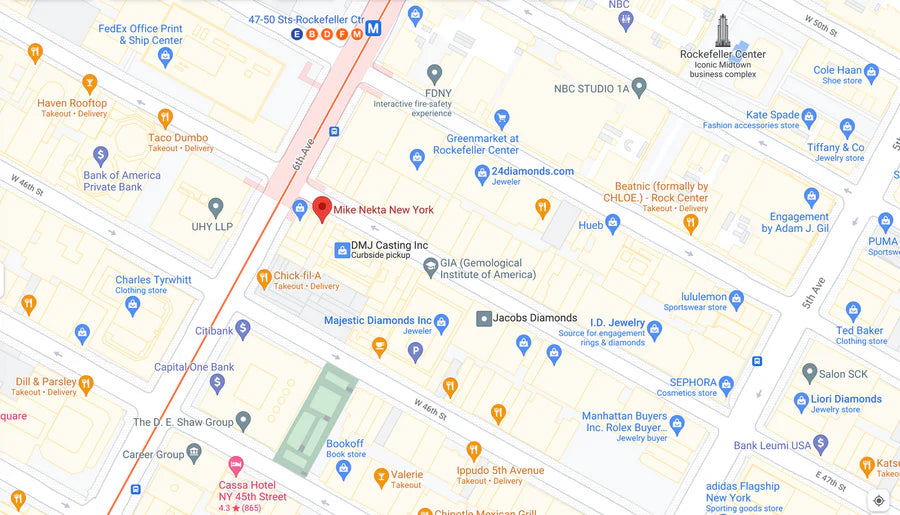
This is my practical guide, written the way I walk clients through it in person at Mike Nekta New York.
What “Unique” Actually Means in 2026
Most people confuse “unique” with “rare.” Rare can be cool, but rare can also be impractical.
Here’s how I define a unique wedding band:
- It matches your life, not just your outfit.
- It fits your hand and your habits.
- It holds up to daily wear without constant maintenance.
- It has intentional design details, not random ones.
- It complements your engagement ring (or stands alone properly).
Or said another way: “Mastery ages well. Trends don’t.”
Step 1: Start With Your Lifestyle, Not the Design
Before we talk diamonds, finishes, or engravings, I always ask basic questions:
- What do you do for work (hands-on, desk, medical, hospitality, trades)?
- Do you work out with weights, climb, golf, cook daily?
- Are you hard on jewelry without realizing it?
- Do you want to wear the band 24/7, or take it off for certain things?
This matters because uniqueness means nothing if the band becomes uncomfortable, scratched beyond recognition, or constantly needing repairs.
If you’re rough on your hands and you choose a high-polish mirror finish with sharp edges, you’re going to hate it. If you love comfort and pick a super flat interior with no rounding, you’ll feel it every day.
A unique ring should feel like it belongs on your hand, not like you’re “wearing a ring.”
Step 2: Choose the Right Band Profile (This Is Where “Custom” Starts)
Profile is the shape of the band when you look at it from the side and the way it sits on the finger. This choice changes everything: comfort, durability, style, and how “different” the ring looks.
Common profiles I recommend depending on goals:
- Low dome (soft comfort look): Classic but not boring. Easy to wear.
- High dome (bold traditional): More presence without needing stones.
- Flat court (modern but comfortable): Clean lines, still wearable.
- Knife-edge (sharp, architectural): Looks incredible when done right, but needs the right thickness and comfort detailing.
- Beveled edge (my go-to for modern durability): A subtle design cue that reads “custom” without screaming.
If you want unique without trendy, this is one of the safest places to invest your design energy.
Step 3: Metal Choice in 2026 (Make It Personal, Make It Smart)
Metal selection is where people either get it right for decades or regret it quietly.
Platinum
Platinum is heavy, premium, and excellent for longevity. It develops patina instead of wearing away quickly. If you like that “lived-in” look, platinum is a strong long-term move.
Gold (Yellow, White, Rose)
Gold is versatile and timeless, and it’s easier to refinish compared to some harder modern metals. In 2026, I’m seeing more couples go back to warmer tones because they photograph well and feel less sterile than ultra-white metals.
A practical note: white gold typically needs maintenance (like rhodium) if you want it looking bright-white.
Alternative Metals (Tungsten, Titanium, Ceramic)
These can be great for the right person, but they come with tradeoffs that people gloss over online. Some can’t be resized. Some chip instead of bend. Some are a nightmare to repair. I’m not against them. I’m against choosing them blindly.
My rule: choose the metal that fits your actual life, not a bullet-point list.
Step 4: Decide How You Want Uniqueness to Show Up
There are different kinds of “unique.” The smartest bands are unique in ways that still age well.
Here are the main lanes:
1) Unique Through Finish (Subtle, Mature, Understated)
Finishes change the personality of a ring immediately:
- High polish: clean, classic, reflects light, shows scratches fastest.
- Satin: modern, softer sheen, more forgiving.
- Brushed: strong, masculine or minimal, hides daily wear well.
- Hammered: handcrafted look, hides scratches, looks alive.
- Sandblasted / matte: sleek but can look dull if not maintained properly.
A lot of my clients land on a combination finish: polished edges with a brushed center, or a satin band with a bright beveled border. It reads custom without turning into a fashion statement.
2) Unique Through Structure (Architecture That Lasts)
This is where design details matter:
- a beveled edge
- a slight step detail
- a contour that matches an engagement ring
- a two-tone construction done cleanly
- a hidden inner detail (more on that below)
Structural uniqueness lasts longer than surface uniqueness.
3) Unique Through Stones (Only If It Fits the Wearer)
Stones can be done beautifully, but they need to match your lifestyle. If you want diamonds around the full band, understand you’re trading future resizing flexibility. If you want a clean, wearable look, I often recommend:
- half eternity
- three-quarter set
- strategic accents (like 5–9 stones with intentional spacing)
If you can’t see the difference between “secure setting” and “looks secure,” you’ll find out later.
And yes, I’m going to say it plainly: “If you can’t see the difference, you’ll feel it later in repairs.”
Step 5: Comfort Fit Is Not Optional
A ring can look perfect and still be wrong if it’s uncomfortable.
Comfort fit isn’t just a marketing term. It’s about interior rounding, edge softness, and how the band interacts with your skin when your hands swell (which they do).
Things I check with clients:
- band width relative to finger size
- knuckle size versus base finger size
- whether the ring rotates
- how the ring feels when making a fist
- skin sensitivity and daily wear habits
If you want a unique wedding band you’ll actually enjoy wearing, you need to prioritize comfort like it’s part of the design. Because it is.
Step 6: Match the Engagement Ring the Right Way (Not the Obvious Way)
If you’re wearing both rings on the same hand, you have three main strategies:
Option A: The Band Sits Flush
Clean and traditional. Often requires a contoured band or adjusting the engagement ring’s setting.
Option B: The Band Intentionally Doesn’t Sit Flush
This can look amazing if you commit to the gap as a design choice. But if you don’t plan it, it looks accidental.
Option C: The Band Is a Standalone Statement
Some clients want the wedding band to be the hero. If so, we design it to stand alone and not rely on the engagement ring for visual balance.
In 2026, I’m seeing more couples stop trying to force a “matching set” and instead build a pairing that looks intentional. That’s usually the more unique choice.
Step 7: Hidden Details That Make It Yours (Without Being Loud)
This is where I love working with clients, because it’s personal without being performative.
Ideas that hold up:
- inside engraving (coordinates, date, a phrase that matters)
- fingerprint engraving done properly
- hidden gemstone inside the band (birthstone, anniversary month)
- negative space design that only reveals itself up close
- milgrain on inner edges for a subtle vintage touch
These details don’t need to impress strangers. They need to mean something to you.
Step 8: Know What You’re Signing Up For (Maintenance and Resizing)
Uniqueness should not come with hidden penalties.
Before you choose a design, you should understand:
- Can it be resized in the future?
- How does the finish age?
- Are the stones protected or exposed?
- Will the band deform under pressure based on thickness and metal?
- What does routine maintenance look like?
Most regret comes from not asking these questions.
This is why I say: “They’re selling jewelry; I’m solving problems.” I’m not interested in handing you a ring that looks good today and causes headaches later.
Step 9: The 2026 “Unique Band” Checklist I Use With Clients
If you’re reading this and want a quick filter, here it is:
- Does it feel comfortable after 5 minutes on your hand?
- Is the width proportionate to your finger and your style?
- Is the metal realistic for your lifestyle?
- Are the design details structural, not just surface-level?
- If it has stones, are they set for daily wear?
- Can it be maintained and resized without drama?
- Will you still like it when trends shift?
If you can confidently say yes, you’re probably looking at something genuinely unique.
My Take: Don’t Chase “Different.” Build “Right.”
The goal is not to shock people. The goal is to own your choice.
A unique wedding band is the one you never have to explain, defend, or baby. It fits. It lasts. It looks like it belongs to you.
And if you want my honest opinion before you spend money, that’s exactly what I do.
Book an Appointment With Me Mike Nekta New York
If you’re serious about choosing a unique wedding band in 2026, book an appointment with me at Mike Nekta New York. Bring screenshots, questions, and your real lifestyle. I’ll help you narrow it down fast and get it right the first time.
Come with questions. Leave with clarity.