
How to Choose a Diamond Jeweler: What Separates Sellers From Problem-Solvers
If you’ve never bought a diamond before, it’s easy to assume every jeweler is basically offering the same thing: a sparkly stone, a nice box, and a congratulatory handshake.
After 20+ years in the diamond business, I can tell you that is not how this works.
Some jewelers are sellers. Their job is to move what’s in the case, close the sale, and get you to “yes” as fast as possible.

A problem-solver is different. A problem-solver treats your purchase like a project with real constraints: budget, timeline, design preferences, finger size, lifestyle, long-term wear, upgrade plans, resale realities, and the emotional pressure that comes with big life moments.
I’m Mike Nekta. I’m a third-generation jeweler and a GIA-certified gemologist. I’ve spent my career working with high-end diamond jewelry, large-carat diamonds, custom engagement rings, and luxury investment pieces. This guide is how I’d want a friend or family member to choose a jeweler if they were spending serious money and wanted to feel confident all the way through.
The Real Risk Is Not Overpaying, It’s Under-Understanding
Most people worry about getting “ripped off.” That’s valid, but the bigger risk is buying with incomplete information.
Here’s what under-understanding looks like in real life:
- You pick a diamond with great numbers on paper, but it looks dead in normal lighting.
- The ring looks good on day one, but it snags, twists, or wears down quickly because the setting isn’t engineered for your lifestyle.
- You pay for a “deal,” then realize later the diamond is difficult to resell, insure, or upgrade because of cut quality, fluorescence, or certification issues.
- You fall in love with a design photo, but the jeweler can’t actually execute it cleanly, so the final ring looks slightly off and you can’t unsee it.
A problem-solver jeweler prevents those outcomes before you spend a dollar, because they know what to ask, what to measure, what to compare, and what to never compromise on.
Start With The Most Important Question: What Are You Actually Buying This For?
A seller will start with: “What shape do you like?” or “What’s your budget?”
A problem-solver starts with intent, because the “right” diamond depends on what you’re trying to accomplish.
I typically break it into four categories:
Engagement And Daily Wear
If this will be worn every day, the setting quality matters as much as the diamond. You need comfort, durability, snag resistance, and a stone that looks lively in real-world lighting, not just under showroom spotlights.
Anniversary, Statement, Or Occasion Jewelry
Now we can prioritize presence. Bigger spread, bolder design, more visual impact. The wearer may not need the same ultra-protective design choices as a daily engagement ring.
Heirloom And Legacy Pieces
Here the goal often includes longevity, timeless aesthetics, and documentation that will matter decades from now. A seller talks about sparkle. A problem-solver talks about structure, serviceability, and what future jewelers will need to know.
Investment And Collection-Grade Diamonds
This is where I see the most mistakes. For true investment intent, the conversation must include liquidity, desirability, certification strictness, and market realities. Not every expensive diamond is an investment-grade diamond.
If you want, you can bring a simple sentence to your jeweler and it will clarify everything: “This piece is for daily wear,” or “This is for legacy,” or “This is for investment.” Watch how differently the jeweler responds.
Why The 4Cs Are Not Enough

Everyone has heard of cut, color, clarity, and carat. The problem is that most people use the 4Cs like a checklist. That approach leads to predictable mistakes, because diamonds are not spreadsheets.
Yes, the 4Cs matter. But the 4Cs don’t fully explain:
- Why two diamonds with the same grade can look dramatically different
- Why one diamond “faces up” bigger than another at the same carat weight
- Why some diamonds look hazy or sleepy even with good clarity grades
- Why a ring looks stunning in photos but not on the hand
A seller recites the 4Cs.
A problem-solver translates the 4Cs into appearance, performance, and long-term value.
Cut Quality: The One Factor That Creates Beauty
If I had to pick one thing that separates a knowledgeable jeweler from a salesperson, it’s how they handle cut.
Cut is not shape. Shape is round, oval, emerald, cushion, pear, marquise, radiant, princess, and so on.
Cut quality is how well that shape is proportioned and finished, and it determines brilliance, fire, scintillation, contrast, and overall life.
Here is what I look for, and what I want you to understand.
For Round Diamonds, Cut Is The Main Event
With round brilliants, the industry is the most standardized, and the cut grade on a reputable report can be meaningful. But even then, not all “Excellent” cuts are equal.
A problem-solver will evaluate:
- Table and depth in relation to face-up spread
- Crown and pavilion angles and how they work together
- Optical symmetry and patterning
- Light performance, not just proportions
If a jeweler can’t clearly explain why one round diamond looks better than another with similar grades, they’re probably selling by certificate, not by beauty.
For Fancy Shapes, You Need A Different Skill Set
Ovals, pears, marquises, cushions, and radiants can vary widely. They don’t have a single cut grade standard the way rounds do, and that’s where buyers get lost.
A problem-solver will help you navigate:
- Bow-tie presence in ovals and pears (and what level is acceptable)
- Length-to-width ratios that fit your taste and hand
- Facet pattern quality and how it affects sparkle style
- Whether the stone has crisp contrast or a mushy, glassy look
If the jeweler keeps pushing you back to only color and clarity for fancy shapes, that’s a red flag.
Color: Learn What You Can See Versus What You Pay For
Color is one of the easiest areas to overspend, especially in white diamonds. Not because color doesn’t matter, but because the difference between grades is not always visible once the diamond is set.
A problem-solver will ask:
- Are you setting this in platinum/white gold, or yellow/rose gold?
- Are you sensitive to warmth, or do you prefer a slightly warmer look?
- Are you choosing a large stone where body color is more noticeable?
- Is the design a solitaire, or will side stones change perception?
In many cases, smart buyers can choose a slightly warmer grade and allocate budget toward cut quality or carat presence, where the visual return is bigger.
The goal is not “lowest color you can get away with.” The goal is “best-looking diamond for the money you’re spending.”
Clarity: Stop Paying For Invisible Upgrades
Clarity is another area where people either overpay, or take risks without realizing it.
A seller says: “This is VS1, so it’s good.”
A problem-solver says: “This is eye-clean, and here’s exactly what that means from the top, from the side, at normal viewing distance, in normal lighting.”
Here’s what matters:
- Eye-clean status: Do you see anything without magnification?
- Inclusion type: Feathers, crystals, needles, clouds, graining all behave differently.
- Inclusion location: A mark under the table is not the same as one near the edge.
- Durability considerations: Some inclusions create structural risk depending on the stone and how it will be set.
I’m not afraid of lower clarity if it’s truly eye-clean and structurally safe. I am afraid of paying extra for “flawless on paper” when nothing changes to the naked eye.
Carat Weight: Face-Up Size Is What You Actually Wear
Carat is weight, not size. Two diamonds can have the same carat weight and look different on the hand.
A problem-solver considers:
- Spread (millimeter dimensions)
- Depth percentage and how much weight is hidden underneath
- Shape and length-to-width ratio, which can create a larger look
- Setting design, which can visually enlarge a center stone
If your jeweler never talks in millimeters, you are not getting the full picture.
Certification: The Report Matters, But The Lab Matters More
A diamond report is not a “nice extra.” It is the backbone of transparency, pricing, insurance, and future resale.
The jeweler you choose should be completely comfortable showing you the report and explaining what it does and doesn’t tell you.
For higher-end diamonds, I prefer strict, globally recognized labs. The difference between labs is not academic. It affects the grades you’re paying for.
A problem-solver will also help you understand:
- Why two reports can price a diamond differently
- What the plotting diagram implies about inclusions
- What fluorescence means for that specific stone
- Whether the proportions align with beauty, not just grade
If a jeweler downplays certification or avoids the topic, walk away.
The Setting Is Not A Detail, It’s The Engineering

I’ve seen people spend most of their budget on a diamond and treat the setting like an afterthought.
That’s backward.
The setting affects:
- Security (will the stone stay in place?)
- Comfort (will it sit and feel right on the hand?)
- Durability (will it wear down quickly?)
- How large the diamond appears
- How the diamond performs visually, due to how light enters and exits
A seller will show you pretty settings.
A problem-solver will ask how you live.
Lifestyle Questions A Good Jeweler Should Ask
- Do you work with your hands?
- Do you wear gloves often?
- Do you exercise daily with the ring on?
- Do you travel frequently?
- Do you want a low profile or a high profile ring?
- Are you hard on jewelry without meaning to be?
Those answers change the recommendation. If the jeweler doesn’t ask, they’re guessing.
Prongs, Galleries, And All The Things You Don’t Notice Until Something Breaks
You don’t need to become a bench jeweler, but you should know what you’re paying for.
A well-made setting should have:
- Clean, even prongs that properly cover and protect the stone
- A stable head that won’t loosen over time
- A shank thickness appropriate for the stone size and daily wear
- Smooth finishing on the inside and edges for comfort
- Strong soldering and structural design, not just surface beauty
If a ring looks delicate and trendy, it may still be engineered correctly. But it has to be built for reality, not just Instagram.
Custom Design: The Difference Between “We Can Do That” And “We Do This Well”
Custom is one of the most overused words in jewelry.
Some places mean: “Pick a setting from a catalog and change the center stone.”
That’s fine, but it’s not true custom.
True custom means:
- Design development around your exact diamond and measurements
- Proportions refined for your finger size and style preferences
- A setting built from scratch, not modified from a generic mount
- Proper pre-visualization so you know what you’re getting
A problem-solver will have a process, not just confidence.
What A Real Custom Process Should Include
- A design consultation to define goals and constraints
- Stone selection before finalizing the design (or a clear plan if the design leads the stone)
- CAD modeling or detailed design renderings
- Clear explanation of what can and cannot be done safely
- Production at a quality level that matches the price point
- Final inspection, finishing, and aftercare plan
If you feel rushed through custom, it’s not custom. It’s just expensive.
Pricing Transparency: You Don’t Need The Cheapest, You Need The Clearest
People love to ask: “Can you give me your best price?”
I understand the instinct. But in high-end diamonds and well-made settings, clarity beats cheap.
A problem-solver jeweler should be able to explain:
- What you’re paying for in the diamond (and why)
- What you’re paying for in the setting (and why)
- What variables change price the most
- Which upgrades are worth it and which are not
If the price feels like a magic trick, that’s a seller environment.
Red Flags That Tell Me You’re Dealing With A Seller

Here are patterns I’ve seen over and over. Any one of these might happen innocently once, but multiple is a trend.
They Push What’s In Stock Before Understanding Your Goal
If the first recommendation is “what we have,” not “what you need,” you’re being sold.
They Use Only Certificates To Close The Sale
A report is important, but you’re not wearing a report. You’re wearing a diamond.
They Avoid Side-By-Side Comparisons
A problem-solver loves comparisons because that’s how you learn to see value.
They Can’t Explain Tradeoffs
A seller treats everything like it’s perfect. A problem-solver explains tradeoffs clearly: what you gain, what you give up, and why.
They Dismiss Your Questions Or Make You Feel Silly
You’re allowed to ask anything. This is a meaningful purchase.
They Overpromise Timelines
If you need a ring for a specific date, a problem-solver will give a realistic timeline, build in buffer, and communicate clearly.
Green Flags That Tell Me You’re In The Right Place
They Educate Without Overwhelming
The best jewelers make you feel calmer and more informed, not confused.
They Ask Better Questions Than You Expected
If you walk out thinking, “I never even considered that,” you probably found a problem-solver.
They Show You Options That Prove Their Point
Not just one stone, but a small range that makes the differences visible.
They Talk About Aftercare Up Front
Cleaning, inspections, prong checks, resizing, repairs, warranty details. That’s long-term thinking.
They Put Everything In Writing
Specs, certifications, design details, policies. A luxury purchase should come with professional documentation.
How I Recommend You Compare Two Jewelers
If you’re trying to decide between jewelers, don’t only compare price. Compare process.
Here’s a simple way to do it.
Step 1: Ask Each Jeweler To Recommend Two Stones
Same general budget, same shape, similar carat target.
A seller will either show you one option or push you toward what they want to move.
A problem-solver will show you two options with a clear explanation of the tradeoff.
Step 2: Ask For The “Why” In Plain English
If the answer is only: “It’s better because it’s higher color,” that’s shallow.
You want: “This one looks brighter in softer light because the proportions and facet pattern are better, and the color difference will be hard to see once set.”
Step 3: Ask About Setting Engineering
Even if you haven’t chosen a design, ask:
- How do you build for durability?
- What changes if the center stone is 2 carats versus 4 carats?
- How do you prevent spinning?
- How do you handle resizing later?
The answers will tell you a lot.
Step 4: Ask What Happens If Something Goes Wrong
Repairs. Loose stones. Manufacturing defects. Resizing issues. Insurance documentation.
A problem-solver has policies and a service mindset. A seller gets vague.
Large-Carat Diamonds: What Changes When You Scale Up

As the carat size increases, small differences become big.
- Cut quality becomes more obvious.
- Color becomes more noticeable.
- Clarity characteristics are easier to see.
- Setting design must be stronger.
- Insurance and documentation matter more.
- Market liquidity and desirability matter more if investment is part of your thinking.
This is one of the areas I specialize in, and it’s also where clients can benefit the most from guidance because the stakes are higher.
A seller will treat a 3-carat like a bigger version of a 1-carat.
A problem-solver knows it is a different category with different risks.
Investment Pieces: Be Honest About What “Investment” Means
Let me say this plainly: most diamonds do not behave like traditional investments.
That does not mean they aren’t valuable. It means you should buy with the right expectations.
If your goal is investment-grade purchasing, a problem-solver will discuss:
- Market demand for certain shapes and specs
- Certification strictness and long-term trust
- Rarity factors that actually matter
- Liquidity considerations and resale channels
- How the piece will be documented and insured
And I’ll add something many sellers won’t: sometimes the best “investment” is buying the right diamond at the right price, not buying the biggest diamond you can stretch into.
The Appointment Matters More Than People Think
When a jeweler is a true problem-solver, the appointment feels different. It’s calm. It’s deliberate. You’re not being rushed past the details.
You should have time to:
- Compare stones
- See them in different lighting
- Ask questions without pressure
- Discuss settings with real engineering in mind
- Understand timelines and next steps
If you’re shopping in New York, I’ll say this directly: an appointment-based process is one of the easiest ways to protect your purchase and enjoy it more.
My Personal Checklist Before I Recommend A Diamond
When I’m selecting a diamond for a client, I’m not only looking at the grade.
I’m looking at how it performs and how it fits the person.
My checklist includes:
- Face-up beauty in normal lighting
- Balanced proportions for the shape
- Optical symmetry and patterning
- Smart color and clarity choices that don’t waste budget
- Certification details and any potential concerns
- Compatibility with the intended setting and lifestyle
- Long-term service considerations
This is the difference between selling a diamond and solving for a client’s life.
The Simple Truth: You’re Not Buying A Diamond, You’re Buying Judgment
A diamond is a product. Judgment is the real luxury.
Judgment is knowing:
- Which “good” stones are actually great
- Which specs hide problems
- Which settings look delicate but fail over time
- Which upgrades are meaningful and which are marketing
- How to align your budget with what you actually care about
A seller gives you inventory.
A problem-solver gives you clarity.
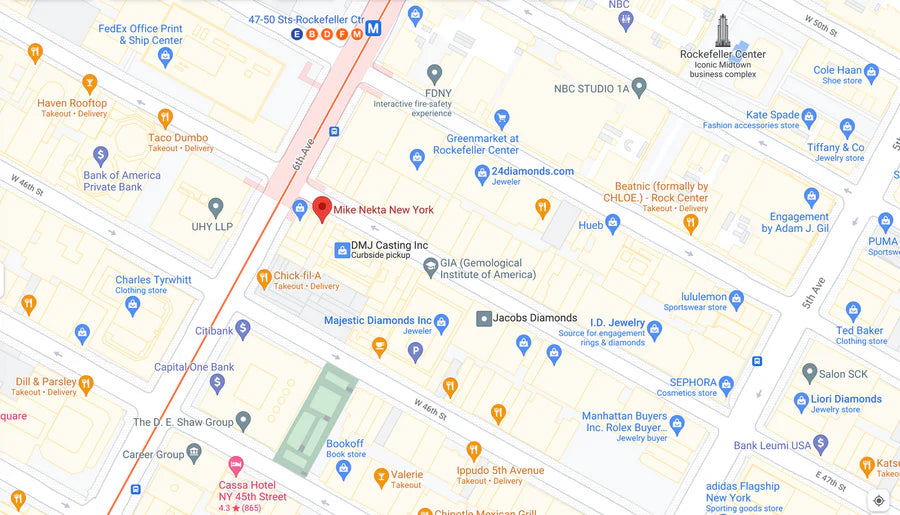
Book A Private Appointment With Mike Nekta New York
If you want help choosing the right diamond and designing a piece that fits your goals, I offer private consultations at Mike Nekta New York.
Whether you’re looking for a custom engagement ring, a large-carat diamond, or a luxury investment piece, I’ll walk you through the process the same way I do for my long-term clients: education first, pressure never, and craftsmanship that holds up.
Book an appointment with me, Mike Nekta, and we’ll turn what can feel overwhelming into something straightforward, personal, and genuinely exciting.