
Bezel Setting vs. Prong Setting: Which Is More Secure?
The most protective setting isn’t automatically the right setting for every diamond. In the choice of bezel setting vs prong setting for security, a full bezel generally shields more of the stone’s edge, while well-made, well-maintained prongs can also hold a diamond securely. If you’re concerned about a stone loosening or falling out, consider the setting’s construction, fit, condition, and how you wear the ring.
You shouldn’t have to choose between peace of mind and a ring that feels unmistakably yours. This guide compares how bezels and prongs hold a diamond, what can affect their security over time, and how their profiles influence appearance and everyday wear. You’ll also learn why the diamond’s shape, the number and condition of its prongs, and your routine belong in the decision. Mike Nekta New York brings more than 50 years of diamond expertise to a thoughtful design process shaped around the stone and the wearer.
Key Takeaways
- In the bezel setting vs prong setting for security comparison, look at how each design holds the stone, while remembering that construction, fit, and care also affect retention.
- Distinguish full from partial bezels to understand how much of the diamond’s perimeter is covered and how that coverage shapes its appearance.
- Compare edge coverage, visibility, snag exposure, maintenance, and design character. Treat these as tendencies, not guarantees.
- Weigh your daily activities, preferred look, and diamond design, then consider how a full or partial bezel fits those priorities.
- Use a private, collaborative design consultation to explore how a setting can complement your diamond and personal preferences.
Bezel vs. Prong Setting Security: What Actually Holds a Diamond in Place?
Neither a bezel nor a prong setting guarantees that a diamond will stay secure regardless of how the ring is made or cared for. Retention depends on the setting’s construction, how precisely it fits the stone, and its condition over time. In the bezel setting vs prong setting for security comparison, the central difference is how each design contacts and protects the diamond, not a promise that one can never fail.
A setting’s structure determines how it supports a diamond; the quality of its execution determines how reliably that structure does its job. Even a design with substantial coverage needs a well-fitted stone and careful workmanship. A more open design can also hold a diamond securely when it’s properly made and maintained.
How a bezel setting supports the diamond
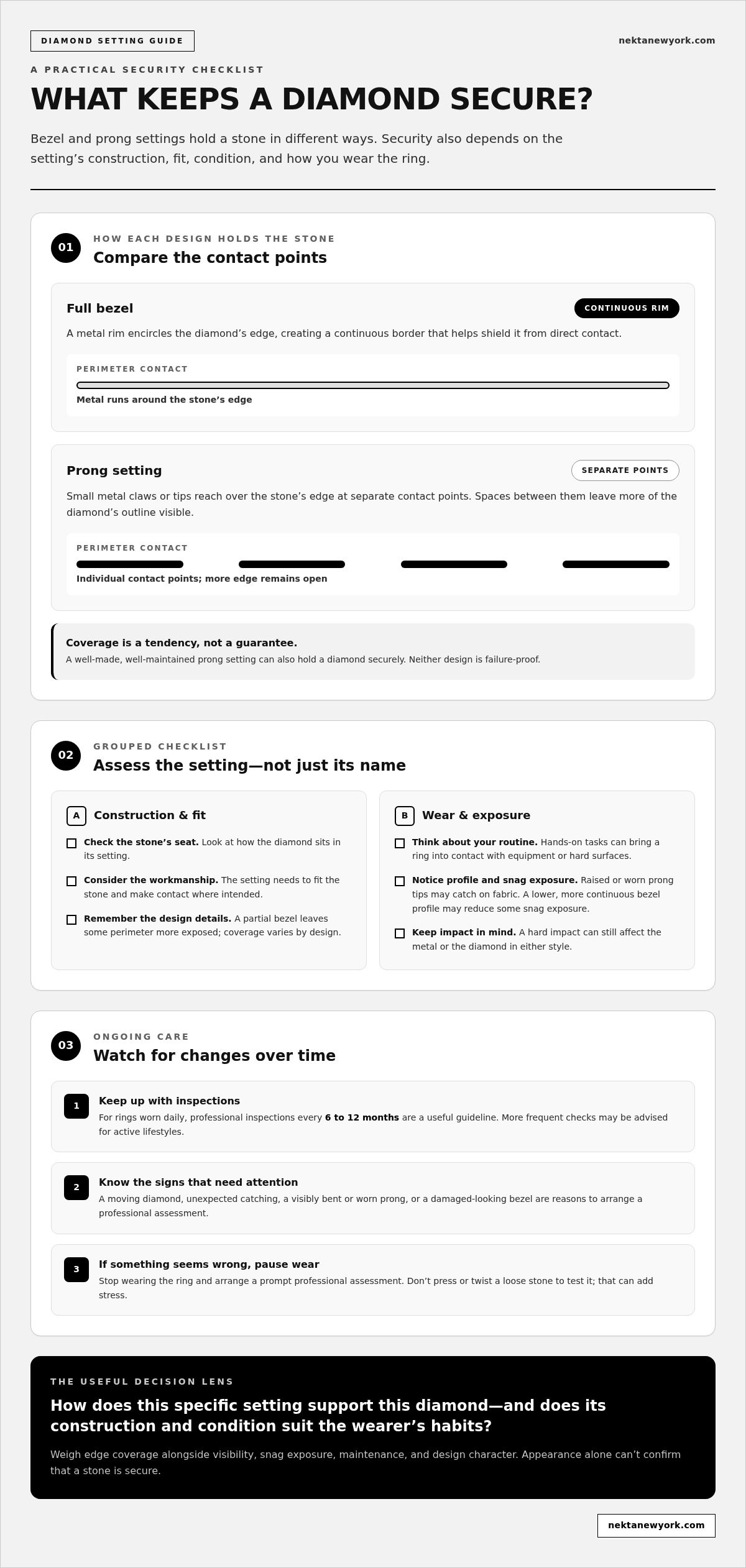
A bezel uses a metal rim around the diamond’s perimeter. In a full bezel, the rim encircles the stone’s edge, creating a continuous border that helps shield it from direct contact. The surrounding metal also defines the ring’s outline, giving the stone a framed appearance rather than the more open look of a prong-set diamond.
A partial bezel leaves portions of the perimeter more exposed, with the degree of coverage varying by design. The rim still needs to fit the diamond appropriately. Coverage alone doesn’t make a setting secure if the stone isn’t seated correctly or the metalwork isn’t executed with precision.
How prongs secure a diamond
Prongs are small metal claws or tips positioned around the diamond. Their ends reach over the stone’s edge to hold it at separate contact points, rather than surrounding the entire perimeter. The spaces between prongs leave more of the diamond’s outline visible, so the setting can appear lighter and more open. The exact configuration depends on the ring’s design and the stone.
That openness also means the diamond’s edge is less continuously shielded than in a full bezel. Individual prongs can wear or be affected by an impact, so the condition of each contact point matters. The Prong Setting overview describes the balance between light exposure and the reduced edge protection of this design.
For either style, look at how the stone sits in its setting and whether the metal makes consistent contact where intended. A well-fitted design should hold the diamond securely, but its appearance alone can’t confirm that. If a ring is struck, catches repeatedly, or shows a visibly bent or worn setting, have it assessed before wearing it again. Regular attention can reveal changes that aren’t easy to spot at a glance.
So the useful question isn’t simply which setting is “stronger.” It’s how the specific design supports the particular diamond, and whether its construction and condition suit the wearer’s habits. That distinction makes it easier to compare protection without treating either bezel or prong settings as failure-proof.
How Bezel and Prong Construction Affect Everyday Diamond Security
A setting’s design shapes how a diamond meets everyday contact, but it doesn’t determine the outcome on its own. A bezel provides support around more of the stone’s perimeter; prongs hold it at separate contact points. Neither arrangement is immune to damage. A hard impact, gradual metal wear, an imperfect fit, or a setting that has shifted can affect how securely the diamond is held. Compare the actual construction, not just the setting name.
Protection, exposure, and potential points of concern
A full bezel’s surrounding metal can shield more of a diamond’s edge from incidental bumps and contact with nearby objects. That coverage reduces exposure, but it doesn’t make a diamond impervious to damage or prevent every setting problem. Prongs leave more of the stone’s outline open and depend on their individual contact points staying properly positioned. The practical difference depends on the design, workmanship, and how the ring has worn.
Consider where contact is most likely in your routine. A ring worn during hands-on tasks may brush against equipment or hard surfaces. A prong-set ring may also catch on fabric if its tips are raised or worn. A bezel’s lower, more continuous profile may reduce some snag exposure, but an impact can still affect its metal or the diamond. The shape and fit of the finished ring matter as much as the broad setting category.
Why workmanship and maintenance matter
A well-fitted setting supports the stone as intended, but no construction can promise that a diamond will never loosen. Prongs may wear down, bend, or sustain damage, so regular professional inspection helps monitor the setting’s condition. For rings worn daily, inspections every 6 to 12 months are a useful guideline, with more frequent checks sometimes advised for active lifestyles.
Make a habit of noticing changes. If the diamond moves, the ring catches unexpectedly, a prong looks bent, or the bezel appears damaged, stop wearing it and arrange a prompt professional assessment. Don’t test a loose stone by pressing or twisting it, since that can add stress instead of clarifying the problem. A jeweler can examine the setting and determine whether it needs attention before regular wear continues.
The American Gem Society (AGS), a nonprofit trade association focused on ethics and professionalism in the jewelry industry, offers broader jewelry education. Keep that general context in perspective: a particular ring’s security is best judged by its individual fit, construction, and condition.
For a ring intended for daily wear, weigh edge coverage against the diamond’s visibility and the care you’re comfortable giving it. A private, collaborative engagement ring design consultation can help bring those priorities together with the stone and the look you want.
Bezel Setting vs. Prong Setting: A Practical Security Comparison
The bezel setting vs prong setting for security decision involves different trade-offs, not a guaranteed winner. A full bezel surrounds the diamond’s perimeter with metal, while prongs hold it at separate points and leave more of its outline visible. A partial bezel offers less perimeter coverage than a full bezel, even if it looks more enclosed than an open prong design.
Use this table to compare common tendencies, not promises. A ring’s actual performance depends on its design, fit, workmanship, and condition. Coverage and visibility are distinct: a setting can show more of the diamond without being inherently unsafe, and more metal around the edge doesn’t make a ring damage-proof.
| Consideration | Bezel setting | Prong setting |
|---|---|---|
| Edge coverage | A full bezel covers more of the perimeter; a partial bezel leaves sections open. | Metal holds the stone at selected contact points, leaving more of its edge exposed. |
| Stone visibility | The metal rim frames the diamond and covers part of its outline. | The open spaces between prongs show more of the diamond’s outline. |
| Snag exposure | A lower, continuous profile may reduce opportunities to catch on nearby material. | Raised or worn prongs may catch, depending on their shape and placement. |
| Maintenance | Inspect the rim and stone fit as part of ongoing care. | Check prongs periodically for wear, movement, or damage. |
| Design character | A defined metal border gives the stone a framed appearance. | A more open setting emphasizes the diamond’s outline. |
When a bezel may better match your priorities
If protecting more of the diamond’s edge is a priority, a full bezel may be worth considering. Its continuous metal outline gives the stone a distinct, framed presence, and the profile can feel streamlined. A partial bezel is a different choice: its openings preserve a more exposed look, but it doesn’t provide the same perimeter coverage as a full bezel. The stone’s shape and the setting’s execution still matter.
When prongs may better match your priorities
Choose prongs for an open presentation that leaves more of the diamond visible. That openness is an aesthetic characteristic, not proof of poor security. The stone relies on the prongs’ sound construction and continued condition, so regular attention is part of wearing the ring responsibly. For further gem and jewelry education, the Gemological Institute of America (GIA) provides a trusted resource.
Let your priorities lead: decide how much edge coverage you want, how prominently you want the diamond displayed, and which design feels right for everyday wear. A full bezel, partial bezel, or prong setting can each offer a different balance of protection and appearance. The most useful comparison is between well-considered designs suited to the particular diamond, not labels alone.
How to Choose a Secure Diamond Setting for Your Ring
A considered choice starts with the way you’ll wear the ring, then moves to the look you want and the needs of the diamond itself. Security matters, but so do comfort, visibility, and how the setting’s proportions work with the stone and band. Use this sequence to identify the priorities that should guide your design conversation.
- Start with your daily routine. Think about how often your hands meet hard surfaces, equipment, or other sources of friction, and whether raised details might catch on clothing or gloves. If your routine involves frequent contact, you may value more edge coverage or a lower profile. These preferences can help narrow the design, but no setting removes the need for care.
- Rank the qualities you value most. Decide how you balance perimeter coverage, an open view of the diamond, comfort, and visual character. A full bezel offers more continuous coverage around the stone than a partial bezel, while prongs leave more of its outline visible. Consider each a distinct design choice rather than assuming every bezel has the same protective profile.
- Bring the diamond’s shape into the decision. The setting should be designed in relation to the stone, not chosen in isolation. Consider how its outline, proportions, and placement will look with the ring’s overall design. The aim is a harmonious fit that reflects your taste and the way you expect to wear the ring.
Match the setting to lifestyle and design priorities
Picture the ring in ordinary moments: reaching into a bag, putting on a sweater, or working with your hands. Which concerns feel most relevant, and what visual compromise would you be comfortable making? These questions turn the broad bezel setting vs prong setting for security comparison into a personal decision, rather than a search for one setting that suits everyone.
Assess fit, condition, and ongoing care
Once the design is selected, have the completed setting assessed for fit and secure stone placement. Plan periodic professional checks, and arrange an assessment after a hard impact or any visible change. A jeweler can evaluate the setting without risking additional stress to the ring.
Watch for signs that deserve prompt professional attention:
- The diamond moves or feels loose in its setting.
- A prong looks bent, worn, or out of place.
- The ring catches unexpectedly, or its setting appears damaged.
- You notice a change in how the stone sits or how the ring feels.
Don’t bend a prong, press on a loose stone, or try to reshape the setting yourself. Small adjustments can affect how the diamond is held. For a design shaped around your stone, lifestyle, and preferred balance of coverage and visibility, schedule a private engagement ring consultation with Nekta New York, available in-store or virtually.
Design Your Engagement Ring Setting with Nekta New York
Understanding the trade-offs is a strong starting point. The next step is translating them into a design that suits your diamond, your taste, and the way you expect to wear your ring. Rather than treating the bezel setting vs prong setting for security question as a choice with one universal answer, consider how protection, proportion, and personal style come together.
A collaborative approach to setting design
In a private design consultation, the diamond and your preferences guide the conversation. You can discuss how a full or partial bezel compares with prongs for the look you want, how much of the stone you’d like to see, and how the setting should relate to the ring’s proportions. These choices shape the design; they don’t amount to a guarantee of security.
Mike Nekta is a GIA-certified diamond expert, and the family’s diamond expertise spans three generations. That experience informs a personal, collaborative process, with attention to the stone and the details that make a ring feel considered and individual. Mike Nekta New York’s handcrafted work is designed to become an heirloom, bringing artistry and thoughtful design to a piece intended to hold personal meaning.
Explore a private ring design consultation
A consultation offers time to talk through the qualities that matter most to you, whether that means a more defined metal outline, an open view of the diamond, or a balance of both. Share your ideas and preferences in person or virtually, then explore how the setting relates to your chosen stone. It’s a chance to consider the whole ring, not just the setting category.
Mike Nekta New York has served New York City for over 50 years. That heritage supports an individual approach, bringing practical priorities into the design conversation alongside craftsmanship, visual balance, and the character you want your ring to express. No setting should be selected on appearance alone, and no design replaces appropriate professional care over time.
If you’re ready to explore a ring shaped around your diamond and preferences, discuss your custom engagement ring design in a private consultation, in-store or virtually.
Choose a Setting That Feels Right for Your Future
Your engagement ring will be part of everyday life and a reminder of a meaningful promise. Let that bigger picture guide your next step: imagine how you want the ring to feel on your hand, what you want the diamond to express, and which design choices will still feel true to you years from now.
The question of bezel setting vs prong setting for security is a useful starting point, but your final design can reflect more than one priority. Bring your ideas, inspirations, and practical considerations to a private conversation with Mike Nekta, a GIA-certified diamond expert, and draw on the family’s three-generation diamond expertise. Consultations are collaborative and available in-store or virtually, giving you space to explore a custom design with personal guidance.
Schedule a private ring design consultation and begin shaping an engagement ring that feels distinctly yours. The right choice is one you can wear with confidence and cherish for years to come.
Frequently Asked Questions
Is a bezel setting more secure than a prong setting?
A full bezel generally offers more coverage around a diamond’s edge, but that doesn’t make every bezel more secure than every prong design. In the bezel setting vs prong setting for security decision, the specific fit and condition matter. A poorly fitted bezel may not hold a stone as intended, while carefully made prongs can provide dependable support. Choose based on the particular diamond and ring, not the setting label alone.
Can a diamond fall out of a bezel setting?
Yes, it’s possible, though a properly fitted bezel is designed to hold the diamond within its surrounding rim. Damage to the metal or a change in the stone’s fit can affect retention. If the ring takes a hard blow, don’t assume the stone is secure just because its edge is surrounded. Have it examined, especially if you notice movement, a new gap, or a change in how the diamond sits.
Can a diamond fall out of a prong setting?
Yes. If prongs become damaged, worn, or lose their position, the diamond may become loose and could fall out. A subtle rattle or movement can be an early warning, even if the ring looks unchanged from above. Avoid wearing it until a professional has assessed the setting, and don’t try to tighten the prongs yourself. A jeweler can check the stone’s seating and the condition of its supporting metal.
Do bezel settings protect a diamond from chipping?
A bezel can help shield the diamond’s edge from some direct contact, which may reduce exposure to knocks. It can’t eliminate the risk of chipping: a forceful impact may still damage the stone, and protection varies with the design and fit. Take extra care after a collision with a hard surface. If you see a chip or suspect damage, have the diamond examined rather than attempting to assess it by touch.
Are prong-set diamonds more likely to snag on clothing?
They can be, particularly if prong tips sit high, have a rough edge, or have shifted from their intended position. A prong-set ring catching on a knit sweater once doesn’t necessarily indicate damage, but repeated snagging deserves attention. Don’t pull hard against the fabric; ease the ring free gently, then look for a bent tip or looseness. If anything seems different, pause wear and arrange a professional inspection.
How often should a jeweler inspect a bezel or prong setting?
For a prong setting worn daily, professional inspections every 6 to 12 months are a useful guideline; active wear may call for more frequent checks. Bezel settings also benefit from periodic assessment, though the inspection schedule can depend on wear and design. For either style, arrange an earlier check after a significant impact or if the stone moves, the setting catches, or visible damage appears. Don’t wait for a routine appointment if you notice a change.
Can a bezel setting be made for different diamond shapes?
Yes, bezel designs can be shaped to follow many diamond outlines, including round, oval, emerald, pear, and marquise forms. Each shape calls for a contour suited to its proportions; pointed ends and corners may need especially thoughtful design. The result depends on how the rim is formed around the individual stone. Discuss the diamond’s outline and the appearance you want together, since a bezel’s metal border becomes part of the ring’s visual character.