
Why the Asscher Cut Is the Hidden Gem of Diamond Shapes
If you’ve been looking at engagement rings for more than five minutes, you’ve probably noticed the pattern: round, oval, round, oval, and then a few more rounds.
Nothing wrong with that. Those shapes are popular for a reason. But if you’re the kind of person who wants something rarer without going flashy, the Asscher cut is one of the best “if you know, you know” choices in the diamond world.
I’m writing this because Asscher cut diamond ring shopping can feel confusing. Not because the shape is complicated, but because this cut shows everything. The good. The bad. The “why does this one look magical and that one look flat?” details.
By the end of this post, you’ll understand what makes an Asscher different, who it’s for, what ring styles make it shine, and how to choose a great one without overpaying.
What an Asscher Cut Diamond Actually is (and Why it Looks so “Architectural”)
An Asscher cut diamond is a square step cut with cropped corners. Think of it like a square with the corners clipped off, creating an octagonal outline when you look at it from the top.
Instead of the “sparkle bursts” you get from brilliant cuts (like round or oval), Asscher diamonds give you a cleaner, more structured effect that people often describe as a hall of mirrors. Big, bold flashes. Crisp reflections. Depth that pulls your eye inward.
That’s also why Asschers read so Art Deco. They’re all about symmetry and geometry. Clean lines. Balanced proportions. They look designed, not just sparkly.
Asscher vs. Emerald Cut (The Common Confusion)
A lot of people mix up Asscher and emerald cuts because both are step cuts. Here’s the simplest way to separate them:
- Asscher cut: square (or close to square), cropped corners, centered “windmill” pattern in many stones, more of a compact footprint.
- Emerald cut: rectangular, longer shape, more of a sleek “mirror rectangle” look, usually faces up larger for the same carat because it spreads lengthwise.
If you love that step-cut elegance but want something more architectural and symmetrical, Asscher is usually the one that hits.
Why the Asscher Cut is a Hidden Gem of Diamond Shapes
I’ve always felt the Asscher cut is one of the most underrated diamond shapes, and once you see a great one in person, it’s hard to unsee it.
1) It’s genuinely rarer
Compared to rounds and ovals, far fewer Asscher cuts are produced and stocked. That matters for two reasons.
First, it feels more personal. You don’t see Asschers on every other hand.
Second, it makes selection more important. When the pool is smaller, you want to be more intentional about cut quality and the specific look of the stone.
2) It’s timeless, not trendy
Some shapes swing hard with trends. Elongated shapes have been having a major moment, and they are beautiful, but trend cycles do change.
The Asscher cut doesn’t really ride micro-trends. It has been stylish for decades because it’s rooted in design history. It looks just as correct in a minimal solitaire as it does in a detailed vintage setting.
3) It makes a statement without size-shouting
If you want presence without screaming “look at the carat weight,” Asscher is a smart move.
An Asscher doesn’t beg for attention from across the room. It rewards closeness. When someone leans in, they see the symmetry, the depth, the mirrored steps, and that’s what makes it feel luxurious.
I call it a “look closer” diamond.
4) It photographs beautifully in a refined way
Because of the clean facet structure, a great Asscher photographs with crisp edges and strong symmetry. You get those sharp, elegant reflections rather than chaotic sparkle. It looks composed in photos, especially in well-made settings with clean lines.
Asscher Cut Diamond Ring Styles That Make The Shape Shine
The Asscher cut has a distinct personality, and the setting can either elevate that personality or fight it. Here are styles that consistently work.
Solitaire: Pure Geometry
A solitaire Asscher is one of the cleanest, most confident looks you can choose. It puts the shape front and center and lets the architecture do the talking.
This is perfect if you love design, structure, and minimalism. It’s also a great option if you want a ring that still feels modern 10 or 20 years from now.
Halo: Outline Emphasis and Extra Brilliance
Asschers are step cuts, so their sparkle is more controlled. A halo adds brightness around the edges and makes the outline pop, which many clients love because it gives the ring more presence without changing the center stone.
A tight, well-proportioned halo can also make the Asscher look larger while keeping that crisp, squared silhouette.
Three-stone: Art Deco Perfection
Asschers pair beautifully with step-cut side stones and geometric shapes. My favorite combinations for that Deco vibe include:
- trapezoids
- baguettes
- shields
A three-stone ring also gives you more visual spread on the finger, which can be a smart strategy if you want a bigger look without paying for a much larger center stone.
East-west (less common): a modern twist
An east-west Asscher turns the stone so it sits “sideways” relative to the band. It’s not the traditional look, but it’s a clean modern move that still keeps the shape distinctive.
This style is for someone who wants an Asscher, but wants it styled in a way most people have never seen.
Vintage-inspired Details: A Natural Fit
Asschers and vintage details belong together. Milgrain, filigree, engraved bands, and subtle hand-finished touches can make an Asscher ring feel like an heirloom without looking costume.
The key is balance. You want the details to frame the stone, not overwhelm it.
Best Metal and Setting Pairings
Asschers are honest stones. They don’t hide color or inclusions the way some brilliant cuts can. That’s why pairing the diamond with the right metal and setting makes a big difference.
Platinum and white gold: crisp, clean, and revealing
Platinum and white gold emphasize the Asscher’s clean geometry and bright reflections. If you love that icy, precise look, this is a great direction.
One nuance: white metal can make body color more noticeable in step cuts. This does not mean you must buy the highest color grade, but it does mean you should be more careful with your selection and view options side by side if you can.
Yellow or rose gold: strategic warmth
Yellow and rose gold can warm the overall look of the ring. In some cases, that warmth can be strategic because it can make slightly lower color grades feel more intentional and harmonious, especially if you prefer a softer look.
If you love a rich yellow gold or romantic rose gold, an Asscher can look incredible in it. Just make sure the setting design still allows light into the stone so you keep that hall-of-mirrors depth.
Bezel vs prong: protection vs airiness
- Bezel setting: A bezel can protect the corners and give a clean modern edge. It’s also great for someone hard on their hands. A well-made bezel on an Asscher looks sleek and architectural.
- Prong setting: Prongs keep the stone airy and classic. They can make the Asscher feel a little lighter visually and let more of the outline show.
Double-claw or corner prongs: the sweet spot
Because Asschers have cropped corners, I often like double-claw prongs or corner-focused prongs. They protect the corners while highlighting the shape. It’s one of those details that can make the ring look more custom and more intentional.
Ring profile and band width: how size perception changes
Band width matters more than people think.
- A thin band makes the center diamond look larger and feels delicate.
- A medium band can make the ring feel more substantial and can visually “anchor” the Asscher, which some people prefer because step cuts can feel very precise and bold.
There’s no universal rule here. It comes down to hand size, lifestyle, and the look you want when you glance down at your ring.
Budget Strategy: Where to Spend vs Where You Can Save on an Asscher
If you want to spend wisely on an Asscher, you need to know what actually changes the visual beauty of the stone.
Spend on cut precision and the overall “look”
With Asschers, I care less about chasing a buzzword and more about the visual result in front of you.
A great Asscher usually shows:
- strong symmetry
- crisp facet steps
- a pleasing, balanced pattern when you look straight down
- depth that feels clean rather than glassy
This is where your money should go, because cut precision is what creates that sharp hall-of-mirrors effect Asscher lovers want.
Be smart on clarity (but don’t be too aggressive)
Step cuts tend to show inclusions more easily because the facets are larger and act like windows. That means the clarity “threshold” for an Asscher is often higher than for brilliant cuts.
My advice is simple: aim for eye-clean, but confirm it with your own eyes, not just a grading report. Two diamonds with the same clarity grade can look very different in real life depending on inclusion type and placement.
Color trade-offs depend on metal and sensitivity
Some people are highly color sensitive. Others are not.
If you’re setting in platinum or white gold and you want a crisp look, you may prefer staying higher in color. If you’re setting in yellow or rose gold, you may be able to go lower and still love the result, especially if the warmth complements your taste.
The smartest move is to compare a few stones side by side and decide what your eyes actually notice.
Use setting design to add presence instead of carat weight
If your goal is “bigger look,” you do not always need a bigger center stone.
You can add presence with:
- a halo
- tapered baguettes or trapezoids
- a three-stone layout
- a tapered band that narrows toward the diamond
These design choices can make the ring look more substantial on the hand without jumping to a new carat bracket.
Consider a slightly smaller carat with higher quality
A slightly smaller Asscher with excellent visual performance often looks more expensive than a larger one that goes flat or shows obvious issues.
With this cut, sharpness and symmetry are the whole game. When they’re right, the diamond feels alive.
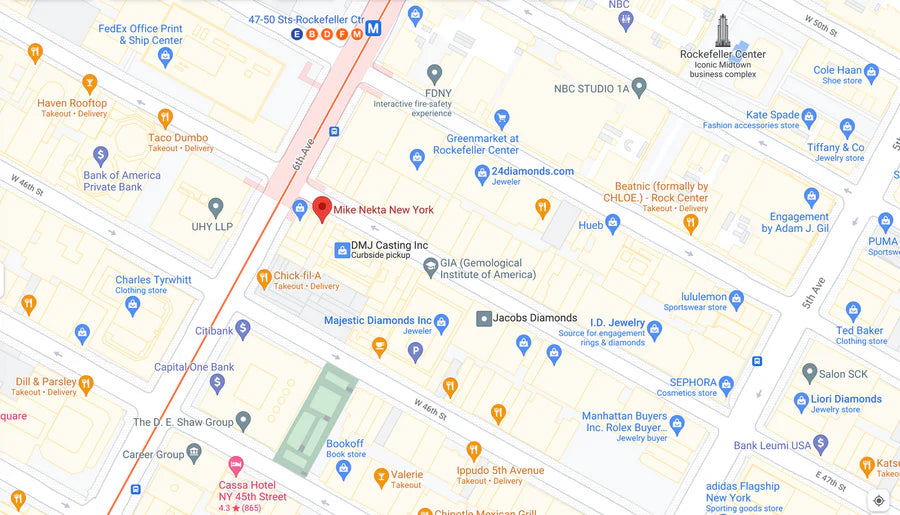
Book an Appointment with Mike Nekta (Mike Nekta New York)
If you’re considering an Asscher cut, I always recommend seeing a few in person. Small differences in symmetry, facet pattern, and color presence can completely change the look, and Asschers are not a shape you want to buy blindly.
If you want help choosing the right stone and pairing it with a setting that fits your style and budget, book an appointment with me, Mike Nekta, at Mike Nekta New York. I’ll walk you through curated Asscher options side by side and give you clear guidance on the cut, color, and clarity trade-offs that matter most for this shape.