

4 Carat Diamond Ring: A Connoisseur’s Buying Guide for 2026
What makes the most striking 4 carat diamond ring isn’t necessarily the greatest weight. The right proportions, brilliance, and setting can make a stone feel perfectly balanced on the hand. Four carats makes a bold impression, yet carat weight alone can’t tell you how large a diamond will look face-up or how vividly it will reflect light. With a substantial stone, differences in cut and shape can be especially apparent.
It’s natural to focus first on the diamond’s impressive size. But choosing with confidence means looking beyond the number on the grading report and considering how the ring will look and feel on the hand, from its silhouette and setting to its comfort and security for everyday wear.
This guide explains what four-carat weight does and doesn’t indicate, and how to compare cut, proportions, color, clarity, shapes, and settings. You’ll also learn what to review in a diamond’s documentation and what to discuss with a trusted expert, so your decision reflects both exceptional beauty and the wearer’s needs.
Key Takeaways
- Assess a 4 carat diamond ring by its face-up appearance and proportions, not its weight alone.
- Compare cut, color, and clarity as separate qualities, and look beyond a cut grade to how the diamond handles light.
- Choose a shape and setting that complement the wearer’s style, hand, and comfort preferences.
- Use a step-by-step review to inspect the stone and confirm its grading report matches the exact diamond.
- Explore how custom design and an experienced diamond expert can help create a ring that feels considered and wearable.
What Does a 4 Carat Diamond Ring Really Look Like?
A four-carat diamond makes a striking impression, but its weight doesn’t tell you exactly how much of the stone you’ll see from above. Shape, cut proportions, and the setting all influence its presence on the hand. Understanding these distinctions helps you assess a 4 carat diamond ring by its actual appearance, rather than relying on the carat number alone.
Carat weight measures a diamond’s weight, not its visible dimensions. A carat is a unit of weight; face-up size describes the diamond’s length and width as viewed from above. For a foundational overview of what a diamond is, including how diamonds are evaluated, see this encyclopedic reference.
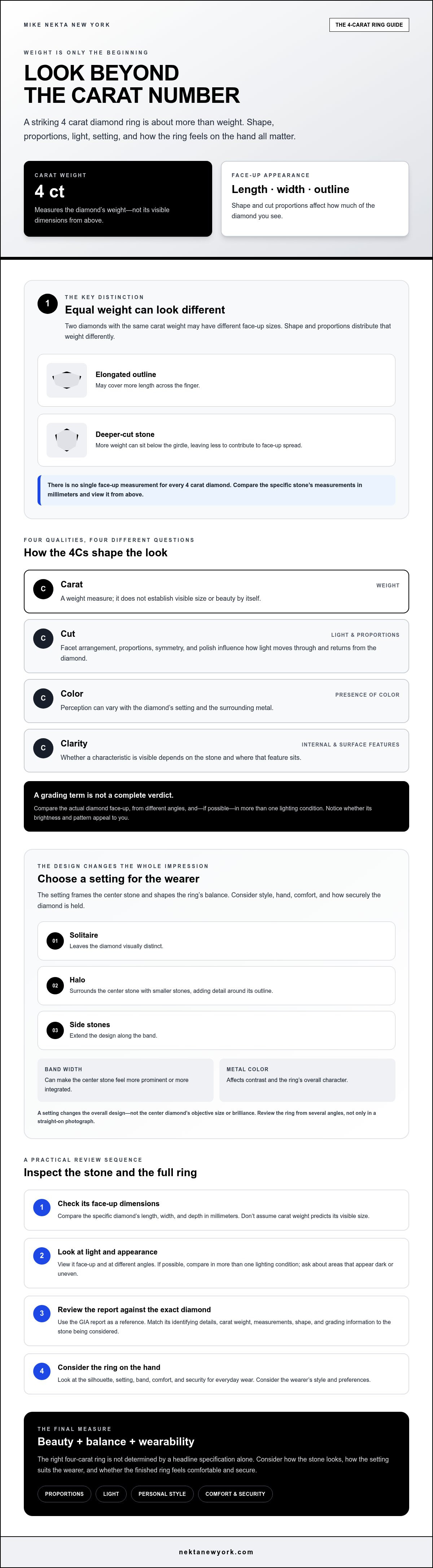
Two diamonds with equal carat weight can look different in size because their shapes and proportions distribute that weight differently. An elongated outline may cover more length across the finger, while a deeper-cut stone can carry more of its weight below the girdle, the widest part of the diamond. In that case, less of the stone’s weight contributes to its face-up spread. The outline matters, too: a round, oval, or emerald-cut diamond presents a different visual footprint, even at the same weight.
How large is a four-carat diamond face-up?
There’s no single face-up measurement that applies to every four-carat diamond. Shape and cut proportions determine its length, width, and depth, so compare the measurements for the specific stone rather than assuming carat weight predicts size. Ask to see those dimensions in millimeters and view the diamond from above. A deeper stone may appear smaller face-up than a shallower stone of equal weight, although depth alone doesn’t determine beauty or quality.
Why the setting changes the ring’s overall presence
The setting frames the center stone and shapes the design’s balance. A solitaire leaves the diamond visually distinct; a halo surrounds it with smaller stones, adding detail around its outline; side stones extend the design along the band. None makes the center diamond objectively larger or more brilliant. Instead, consider how the whole ring looks on the wearer’s hand and suits their style.
Band width can make the center stone feel more prominent or more integrated into the design. Metal color also affects contrast and the ring’s overall character. When comparing settings, consider the wearer’s preferred look, comfort, and how securely the center diamond is held. If possible, review the ring from several angles, not only in a straight-on photograph. That fuller view reveals how the setting, stone depth, and band work together.
How the 4Cs Shape a Four-Carat Diamond’s Beauty
The 4Cs describe different aspects of a diamond, not interchangeable measures of quality. Carat is weight; cut concerns how the diamond’s facets are arranged and how effectively they return light; color describes the presence of color in a diamond; and clarity considers internal characteristics and surface features. Together, they help you assess a stone, but no single grade can tell you whether its appearance suits your taste.
Carat weight alone can’t establish a diamond’s beauty; its visible character depends on how weight, cut, color, and clarity come together. That distinction matters in a 4 carat diamond ring, where the individual stone deserves close examination rather than a decision based on headline specifications alone.
Why cut and proportions deserve close attention
Cut influences how light moves through and returns from a diamond. Proportions, symmetry, and polish all contribute to its appearance, but a grading term isn’t a promise that every stone will look equally lively. Compare the actual diamond face-up and at different angles, and, if possible, in more than one lighting condition. Notice whether its brightness and pattern appeal to you, and ask an expert to explain any areas that appear dark or uneven.
Assess cut in context, too. Shape affects facet arrangement, and grading approaches can differ across shapes. Rather than treating a label as a complete verdict, consider the report alongside the stone’s real-world appearance. A well-documented diamond still needs to meet your visual preferences.
How to assess color, clarity, and a GIA report
Color and clarity preferences are personal. The way color is perceived can vary with the diamond’s setting and surrounding metal, while the visibility of a clarity characteristic depends on the stone and where that feature sits. Review the diamond closely and decide which details matter to you, rather than assuming one grade is right for every buyer or setting.
Use the GIA report as a reference, not a substitute for inspection. Match its identifying details to the exact diamond under consideration, then confirm that the listed carat weight, measurements, shape, and grading information correspond to that stone. A report documents grading information; it can’t determine whether you prefer the diamond’s appearance or whether a particular ring design suits the wearer.
For another point of reference, explore GIA-certified loose diamonds from Mike Nekta New York, a Manhattan Diamond District boutique led by a third-generation diamond expert. Reviewing documentation alongside an expert’s assessment can help connect a diamond’s recorded characteristics with what you actually see.
Which 4 Carat Diamond Shape and Setting Suit Your Style?
The right shape is the one whose pattern, outline, and presence feel balanced on the wearer’s hand. A four-carat center stone will be visually prominent, but it doesn’t have to feel excessive. Proportions, setting height, band design, and personal style all influence whether the finished ring feels graceful, bold, or comfortably understated.
How diamond shape changes the ring’s visual character
A round brilliant is designed to create lively, dispersed sparkle. Emerald and Asscher cuts use step-cut facets, creating a more geometric look with broad flashes and a clear view into the stone. Cushion cuts have softened corners, with their facet pattern varying by cut style. Oval, pear, and marquise shapes introduce elongated silhouettes, while princess cuts bring a crisp, angular outline. These are differences in character, not a ranking of quality.
Shape alone doesn’t determine how a diamond will look on the hand. Length-to-width proportions, facet arrangement, and the ring’s overall design all contribute to its appearance. An elongated outline may draw the eye along the finger, while a round or cushion shape creates a different visual balance. Compare stones on the wearer’s hand when possible, and view the round brilliant engagement ring guide for a closer look at that cut’s characteristics.
Balancing prominence, comfort, and security
A ring’s profile matters as much as its face-up view. A higher setting can make a center stone more exposed to bumps or snagging, while a lower profile may feel less obtrusive for someone with an active routine. Prongs and bezels hold a diamond in different ways and create distinct visual effects; have the specific design assessed for how securely it holds the stone and whether it suits the wearer’s habits.
Consider the band, too. A wider band can create a substantial frame, while a more delicate one may leave the center diamond as the focal point. Neither choice is universally more flattering. Try comparable stone proportions and setting heights if you can, then notice how the ring feels during ordinary hand movements, not just how it looks in a still image.
For a 4 carat diamond ring intended for regular wear, discuss practical preferences before settling on the design: how high the stone should sit, whether the wearer prefers a prominent or streamlined profile, and what level of maintenance feels reasonable. Custom design can bring these considerations together, balancing the center stone with comfort and personal taste. Mike Nekta New York offers custom-designed engagement rings, with guidance informed by third-generation diamond expertise.
A Practical Checklist for Evaluating a 4 Carat Diamond Ring
A step-by-step review makes it easier to compare a diamond’s documented characteristics with its appearance and the wearer’s priorities. Work through these steps before settling on a stone or setting:
- Start with the wearer. Note preferred shapes, metal color, daily routines, comfort priorities, and how prominent the ring should feel.
- Review the exact diamond. Examine it face-up and from the side, and ask for its measurements, shape, and cut details. If buying remotely, look for clear, well-lit imagery or video showing the specific stone from multiple angles.
- Observe its appearance. If possible, view it under different lighting conditions. Notice its brightness, pattern, visible inclusions, and color impression rather than relying on a single photograph or grading term.
- Match the grading report. Check the report issuer and report number, then confirm that identifying details correspond to the exact diamond being considered.
- Ask what the documentation can tell you. Clarify the grading information and its limits. If ethical sourcing or traceability matters to you, ask what claims are being made and what supporting information is available.
- Assess the finished setting. Consider the metal, band width, setting style, height, comfort, security, and care expectations. Review how the design frames the center stone and feels on the hand.
Questions to ask about the diamond and its documentation
Ask to see the complete report and have the identifying number matched to the diamond, not merely to a similar stone. Invite the expert to explain how the grading details relate to what you can see, and which qualities remain matters of personal taste. If sourcing is important, ask what specific information supports any sourcing or traceability statements.
Questions to ask about the finished ring
Discuss preferred metal, setting profile, comfort, security, and maintenance before finalizing the design. Ask how changes to the band or setting affect the center stone’s proportions and everyday wear. For further context on bespoke decisions, read this custom bridal jewelry NYC guide.
A custom-designed engagement ring can bring the diamond and the wearer’s preferences into a considered whole. To discuss how those choices may shape a ring, explore custom-designed engagement rings from Mike Nekta New York, a Manhattan Diamond District boutique led by a third-generation diamond expert.
Designing a Four-Carat Ring with an Experienced Diamond Expert
A four-carat diamond is a significant design decision. An experienced diamond expert can help connect a stone’s proportions, shape, and documented characteristics with the wearer’s priorities, so the conversation goes beyond comparing grades. For a 4 carat diamond ring, the aim is a considered balance: a center stone with the desired presence, set in a design that feels personal and comfortable to wear.
What personalized guidance can clarify
A specialist can help you compare the stones under consideration by looking at their appearance as well as their reports. Ask how differences in proportions, facet pattern, and visible characteristics affect what you see, then discuss which qualities matter most to the wearer. This guidance can help clarify trade-offs without suggesting that a single grade or specification defines the best choice.
Bring the wearer’s preferences into the discussion early. A preference for a particular shape, a lower profile, a specific metal color, or a ring suited to regular wear can influence which diamond and setting deserve closer consideration. Ask to review the exact stone and its documentation, and discuss how the intended design may frame it. Availability and design options should be confirmed directly rather than assumed.
From diamond selection to a considered custom design
A thoughtful process begins with priorities: the look the wearer loves, the desired presence on the hand, and practical considerations such as comfort and everyday habits. Next, compare candidate diamonds by their appearance and documentation. Once a stone is under consideration, discuss a setting that complements its shape and proportions while reflecting the wearer’s style.
Mike Nekta New York is a Manhattan Diamond District boutique led by a third-generation diamond expert. The business offers custom-designed engagement rings, ethically sourced diamonds, and GIA-certified loose diamonds. That context can support a detailed conversation about the stone and the design, while the final choice remains guided by the wearer’s preferences. Ask what sourcing information is available and review the report for the specific diamond being considered.
For a substantial center stone, custom design offers a way to make the finished ring feel intentional rather than simply oversized. The setting, band, and profile can be discussed together, with wearability treated as part of the design from the outset. If you’re considering a four-carat engagement ring, reach out to Mike Nekta New York to discuss a custom four-carat ring with Mike Nekta New York and the qualities you’d like the finished ring to express.
Choose a Ring That Feels Beautifully Your Own
A four-carat diamond’s weight is only part of its story. Its proportions and cut shape the way it appears, while the stone’s color, clarity, shape, and setting influence the ring’s overall character. The best choice is one that looks exceptional to you and feels considered for the wearer’s style and daily life.
Take time to review the specific diamond, match it to its grading report, and consider the finished design from more than one angle. A thoughtful setting brings the center stone, comfort, and personal preference into balance.
Mike Nekta New York brings third-generation diamond expertise to custom-designed engagement rings and GIA-certified loose diamonds. The family business has operated for more than 20 years, offering a depth of experience to inform a considered decision. If you’re ready to explore a design that reflects your priorities, discuss a custom four-carat ring with Nekta New York. With the right guidance, you can move forward with confidence and choose a ring that feels distinctly yours.
Frequently Asked Questions
Is a 4 carat diamond too large for an engagement ring?
No, a 4-carat diamond isn’t inherently too large; whether it feels right depends on the wearer’s taste, hand, and daily routine. Consider the diamond’s face-up dimensions, shape, and setting profile, not just its weight. A lower setting or a design with a balanced band may feel more comfortable to some wearers. If possible, try comparable proportions on the hand before choosing a final design.
How big does a 4 carat diamond look?
Its visible size depends on the diamond’s shape and cut proportions, so carat weight alone can’t predict its face-up appearance. Length and width measurements show how much of the stone is visible from above, while depth indicates how much extends below the widest point. Compare the exact diamond’s measurements and view it face-up. An oval and a round diamond with the same carat weight, for instance, have different outlines.
How much does a 4 carat diamond ring cost?
There isn’t one standard price for a 4-carat diamond ring. The diamond’s origin, cut, color, clarity, shape, and grading documentation all affect its value, as do the setting’s design and materials. Compare complete details for the specific stones and finished rings you’re considering, rather than using carat weight as a price guide. Ask for a current itemized quote and confirm which diamond and setting it covers.
What should I look for in a 4 carat diamond?
Look at the diamond’s proportions and appearance, then consider cut, color, clarity, shape, and the wearer’s preferences as distinct factors. Review its measurements and grading report, and make sure the report matches the exact stone. Observe the diamond in different lighting and from several angles, paying attention to its light return and any visible inclusions. A 4 carat diamond ring should suit the wearer’s style and comfort, not just meet a target grade.
Is a GIA report important when buying a 4 carat diamond?
A GIA report is useful because it documents grading information for a specific diamond, but it doesn’t decide whether you’ll like the stone or whether a setting suits the wearer. Check the report number and identifying details against the diamond under consideration. Ask an expert to explain what the report confirms and what it can’t establish about personal appearance or design preference. Mike Nekta New York offers GIA-certified loose diamonds.
Can a 4 carat diamond ring be comfortable for everyday wear?
It can be, but comfort depends on the ring’s design and the wearer’s routine. Consider the setting’s height, the band’s proportions, and whether prongs or a bezel suit the wearer’s activities and preferences. Ask how the center stone is secured and what care it may require. If possible, try a comparable ring and move your hand naturally to assess whether the profile catches or feels cumbersome.
Which diamond shape is best for a 4 carat engagement ring?
There’s no universally best shape; the right choice reflects the wearer’s taste and the ring’s design. Round brilliant cuts offer a distinct sparkle pattern, while emerald cuts have a more geometric, step-like appearance. Oval, pear, and marquise shapes create elongated outlines; cushion cuts have softened corners. Compare the actual stones, their proportions, and how each looks on the hand before choosing a shape and setting.